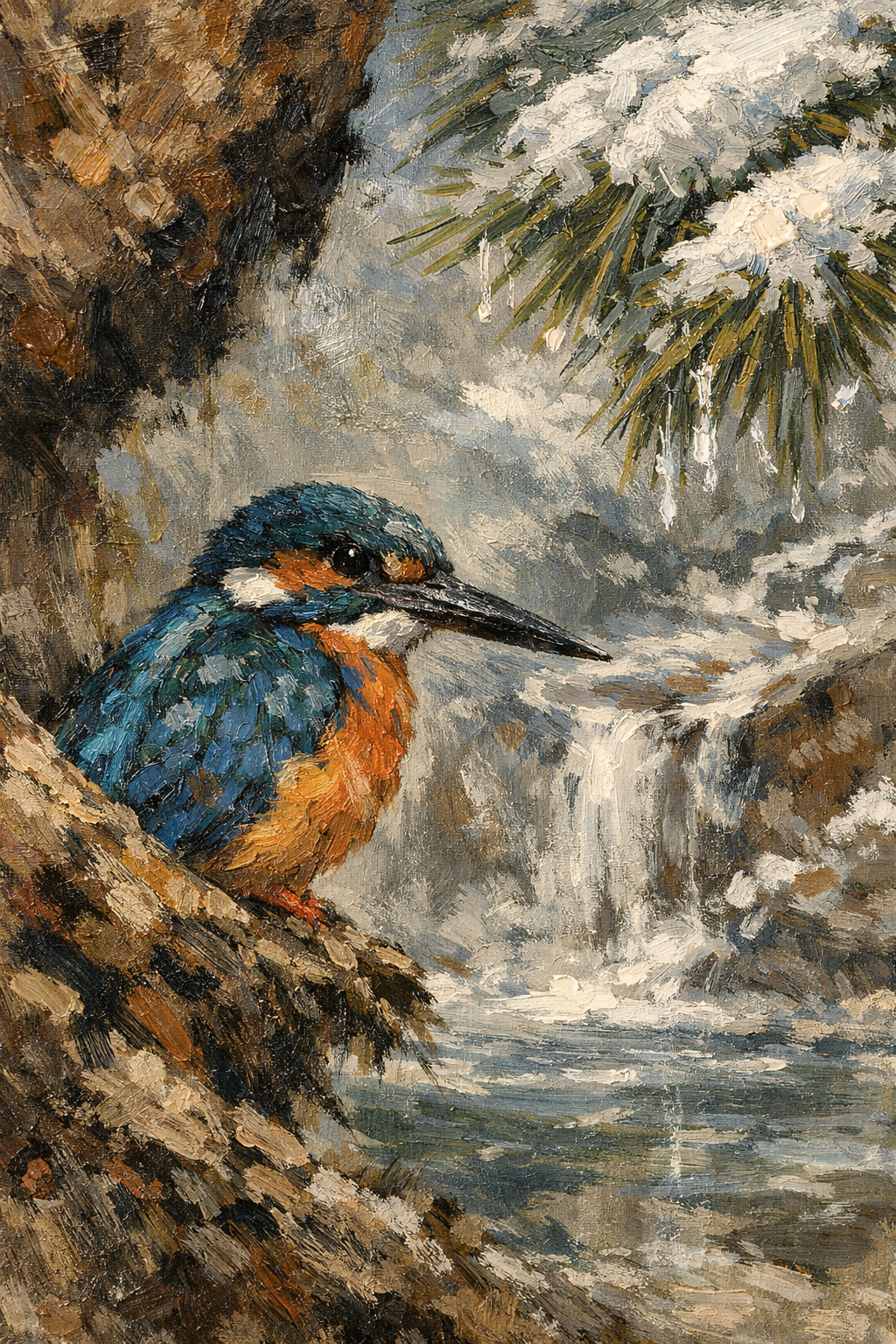
Song of the Raging Sea
Critique
1. Introduction This oil painting presents a vivid depiction of a kingfisher amidst a wintry natural landscape. The work captures the striking contrast between the bird's brilliant plumage and the muted, cool tones of a snow-covered environment. Through a robust application of paint, the artist creates a scene that feels both immediate and timeless, emphasizing the resilience of life in the face of the elements. 2. Description A kingfisher, rendered in vibrant shades of cerulean blue and warm orange, sits perched on a thick, textured branch that extends from the lower left. In the upper right, pine needles laden with thick white snow frame the composition. The background features a cascading waterfall, its motion suggested by horizontal and vertical white brushstrokes. The overall atmosphere is one of cold serenity, with a palette dominated by blues, whites, and earthy browns. 3. Analysis The artist utilizes an impasto technique most effectively in the depiction of the snow and the rushing water, giving these elements a tangible, three-dimensional quality. The bird is the primary focal point, its sharp beak and dark eye providing a moment of crisp detail against the more expressive, painterly surroundings. The composition follows a subtle diagonal line from the branch towards the waterfall, creating a sense of depth and movement. Light appears to filter through the winter air, casting soft shadows and highlighting the texture of the tree bark. 4. Interpretation and Evaluation This painting can be interpreted as a study of survival and the inherent beauty of the natural world's transitions. The technical skill is apparent in the balance between the bird's precise form and the more abstract, energetic rendering of the water and snow. By choosing a kingfisher—a bird often associated with water and vitality—within a winter setting, the artist highlights a poignant moment of natural drama. The work is successful in its ability to evoke a specific sensory experience of cold air and rushing water through purely visual means. 5. Conclusion Ultimately, the work is a compelling fusion of detailed bird portraiture and expressive landscape painting. While the initial impression is defined by the bird's brilliant colors, the viewer's attention is soon drawn to the sophisticated handling of the wintry atmosphere. The piece stands as a powerful example of how textured brushwork can be used to convey both the stillness of a winter day and the vibrant energy of its inhabitants.
Same Subcategory
Similar Artworks
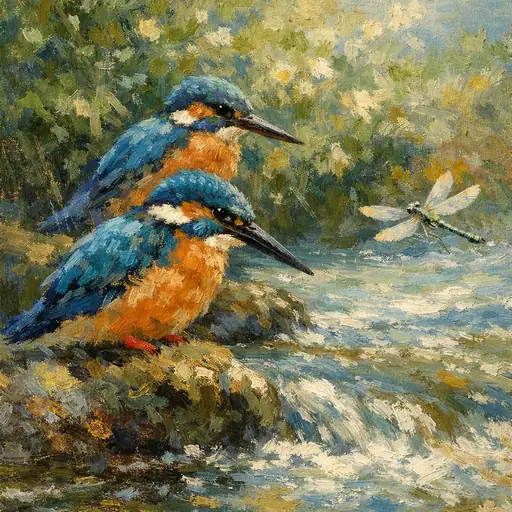 Whispers of the Rushing Stream
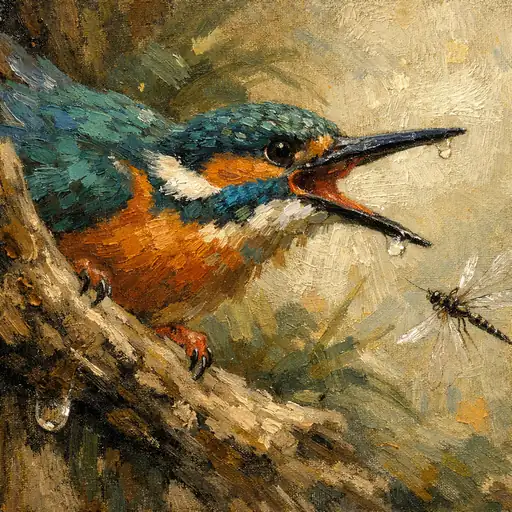 Solitude of the Winter Moon
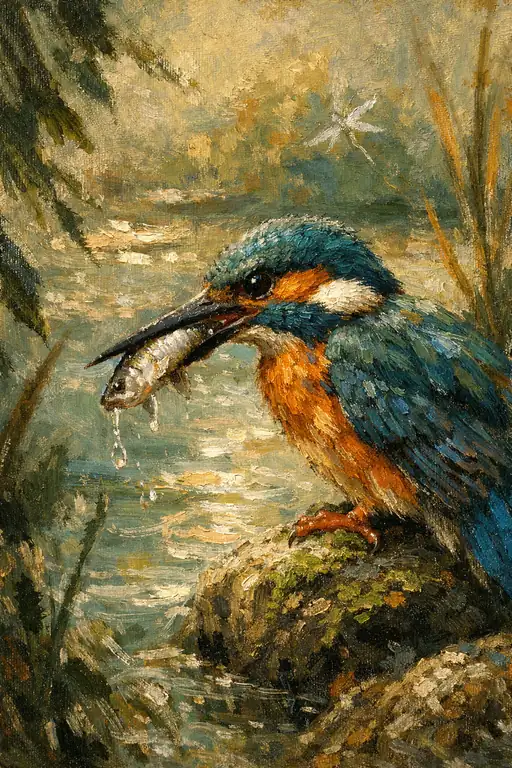 The Thrill of the Hunt Painted in Flashes of Teal and Gold
 The Sapphire Guardian of the Stream
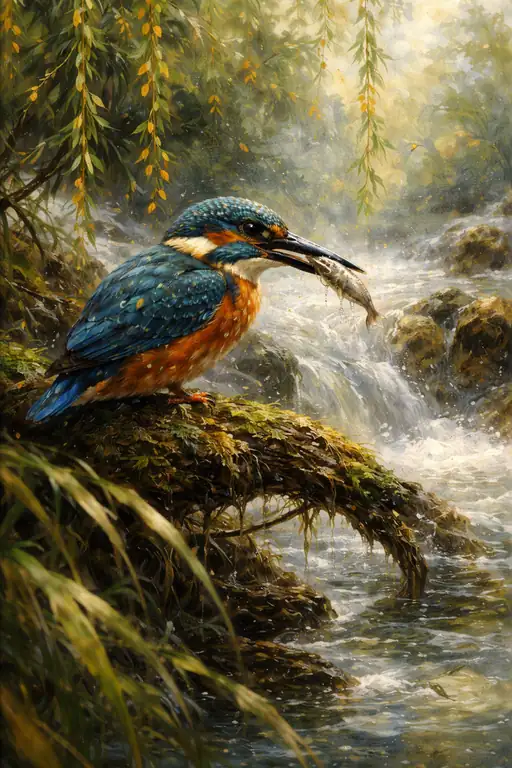 Triumph of the Sapphire Kingfisher
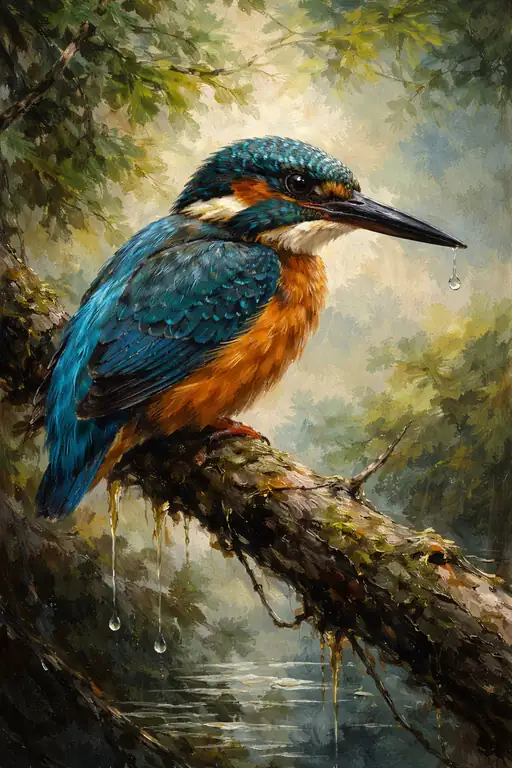 A Splash of Sapphire in Stillness
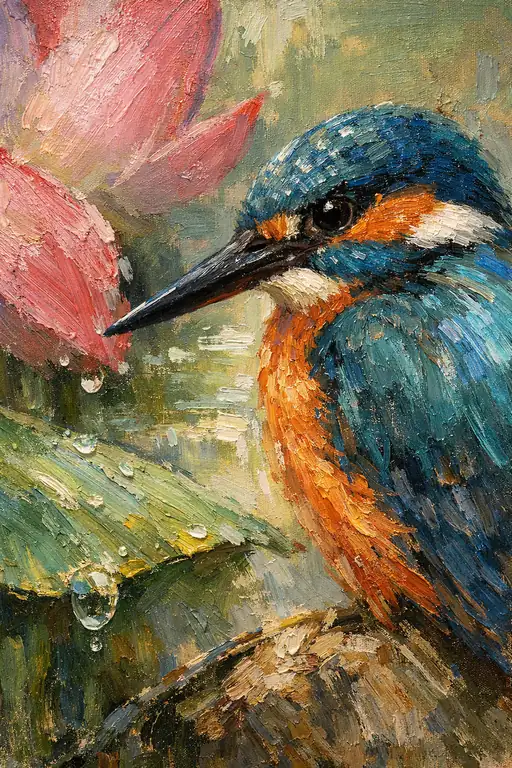 A Fleeting Radiance by the Lotus
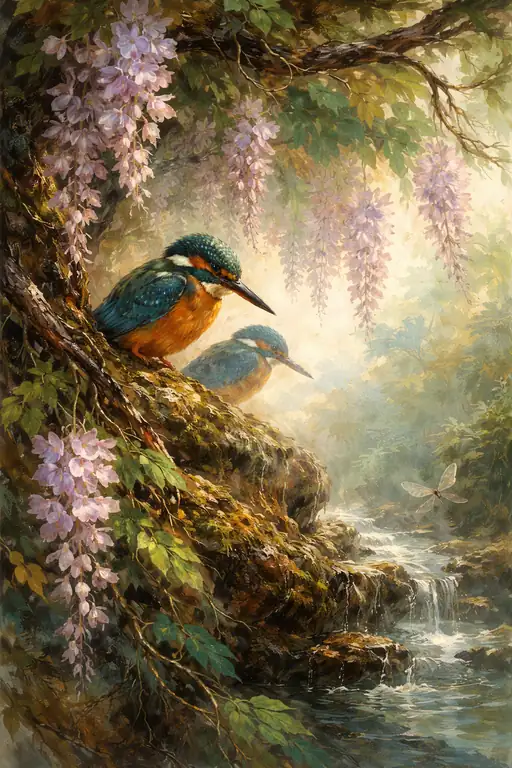 Love's Dance Beneath the Wisteria
 Jewel in the Downpour
 Golden Grace on the Lake