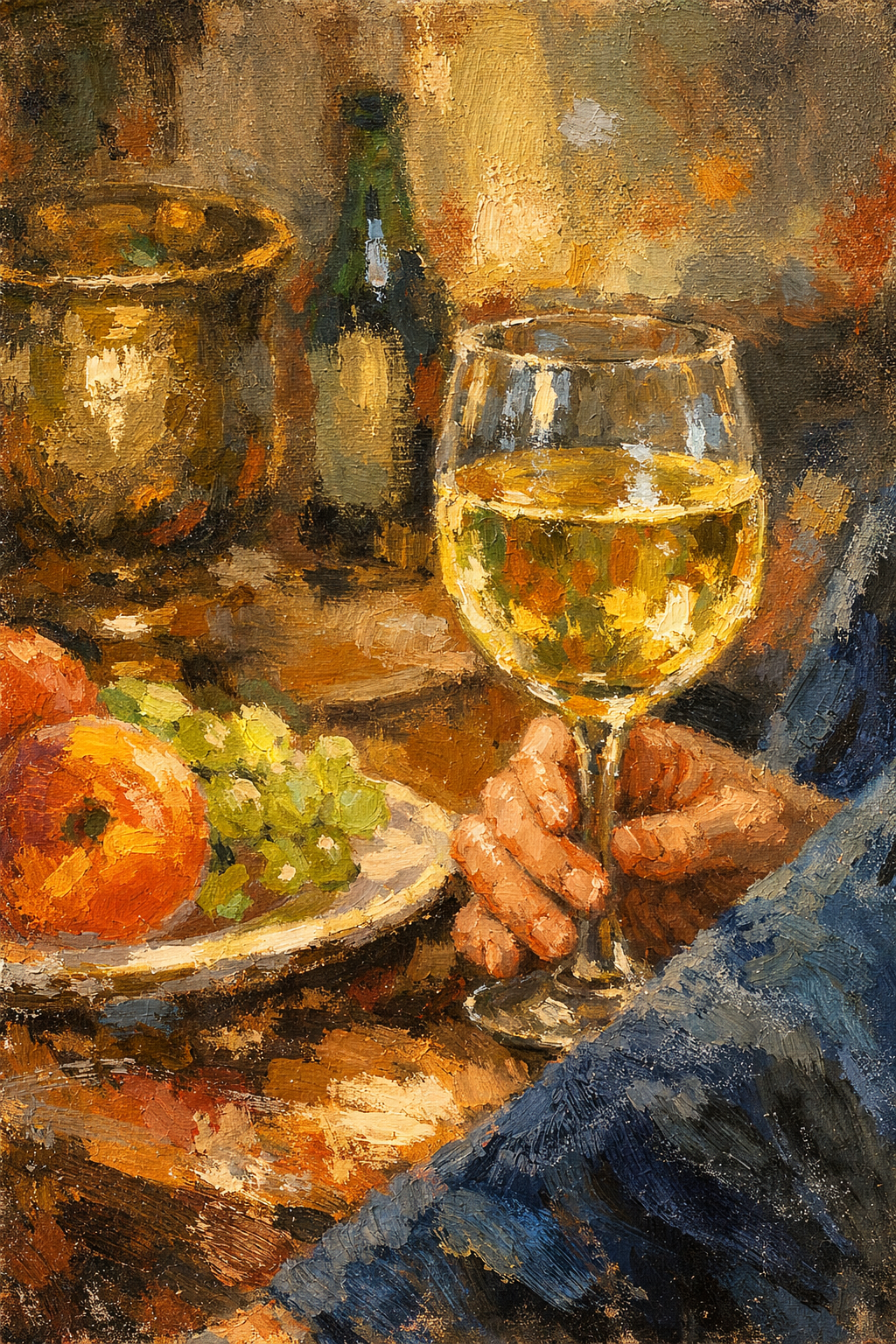
A Toast to Fleeting Moments
Critique
1. Introduction This work is a genre painting that combines still-life elements, depicting a hand holding a glass filled with white wine alongside fruit on a table. It expresses a warm scene evocative of intimate conversation or a moment of peaceful rest. While employing classical oil painting techniques, the bold brushwork vividly captures the instantaneous interplay of light and shadow. It is a lyrical piece that renders an ordinary everyday scene with rich colors and textures. 2. Description A hand extending from the lower right of the frame firmly holds a glass of golden, glowing white wine. Beside it, orange fruits and green grapes are served on a white plate, with a deep green bottle and a metallic vessel placed in the background. The figure wears blue clothing, which serves as an effective accent within the overall warm-toned color scheme of the screen. The light source is presumed to be from the upper right, creating strong highlights on the glass and fruit surfaces and casting deep shadows on the table. 3. Analysis In terms of composition, the hand and glass in the lower right are emphasized as the foreground, leading the viewer's gaze toward the still-life objects in the back with a sense of depth. Color-wise, the combination of the wine's yellow, the fruit's orange, and the clothing's blue brings vitality and harmony to the frame. The heavy impasto and rough yet precise brushwork simultaneously express the presence of matter and the atmosphere. The transparency of the glass reflecting light contrasts beautifully with the warmth of the hand. 4. Interpretation and Evaluation This work contemporaneously reconstructs the traditional theme of a "dining table scene" through an extremely sensory expression. The approach of capturing subjects as spots of light or blocks of color, eschewing meticulous detail, embodies the free creative spirit since Impressionism. In particular, the depiction of light passing through the wine glass is outstanding, successfully fixing the complex brilliance woven by liquid and glass. This space, where human warmth and the silence of still-life coexist, is full of originality that evokes rich narratives for the viewer. 5. Conclusion What initially appears to be casual brushwork is actually based on extremely delicate calculation in distinguishing between illuminated areas and those submerged in shadow. This powerful touch provides the static scene with a pulsating sense of life. The realism, making one feel as if the aroma of wine is wafting through, is a result of the artist's excellent sensitivity and solid technique. The initial visual impact has been sublimated through detailed analysis into an understanding of the deep affection and insight the artist poured into the subject.
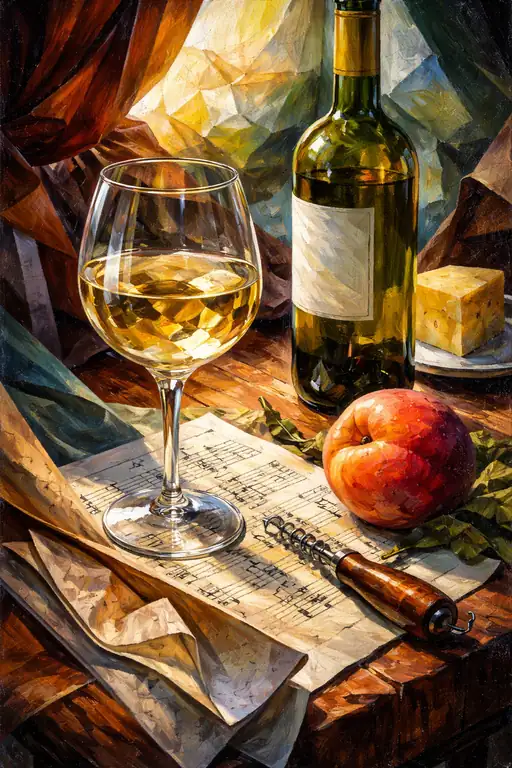 A Solitary Toast to the Setting Sun
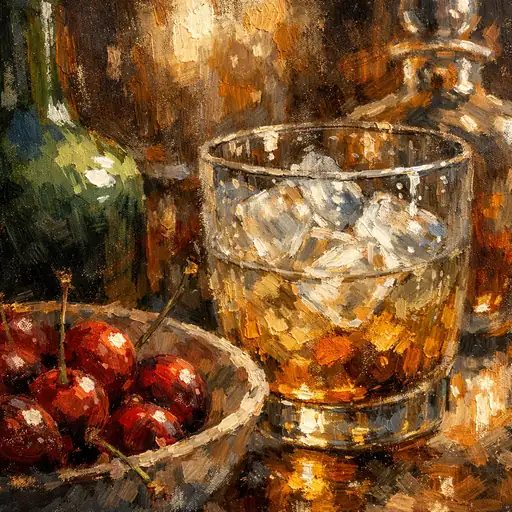 Amber Reflections of Time
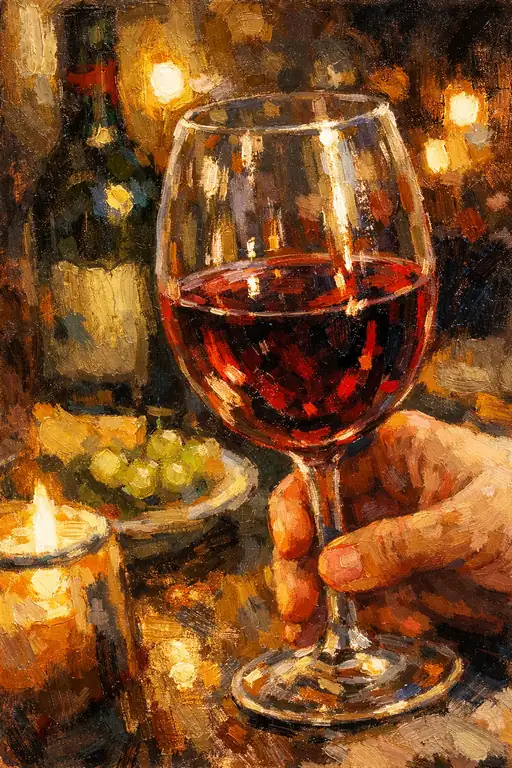 Echoes of a Crimson Evening
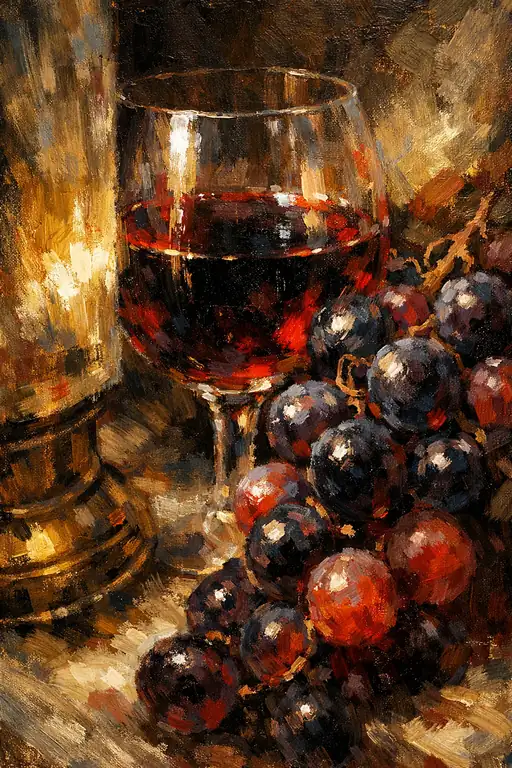 Crimson Nectar of the Night
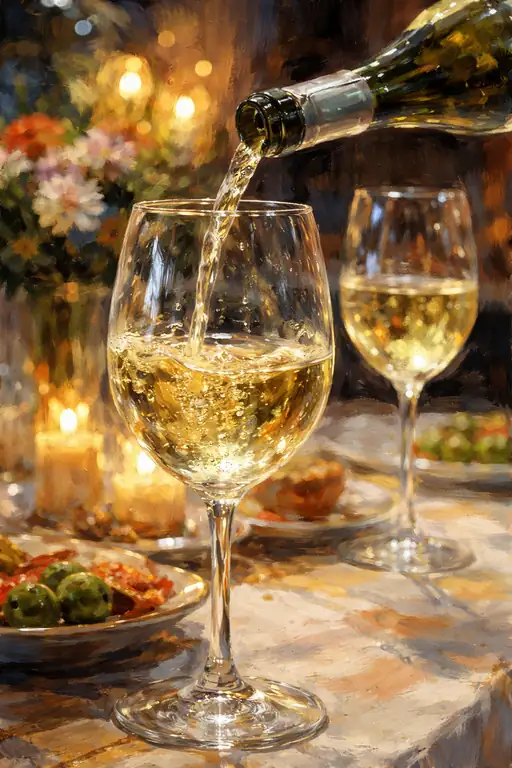 A Toast to the Evening Glow
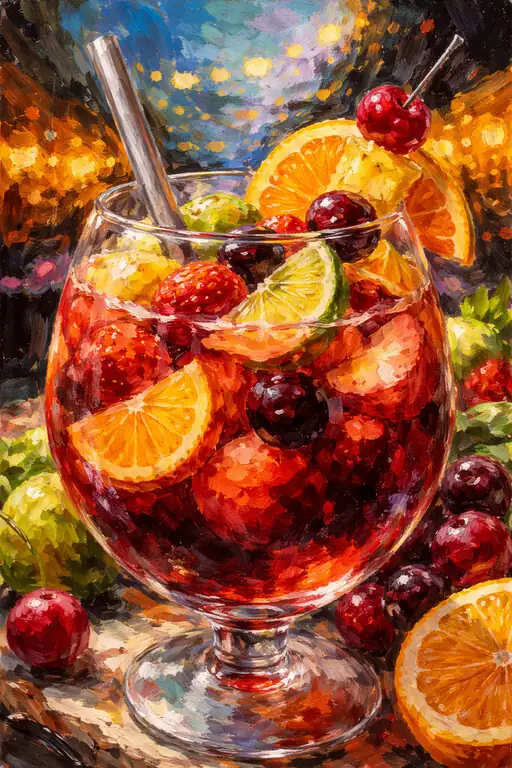 A Midsummer's Vibrant Elixir
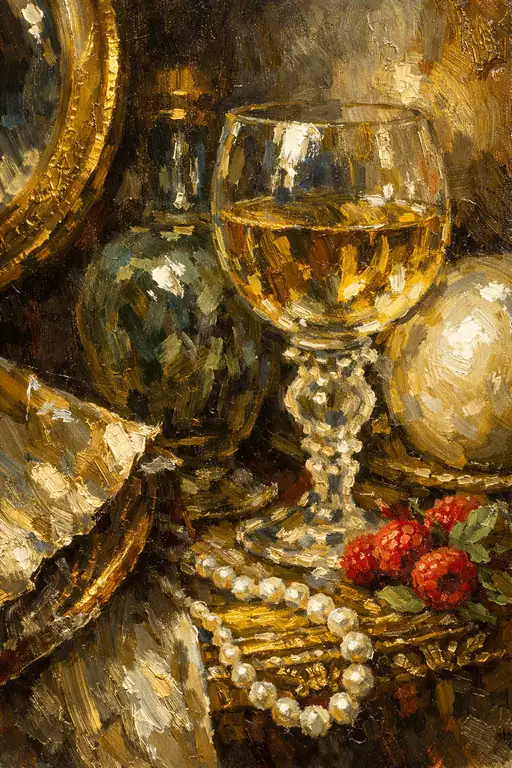 Lustrous Dreams on a Velvet Table
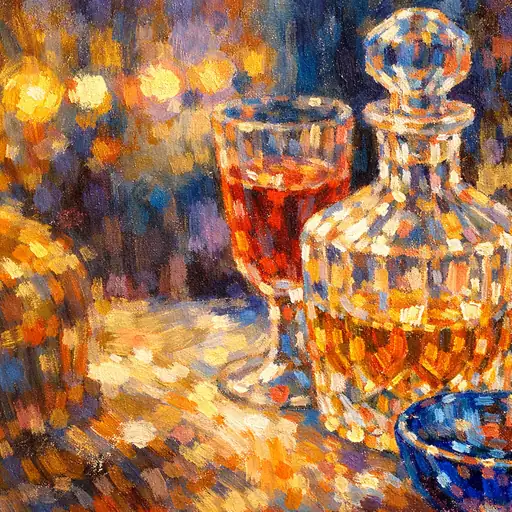 Reflections in Amber Glass
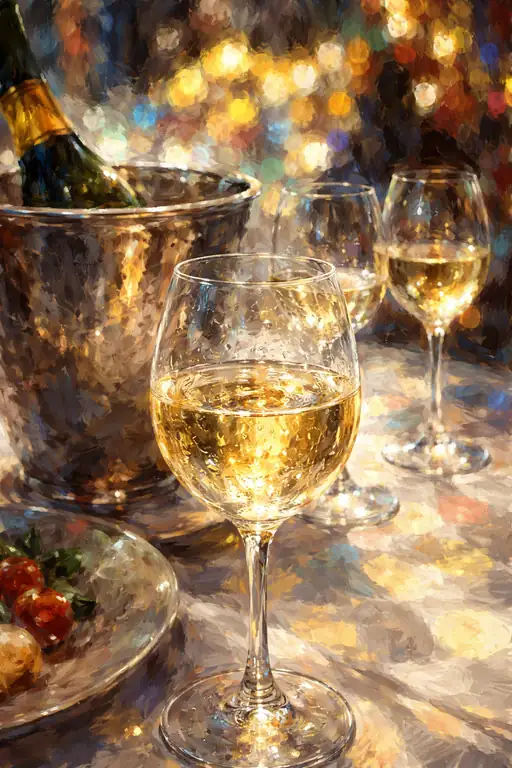 Embrace of the Emerald Night
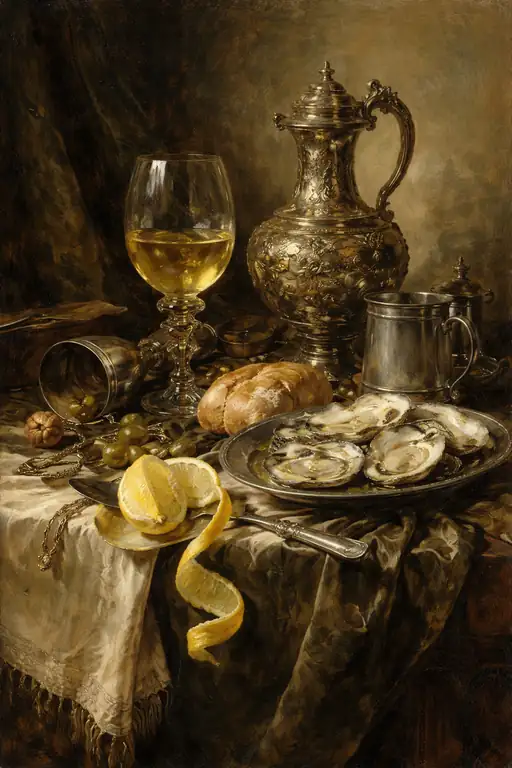 The Fleeting Feast