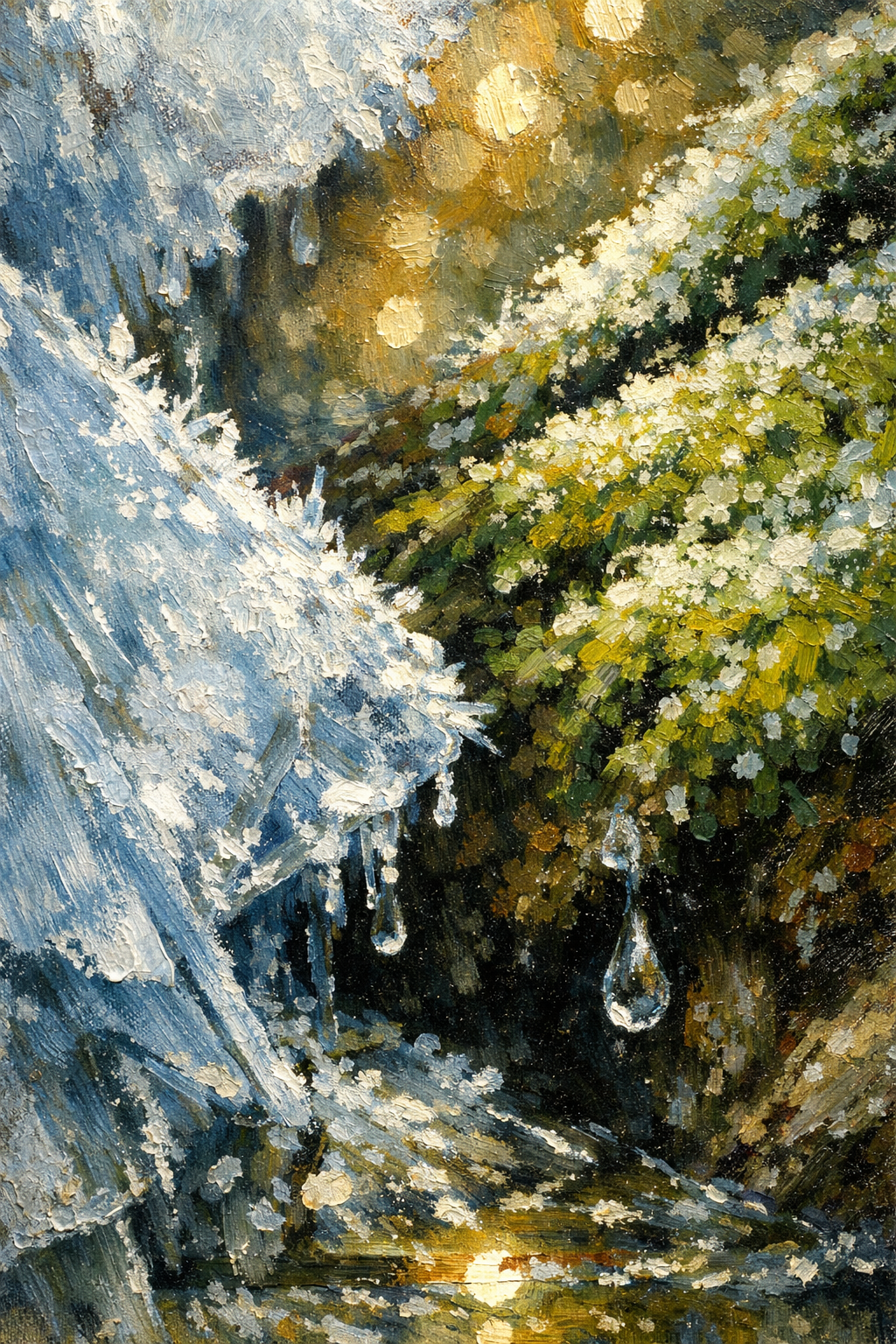
Frozen Tears of the Mountain
Critique
1. Introduction This vertical oil painting captures the dynamic moment of a winter thaw, focusing on the interplay between crystalline ice and vibrant greenery. The composition juxtaposes heavy, frozen structures with delicate foliage and clear, falling water droplets. Through its masterful use of impasto and light, the work explores the transition from a state of frozen stasis to liquid motion. This critique analyzes the painting's formal elements and its evocative representation of nature's cyclical changes. 2. Description The left side of the canvas is dominated by a large, jagged formation of white and pale blue ice, rendered with thick, tactile brushstrokes. Adjacent to this, on the right, dense green foliage with bright yellow highlights suggests the resilience of life beneath the winter's grip. Several large, translucent water droplets are suspended in mid-air or hanging from the ice and leaves, catching the light. The background is filled with warm, golden tones that suggest sunlight filtering through a cool atmosphere. 3. Analysis The artist employs a vigorous impasto technique to create a physical sense of depth and texture, particularly in the ice formation. This contrasts with the smaller, more rhythmic dabs of color used for the foliage, which create a dappled light effect. The verticality of the composition is reinforced by the downward trajectory of the ice and droplets, guiding the viewer's eye through the scene. The color palette balances the cool, stark whites and blues against the warm, earthy greens and golds. 4. Interpretation and Evaluation The painting successfully conveys a sense of hope and renewal, as the melting ice reveals the life-affirming green of the plants. The technical challenge of representing transparent water and translucent ice through the opaque medium of oil paint is handled with exceptional skill. The use of light to unify the scene creates a luminous quality that elevates the subject matter beyond simple landscape documentation. The composition is both structurally sound and emotionally resonant, capturing a fleeting natural phenomenon. 5. Conclusion This work is a powerful testament to the beauty of natural transitions, blending strong textural presence with a delicate handling of light. The contrast between the rigid ice and the fluid droplets creates a compelling visual narrative of change. Through its expressive brushwork and sophisticated color harmony, the painting offers a deeply sensory experience of the winter season. My initial focus on the coldness of the ice shifted to a warmer appreciation for the vitality and light emerging from the thaw.
Same Subcategory
 A Flash of Azure in the Quiet Wood
Similar Artworks
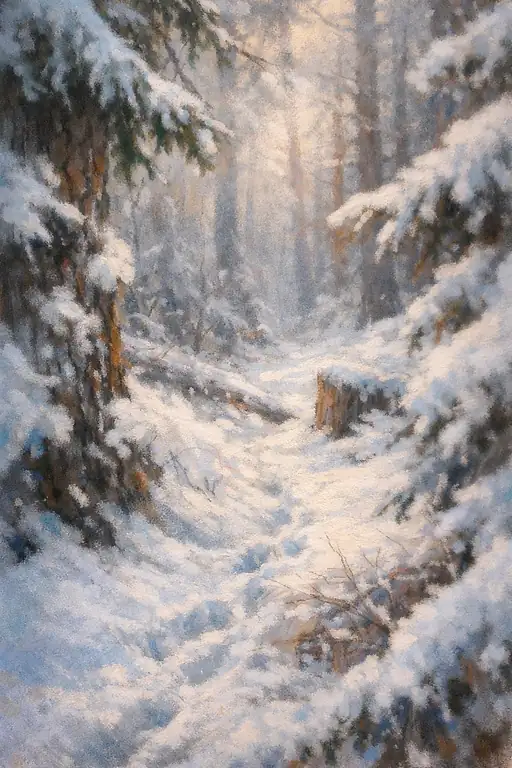 Snowy Path Through the Pines
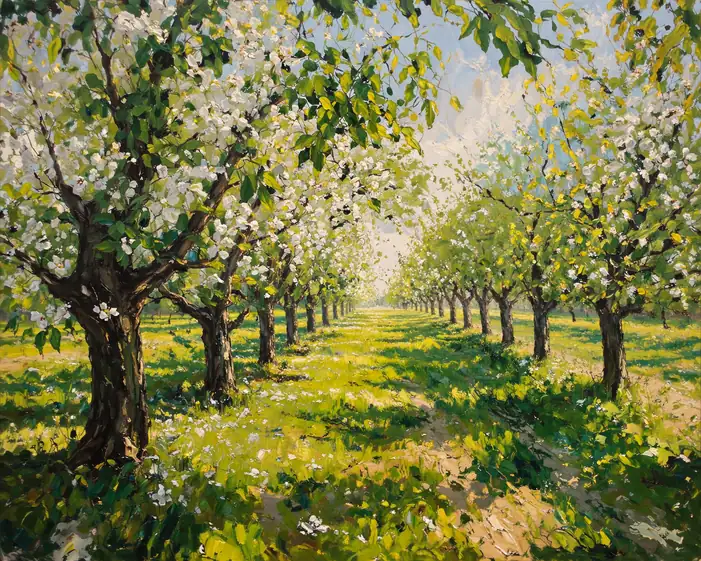 Eternal Promise of the Blossoming Path
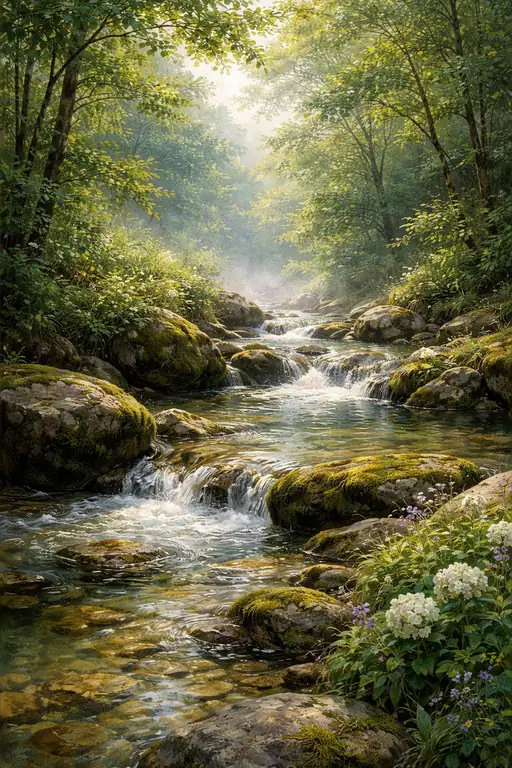 Sanctuary of the Emerald Murmurs
 Golden Memories of the Oak
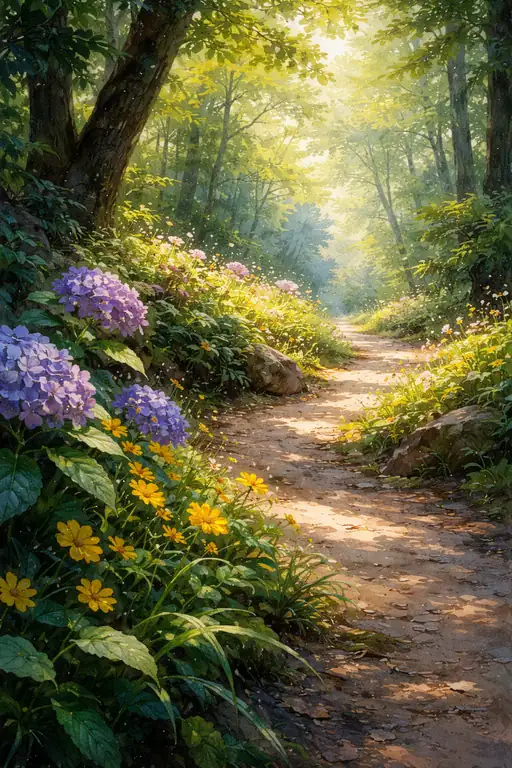 Whispers of the Sunlit Canopy
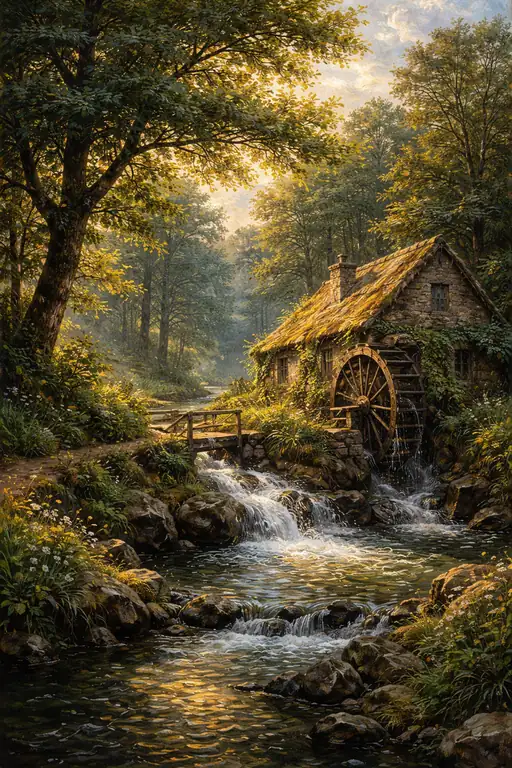 Sanctuary of the Sunbeams
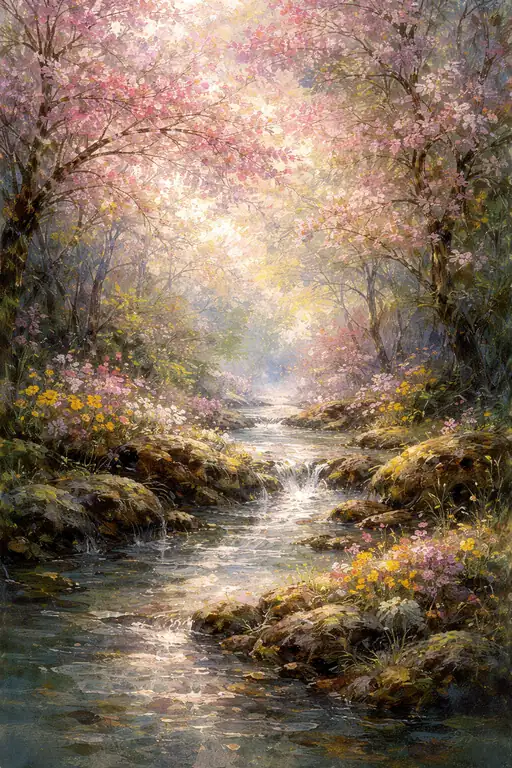 Whispers of the Spring Creek
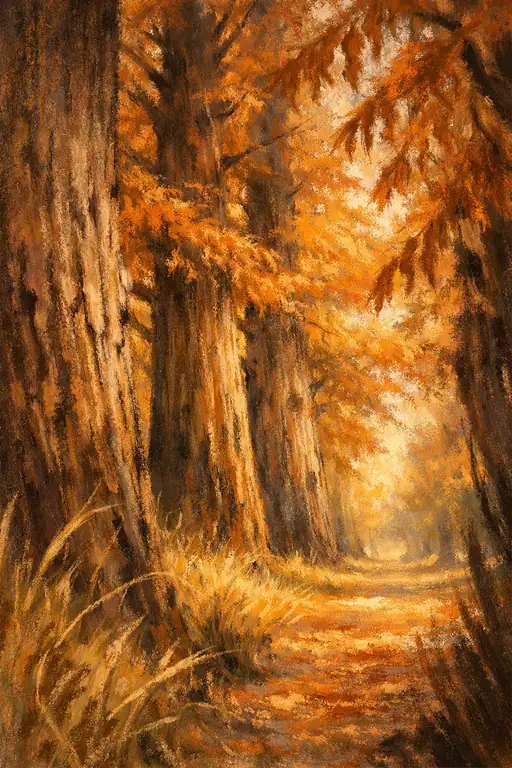 Golden Path to Solitude
 Whispers of the Misty Rain
 Stillness Broken by the Rippling Hunt