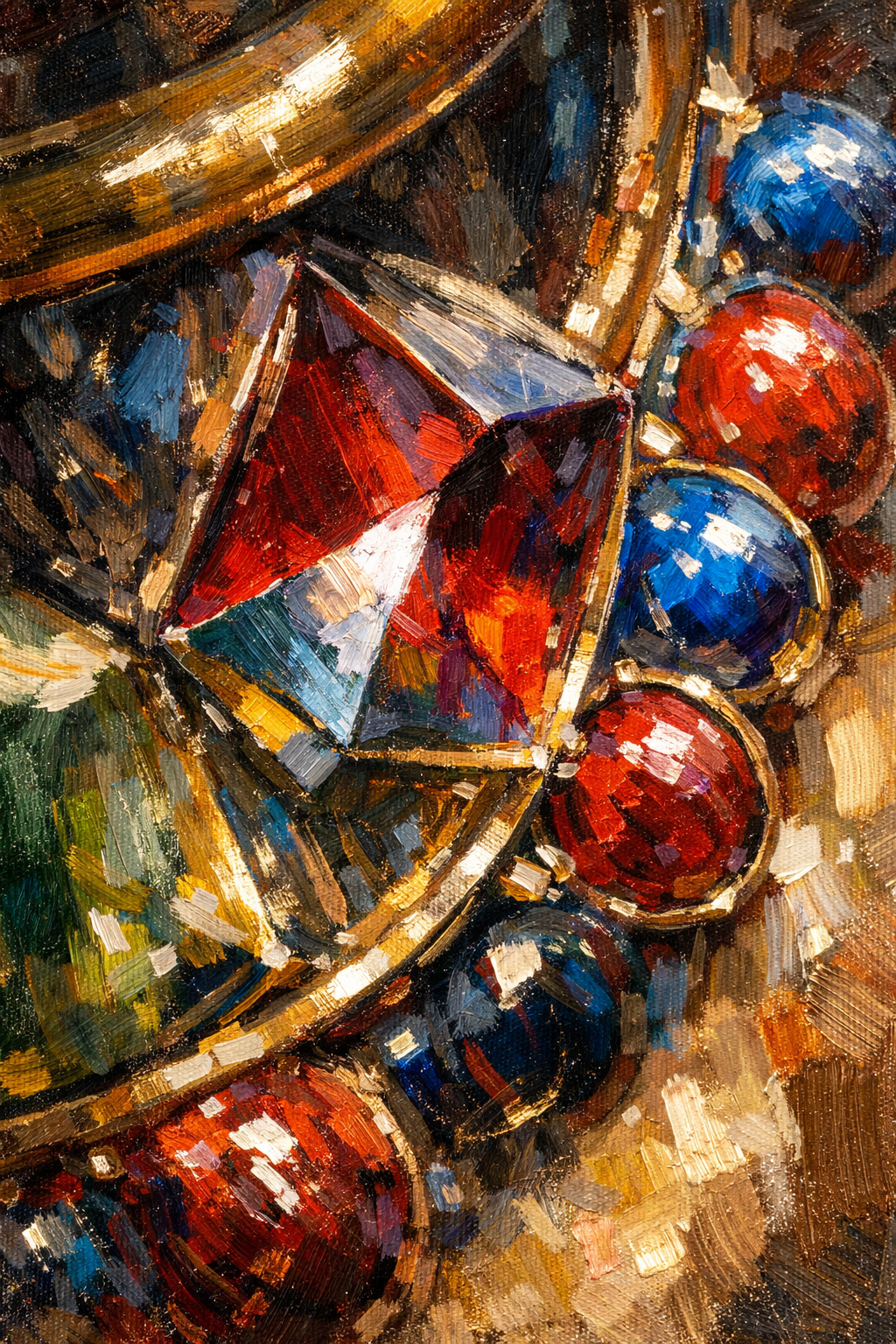
Tears of the Crown
Critique
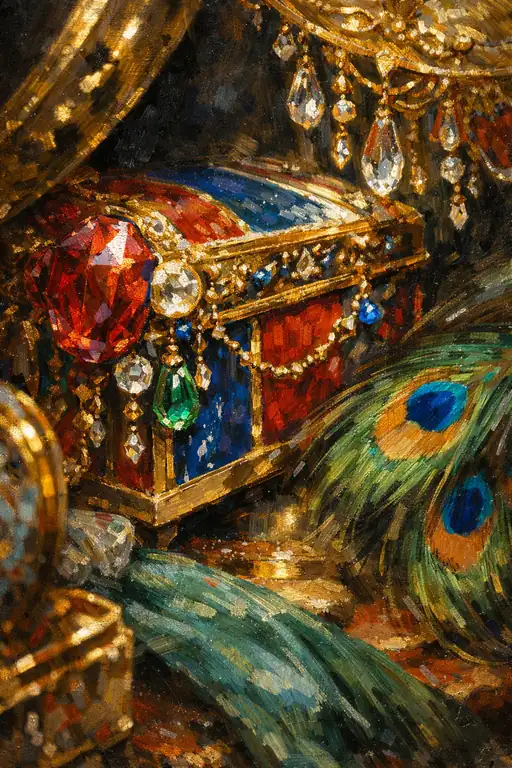
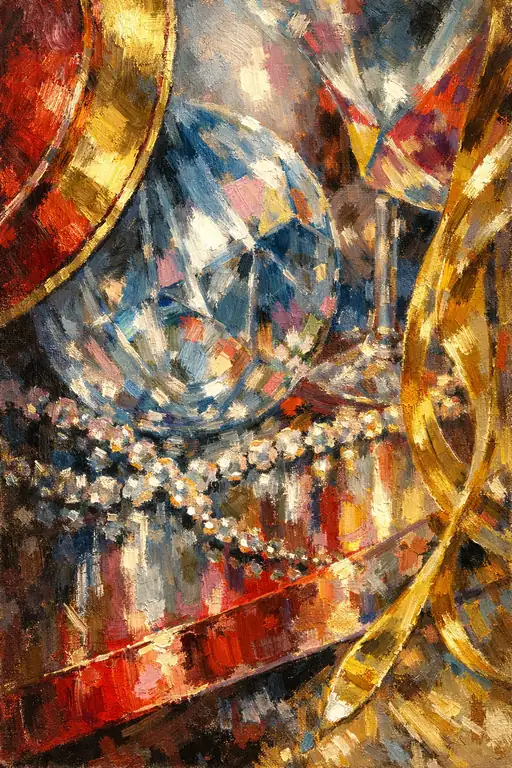
1. Introduction This still life painting captures the dazzling light of gemstones and the heavy texture of metal from an extremely close-up perspective. The entire canvas is filled with decorative elements, symbolically representing the pinnacle of material beauty. Rather than meticulously copying every detail, the artist reconstructs the chaotic reflection of light using fragmented brushstrokes to present visual brilliance directly. This bold composition succeeds in portraying the vitality of light itself, transcending the mere external appearance of objects. 2. Description At the center sits a large, multi-faceted red gemstone, where hues of red, white, and blue intersect complexly within its interior. Surrounding this central gem are spherical ornaments of deep blue and red, arranged alternately and secured in golden settings. Curving metallic frames with the luster of gold leaf are positioned at the top and left of the frame. The background and interstices are interspersed with strokes of ochre and white, giving the overall impression that the entire scene is bathed in golden light. 3. Analysis Formally, the accumulation of short brushstrokes in the depiction of light brings a dynamic rhythm and sparkle to the composition. Sharp highlights of white and pale yellow are placed on the metallic surfaces, while colors close to complements are used in the gemstone's facets to heighten visual saturation. The impasto technique emphasizes the hardness of the gems and the mass of the metal through physical paint build-up. The curved compositional lines create decorative elegance and effectively focus the viewer's attention. 4. Interpretation and Evaluation The work can be evaluated as an expression of the mystical communion between light and matter, transcending the simple depiction of jewelry. By powerfully portraying how natural light resides within artificial objects like gems and precious metals, it breathes new life into the still life genre. The artist's superior color sense successfully conveys the depth of matter through subtle chromatic variations. It is a highly original and accomplished work that reinterprets traditional beauty through modern painterly techniques. 5. Conclusion Initially, one is overwhelmed by the decorative splendor, but further observation reveals that each brushstroke is a necessary placement to capture light. The painting conveys a strong will to purify and fix the phenomena of light caught by our eyes through the medium of paint. This microscopic world woven from light and color sharpens the viewer's senses and invites a reconsideration of the roots of beauty. Ultimately, the work stands as an exceptional artistic achievement that eternally preserves the brilliance of matter through superior formal power.
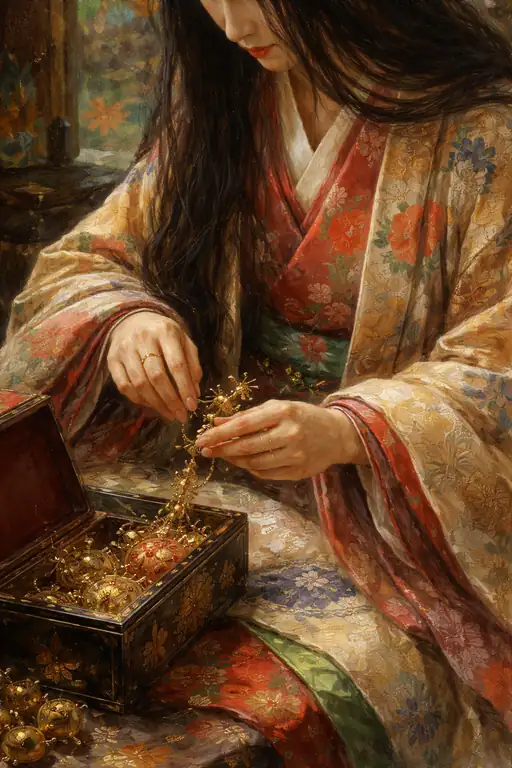 Treasures Touched by Time
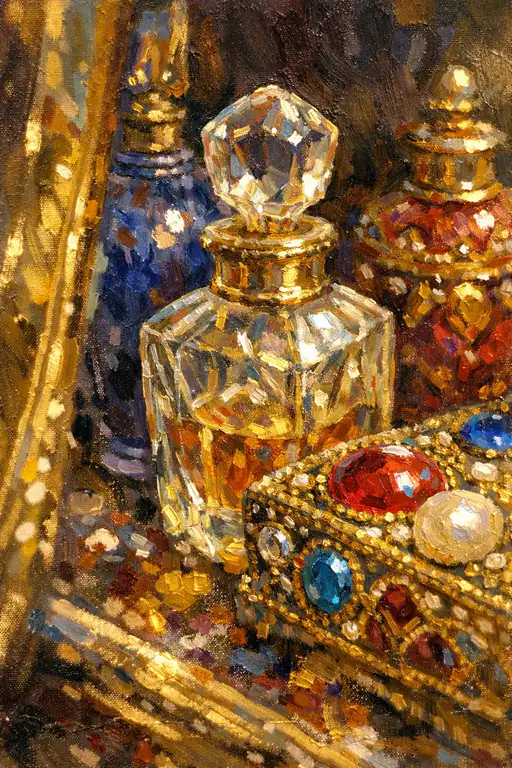 Echoes of Forgotten Elegance
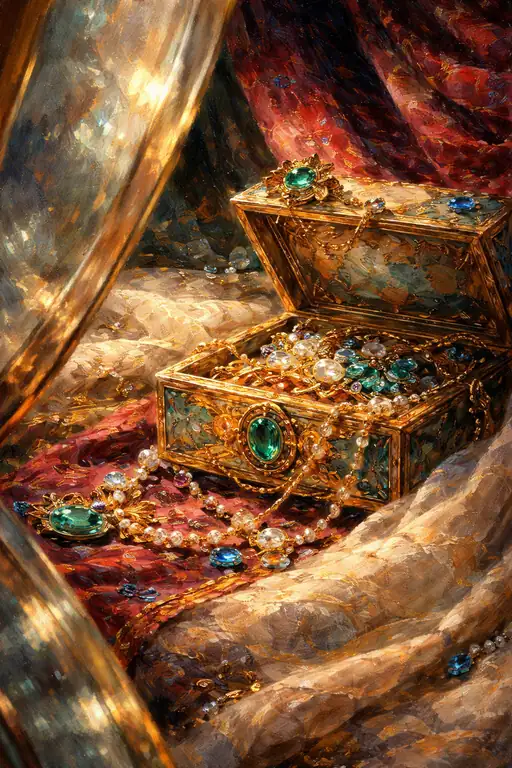 The Velvet Treasury's Secret
 The Weight of Abundance
 Decadent Splendor
 The Allure of Earthly Treasures
 Echoes of a Forgotten Treasury
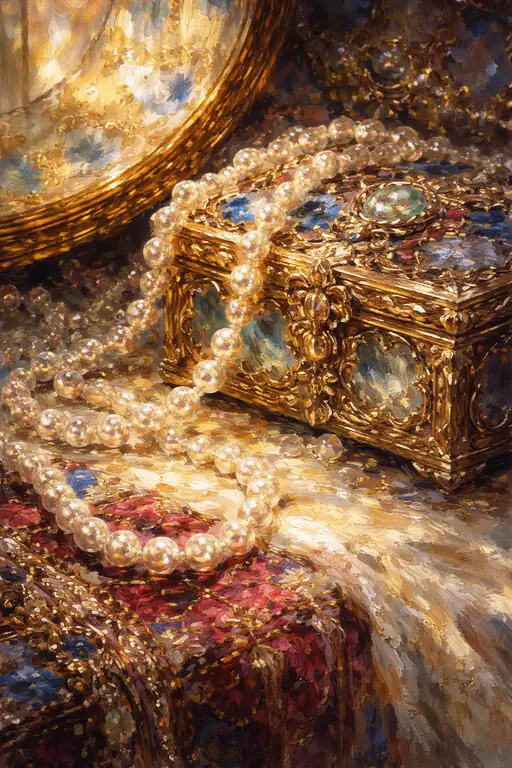 Luster of the Lost Century
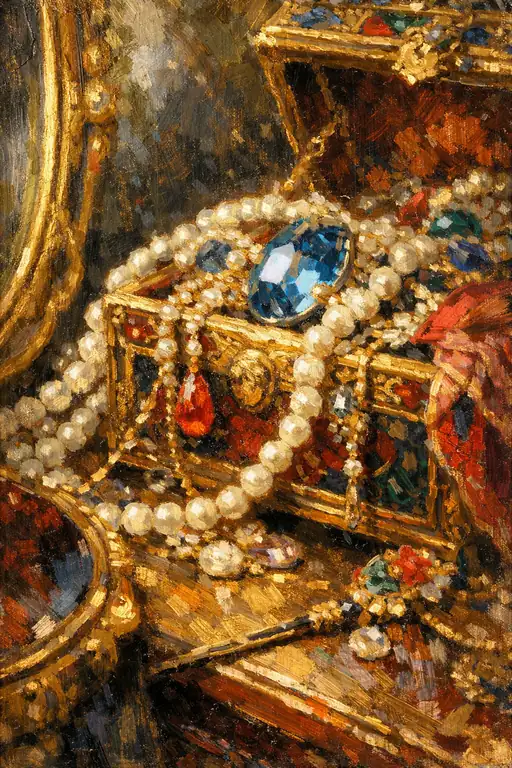 Melancholy of the Winding Path
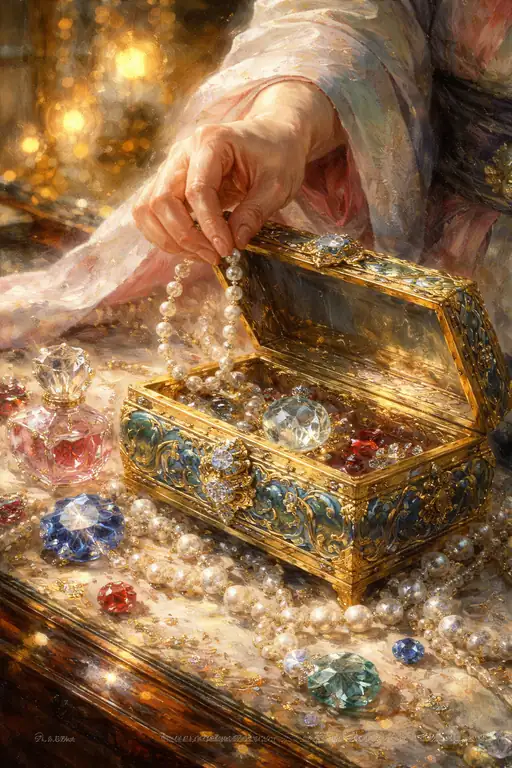 Treasures of a Forgotten Era
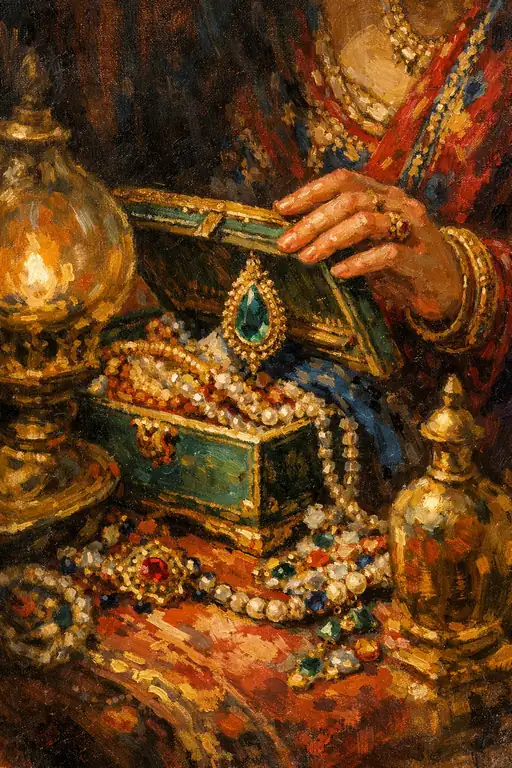 Gleaming Treasures in the Twilight
 Fragments of an Opulent Dream