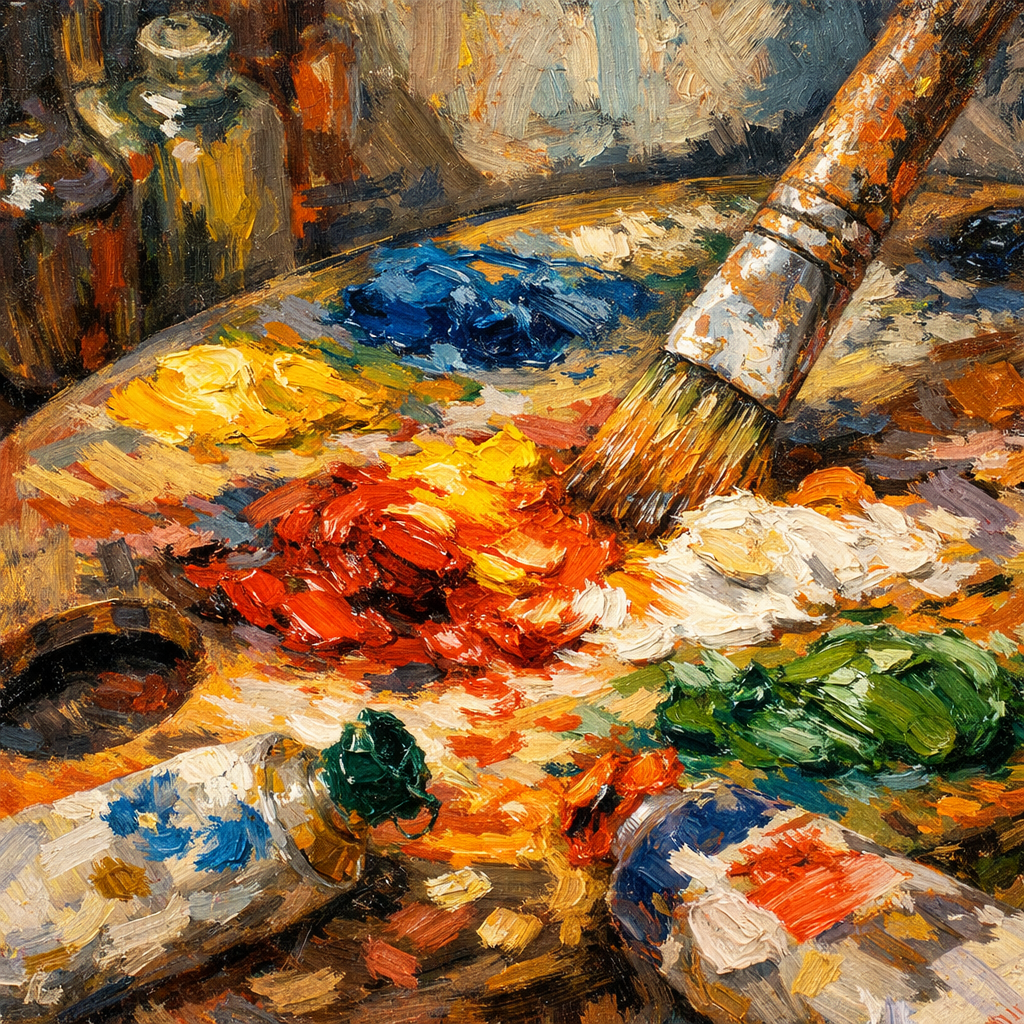
The Chaos from Which Dreams Are Born
Critique
1. Introduction This vibrant oil painting offers a self-reflexive look at the artistic process, depicting a close-up view of a painter's palette laden with thick, colorful pigments. The work celebrates the materiality of the medium itself, emphasizing the tactile quality of oil paint through extreme impasto. By focusing on the tools and materials of creation, the composition serves as a meditation on the act of painting, transforming a utilitarian object into a subject of profound visual interest. 2. Description The palette is covered with generous mounds of primary and secondary colors, including intense reds, vibrant yellows, deep blues, and fresh greens. A large, wooden-handled paintbrush is positioned in the upper right, its bristles thick with paint as if in the middle of a mixing stroke. Several squeezed paint tubes and glass jars of medium or solvent are visible in the periphery, all rendered with the same heavy, energetic brushwork that defines the central palette surface. 3. Analysis Technically, the painting is an exploration of pure texture and color interaction. The artist utilizes a palette knife and broad brushes to build up layers of paint, creating a three-dimensional surface that catches the light and casts small shadows. The primary colors are arranged in a dynamic, swirling pattern that suggests the movement of the artist's hand. The composition is deliberately chaotic yet balanced, with the diagonal of the paintbrush providing a strong directional line that organizes the surrounding explosion of color. 4. Interpretation and Evaluation The imagery suggests the raw potential and energy inherent in the early stages of artistic creation. The palette represents a field of possibilities where individual colors are about to be transformed into a finished work of art. The painting is highly successful in conveying the joy and physical intensity of working with oil paint, moving beyond mere representation to capture the "soul" of the material. The execution is masterful in its ability to maintain color purity despite the proximity of different hues on the palette. 5. Conclusion Initial observation of the piece provides a sensory rush of color and texture, but a deeper look reveals the artist's disciplined control over the seemingly chaotic surface. The way the light interacts with the thick ridges of paint gives the work a sculptural quality that changes depending on the viewing angle. Ultimately, the painting stands as a powerful tribute to the craft of painting, reminding the viewer that the materials themselves possess an inherent beauty and expressive power that rivals the subjects they are used to depict.
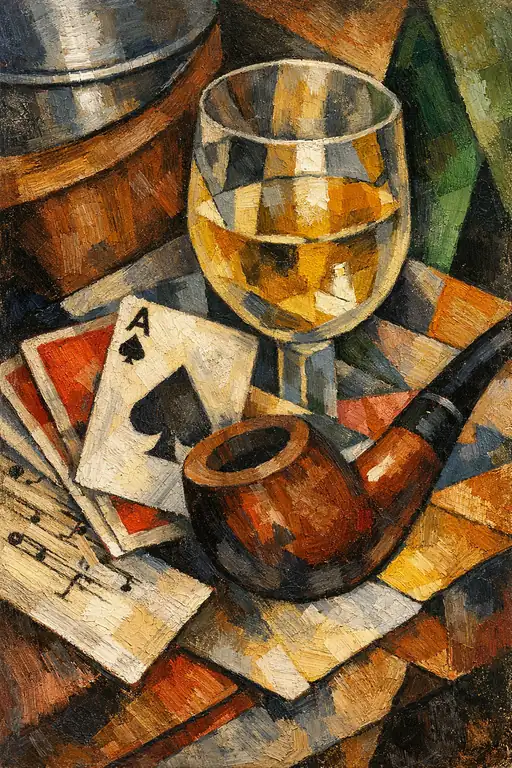 Fractured Memories of a Quiet Evening
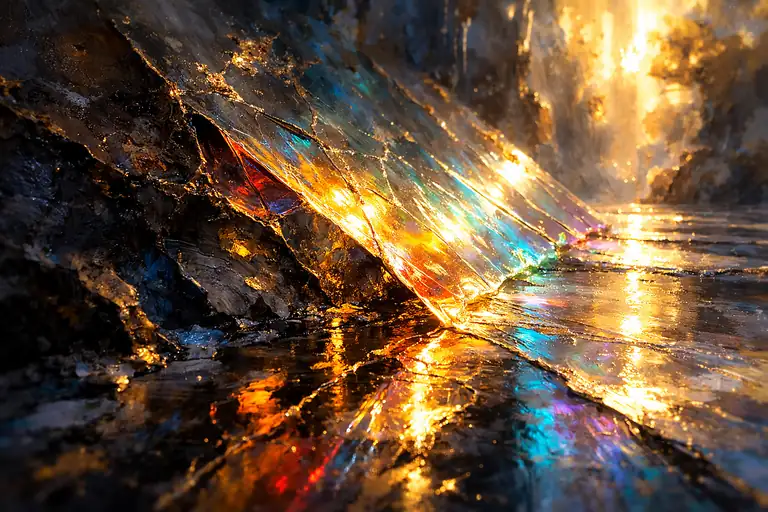 Shattered Prism Dreams
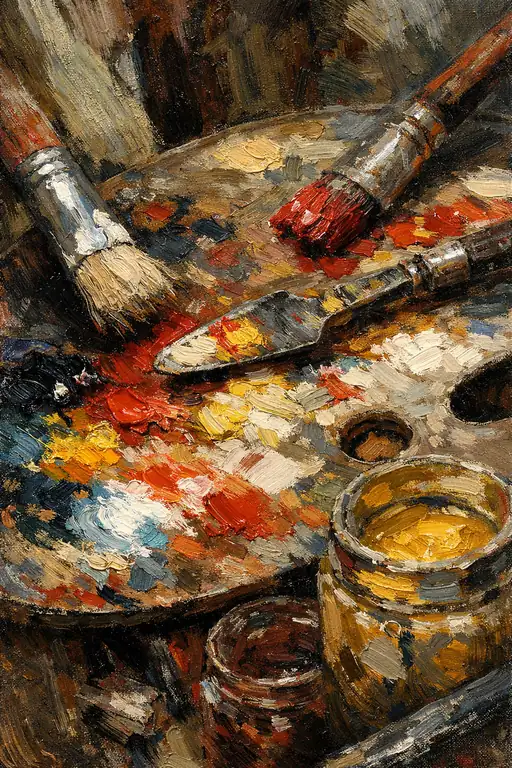 Heart of Creation
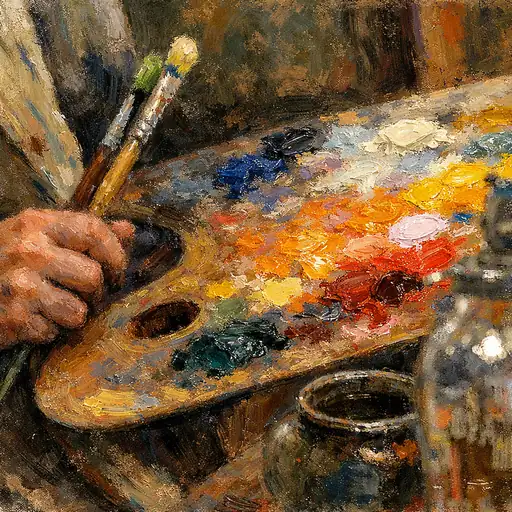 The Creator's Symphony in Impasto
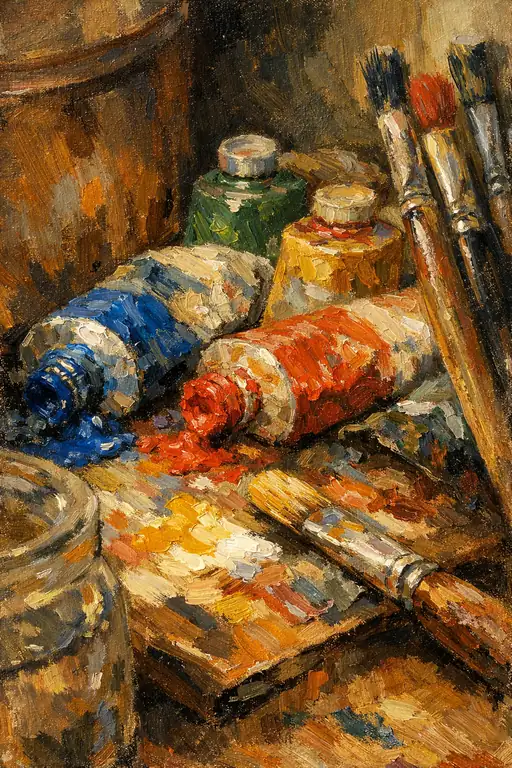 The Artist's Untamed Palette
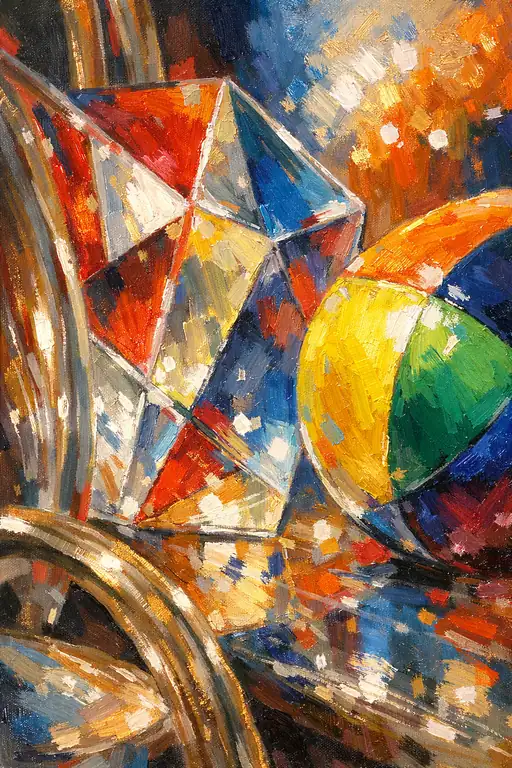 Fragments of a Fractured Reality
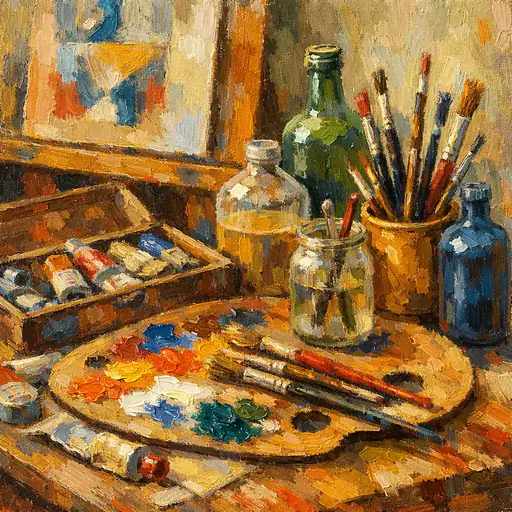 The Passion of the Impasto
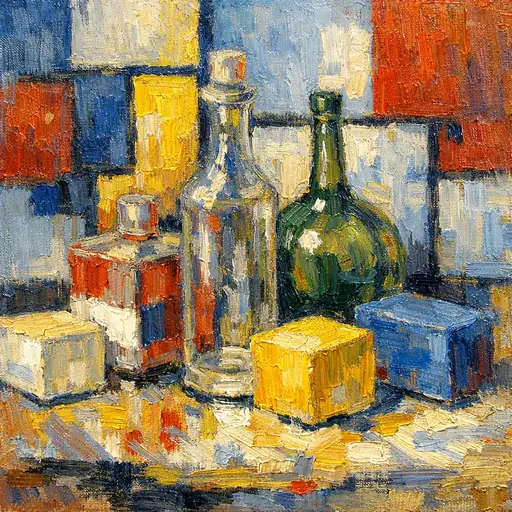 Shattered Reality: A Vibrant Dance of Cubes and Bottles
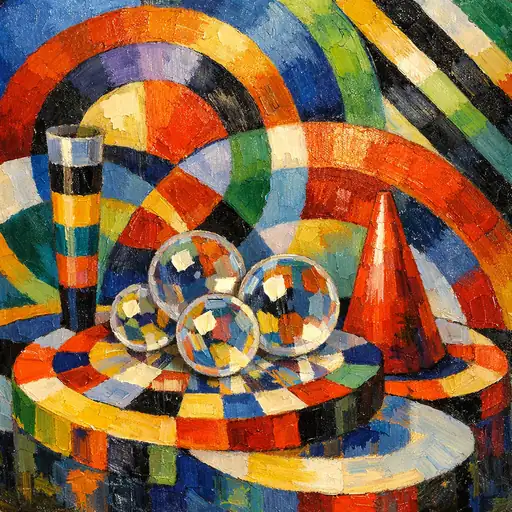 Mosaic Dreams of Spheres
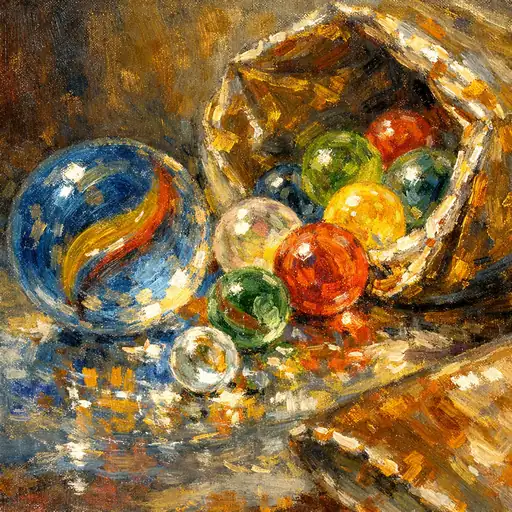 Spilling Dreams
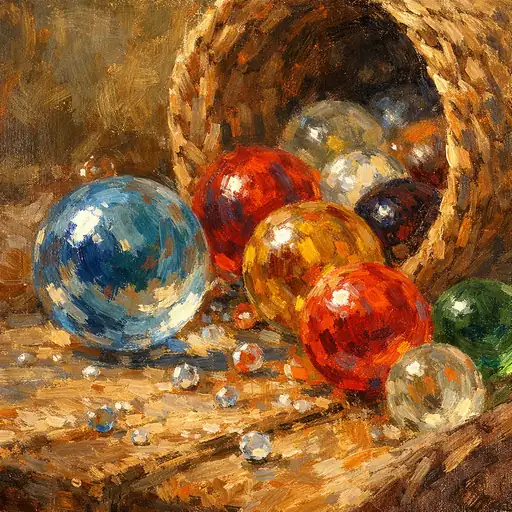 Spilling Dreams
 Reflections of a Forgotten Night