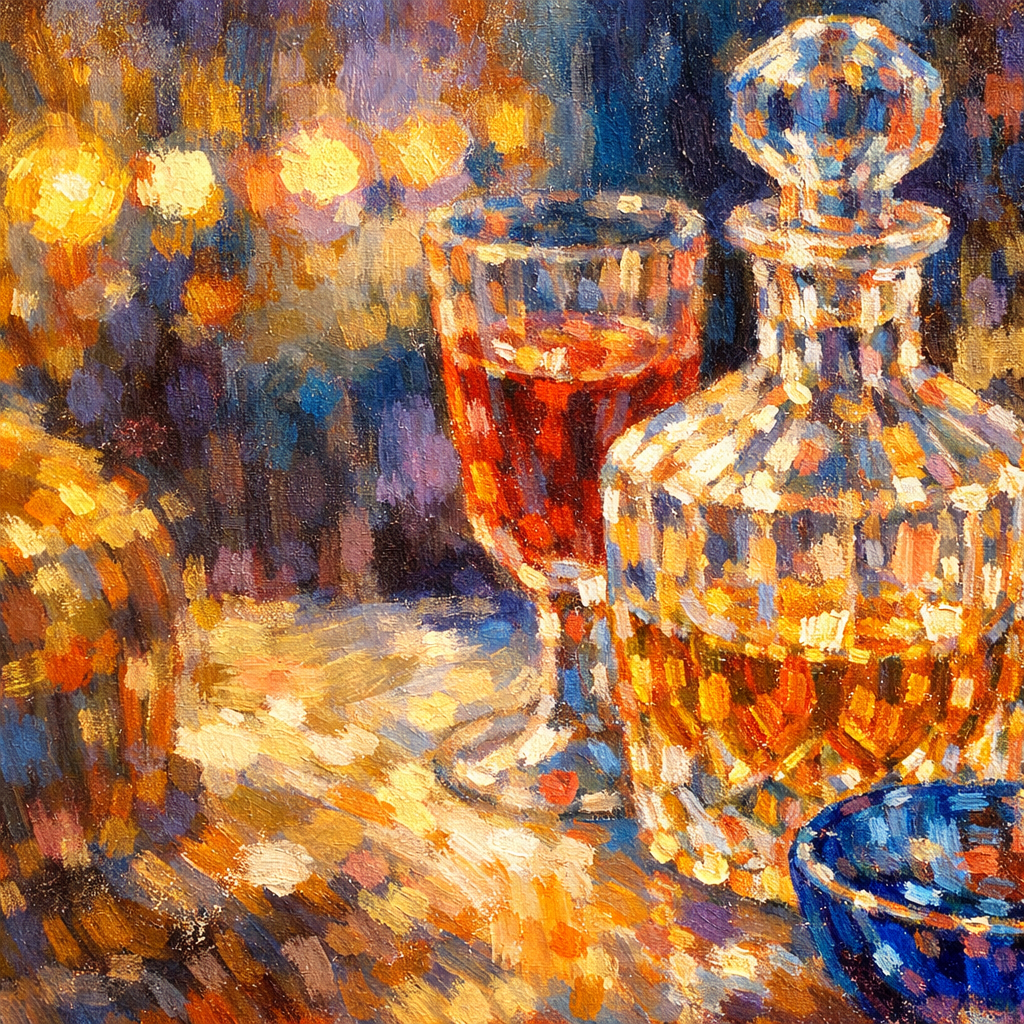
Reflections in Amber Glass
Critique
1. Introduction This Impressionist-style still life painting captures an intimate corner of an interior as evening falls, featuring elegant glassware and amber liquids. The entire canvas is alive with short, rhythmic brushstrokes that seem to fix light particles directly onto the surface, inviting the viewer into a warm and contemplative atmosphere. By skillfully merging vivid color with the transparency of glass, the work elevates the physical phenomena of refraction and reflection into a profound artistic expression. 2. Description Positioned slightly to the right of center is a glass decanter with intricate crystalline facets, filled with a glowing amber liquid. Beside it stands a wine glass containing a deep red spirit, its surface catching complex reflections from the surroundings. A small blue bowl in the bottom right corner provides a sharp color accent. The background consists of deep indigo tones, punctuated by blurred golden spots of light that evoke distant city lamps or flickering candles indoors. 3. Analysis The color composition relies heavily on the effective contrast between the warm ambers and oranges of the spirits and the cool indigo of the background. This complementary relationship ensures the central subjects emerge with striking clarity. Technically, each individual dab of paint remains distinct yet cooperates to define the hard texture of glass and the fluidity of the liquid. The pure white highlights on the decanter serve as focal points that provide both brilliance and a sense of three-dimensional form. 4. Interpretation and Evaluation The work can be interpreted as a symbol of domestic tranquility and the "intimate hour" shared in private. The background bokeh suggests a world beyond the window, emphasizing the stillness within. The painting is evaluated highly for its ability to treat light not as a mere decoration, but as a structural element that builds the form of the glassware. The artist窶冱 technical mastery in maintaining color purity while rendering complex textures is truly exceptional. 5. Conclusion At first glance, the painting offers a spontaneous and festive impression of dancing light. However, closer analysis reveals that the calculated color contrasts and the methodical layering of brushstrokes are what sustain its lyrical quality. By materializing light through a pointillist-like approach and bringing a musical rhythm to the still life genre, the artist has created a masterpiece that leaves a lasting, warm resonance in the viewer's heart.
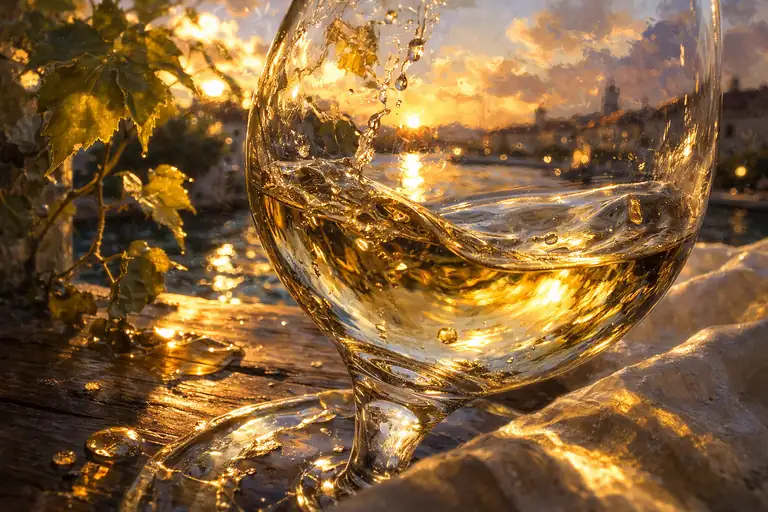 A Splash of Golden Twilight Memories
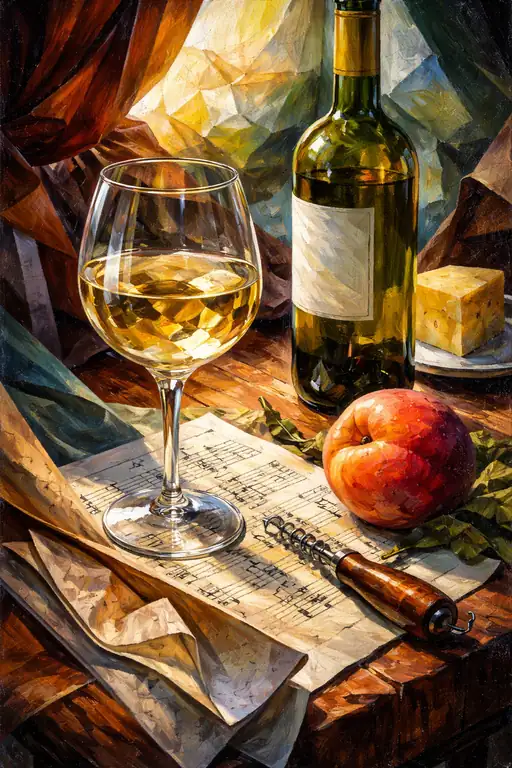 A Solitary Toast to the Setting Sun
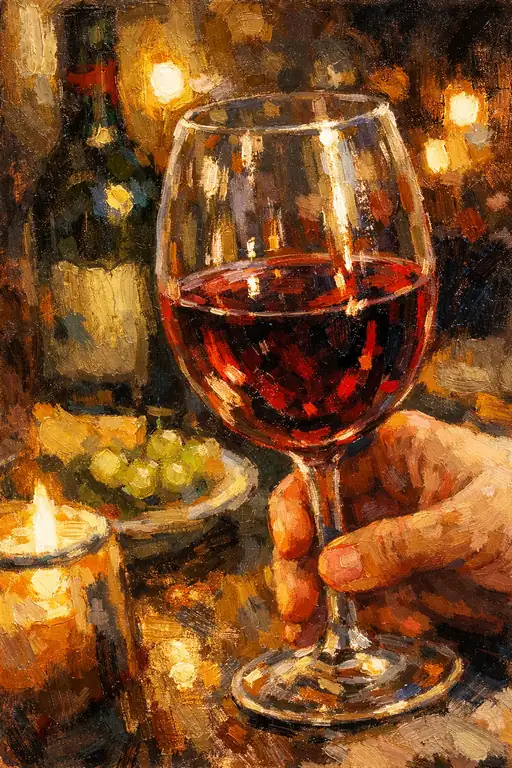 Echoes of a Crimson Evening
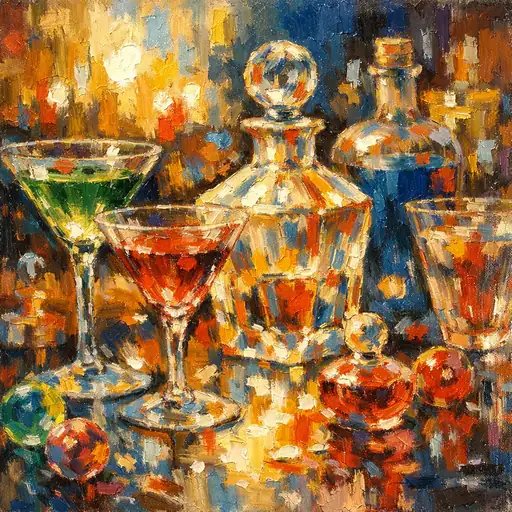 Symphony of Liquid Light
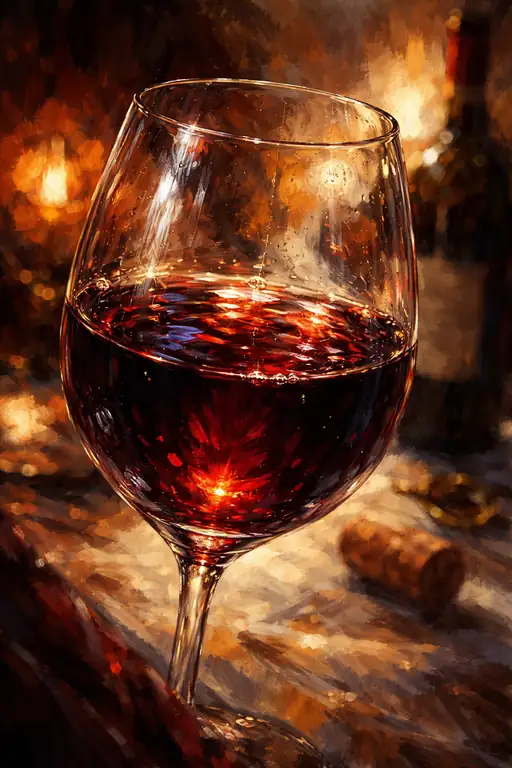 Crimson Wine Reflections
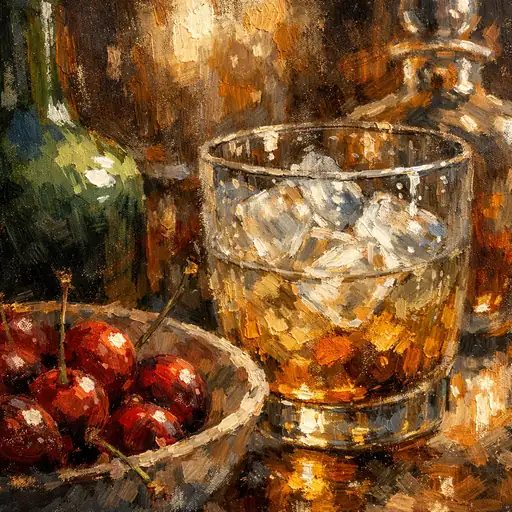 Amber Reflections of Time
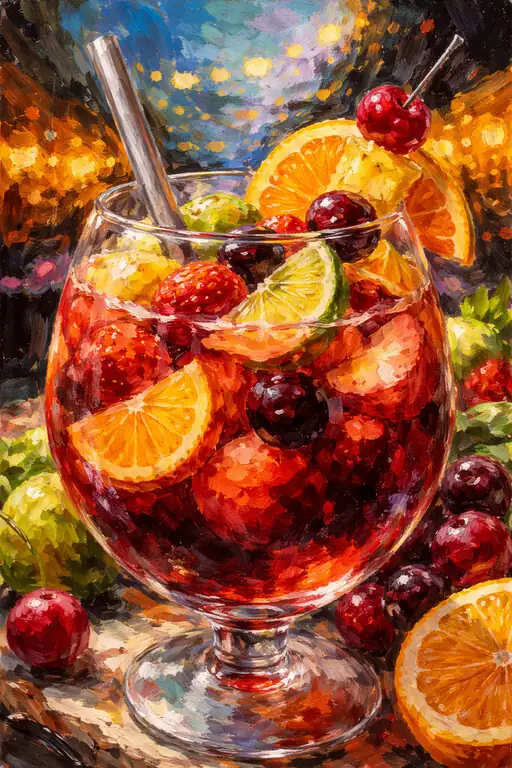 A Midsummer's Vibrant Elixir
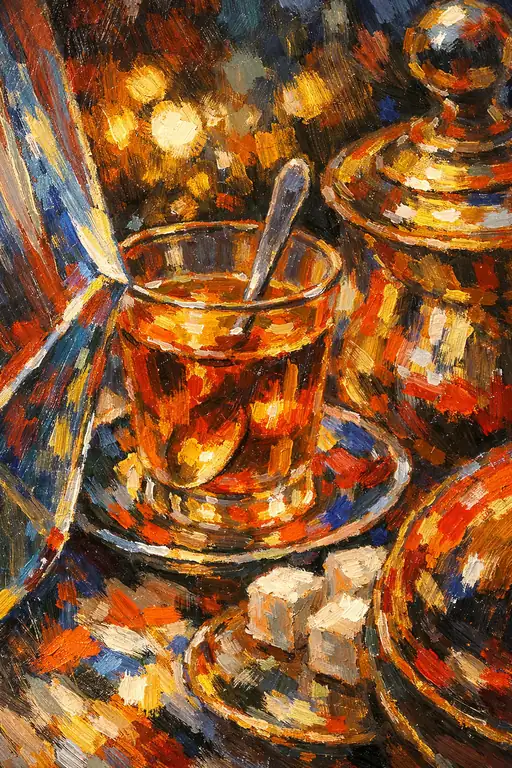 Golden Infusion
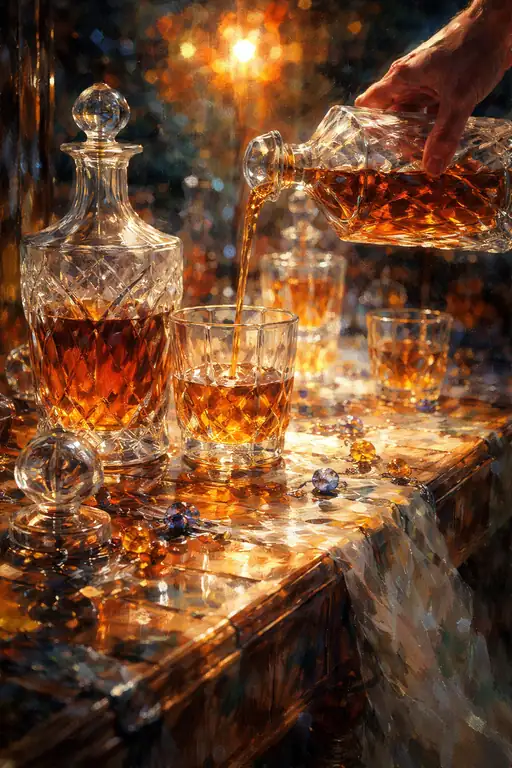 Pouring the Golden Hour
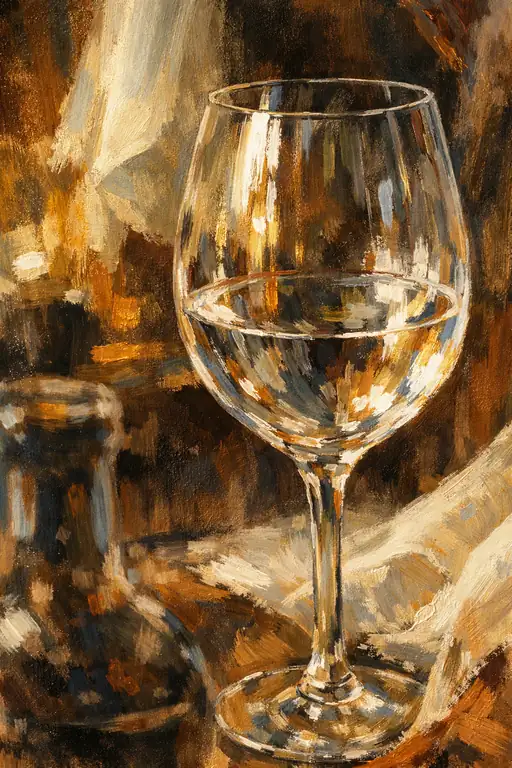 Amber Meditation
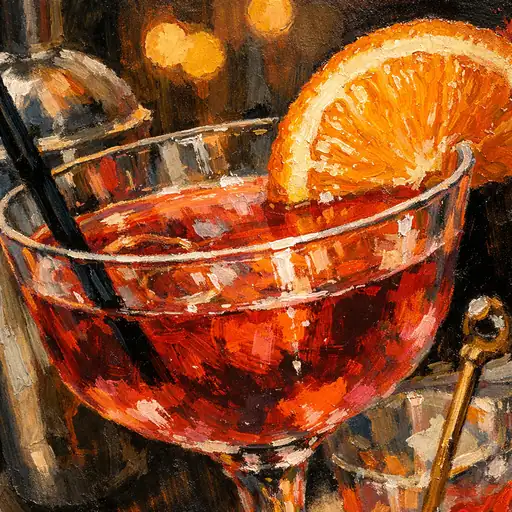 Liquid Embers of the Night
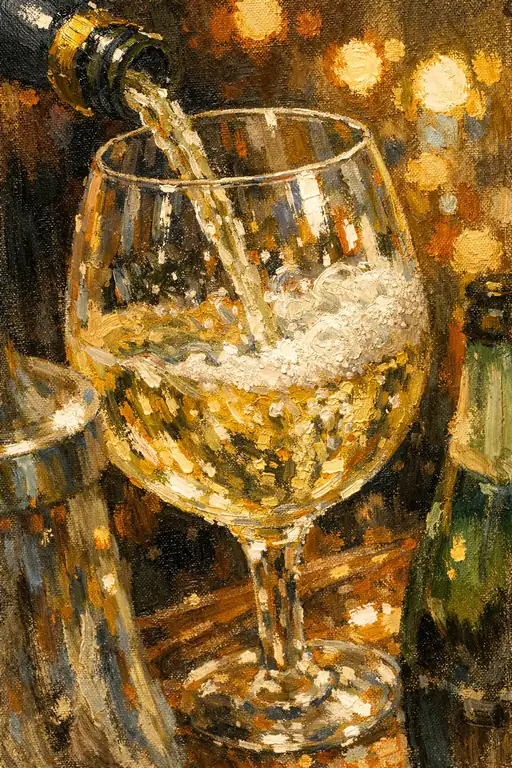 Effervescent Joy in Golden Hues