
Journey Through the Ice Fire
Critique
1. Introduction This oil painting presents a dynamic maritime scene featuring a stylized vessel navigating through turbulent waters. The work utilizes a rich, impasto technique that emphasizes texture and the physical presence of the medium. It effectively captures a fleeting moment where light and water intersect, creating a sense of immediate atmospheric intensity. The composition focuses on the structural forms of the boat as they clash with the surrounding environment. 2. Description The central subject is a boat-like structure, reminiscent of a folded paper vessel, rendered with thick, expressive brushstrokes. It is situated amidst dark, churning waves that reflect brilliant streaks of golden and white light from an unseen source above. Transparent droplets appear to fall from the edges of the vessel, suggesting melting ice or heavy spray. The background is composed of deep blues and blacks, contrasting sharply with the luminous highlights on the water and the boat's surfaces. 3. Analysis The artist employs a high-contrast color palette, primarily using deep ochres, radiant whites, and cool navy tones to establish depth and volume. The impasto application creates a sculptural quality, where the physical height of the paint mimics the crests of the waves and the jagged edges of the boat. Rhythmic, diagonal strokes guide the eye from the upper left light source down to the splashing water at the bottom. This directional movement reinforces the sense of motion and the force of the elemental struggle. 4. Interpretation and Evaluation The work can be interpreted as an exploration of resilience and fragility, symbolized by the delicate form of the boat facing a powerful sea. The technical execution shows a sophisticated understanding of light reflection and the tactile properties of oil paint. The use of dripping elements adds a layer of realism to an otherwise semi-abstract representation of water. The composition is balanced and successfully conveys the overwhelming scale of the ocean relative to the small, navigating subject. 5. Conclusion Upon initial viewing, the painting appears to be a chaotic arrangement of color and texture. However, a closer examination reveals a carefully structured study of light and form in motion. The piece excels in its ability to translate the energy of a stormy sea into a tangible, painterly experience. It remains a compelling example of how traditional techniques can evoke profound environmental narratives through abstraction and light.
Same Subcategory
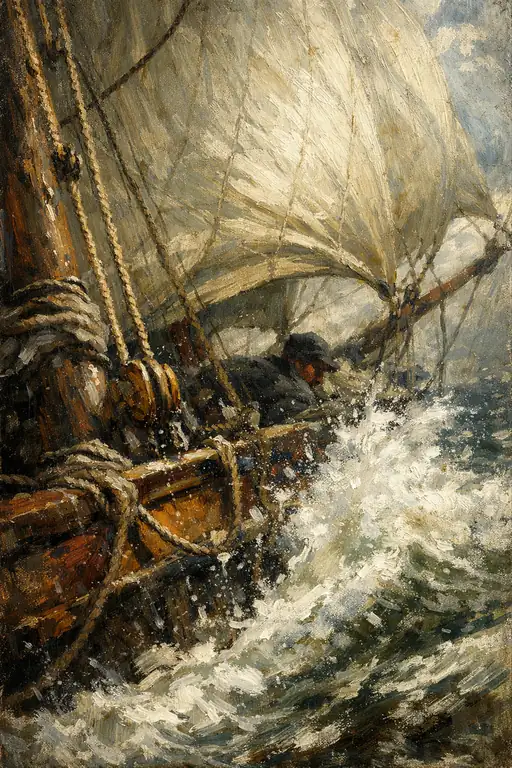 The Sailor's Stormy Heart
Similar Artworks
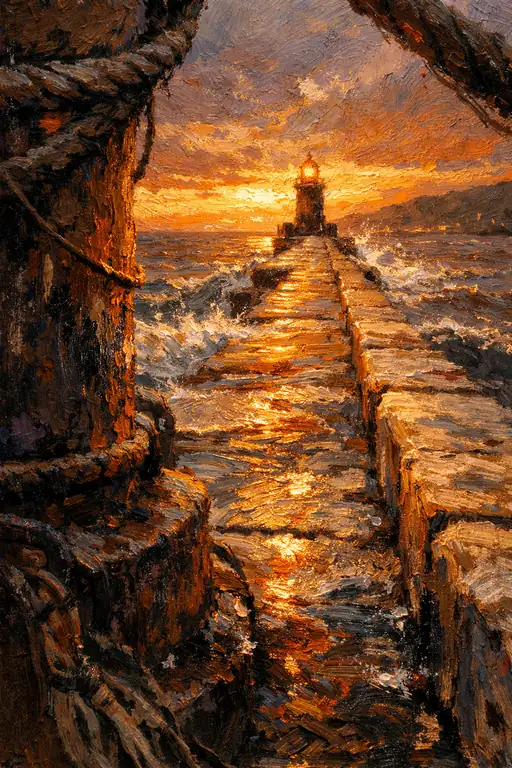 Unwavering Hope Amidst the Raging Seas
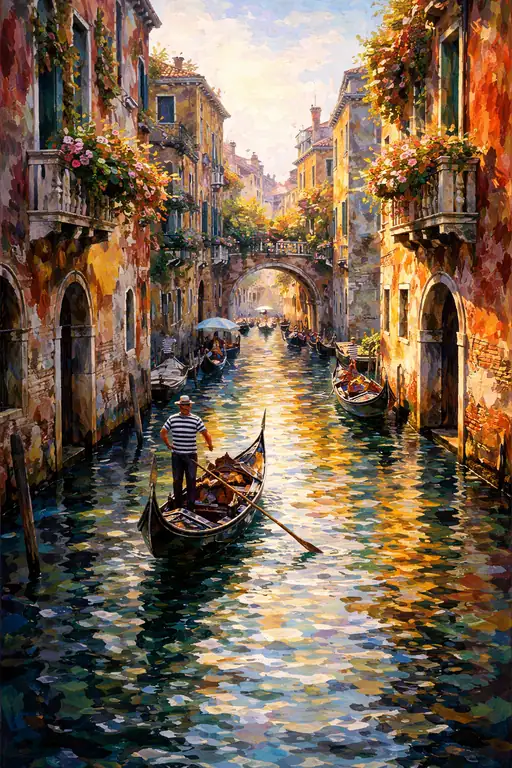 Serenade on the Floating City
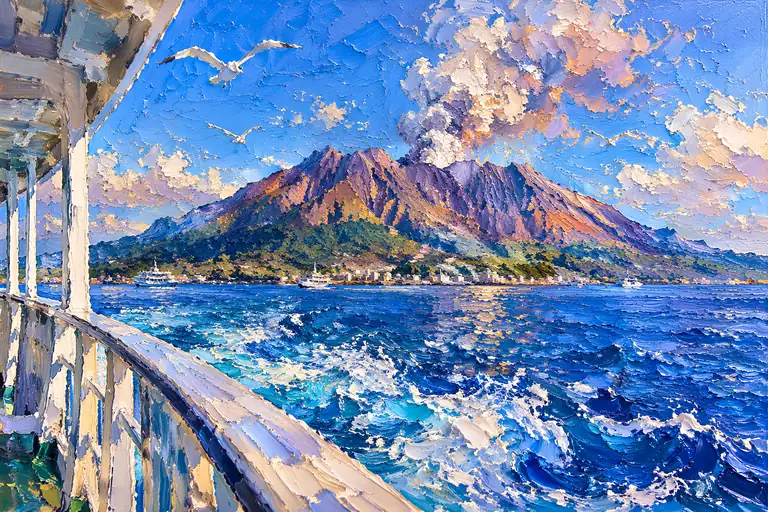 Pulse of the Azure Roar
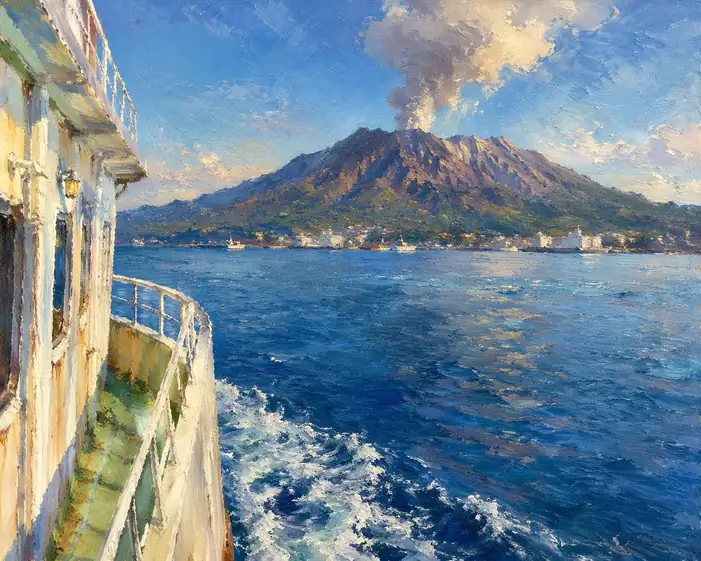 Echoes of the Fiery Peak
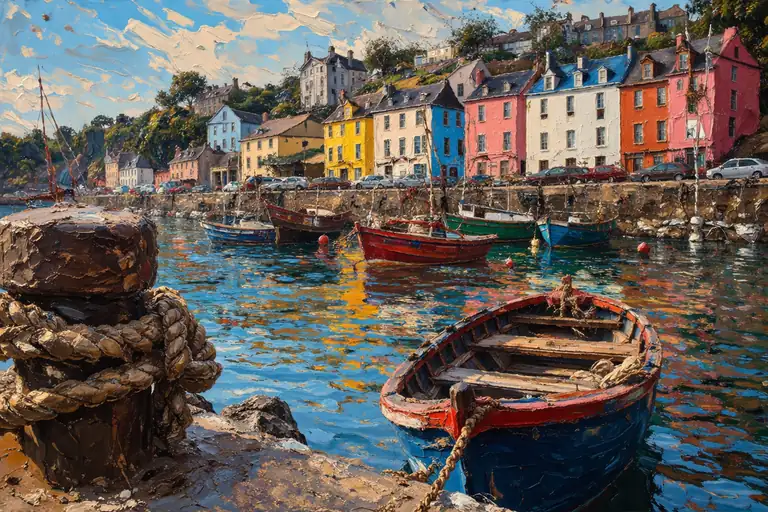 Tangled Ropes and Vibrant Memories
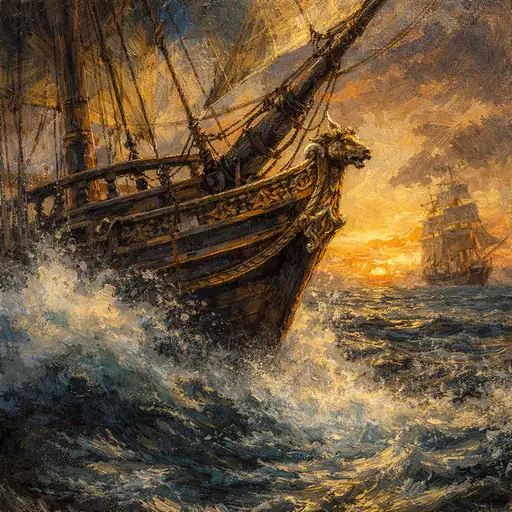 Golden Hour Odyssey
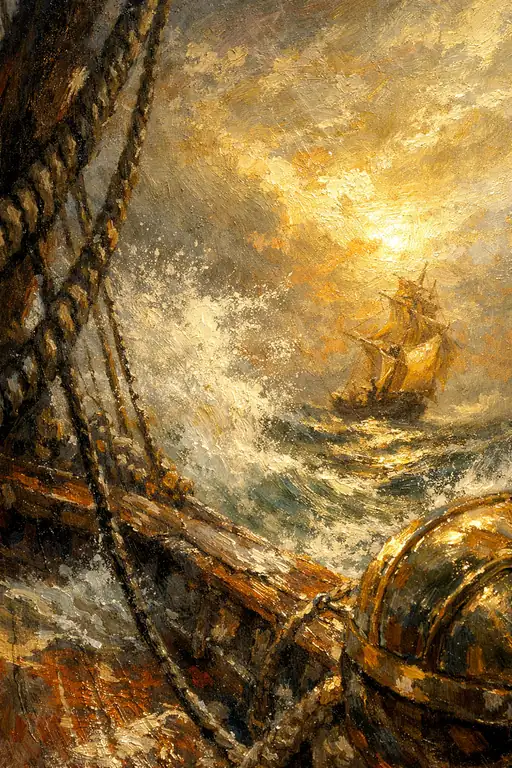 Fury of the Deep: The Defiant Vessel Against the Tempest
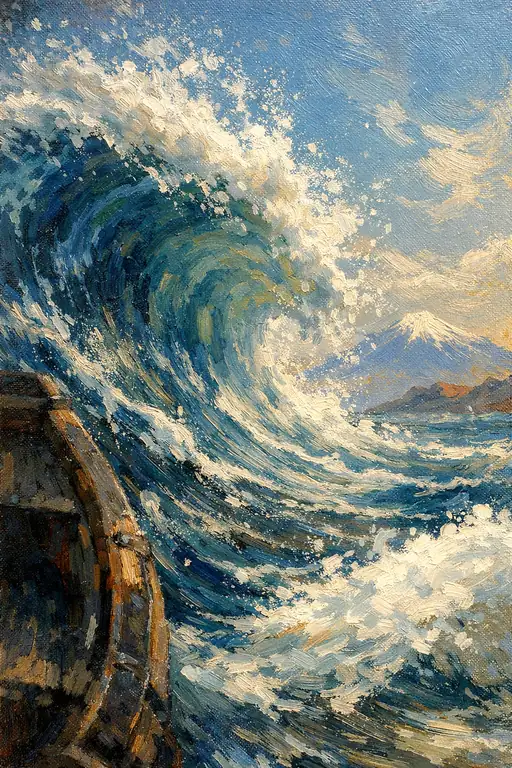 Roar of the Indomitable Tide
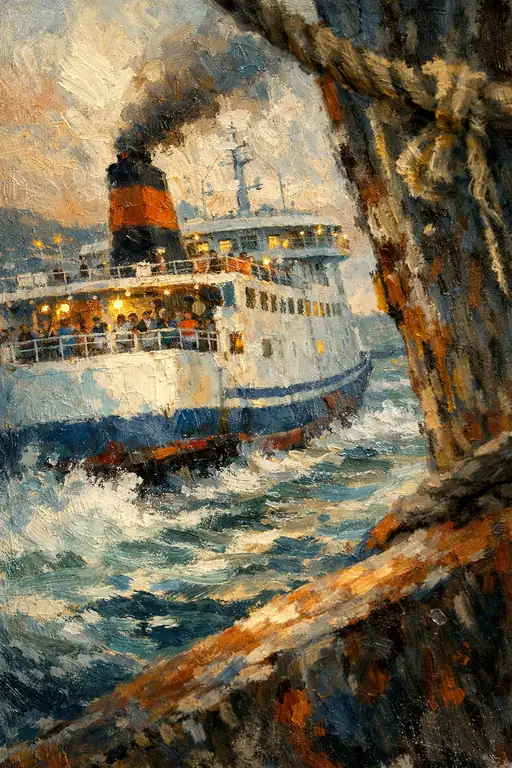 Voyage Through the Churning Blue
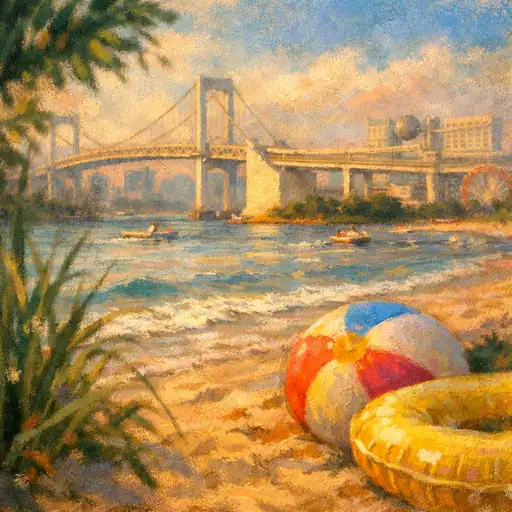 Summer Echoes by the Bridge