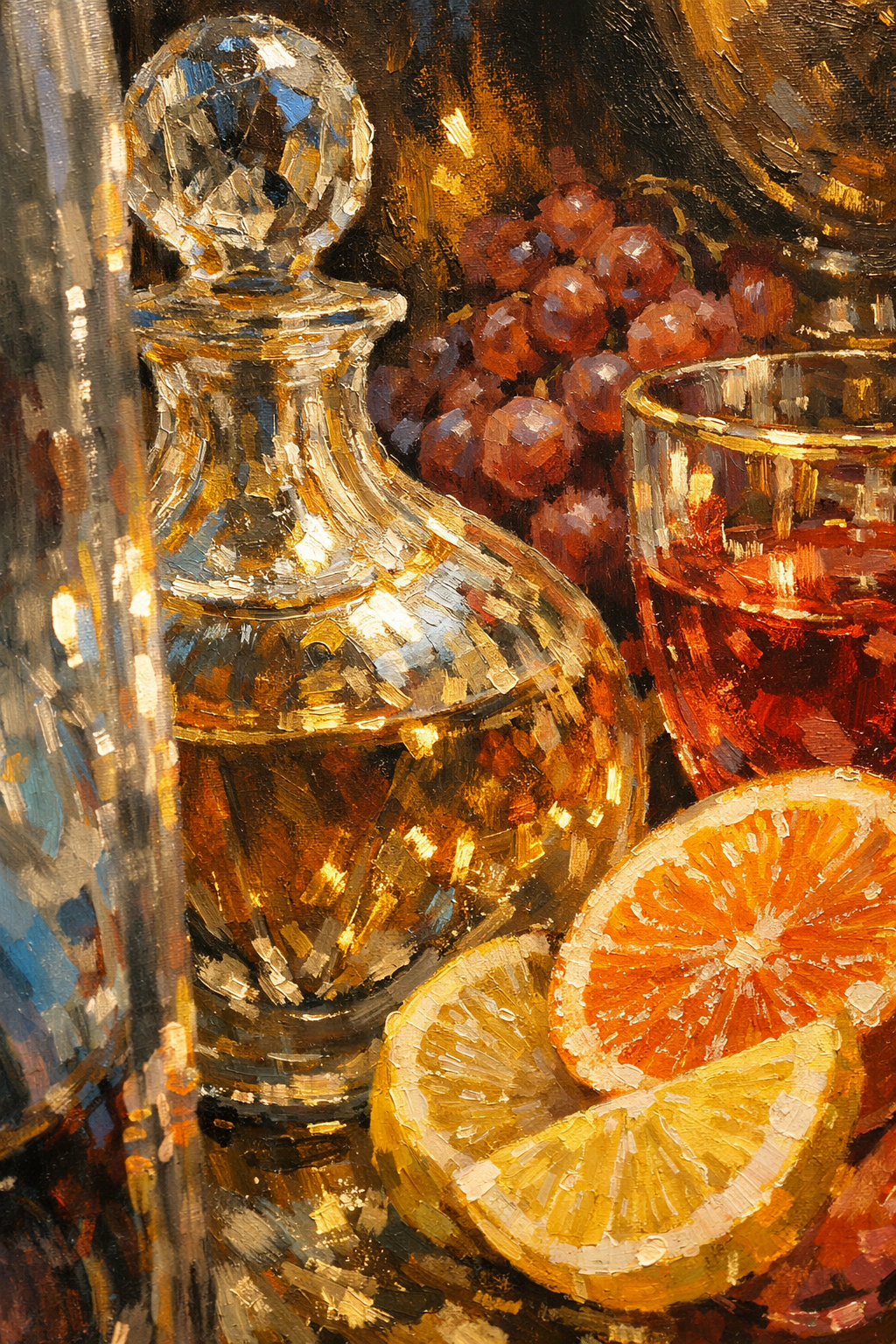
Dance of the Crimson Refraction
Critique
1. Introduction This still life painting captures the dynamic interplay of refracted light and material color through bold and expressive brushwork. The composition is centered around an intricately cut crystal decanter, accompanied by a glass filled with deep red liquid, vibrant citrus slices, and a cluster of grapes in the background. By treating light not merely as illumination but as an active element that constructs the subjects, the work offers a unique charm that blends traditional realism with modern impressionistic interpretation. 2. Description Positioned on the center-left, the decanter is covered in countless fragments of light, giving it a presence as if it were self-illuminating. To its right, a glass containing what appears to be red wine glows vividly as it transmits light. In the foreground, slices of orange and lemon display their internal structures, rendered through powerful touches rather than minute detail. The grapes in the background provide a rhythmic pattern of deep purple, adding depth to the scene. The dark tones of the environment effectively accentuate the brilliance of these primary objects. 3. Analysis From a formal perspective, the unique faceted brushwork is particularly noteworthy. The crystal sections of the decanter are composed of individual strokes that correspond to reflective surfaces, creating a structural beauty reminiscent of a mosaic. The color scheme relies on a sequence of warm tones窶牌ibrant orange, yellow, and deep red窶巴ringing energy and warmth to the canvas. Strong diagonal lighting dramaticizes the scene, softening the contours of the objects while simultaneously emphasizing their essential presence and volume. 4. Interpretation and Evaluation The work expresses the joy of the moment when matter and light intersect, filtered through the artist's passionate perspective. It is fascinating how the hard medium of crystal and the organic forms of the fruit are treated equally through the shared language of light. The artist's mastery lies in conveying the vibration of the atmosphere and the emotion brought by beams of light rather than achieving mere visual accuracy. With its strong composition and sophisticated color sense, this piece breathes new life into the classical genre of still life. 5. Conclusion Close observation reveals that what initially seems like spontaneous brushstrokes are actually carefully calculated placements of light. While the initial attraction is the richness of the colors, the viewer eventually feels a sense of order and deep silence governed by the overarching logic of light. This artwork is a highly polished achievement that reconstructs fragments of the everyday through exceptional sensitivity and technique, powerfully representing the universal theme of light.
Same Subcategory
Similar Artworks
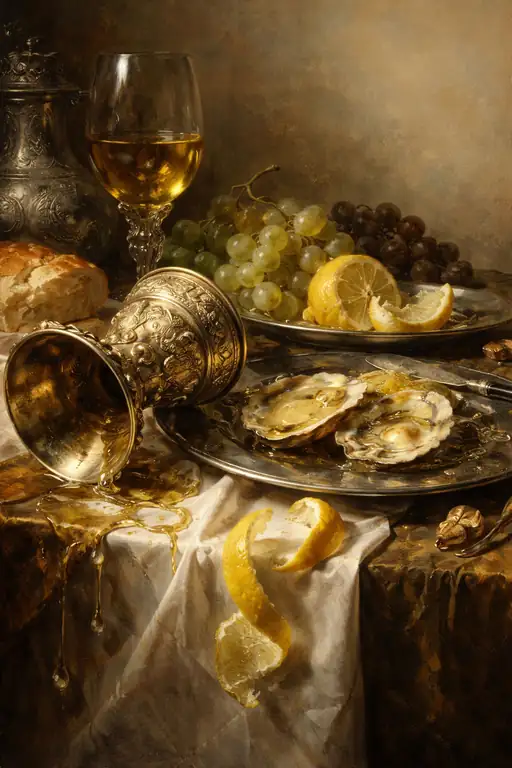 The Fallen Goblet of Vanity
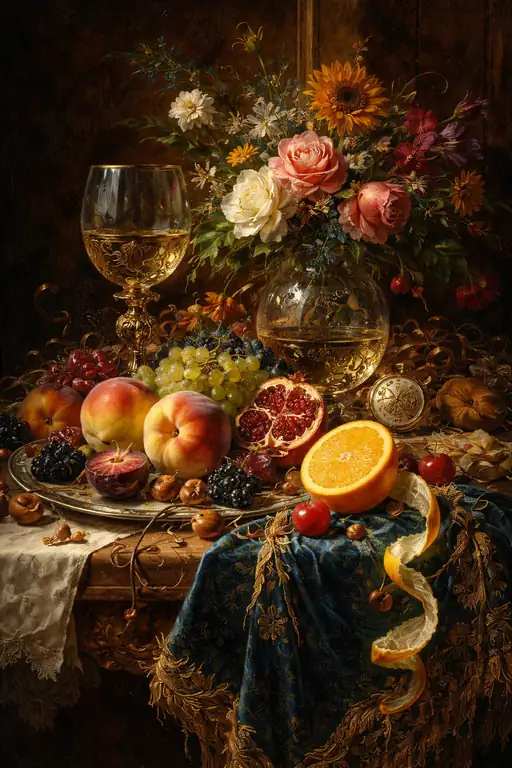 A Banquet of Fading Splendor
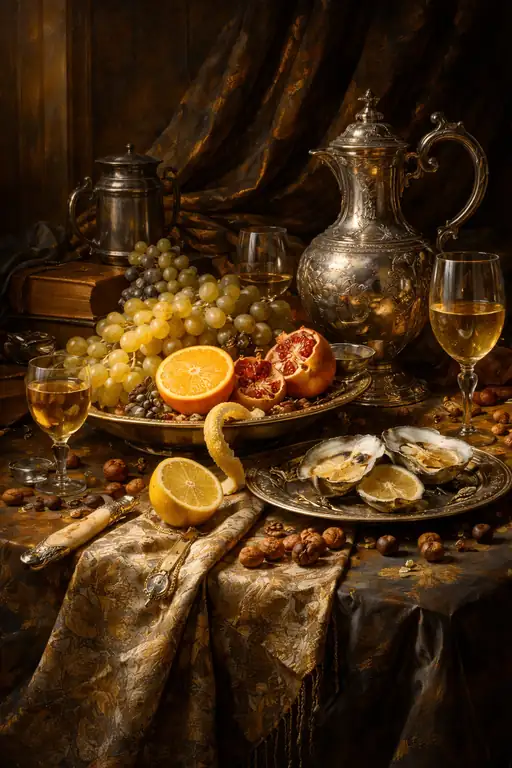 Vanitas in Silver and Crimson
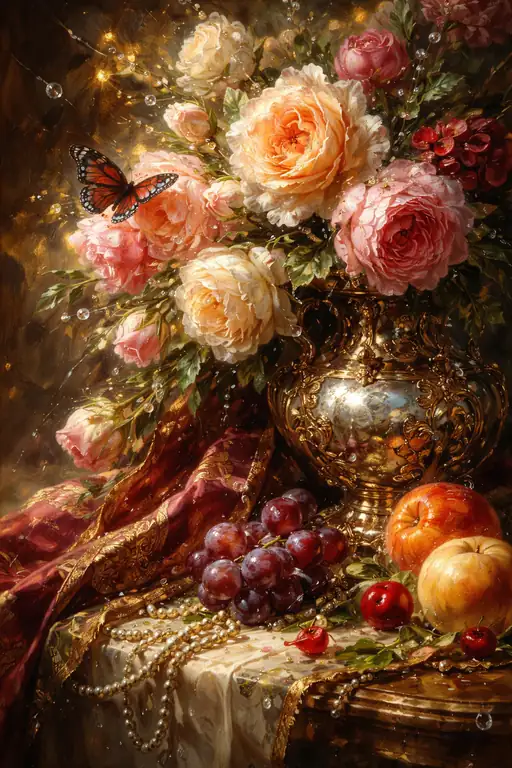 Golden Bounty of the Ephemeral
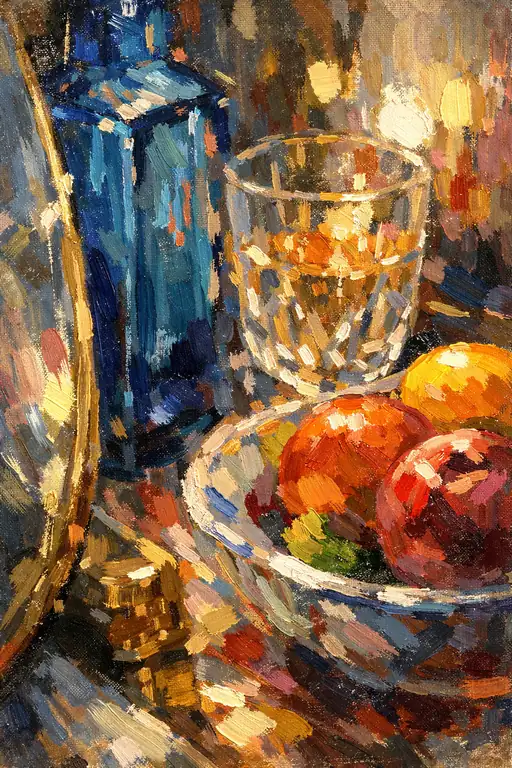 Whispers of the Cobalt Glass
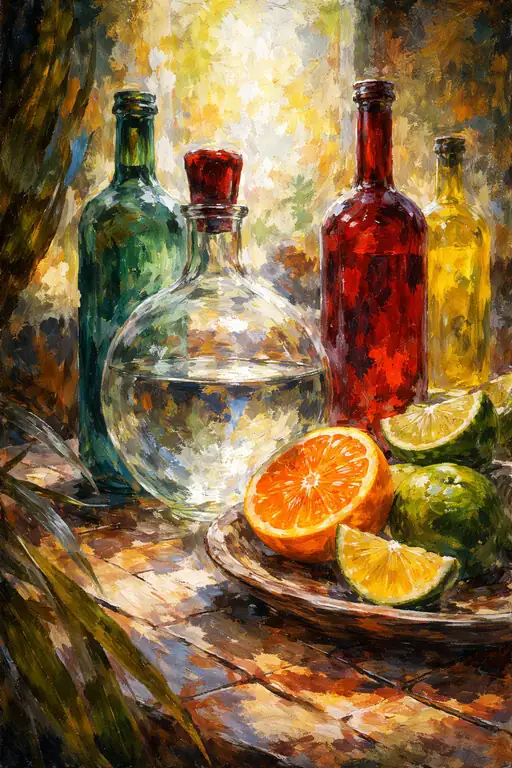 Luminous Whispers in Glass
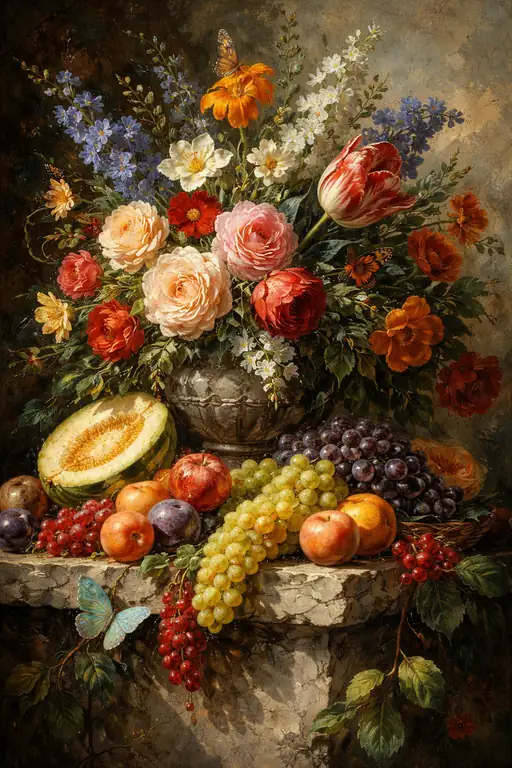 Symphony of the Bountiful Harvest
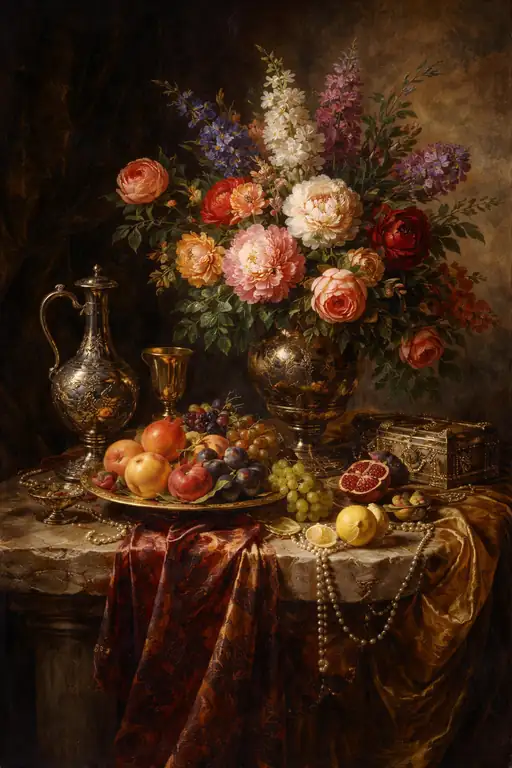 Flowers, Fruits, and Precious Objects
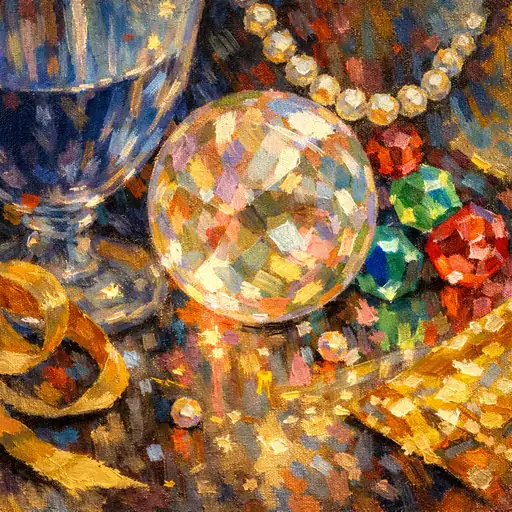 Dazzling Symphony of Light and Reflections
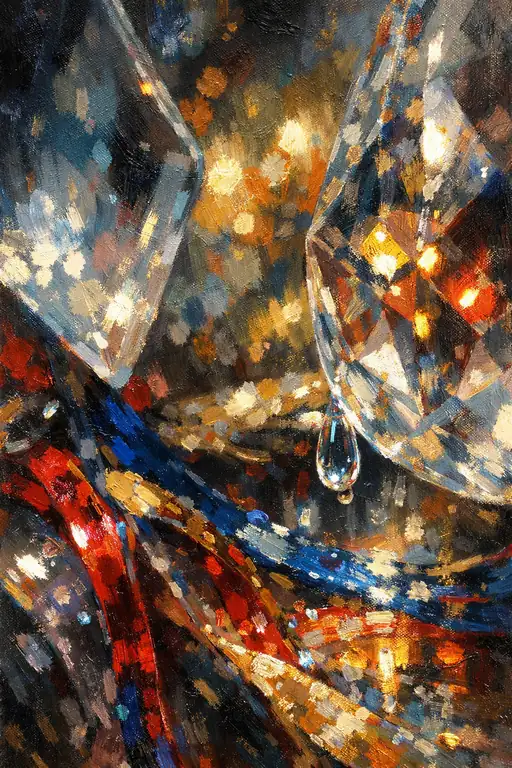 A Droplet of Eternity