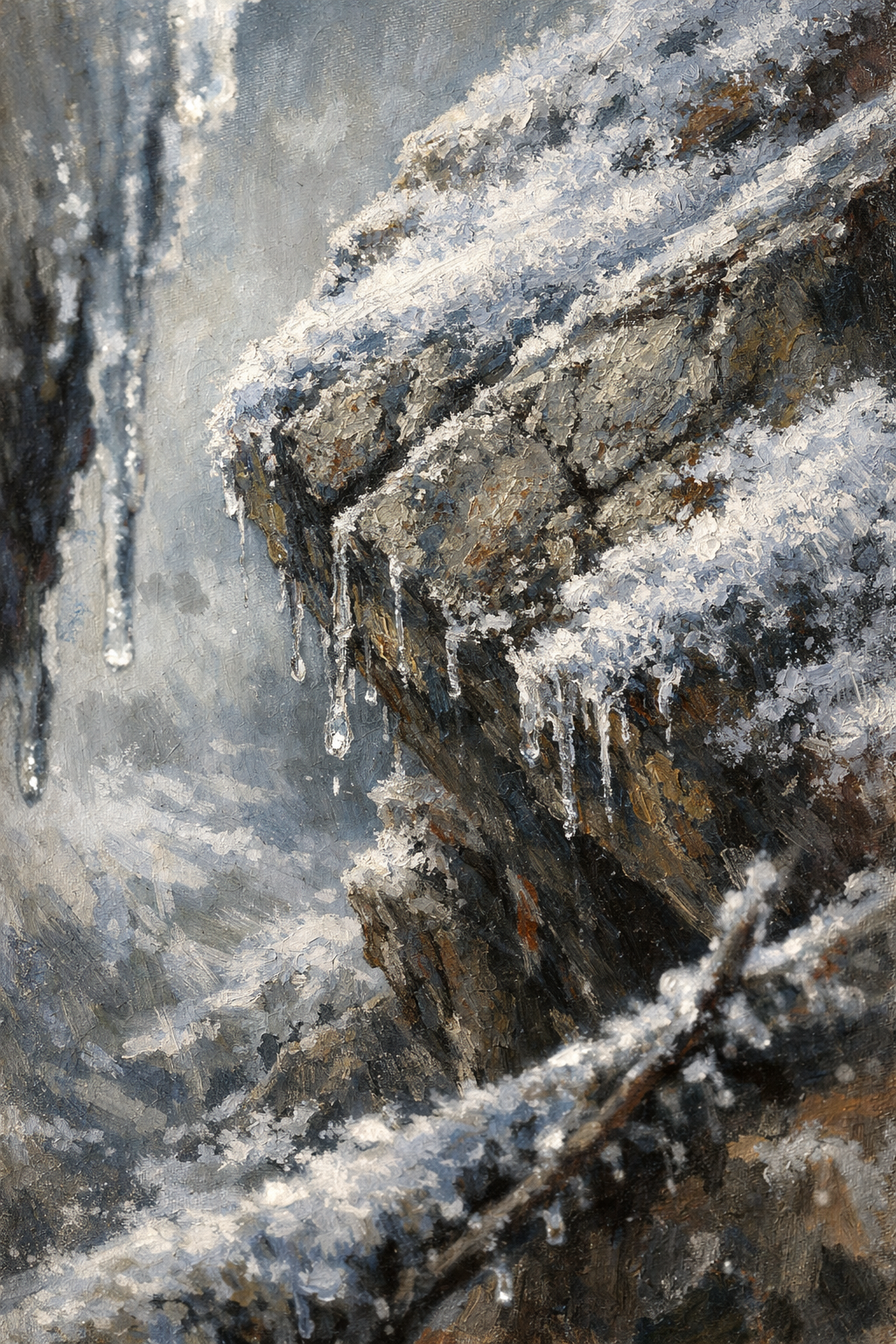
Frozen Tears of the Mountain: The Icicle's Grip
Critique
1. Introduction This oil painting presents a rugged, close-up view of a rugged, close-up view of a rocky cliff face during winter. The composition focuses on the harsh yet beautiful textures of frozen water and weathered stone. By isolating a specific section of the mountain, the work highlights the stark contrast between the solidity of the earth and the delicate, transient nature of ice. 2. Description The central focus of the piece is a steep, dark rock formation covered in thick layers of white snow. Hanging from the jagged edges of the stone are numerous clear icicles, some reflecting the cold light of the environment. In the background, a blurred, greyish-blue mist or snow-covered slope is visible, suggesting a high-altitude or deep winter setting. The brushwork is thick and impasto-like on the snow. 3. Analysis The artist uses a limited color palette of greys, whites, and browns to emphasize the cold atmosphere. The application of paint is particularly noteworthy, with heavy, textured strokes creating a sense of physical weight in the snow and the roughness of the rock. The vertical orientation of the icicles creates a downward visual pull that contrasts with the strong horizontal and diagonal lines of the rock shelves. 4. Interpretation and Evaluation This work successfully captures the raw, tactile quality of a winter landscape. The technical skill in depicting the translucency of the icicles against the opaque, heavy snow demonstrates a deep understanding of natural materials. The composition feels intimate yet powerful, evoking a sense of the formidable power of nature. It is a compelling study of light and texture in a challenging environment. 5. Conclusion While the subject matter is simple, the initial impression of coldness evolves into an appreciation for the complex surfaces and tonal variations within the ice and rock. The painting achieves a remarkable sense of presence through its bold use of texture. Ultimately, the work stands as a visceral tribute to the enduring beauty of the wilderness in its most severe state.
Same Subcategory
Similar Artworks
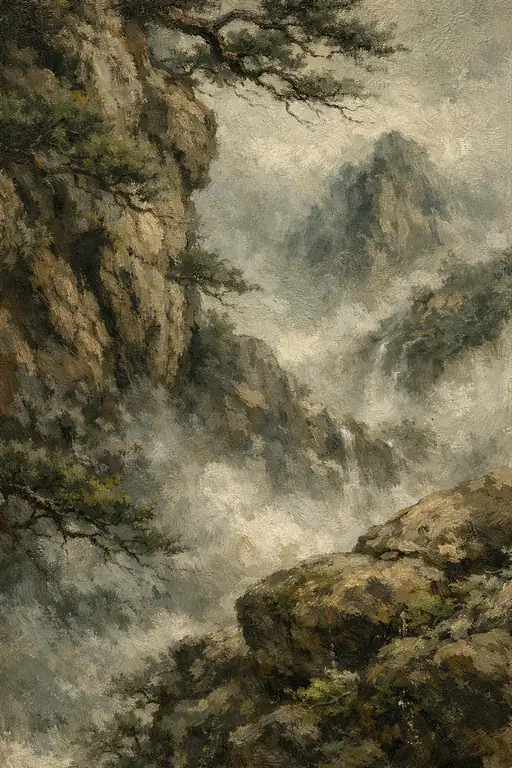 Whispers of the Misty Peaks
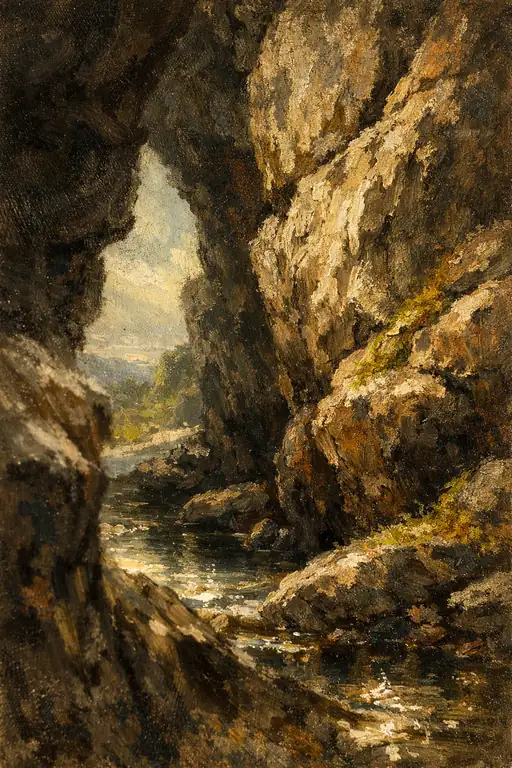 A Glimmer of Hope Through the Monoliths
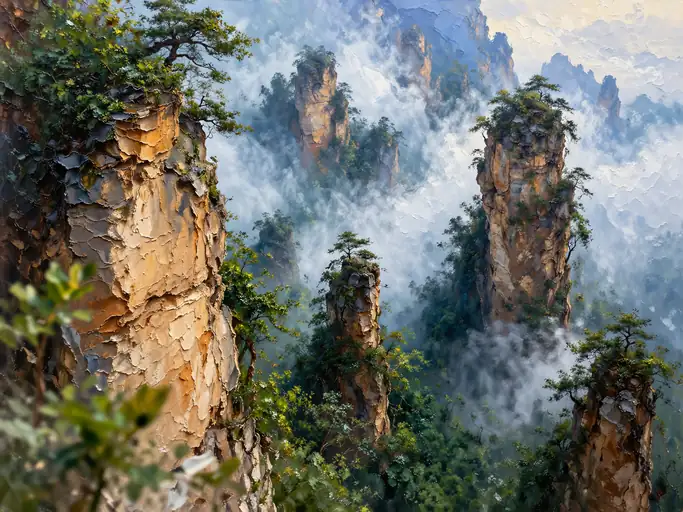 Timeless Pillars: The Quartz Sentinels of Wulingyuan
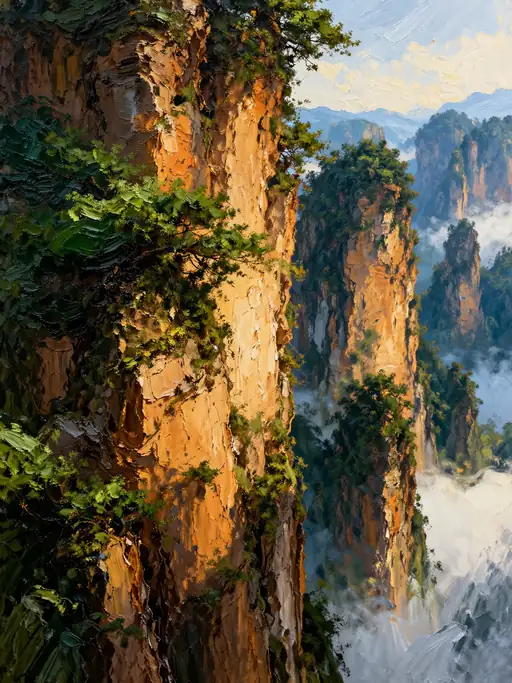 Pillars of the Earth: The Mist-Shrouded Canyons
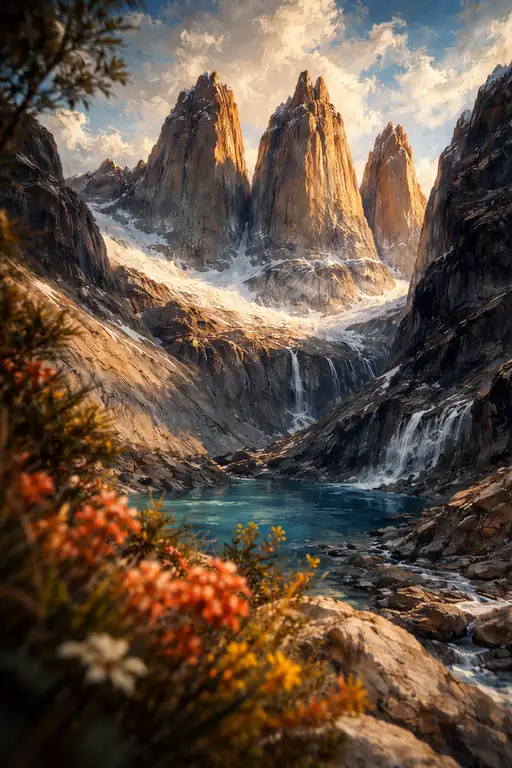 Golden Spires of Torres del Paine: The Glacier Lake's Majestic Silence
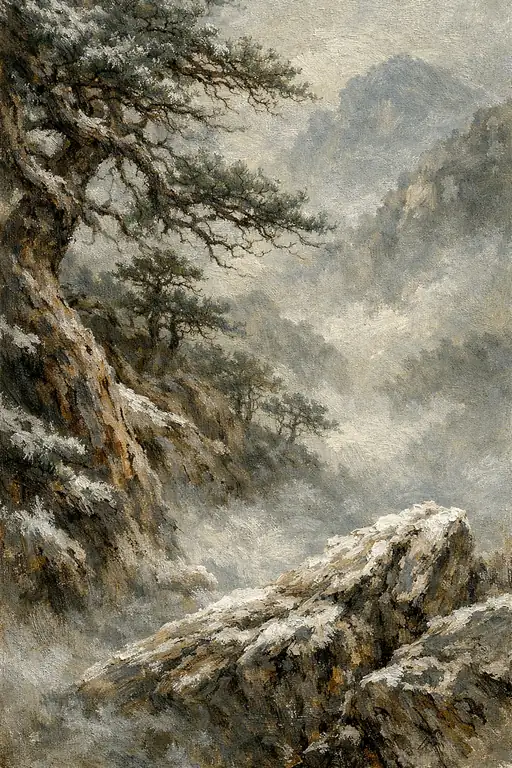 Frost's Silent Sentinel
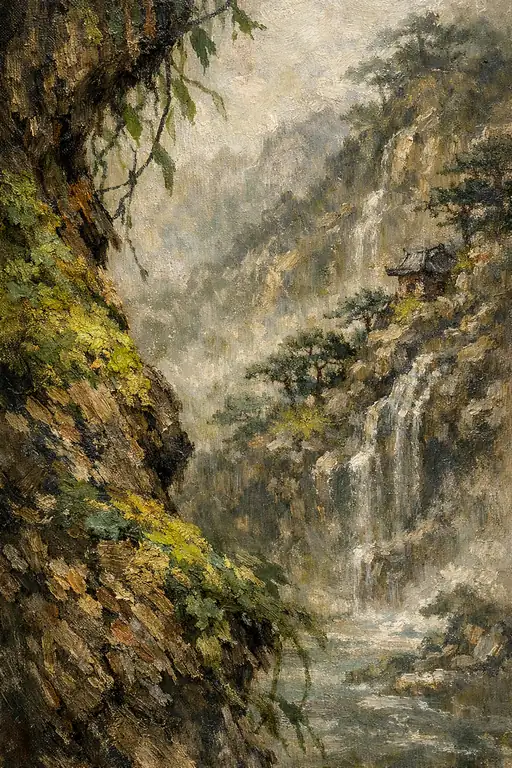 Shrine of the Weeping Cliff
 Gateway to the Wild
 Resilience Carved in the Deep Gorge
 Breath of the Abyss