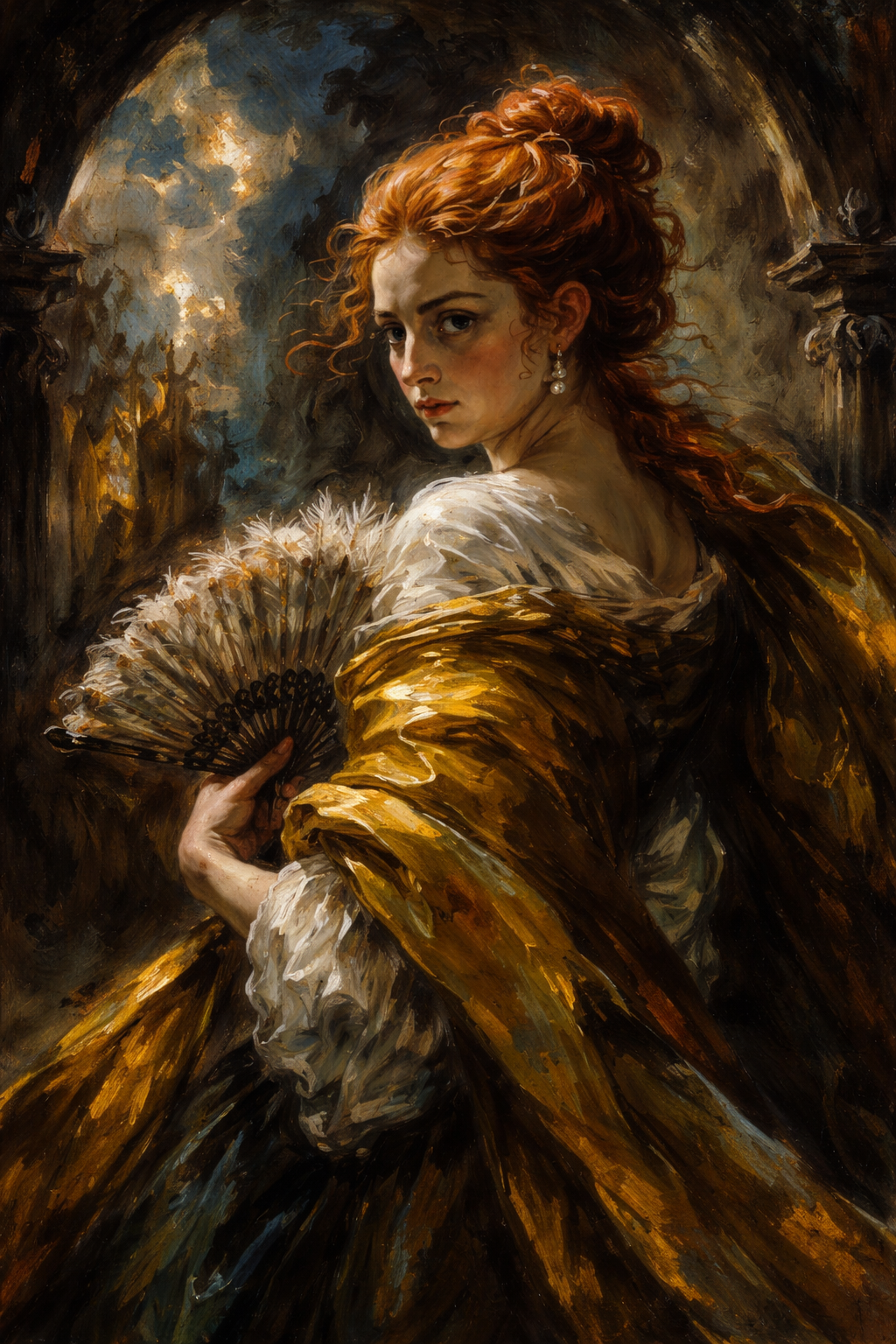
The Enigmatic Glance from the Shadows
Critique
1. Introduction This oil painting is a compelling portrait of a woman with vibrant red hair, executed in a style that evokes the dramatic flair of the Baroque period. The subject is depicted from a three-quarter rear view, looking back at the viewer with an intense and enigmatic expression. Holding a decorative feather fan, she is framed by a dark, architectural archway that enhances the theatrical atmosphere of the work. 2. Description The woman窶冱 features are finely rendered, with her pale skin contrasting sharply against her fiery hair and the deep shadows of the background. She wears a white blouse partially covered by a heavy, golden-brown shawl that flows across the composition. In her hand, she holds an ornate fan made of white feathers, which is rendered with delicate, individual strokes. The background is dominated by dark, moody tones and the suggestion of stone pillars and an arch. 3. Analysis The composition is built on strong diagonal lines, created by the turn of the subject窶冱 body and the flow of her shawl. This creates a sense of dynamic movement despite the static pose. The artist utilizes chiaroscuro to emphasize the subject窶冱 face and hand, pulling them out of the surrounding darkness. The contrast between the soft, airy texture of the feathers and the heavy, metallic sheen of the shawl adds tactile complexity to the visual experience. 4. Interpretation and Evaluation This portrait can be interpreted as a study of personality and social poise. The subject窶冱 direct gaze suggests a person of strong will and intelligence, while the opulent accessories denote wealth or status. Technically, the artist demonstrates a masterful handling of light and shadow, using a limited palette to create a wide range of tones. The brushwork is expressive yet controlled, successfully capturing both the physical likeness and a sense of inner mystery. 5. Conclusion The initial impact of the dramatic lighting leads to a deeper appreciation of the psychological depth present in the subject窶冱 expression. This work effectively utilizes classical techniques to create a timeless portrayal of human character. It remains a powerful example of how lighting and composition can be used to elevate a simple portrait into a profound exploration of presence and mood.
Same Subcategory
Similar Artworks
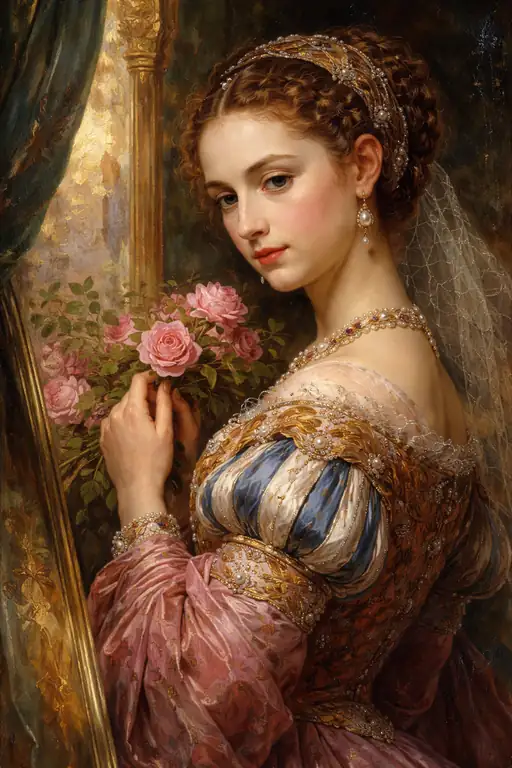 Elegance Blooming in the Quiet Shadows
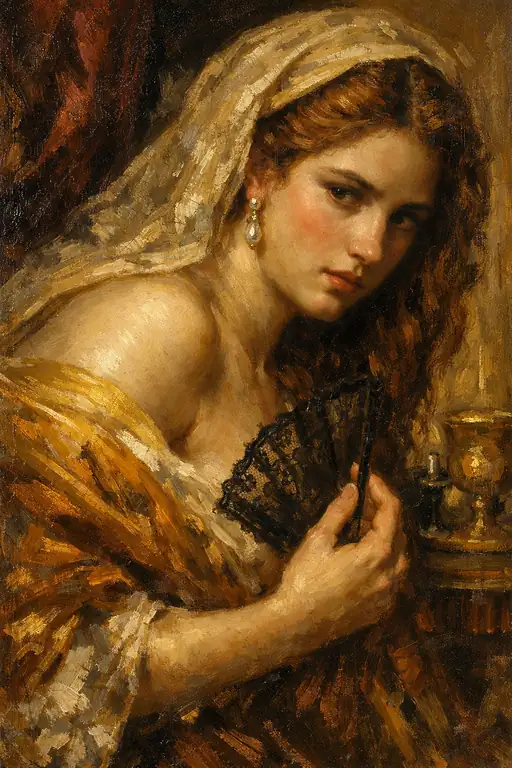 Secrets in the Shadows
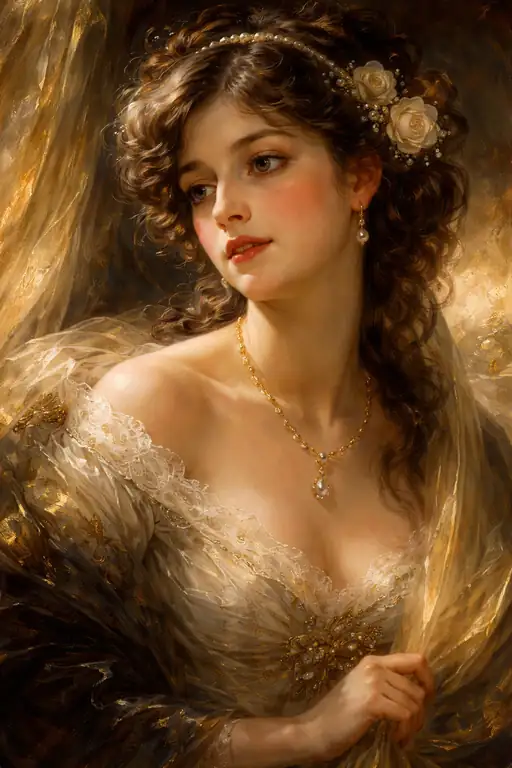 Whispers of the Gilded Rose
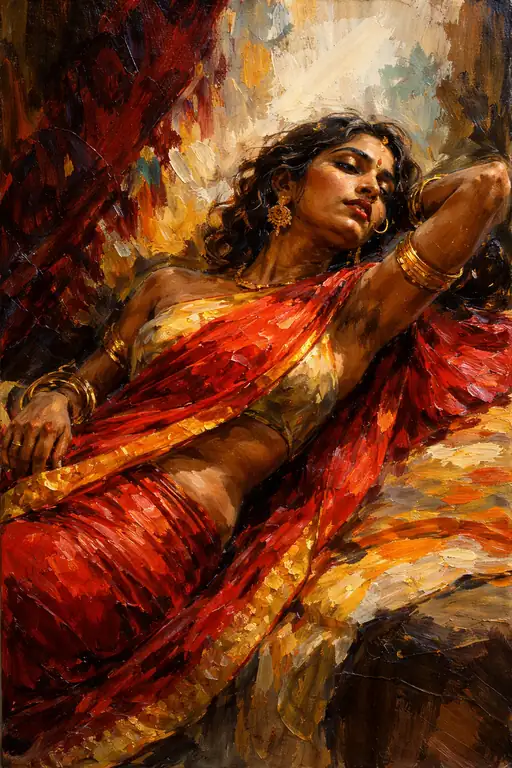 Embers in Repose
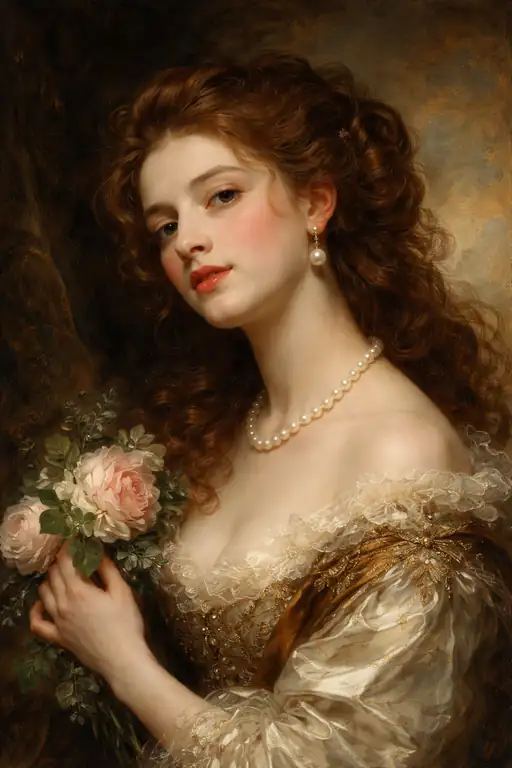 Grace Wrapped in Pearl and Rose
 The Golden Cage's Radiant Hope
 Luminescence: The Girl with the Stained Glass Glow
 A Whisper Behind the Golden Plumes
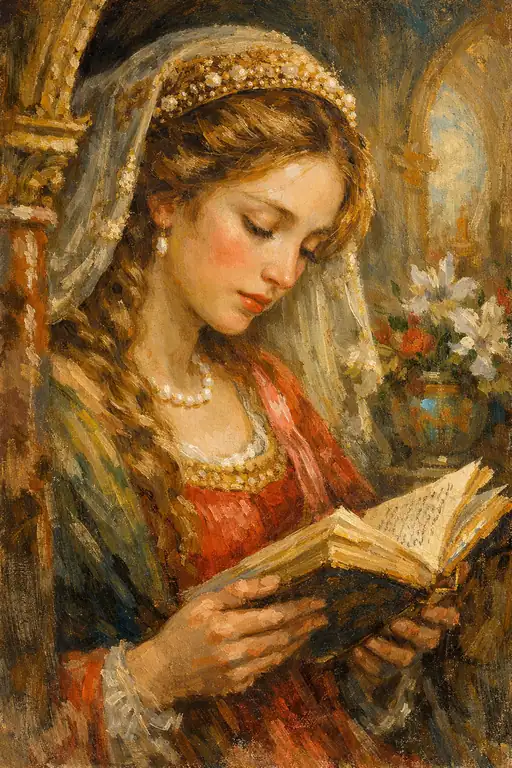 Wisdom's Silent Embrace
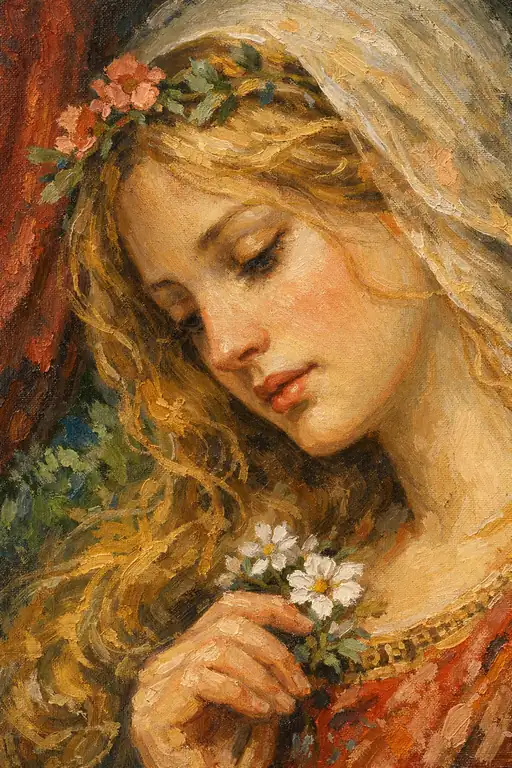 Blossoms of Innocence