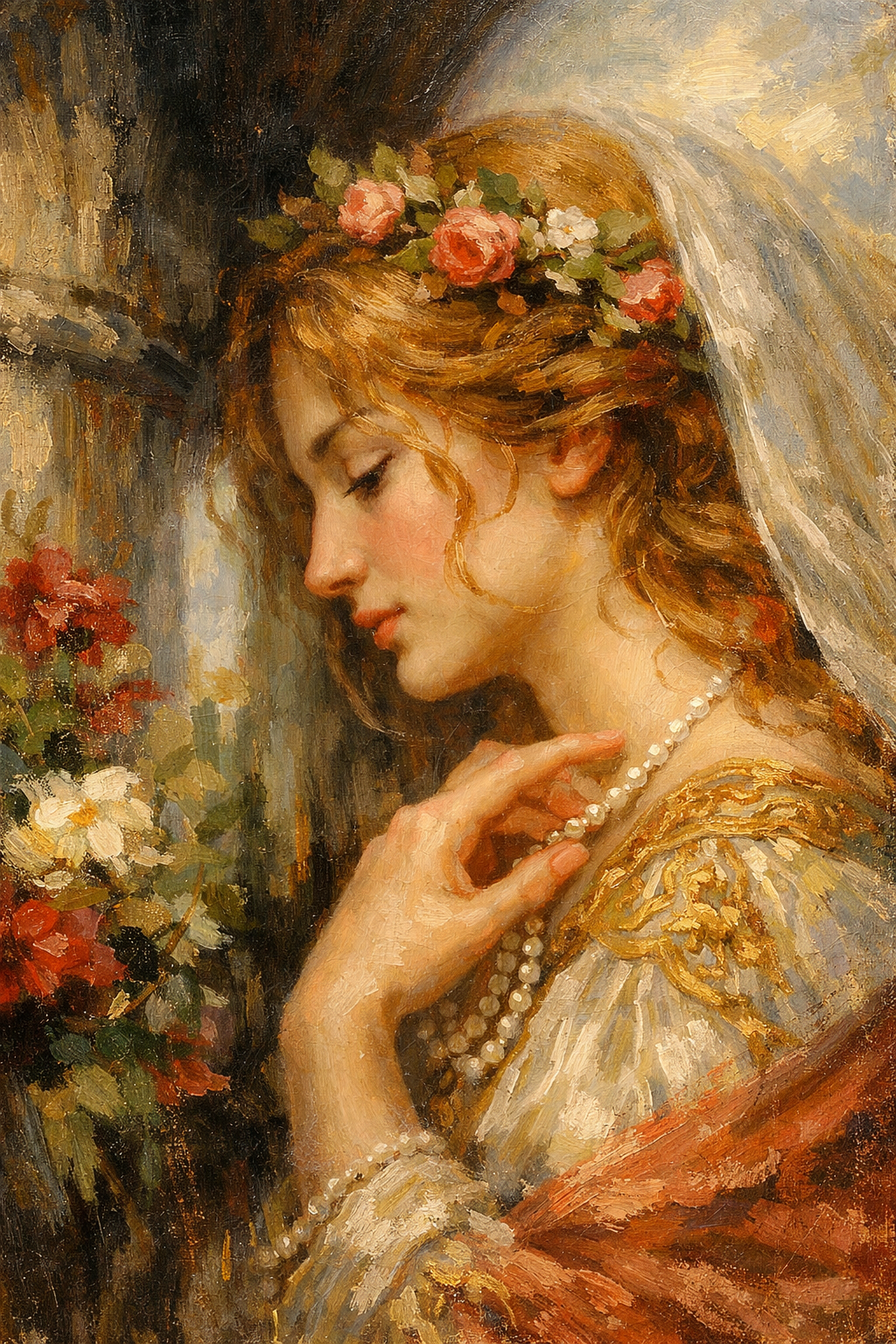
Veil of the Rose Queen
Critique
1. Introduction This oil portrait captures a pensive young woman in profile, adorned with bridal or festive elements. The composition is intimate, focusing on the figure's delicate features and her introspective expression. Through a vibrant yet controlled application of color and light, the work explores themes of beauty, transition, and the quiet complexity of human emotion. 2. Description The subject is a woman with reddish-blonde hair, wearing a crown composed of small red and pink roses. A sheer white veil flows from the crown, blending into a soft background of muted tones. She wears a white gown with golden embroidery and a pearl necklace, which she gently touches with her right hand. In the lower left foreground, a cluster of red and white flowers adds a touch of brightness to the scene. 3. Analysis The artist employs an expressive brushwork technique, particularly in the hair and the textures of the dress, where visible strokes create a sense of movement. The lighting is soft and directional, highlighting the contours of the woman's face and the iridescent quality of the pearls. The color palette balances warm, luminous flesh tones with the rich reds of the roses and the cool, atmospheric grays of the background. 4. Interpretation and Evaluation The work effectively communicates a sense of quiet contemplation, with the figure's downward gaze suggesting a moment of inner reflection. There is a compelling tension between the celebratory nature of the floral crown and the woman's somber, almost melancholic expression. Technically, the rendering of light on the skin and the delicate handling of the translucent veil demonstrate a high degree of skill and artistic sensitivity. 5. Conclusion Initial impressions of traditional beauty are quickly replaced by a deeper appreciation for the work's emotional depth. The painting succeeds in transforming a standard portrait into a profound study of character and mood. Ultimately, this piece is a masterfully executed exploration of the nuanced intersection between outer ornamentation and inner emotional states.
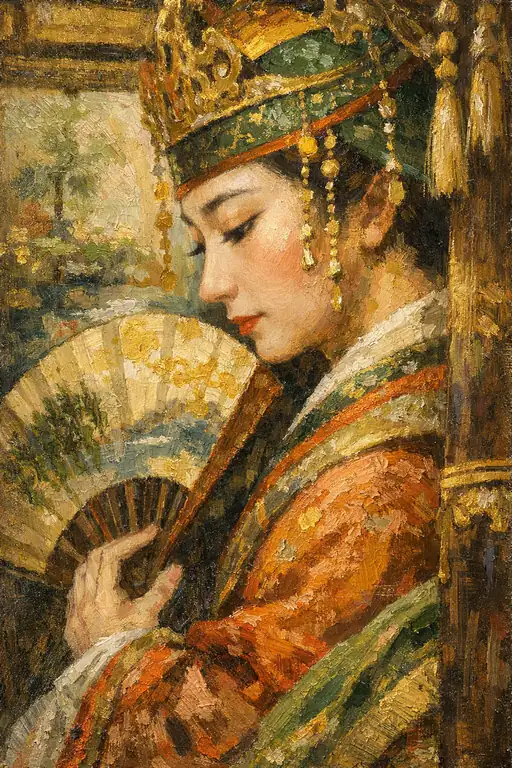 Gaze of the Golden Empress
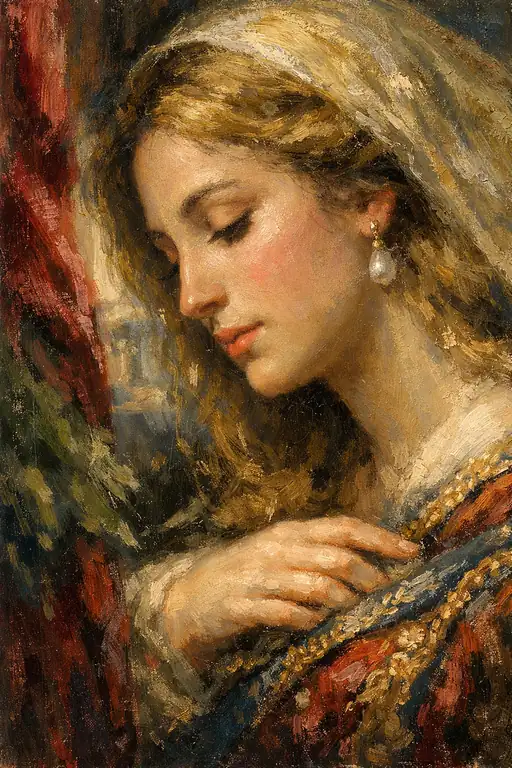 Tears of the Golden Maiden
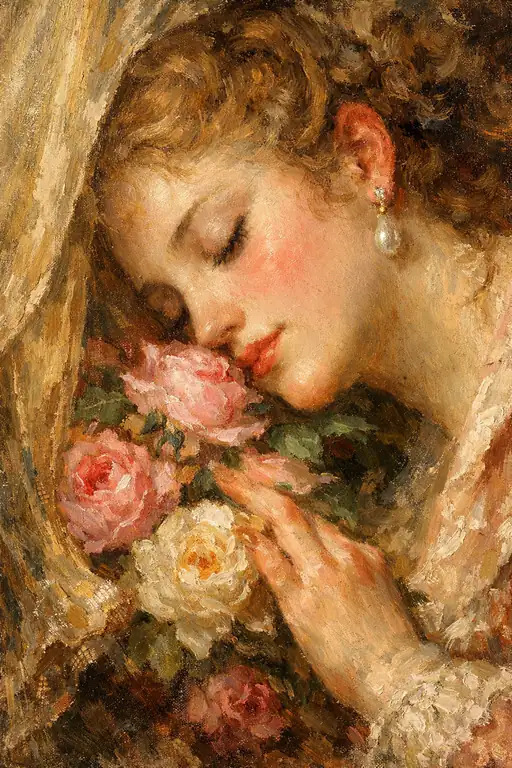 Lost in the Scent of Velvet
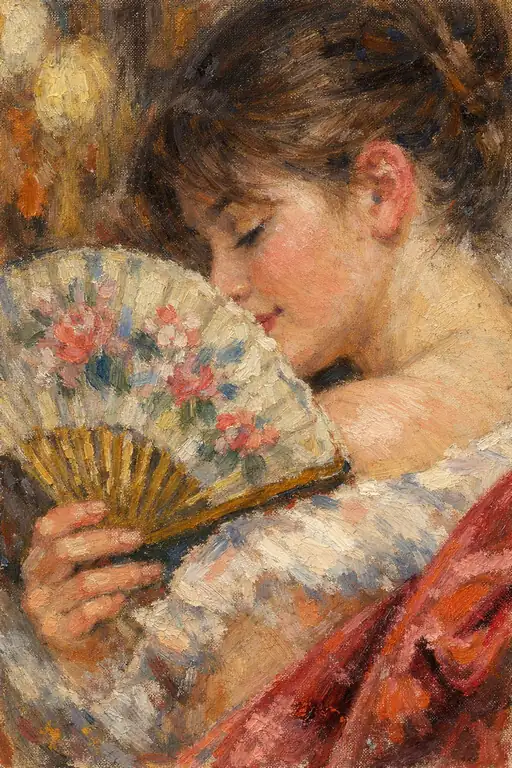 A Fleeting Blush Behind the Fan
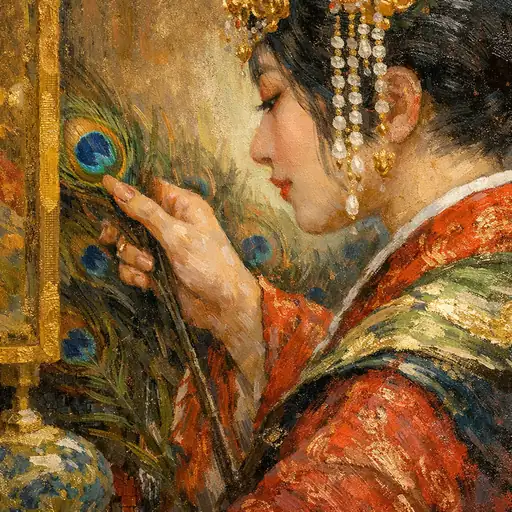 Gaze of the Golden Plume
 Embraced by the Warmth of Slumber
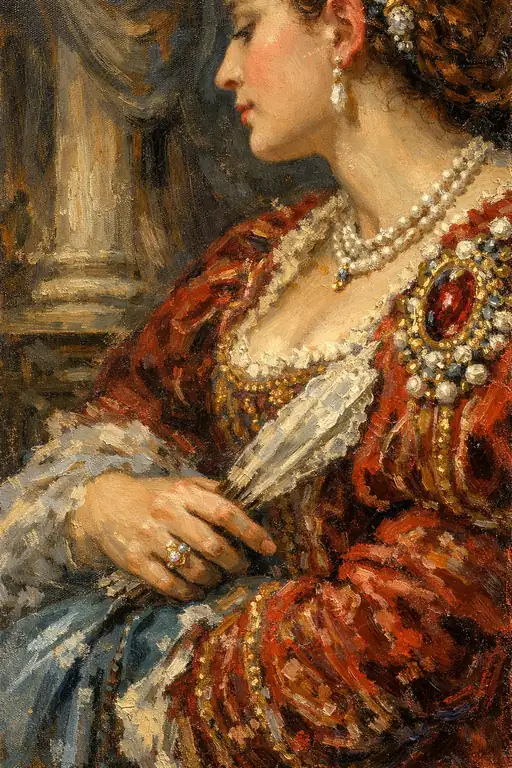 Blood and Pearls
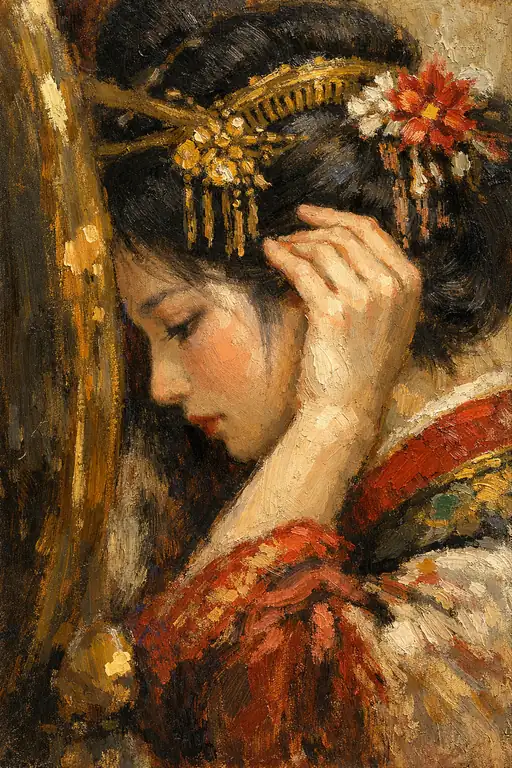 Elegance Veiled in Shadows
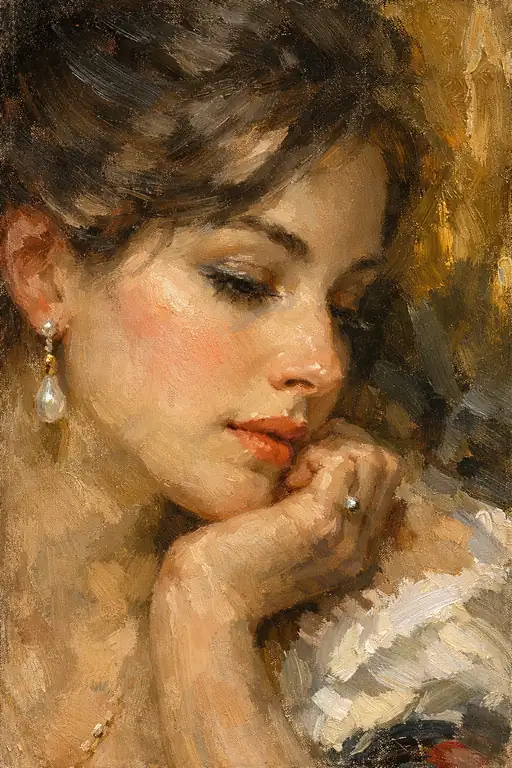 Profile of Grace: A Soft Gaze Through the Pearl's Luster
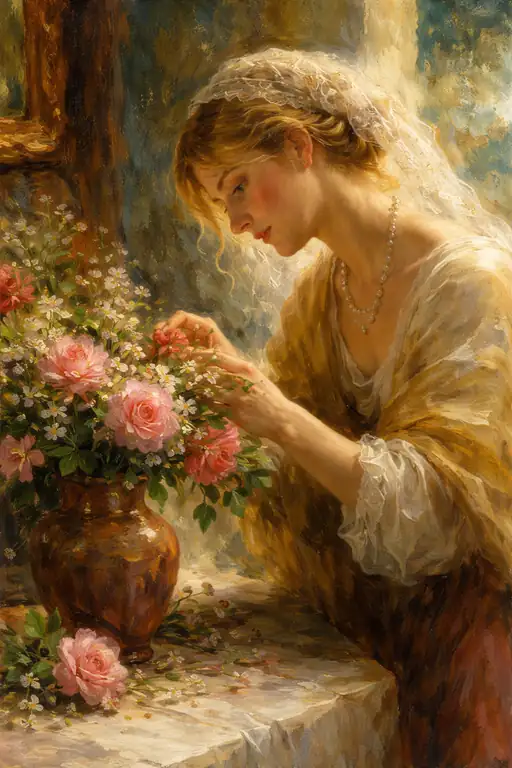 Grace Among the Petals
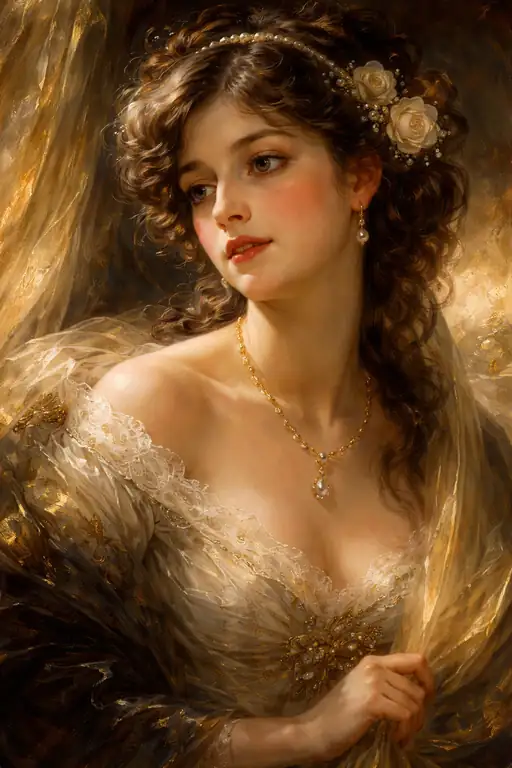 Whispers of the Gilded Rose