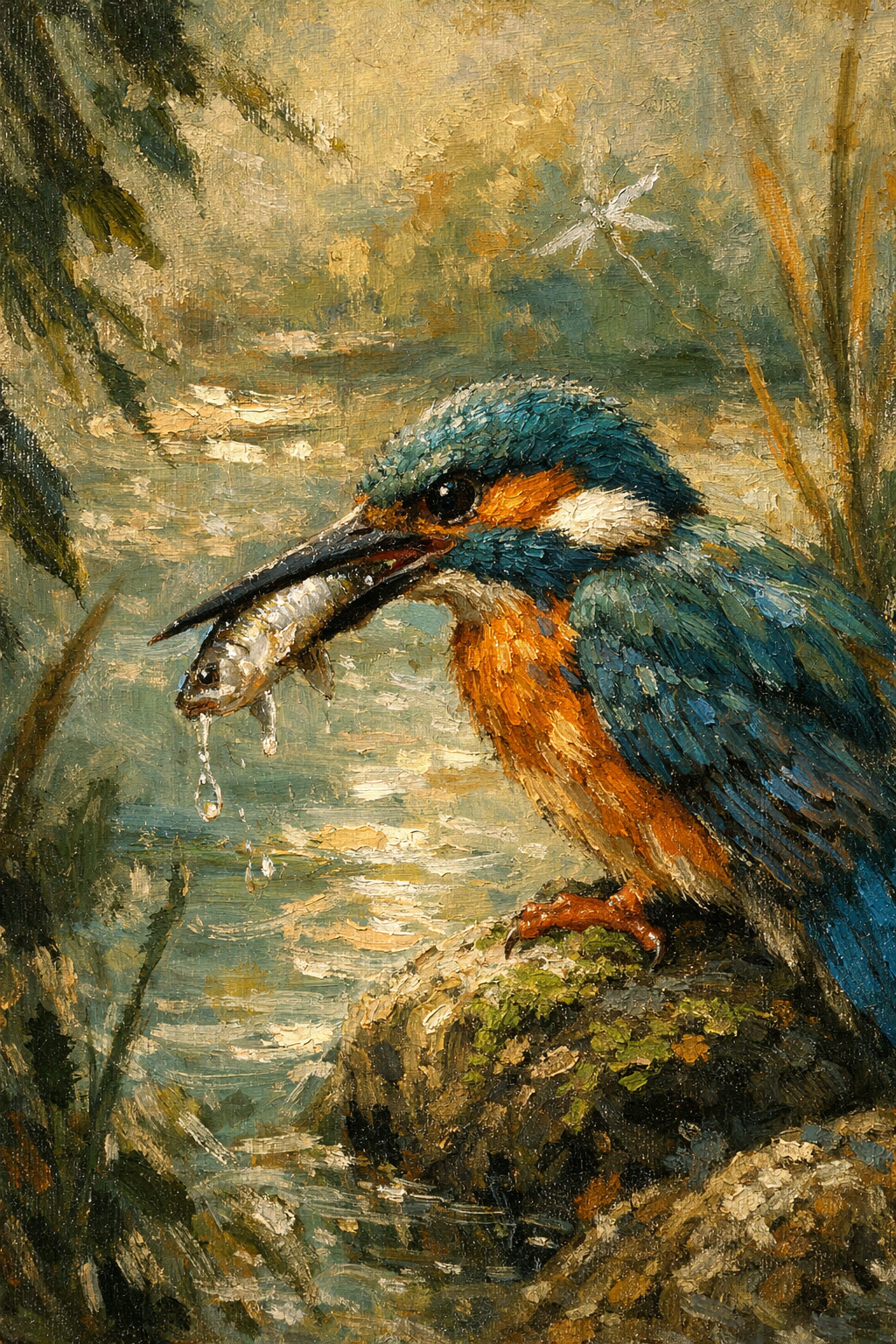
The Thrill of the Hunt Painted in Flashes of Teal and Gold
Critique
1. Introduction This oil painting captures a dynamic moment in nature, focusing on a kingfisher that has just secured its prey. The composition is centered on the bird, which is perched on a moss-covered rock at the water's edge. The artist utilizes a vibrant color palette and thick, expressive brushwork to convey the vitality and energy of the scene. The work effectively portrays the raw reality of the natural world through a stylized and textural lens. 2. Description The kingfisher dominates the center of the frame, its brilliant blue and orange plumage rendered with significant impasto. In its beak, it holds a small, silver fish, from which several translucent water droplets are seen falling. The bird rests on a dark, textured rock speckled with green moss, while the background depicts a shimmering water surface reflecting golden light. A small dragonfly is visible in the upper right, adding to the sense of a thriving aquatic ecosystem. 3. Analysis The artist employs a strong contrast between the bird's vivid colors and the more muted, atmospheric tones of the background. The use of visible, directional brushstrokes creates a sense of movement and immediacy, particularly in the rendering of the feathers and the water's surface. The composition is balanced by the diagonal line of the bird's body and beak, which directs the viewer's gaze toward the center of the action. Light is used effectively to highlight the wetness of the fish and the iridescence of the kingfisher's wings. 4. Interpretation and Evaluation This artwork can be interpreted as a celebration of the cycle of life and the predatory instinct within nature. The kingfisher is depicted not just as a beautiful creature, but as a skilled hunter, providing a sense of narrative depth. Technically, the painting is successful in its bold use of oil media, creating a tactile quality that invites close inspection. The original approach to the subject matter and the confident execution of the impasto technique demonstrate the artist's strong command over the medium. 5. Conclusion What initially appears as a simple wildlife study evolves into a compelling narrative of survival and precision. The synthesis of light, color, and texture produces a work that is both visually striking and emotionally resonant. The kingfisher remains a powerful symbol of focus and agility within its watery domain. Ultimately, the painting offers a profound look at a fleeting yet significant moment in the natural environment.
Same Subcategory
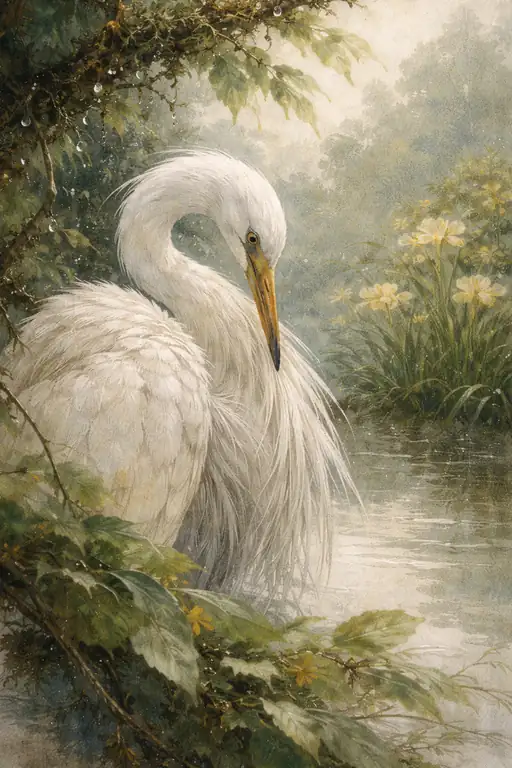 The Elegant Solitude of White Plumage in the Morning Dew
Similar Artworks
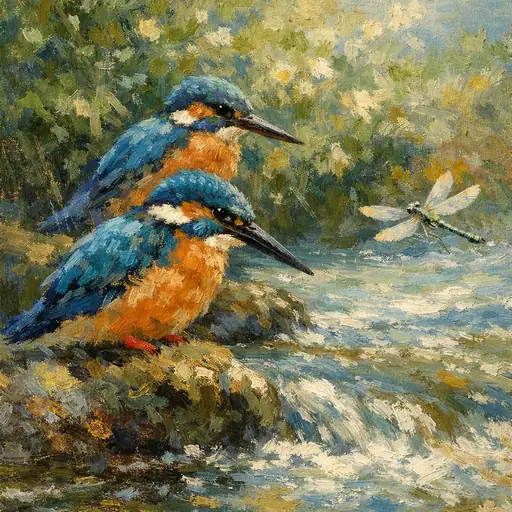 Whispers of the Rushing Stream
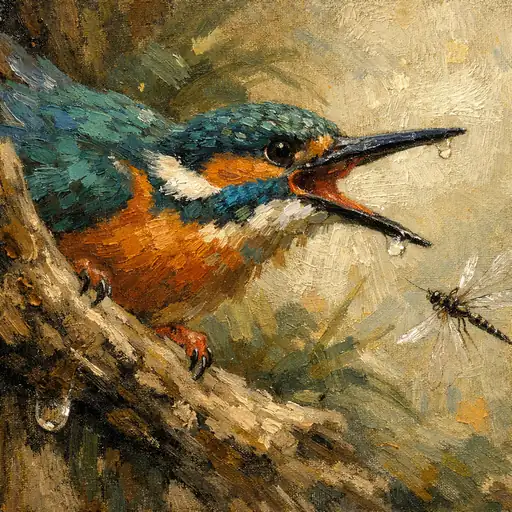 Solitude of the Winter Moon
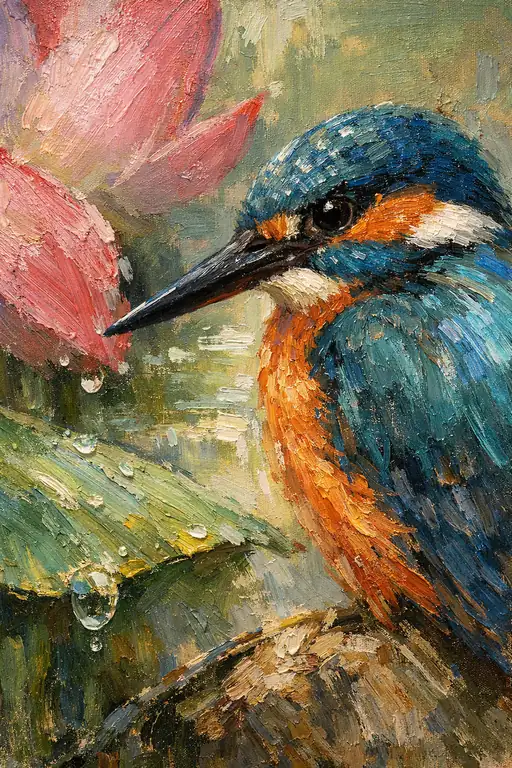 A Fleeting Radiance by the Lotus
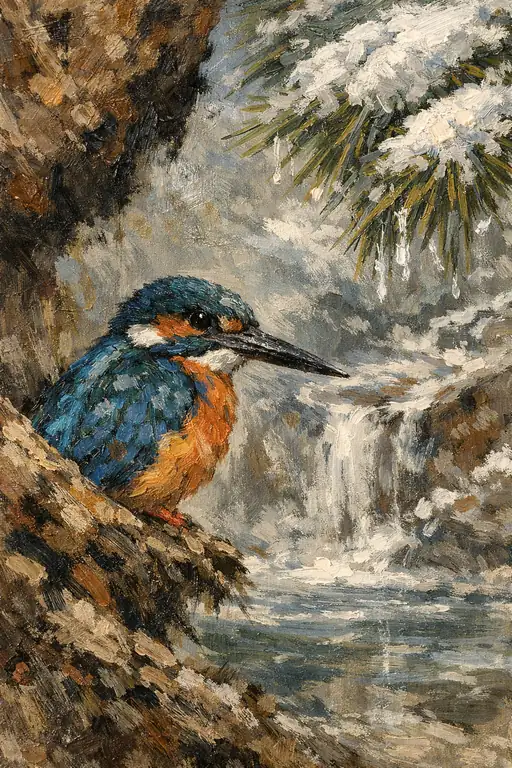 Song of the Raging Sea
 Love's Dance Beneath the Wisteria
 Triumph of the Sapphire Kingfisher
 The Silent Kingfisher's Gaze
 The Sapphire Guardian of the Stream
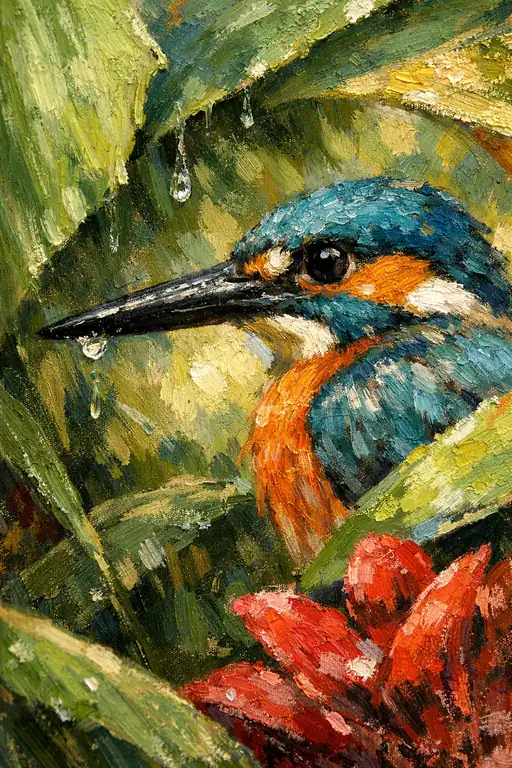 Jewel in the Downpour
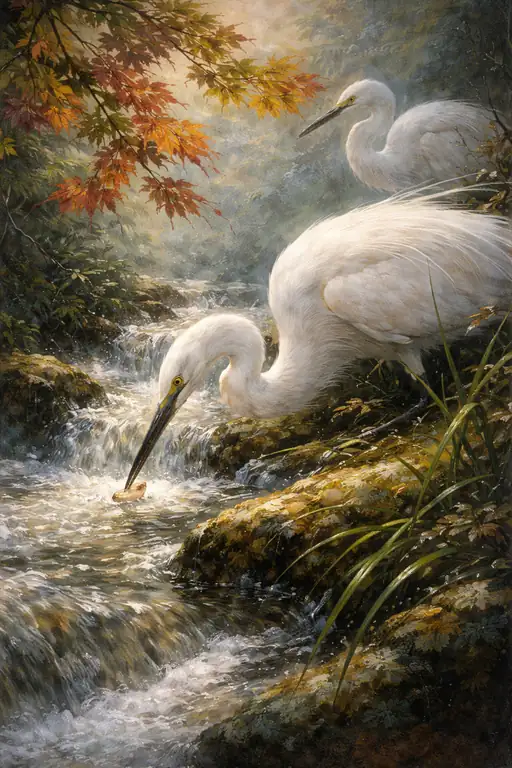 A Fleeting Strike in the Calm