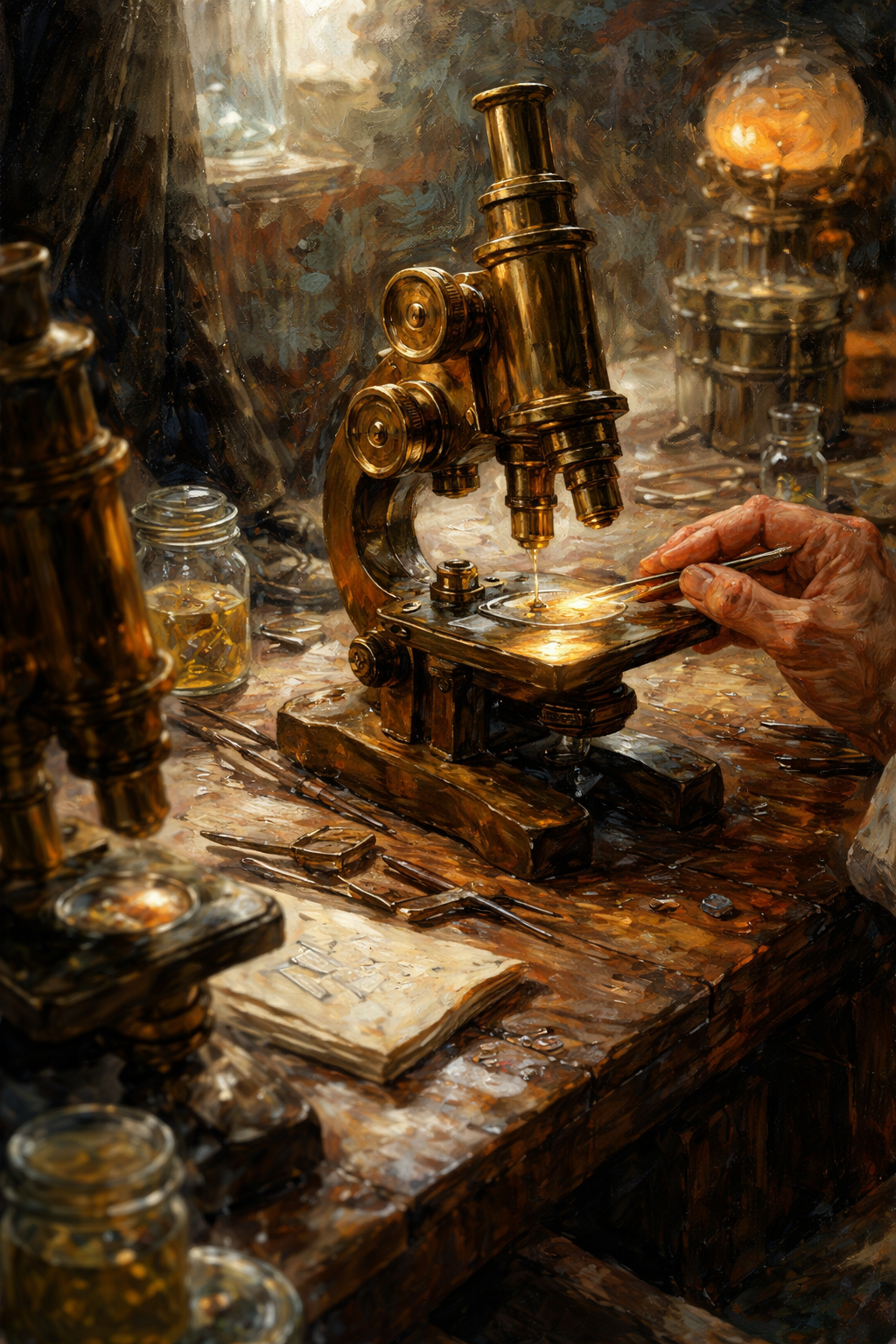
Whispers of the Unseen World
Critique
1. Introduction This artwork transports the viewer into a historical laboratory, capturing a moment of scientific inquiry and meticulous observation. Through a rich, painterly style, the painting elevates the tools of science into objects of aesthetic wonder. It emphasizes the human element in discovery, focusing on the concentration and steady hand required for microscopic exploration within a deeply atmospheric and nostalgic setting. 2. Description The central subject is an intricate vintage brass microscope, its polished surfaces reflecting a warm, golden light. To the right, an aged hand carefully adjusts a specimen slide using a pair of tweezers. The surrounding environment is filled with glass jars containing amber liquids, additional scientific apparatus, and weathered notebooks, all set upon a dark wooden workbench that shows signs of long-term use. 3. Analysis The artist employs a dramatic chiaroscuro-like lighting effect, where deep shadows contrast with brilliant highlights on the metallic and glass surfaces. The color palette is restricted to a range of warm browns, ambers, and golds, which creates a sense of unity and historical weight. Thick, expressive brushstrokes provide a tactile texture to the wooden table and the background, while the focal point remains relatively sharp. 4. Interpretation and Evaluation This piece can be interpreted as a tribute to the era of classical science, where discovery was a tactile and deeply personal endeavor. The technical execution of the light reflecting off the brass is particularly effective, lending the microscope a regal and enduring presence. The composition is expertly balanced, leading the viewer’s eye from the hand to the specimen and finally up through the vertical structure of the instrument. 5. Conclusion What initially appears as a scholarly study of scientific instruments reveals itself to be a profound meditation on the search for knowledge. The painting successfully combines technical precision in its lighting with an impressionistic freedom in its textures. It remains a powerful testament to the enduring curiosity of the human spirit and the timeless beauty of the instruments that aid in our understanding of the world.
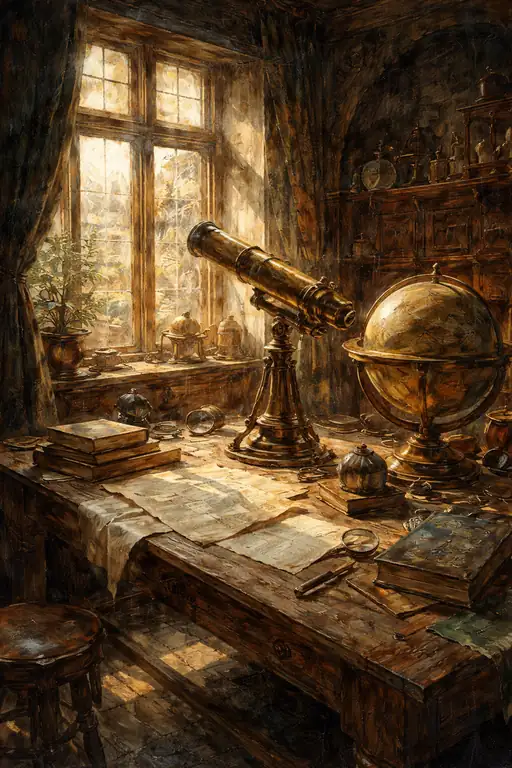 Vigil of the Golden Scholar
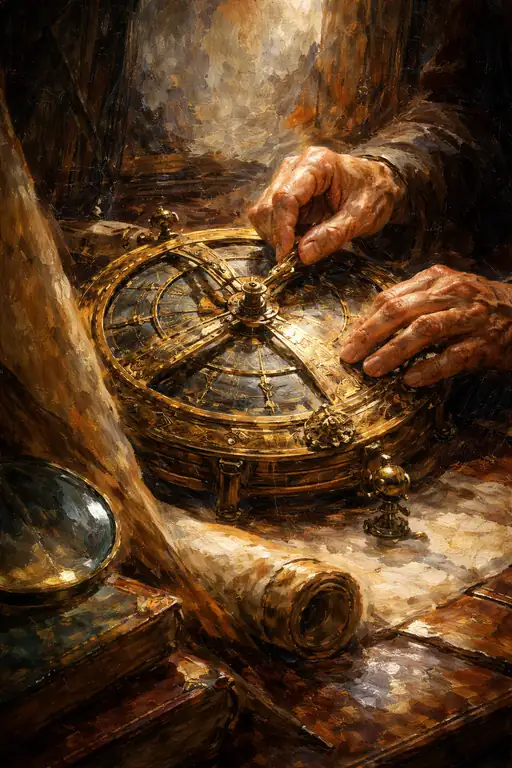 The Architect of Starlight
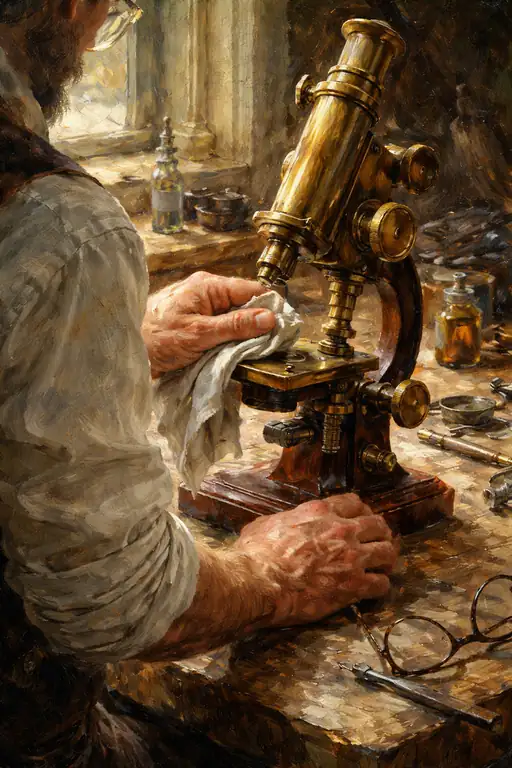 The Artisan's Focus
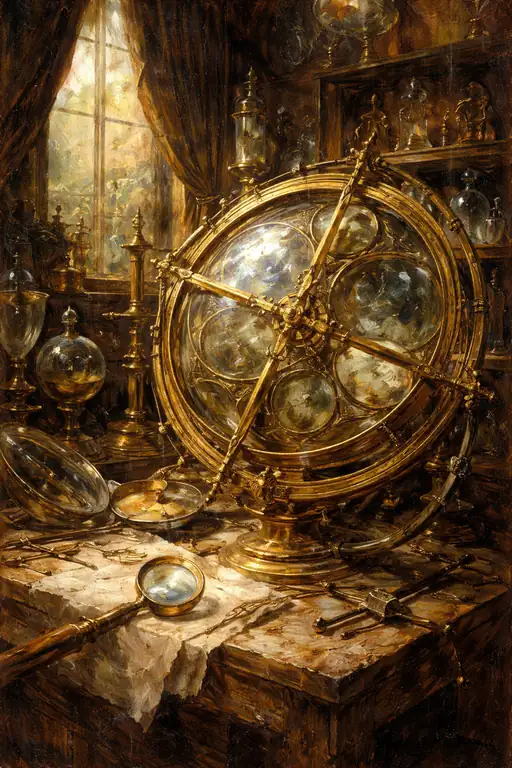 Gleaming Relics of the Astral Study
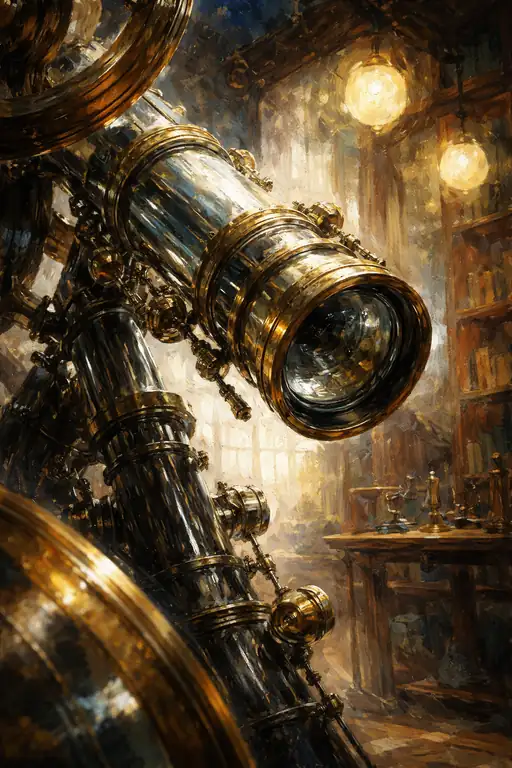 The Scholar's Cosmos
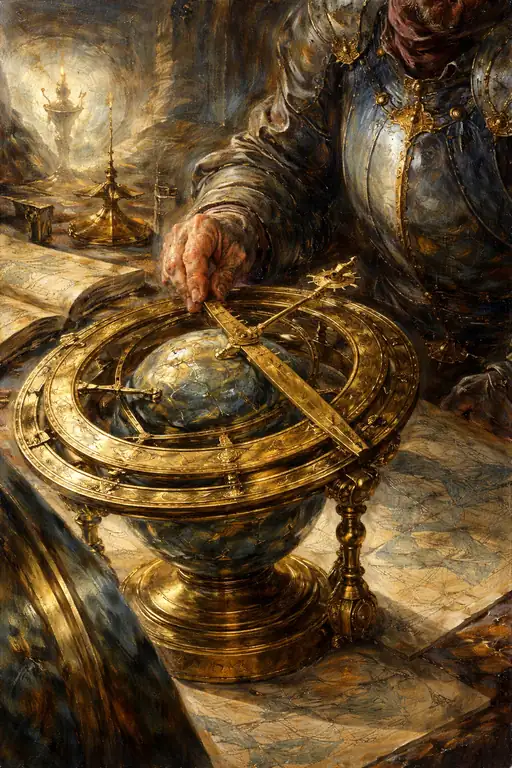 The Scholar Knight's Celestial Discovery
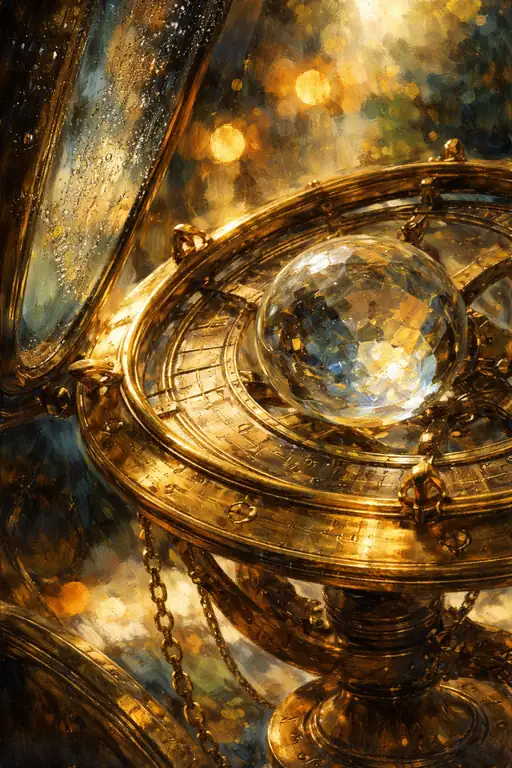 Starlight Bound in Gold
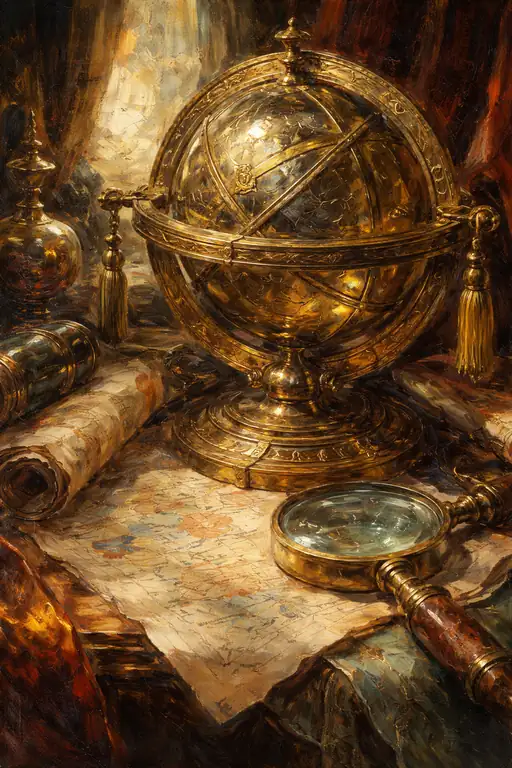 The Golden Map
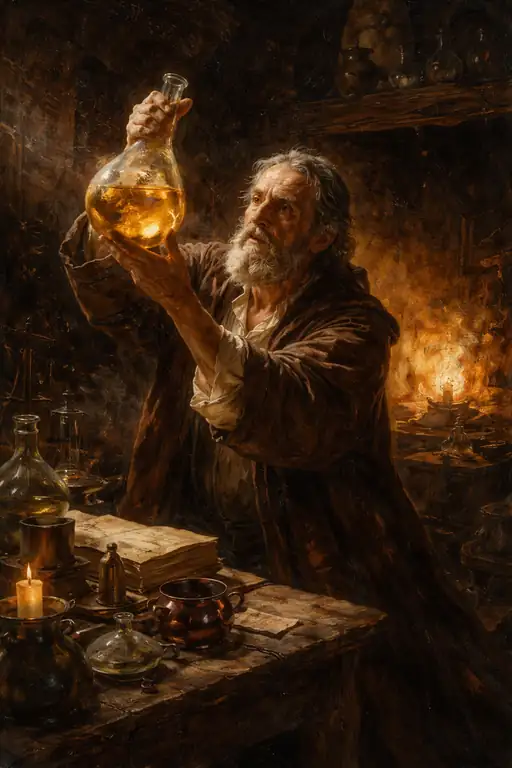 The Golden Epiphany
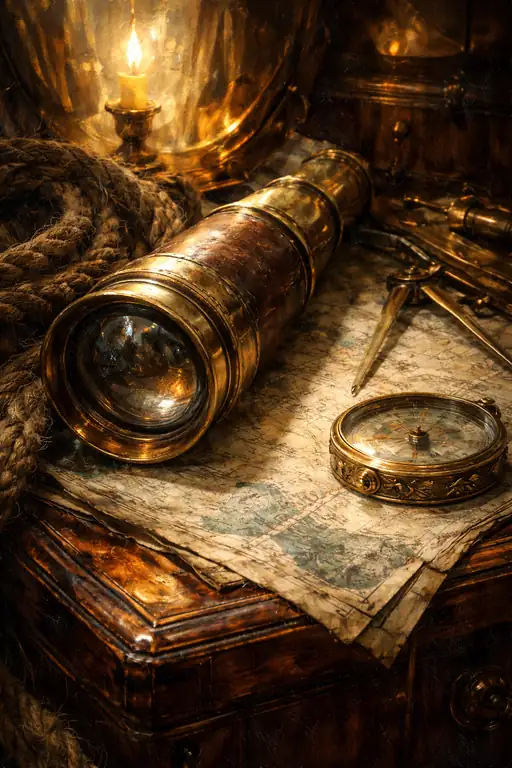 Whispers of the Uncharted Sea
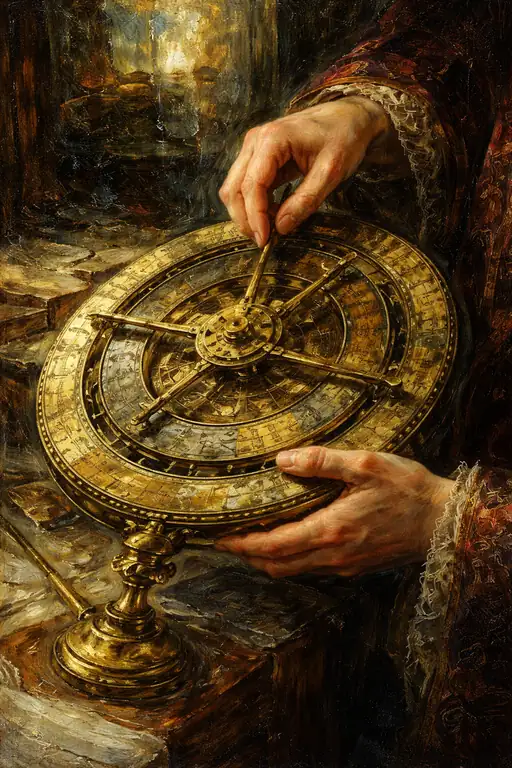 Echoes of the Starlit Ocean