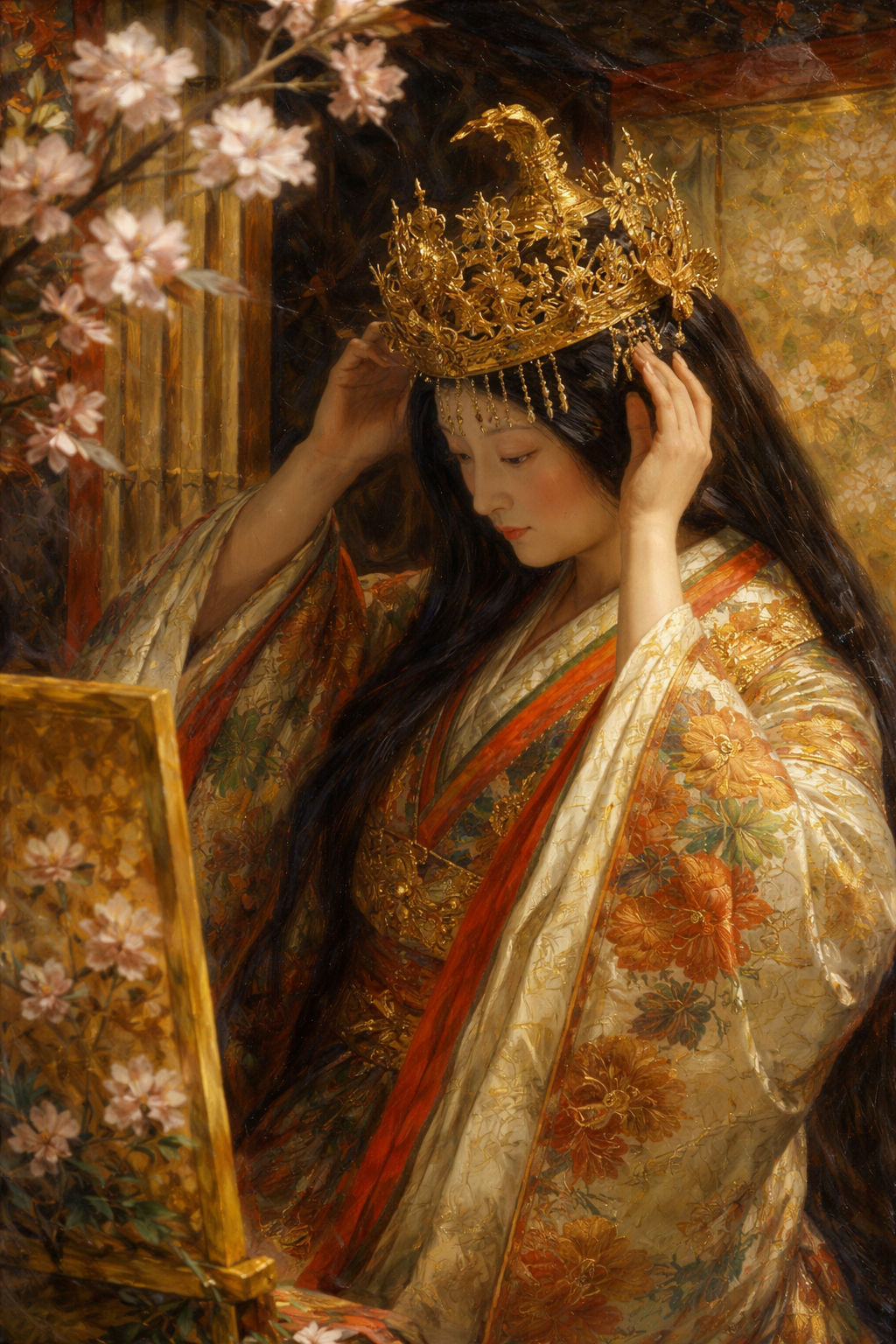
Glint of the Golden Crown
Critique
1. Introduction The presented artwork is a figurative painting that illustrates a scene of a woman in elaborate traditional attire. This piece demonstrates a high degree of technical proficiency in depicting the textures of gold and fabric. It effectively merges elements of East Asian motifs with a style reminiscent of classical realism. The overall composition centers on the intimate moment of self-arrangement. 2. Description In the center of the frame, a woman with long black hair is shown from the waist up, adjusting a complex golden crown. She is dressed in a multi-layered robe featuring intricate floral patterns in orange and gold, accented by a bold red sash. To her left, a blossoming branch of cherry flowers extends into the scene, partially obscuring a golden screen. Her gaze is cast downward toward an ornate mirror that stands in the lower-left corner. 3. Analysis The artist utilizes a warm color palette dominated by gold, orange, and red, which creates a sense of regal opulence. Soft, directional lighting illuminates the subject's face and hands, highlighting the delicate skin tones against the dark hair. The fine lines used for the crown窶冱 filigree contrast with the broader, more painterly strokes of the background screen. Spatial depth is achieved through the overlapping of the floral branches and the subject. 4. Interpretation and Evaluation The work can be interpreted as an exploration of beauty and the ritualistic nature of preparation. The downward gaze and the act of adjusting the crown suggest a quiet, introspective focus. The technical execution of the reflective surfaces and the silk-like texture of the garments is exceptional. This painting succeeds in conveying a dignified atmosphere through its balanced composition and harmonious use of traditional iconography. 5. Conclusion This artwork provides a compelling vision of elegance through its meticulous detail and rich color scheme. The interaction between the subject and her reflection offers a timeless quality to the narrative. One窶冱 initial impression of mere decorative beauty evolves into an appreciation for the subtle emotional weight held in the subject's posture. It stands as a refined example of modern figurative painting.
Same Subcategory
Similar Artworks
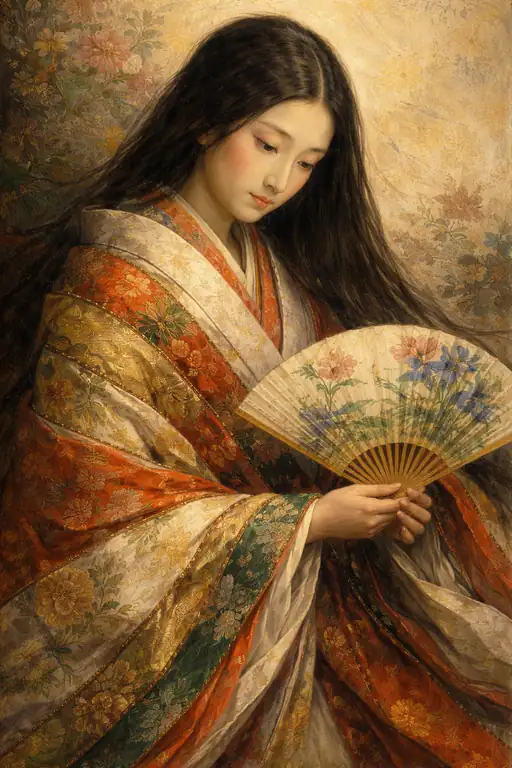 Silken Folds and Quiet Thoughts
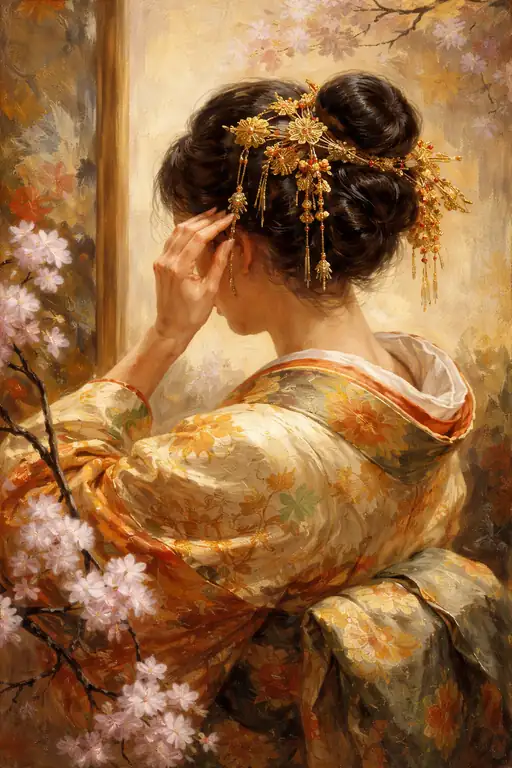 Grace Reflected in the Cherry Hues
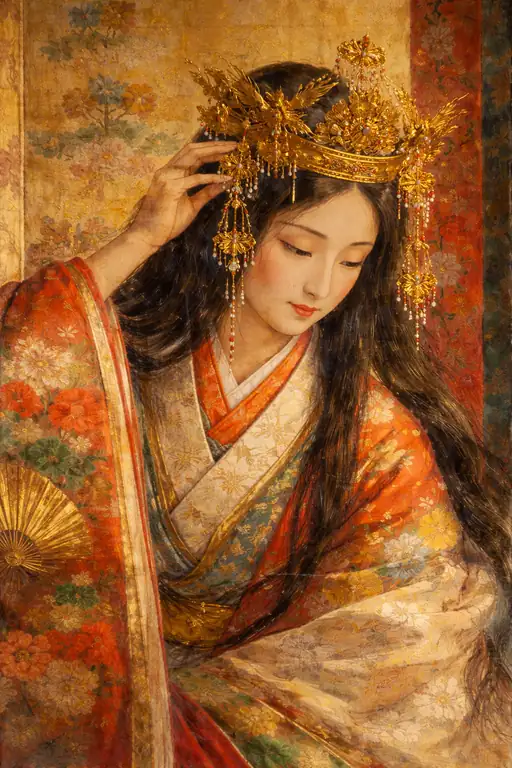 Ceremonial Shadows in the Mirror
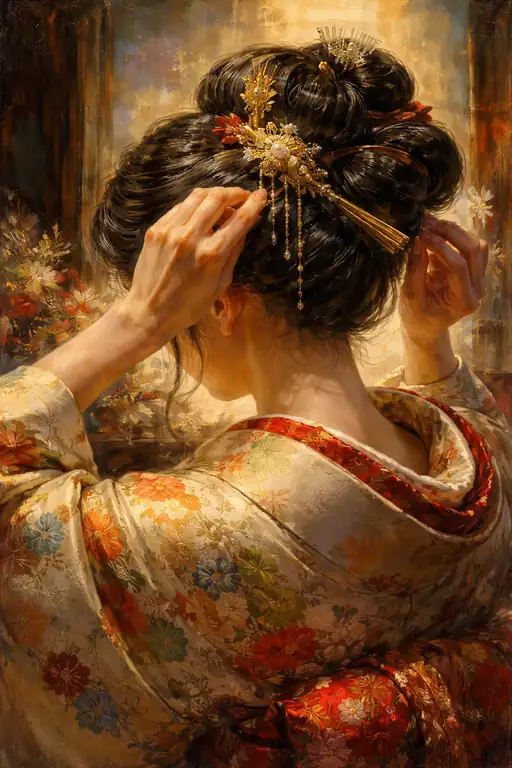 A Secret Adornment in the Mirror's Gaze
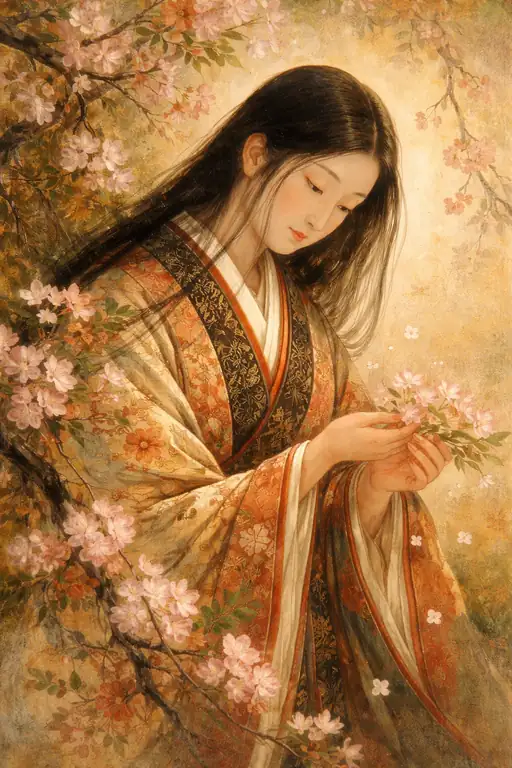 Ephemeral Bloom of Nostalgia
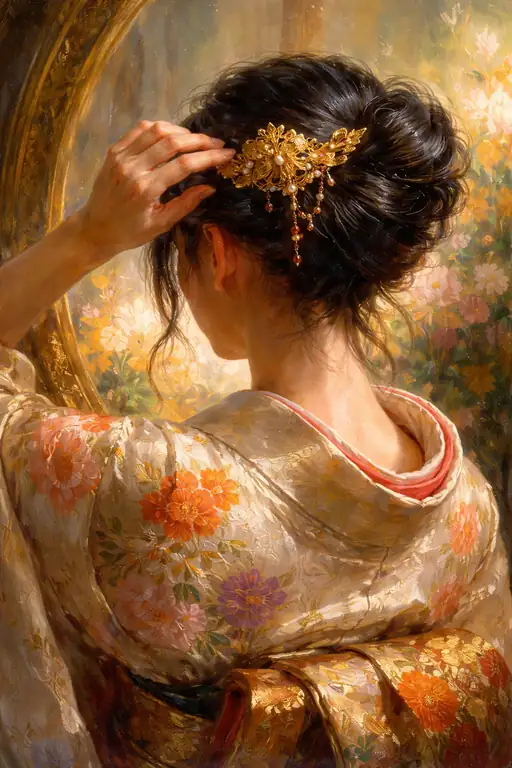 Golden Hairpin Glimmering in the Mirror
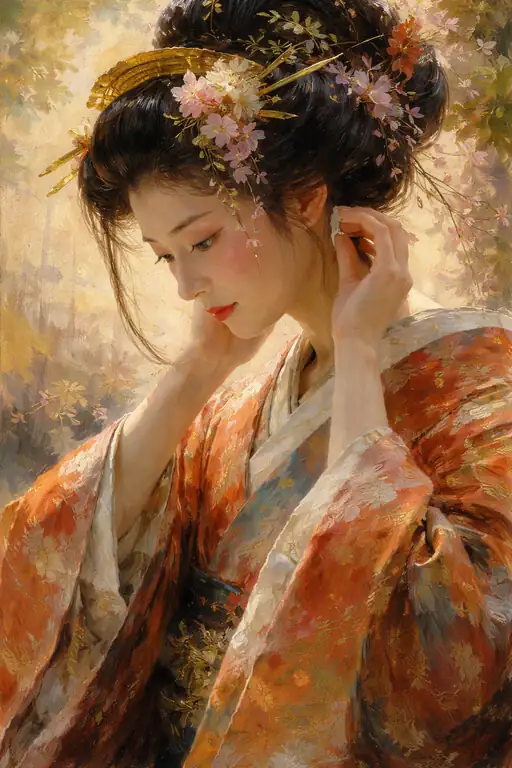 Gilded Petals, Silent Grace
 Silent Reverie in Golden Threads
 A Quiet Reflection Woven in Silk
 A Toss of Crimson and Gold