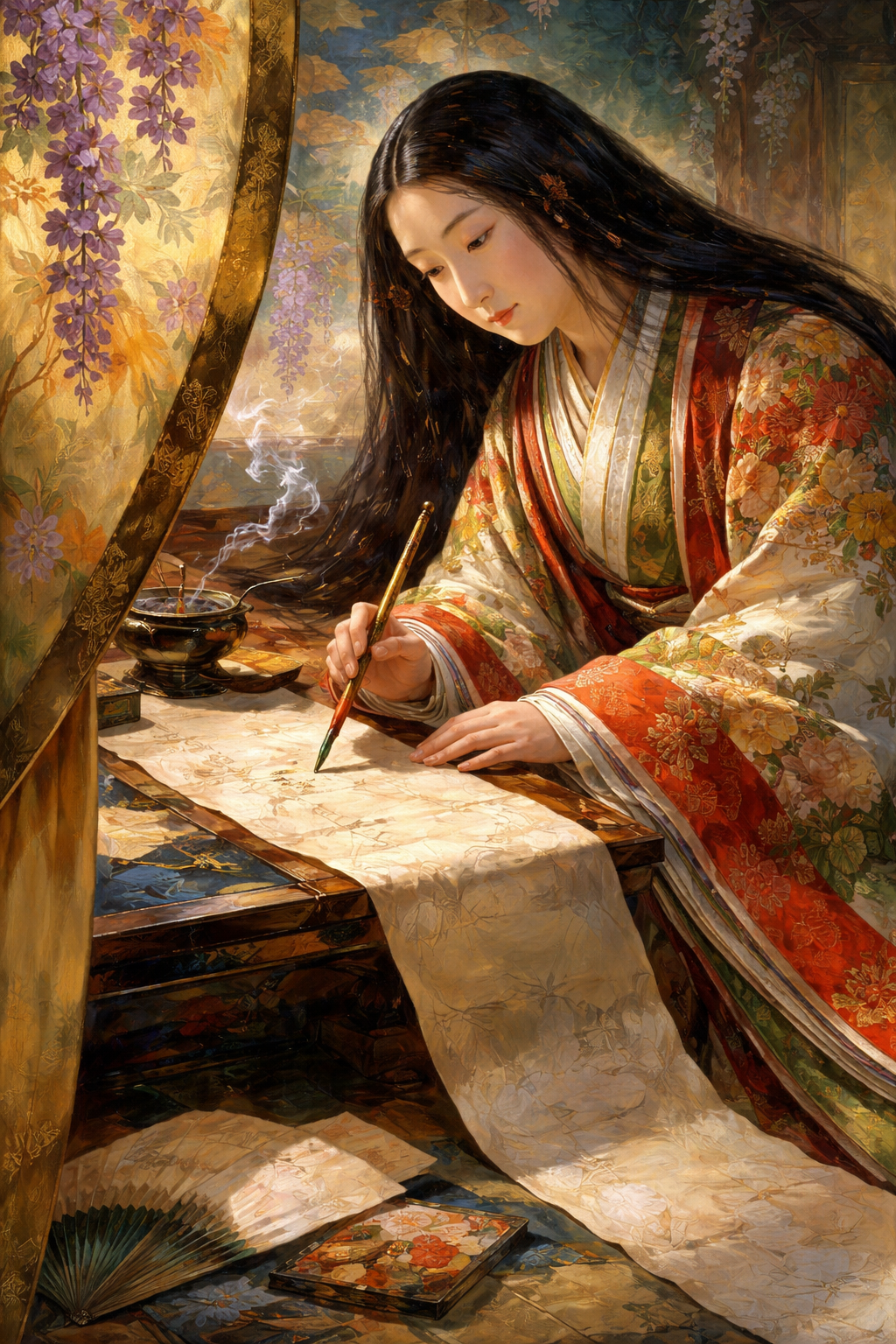
Ink and Smoke in the Scented Room
Critique
1. Introduction This artwork presents a serene portrait of a young woman engaged in the traditional act of calligraphy. She is depicted indoors, surrounded by elements that suggest a refined cultural setting, including floral patterns and incense. The piece captures a moment of quiet concentration, blending historical aesthetic elements with a delicate, modern painterly sensibility. It invites viewers into a private space where time seems to slow down, focusing on the rhythmic movement of the brush. 2. Description The central figure is a woman with long, flowing black hair, dressed in an ornate, multi-layered kimono adorned with intricate floral motifs in red, gold, and green. She sits at a low wooden desk, holding a thin brush and leaning over a long, pale scroll that extends toward the foreground. In the background, purple wisteria blooms hang near a window, while a small bronze incense burner releases a delicate trail of white smoke. A partially opened fan and a decorative box lie on the floor in the lower-left corner. 3. Analysis The composition is built on a strong diagonal line created by the scroll, which leads the viewer's eye from the bottom-right up to the figure's hands. Soft, warm light enters from the upper-left, illuminating the woman's face and the rich textures of her silk garments. The color palette is dominated by earthy golds and warm reds, contrasted by the cool purples of the wisteria and the deep black of the hair. Fine line work is used to define the complex patterns on the kimono, creating a sense of tactile richness. 4. Interpretation and Evaluation The painting successfully conveys a sense of meditative tranquility and the preservation of classical traditions. The artist demonstrates exceptional skill in rendering varied textures, from the gossamer-like smoke to the heavy, embroidered silk of the clothing. The use of wisteria, often a symbol of longevity and grace, reinforces the elegant atmosphere of the scene. While the perspective on the scroll is slightly exaggerated, it serves to emphasize the primary action and the physical length of the artistic endeavor. 5. Conclusion This work offers a compelling exploration of cultural identity and the beauty of focused labor. Through its harmonious blend of color and light, the piece elevates a simple act of writing into a significant ritual. The initial impression of a historical tableau is deepened by the artist's meticulous attention to detail and atmosphere. It stands as a refined example of how traditional themes can be revitalized through contemporary technical proficiency and a sensitive approach to character.
Same Subcategory
Similar Artworks
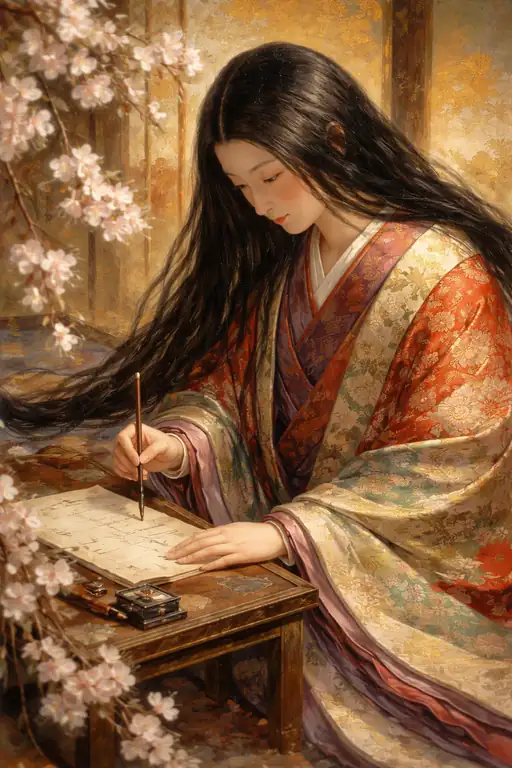 Echoes of Tradition Under Falling Sakura
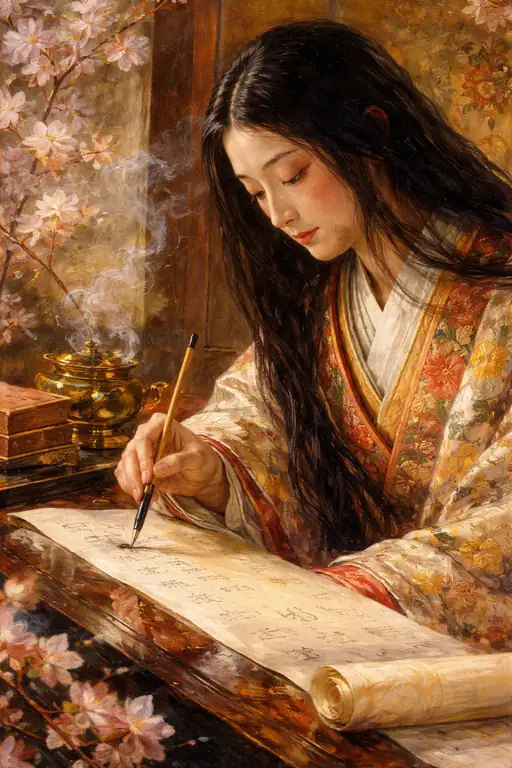 Whispers in the Incense Smoke
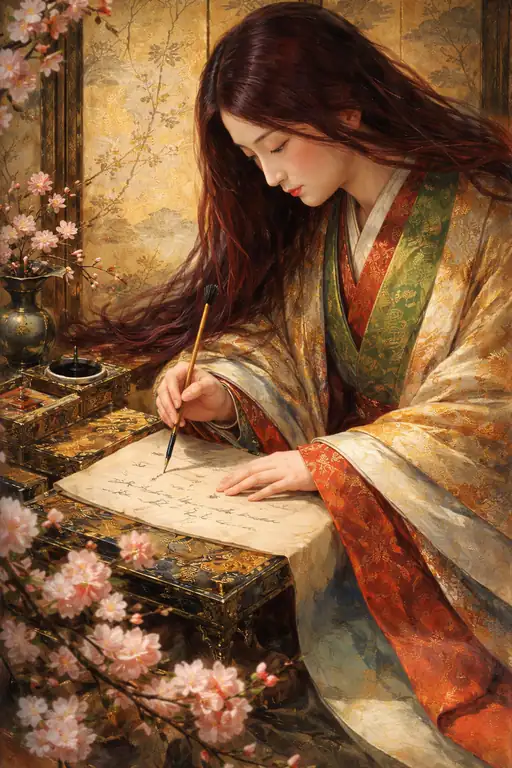 Golden Screen of Literary Grace
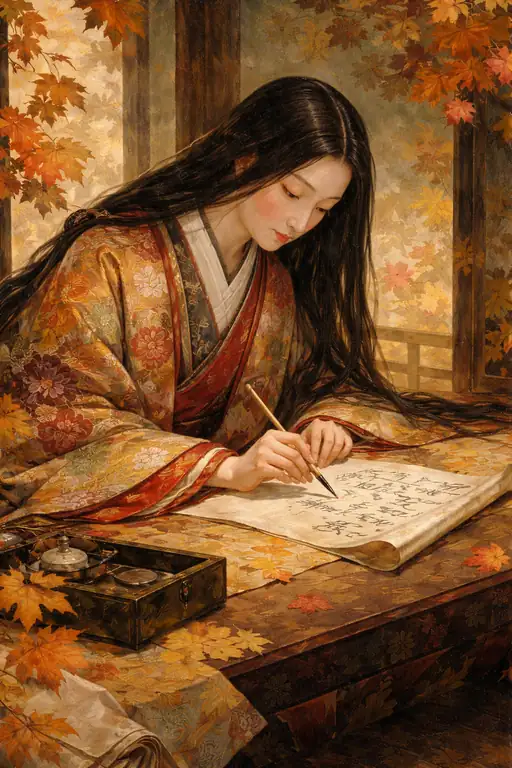 Ink Stains on Autumn Paper
 Illuminations in the Solitude of Night
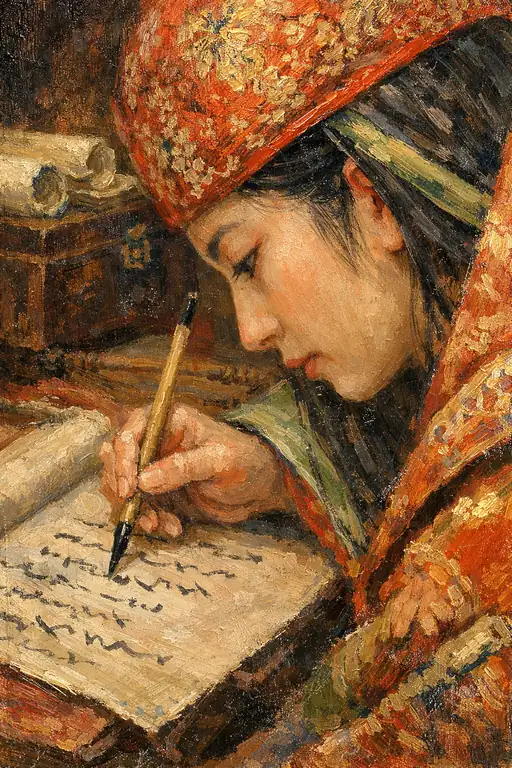 Ink and Introspection
 Elegance of the Brush
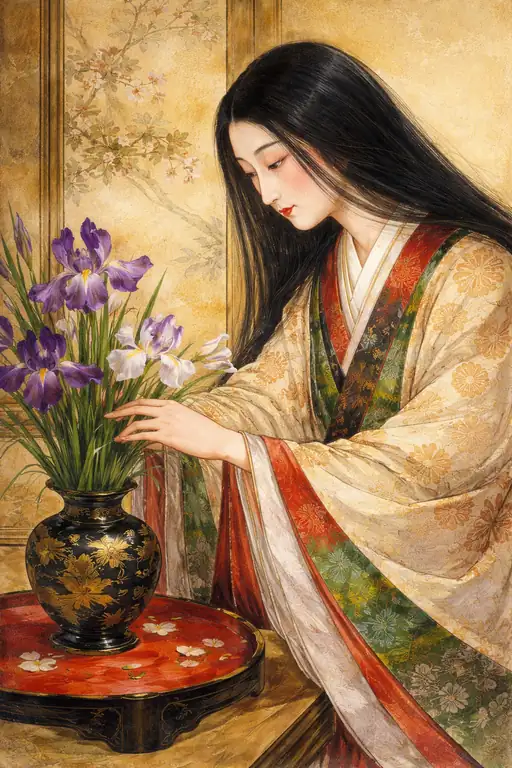
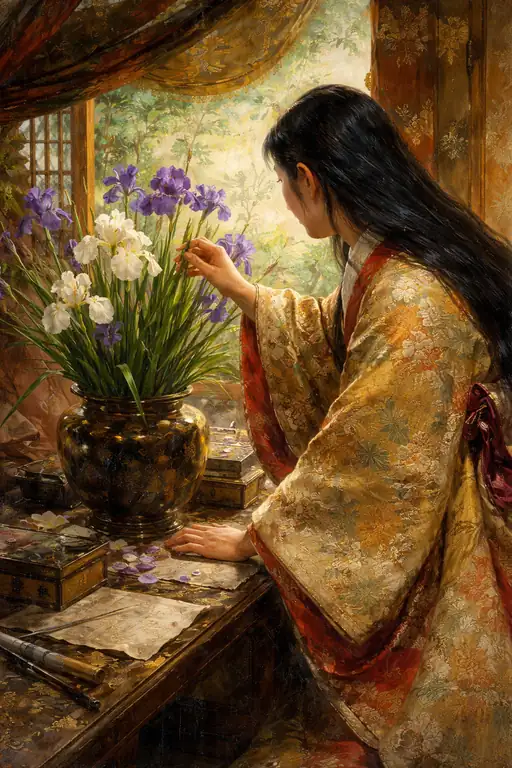 A Moment's Grace with Purple Irises
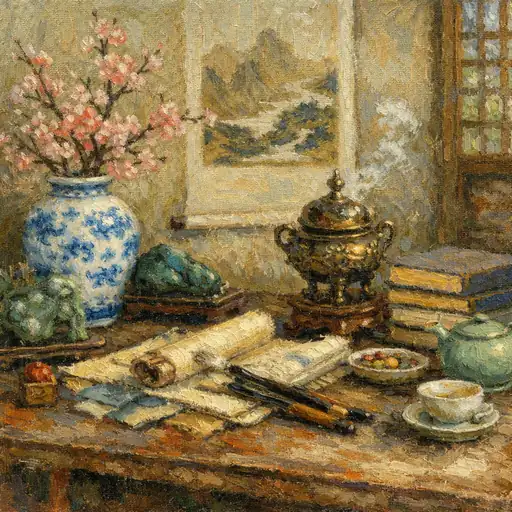 The Scholar's Reverie: Fragrant Smoke and Timeless Ink
 Devotion to the Silent Stems