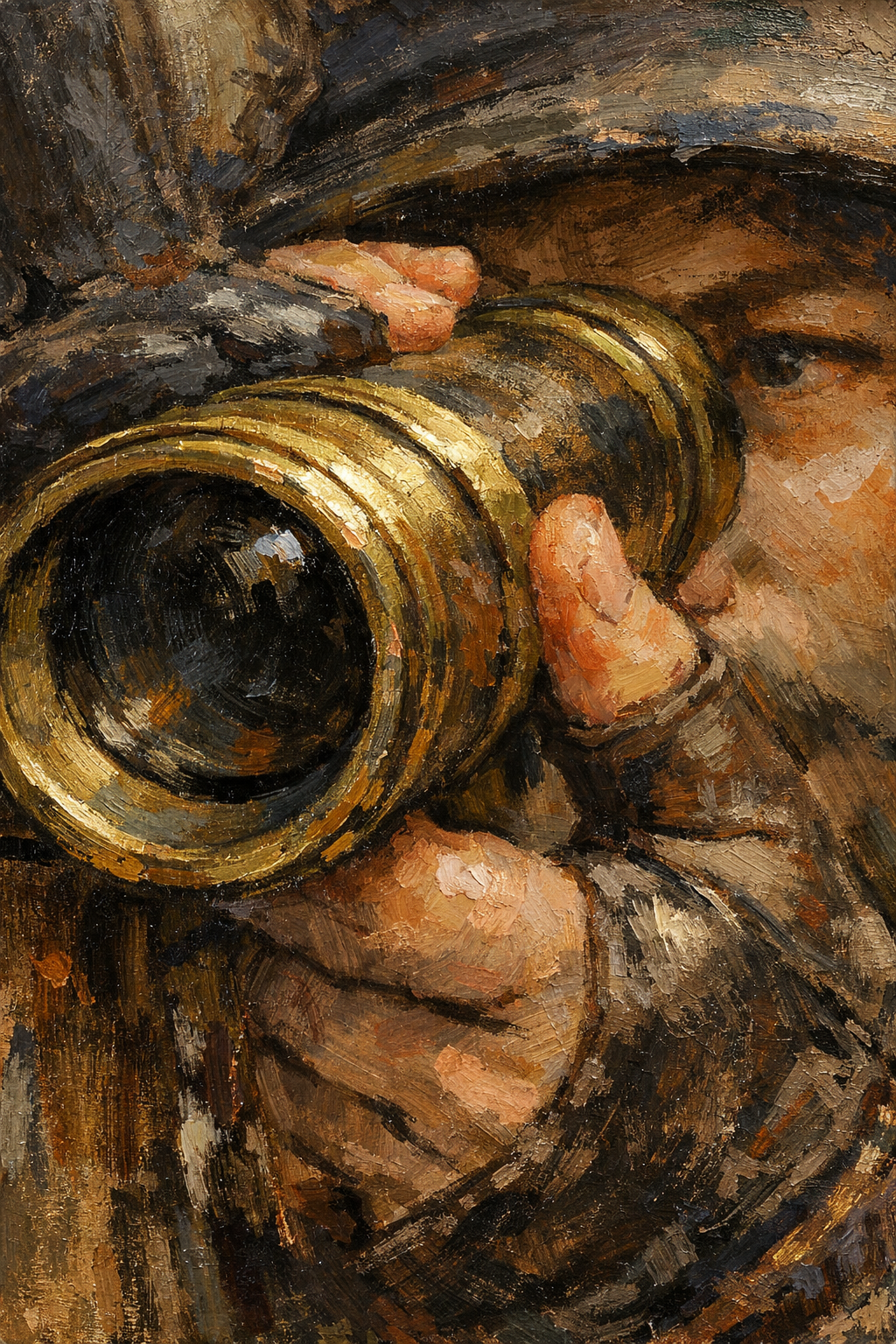
Reaching for the Horizon
Critique
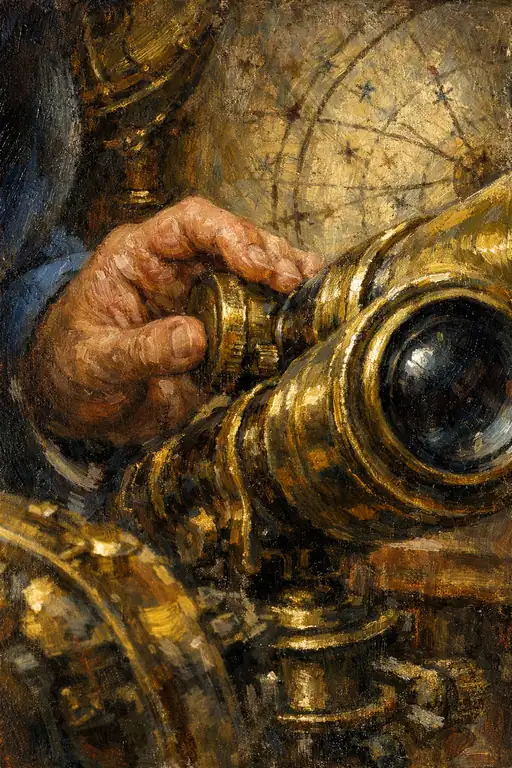
1. Introduction The artwork offers a compelling close-up of a figure engaged in the act of observation, utilizing a vintage brass telescope as the primary focal point. This piece captures a sense of profound curiosity and the human desire to bridge the distance between the observer and the unknown. By focusing on the tools of discovery, the painting invites the viewer to consider the intensity of a single, focused gaze. The composition is intimate, drawing the audience into the physical and psychological space of the explorer. 2. Description A substantial, weathered brass telescope dominates the center of the vertical canvas, its surface marked by varied golden and bronzed tones. Two hands, rendered with thick, expressive strokes, grip the instrument firmly, suggesting its physical weight. In the upper-right corner, a single eye is visible, partially obscured but clearly aligned with the telescope窶冱 eyepiece. The figure wears dark, heavy garments that blend into the earthy, textured background, ensuring that the metallic instrument remains the undisputed center of attention. 3. Analysis The artist窶冱 use of heavy impasto is particularly striking, providing the painting with a tactile quality that mirrors the rugged nature of the equipment depicted. The brass of the telescope is not rendered as a smooth surface but as a series of layered, reflective strokes that capture the play of light and shadow. The vertical orientation of the composition emphasizes the length of the telescope, creating a strong directional line that leads the viewer窶冱 eye toward the unseen subject of observation. The color palette is restricted to warm metallics and deep, somber browns. 4. Interpretation and Evaluation The work functions as a powerful metaphor for the pursuit of knowledge and the expansion of the human horizon. The tension in the hands and the alignment of the eye suggest a moment of critical discovery or urgent surveillance. The execution is highly successful; the artist manages to convey the rigid, cold nature of the metal alongside the soft, pliable texture of human skin using the same bold technique. The tight cropping of the scene heightens the drama, focusing entirely on the relationship between the man and his instrument. 5. Conclusion Initially, the viewer is struck by the bold materiality of the brass, but the painting eventually reveals a deeper narrative of exploration. The interplay of texture and light successfully evokes the atmosphere of a past era of scientific inquiry. Ultimately, the artwork stands as a testament to the enduring significance of focused vision in the human experience, leaving a lasting impression of intellectual and physical striving.
Same Subcategory
 The Heartbeat of Iron
Similar Artworks
 Echoes of the Uncharted Sea
 Grasping the Celestial Mysteries
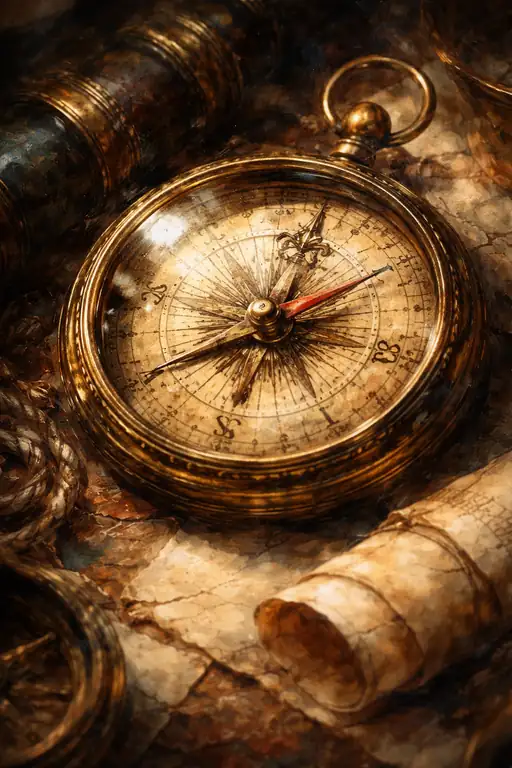 The Compass that Knows My Heart's Direction
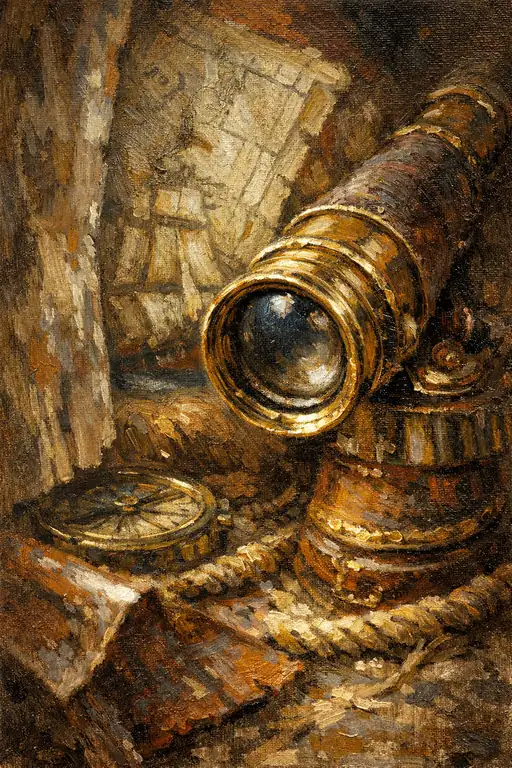 Voyage Through Amber Dust
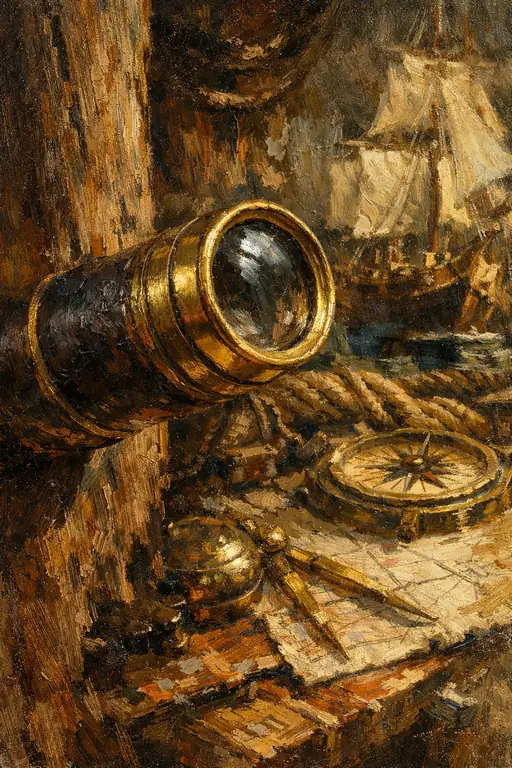 Looking Towards the Unknown Sea
 Whispers of the Uncharted Sea
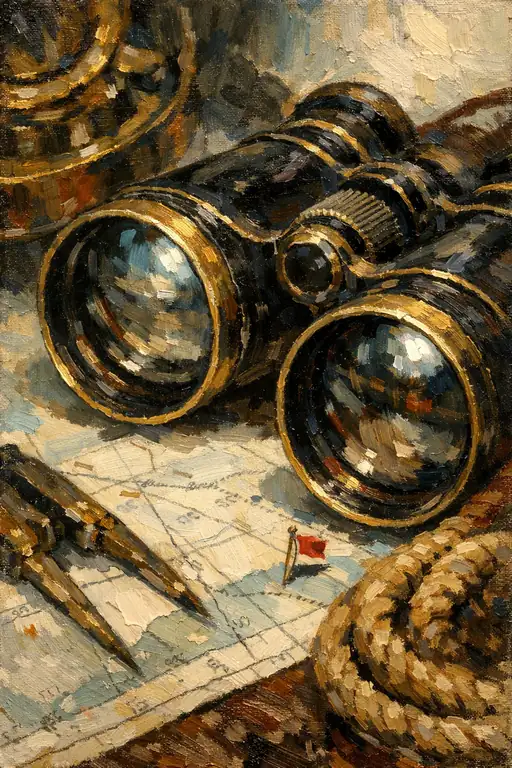 Gaze into the Unknown
 Clockwork Dreams of the Starlit Navigators
 Echoes of the Voyage: The Navigator's Rest
 Guiding the Heavens: The Touch of Discovery