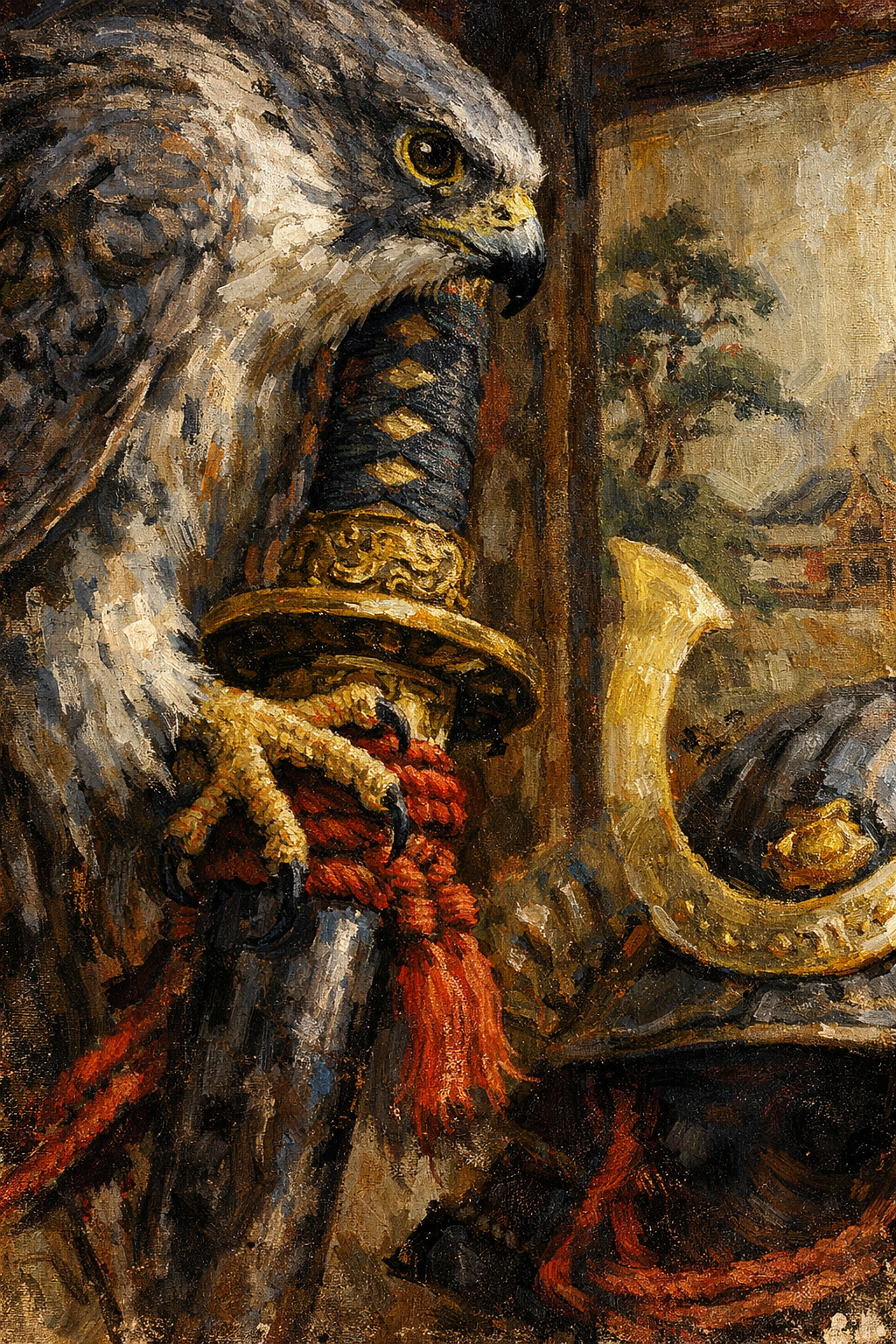
The Predator and the Honor
Critique
1. Introduction This oil painting presents a powerful juxtaposition of nature and martial tradition through its focused composition. The work captures a momentary stillness where a predatory bird and human artifacts converge in a single, evocative frame. The piece utilizes a rich, impasto technique to convey texture and depth across its diverse subjects. 2. Description In the upper left quadrant, the head of a falcon is depicted with meticulous detail, its sharp beak and keen eye directed toward the right. Its talons firmly grasp the ornate hilt of a katana, which features gold-leaf accents and a deep blue wrapping. Below the hilt, a thick red cord hangs with intricate knots. The lower right foreground reveals a samurai helmet, characterized by a prominent golden crescent moon ornament. The background suggests a traditional Japanese structure amidst autumnal foliage. 3. Analysis The artist employs a tight, vertical composition that emphasizes the physical connection between the bird and the sword. High-contrast lighting highlights the metallic sheen of the hilt and the helmet's ornament against the softer textures of the feathers. The color palette is dominated by earthy browns and grays, punctuated by the vibrant gold and striking red of the cord. Brushstrokes are bold and visible, lending a dynamic, expressive quality to the static objects. 4. Interpretation and Evaluation This work can be interpreted as a symbol of disciplined strength and the nobility associated with the warrior class. The falcon, a traditional symbol of keen sight and authority, serves as a guardian or a spiritual counterpart to the samurai's equipment. The technical execution is commendable, particularly in the rendering of light on different surfaces. The choice of the impasto style adds a layer of modern intensity to a theme deeply rooted in historical aesthetics. 5. Conclusion The painting successfully merges animal majesty with cultural symbolism into a coherent and impactful visual statement. It invites the viewer to reflect on the relationship between natural instincts and the refined arts of warfare. Overall, the work remains a compelling example of how classical subjects can be reinvigorated through expressive painterly techniques.
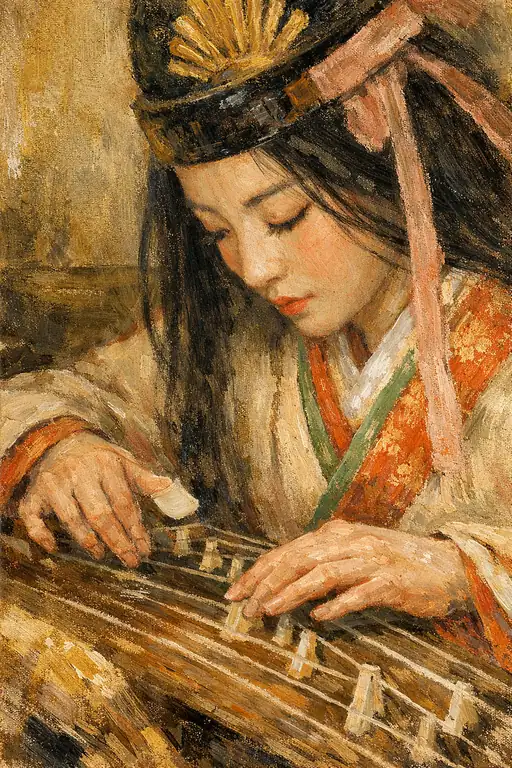 Melodies in the Golden Threads
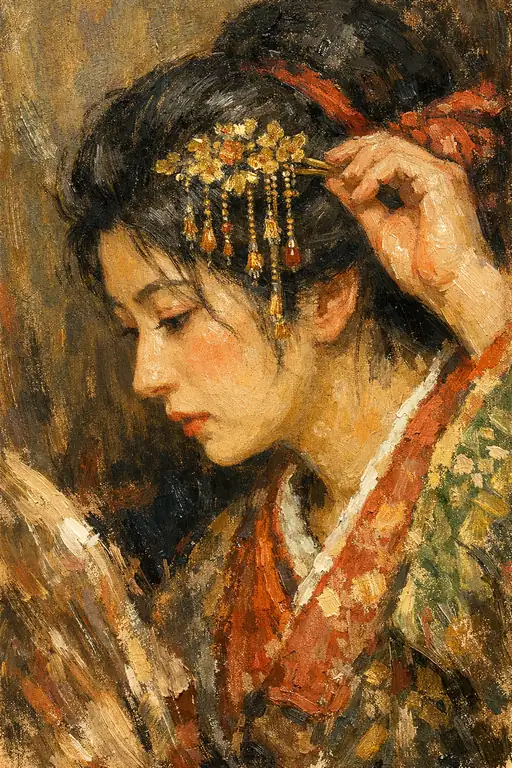 Reflection of Time's Grace
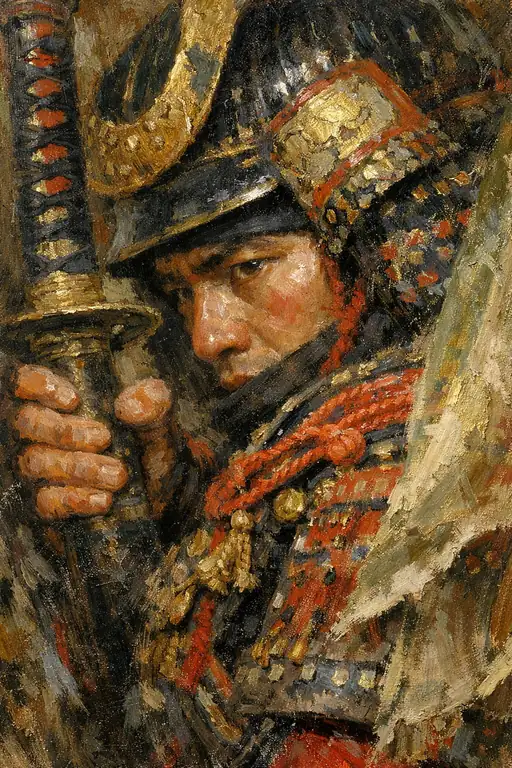 Burden of the Blade
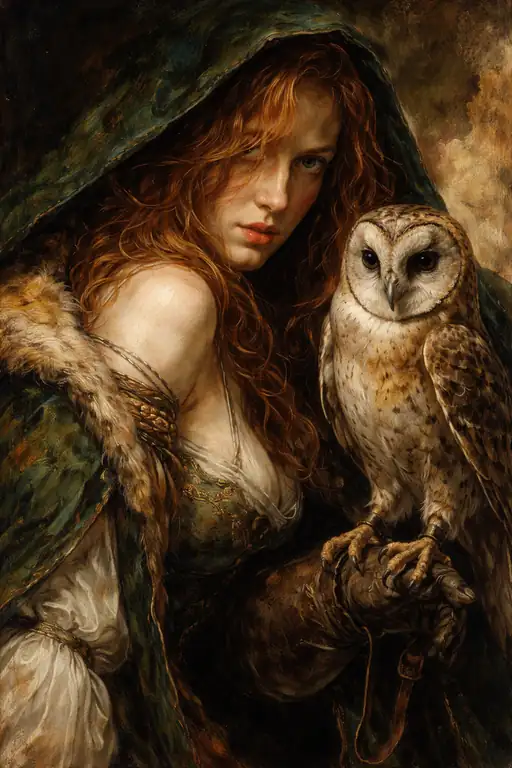 Guardian of the Forest: The Owl's Companion
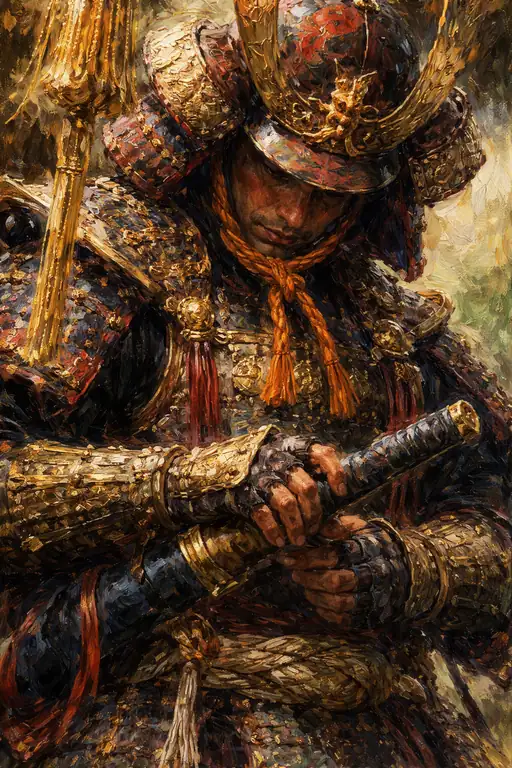 Golden Armor Shimmering in Silent Thought
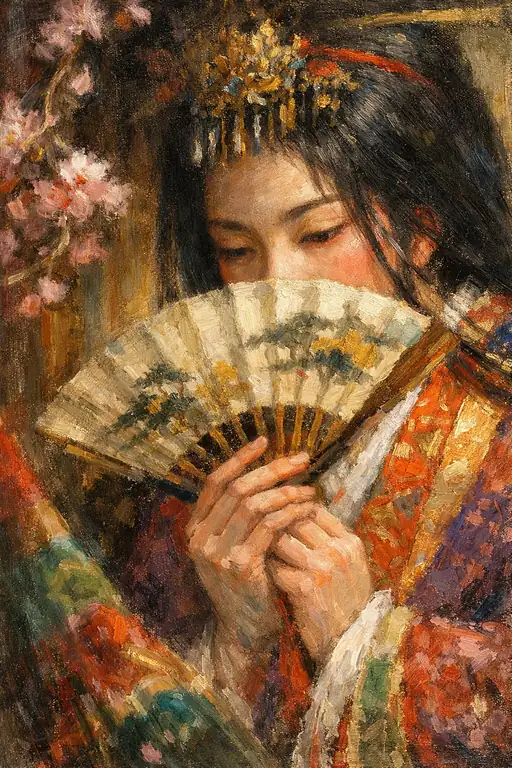 Secrets Behind the Petals
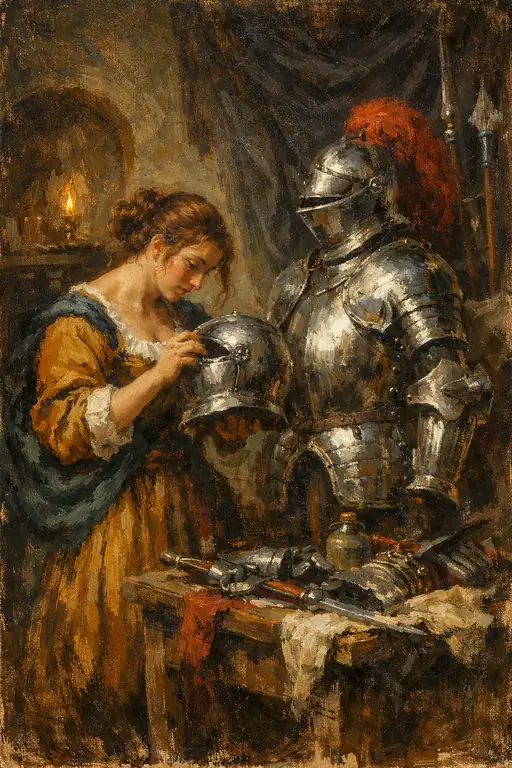 Reflections in Steel
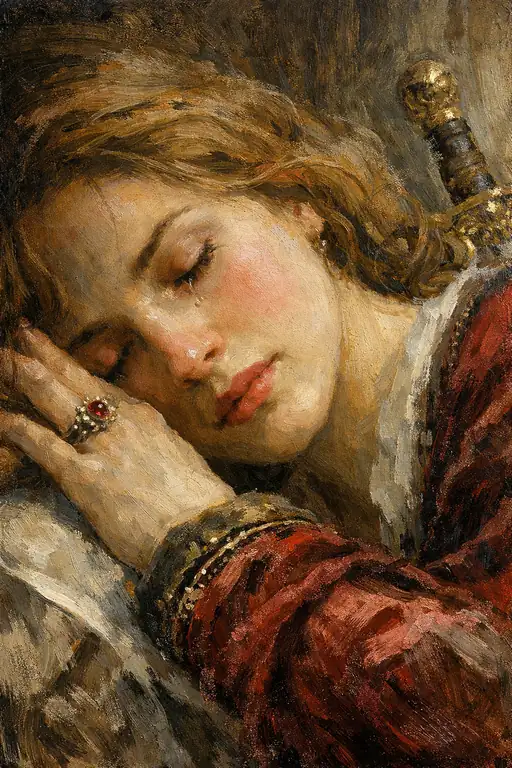 Tears of a Forgotten Age
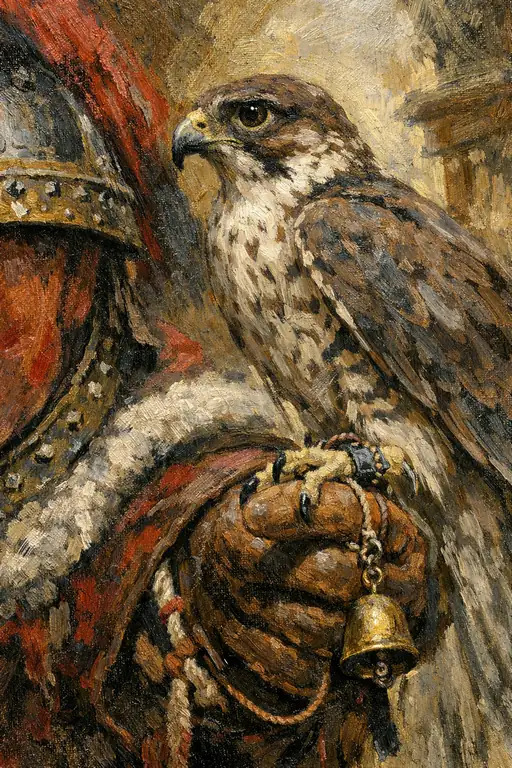 A Bond Woven in Feathers
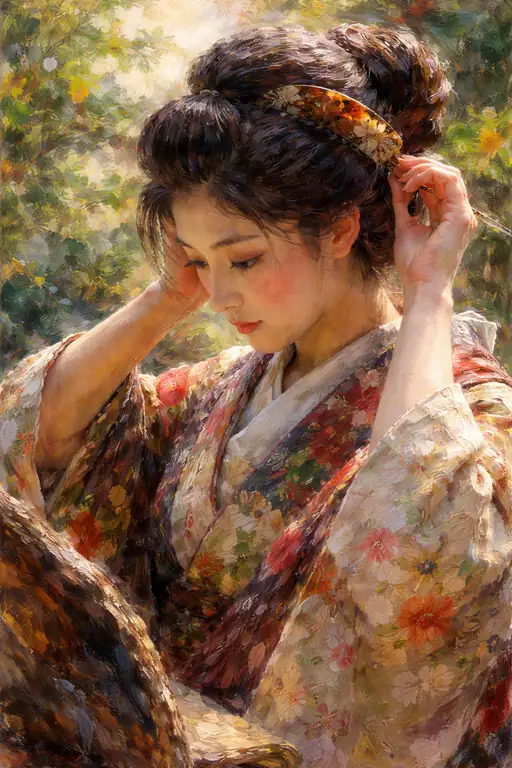 Melody of the Forgotten Sea