Whispers of the Spring Breeze
Critique
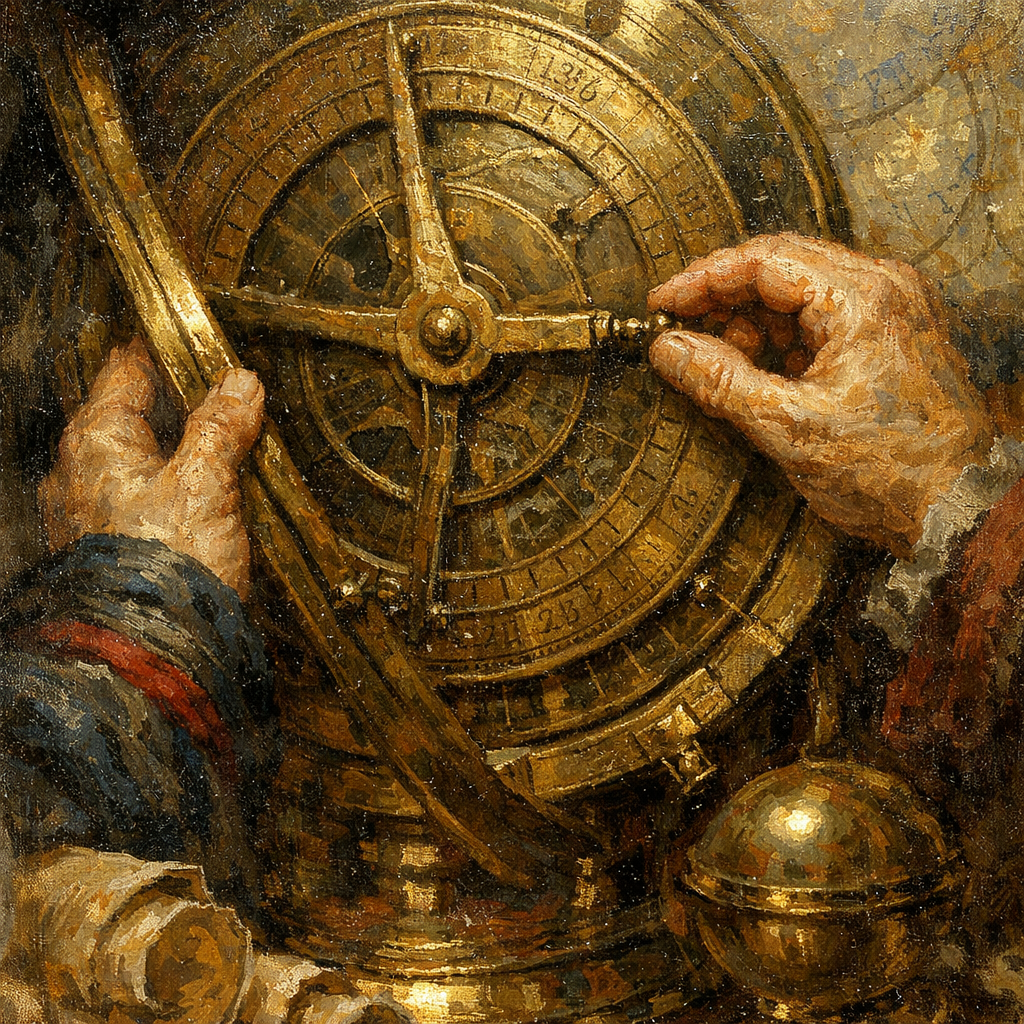
1. Introduction This compelling oil painting captures a moment of intense focus and precision, centering on the hands of a scholar or navigator adjusting an intricate scientific instrument. The composition is dominated by a golden astrolabe, surrounded by rolls of parchment and a small celestial globe. Through its meticulous focus on the act of measurement, the work celebrates the human endeavor to understand and map the physical world. 2. Description The hands, depicted with weathered skin and prominent veins, are shown in the process of turning a small knob on a large, multi-layered brass device covered in astronomical scales. To the lower left, several rolled scrolls suggest maps or calculations, while a polished golden sphere sits in the lower right corner. The background is dark and textured, featuring faint markings that hint at celestial charts or blueprints. The lighting is concentrated on the instrument and the hands, creating a sense of dramatic chiaroscuro. 3. Analysis The artist employs a monochromatic gold and brown palette, which imbues the scene with a sense of antiquity and intellectual gravity. The circular forms of the astrolabe and globe create a rhythmic pattern that anchors the composition, while the diagonal lines of the hands provide a dynamic sense of action. Visible brushstrokes and heavy impasto emphasize the physical reality of the aged skin and the metallic sheen of the brass. The contrast between the soft texture of the paper and the hard, reflective surface of the instruments is masterfully rendered. 4. Interpretation and Evaluation The painting functions as an allegory of human curiosity and the mastery of technology during the Age of Discovery. By focusing solely on the hands and the tools, the artist highlights the craftsmanship and intellectual rigor required for such pursuits. The technical execution is exceptional, particularly in the way the warm light seems to radiate from the golden surfaces, illuminating the fine details of the instrument's engravings. This work effectively communicates the dignity of scientific labor and the profound connection between the mind and the physical world. 5. Conclusion The artwork elevates the act of scientific observation into a moment of transcendental beauty. By emphasizing the tactile relationship between the scholar and his instruments, the artist allows the viewer to feel the weight of historical inquiry. The initial impression of a complex machine eventually reveals a deeply human story of persistence and wonder. This painting stands as a powerful testament to the enduring human quest for knowledge and the tools that make it possible.
 Echoes of Forgotten Journeys
 The Heartbeat of Iron
 The Weight of the World
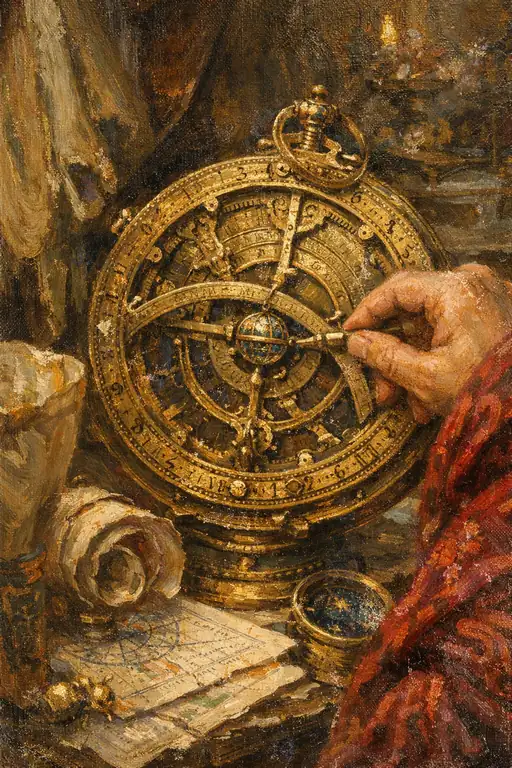 Grasping the Celestial Mysteries
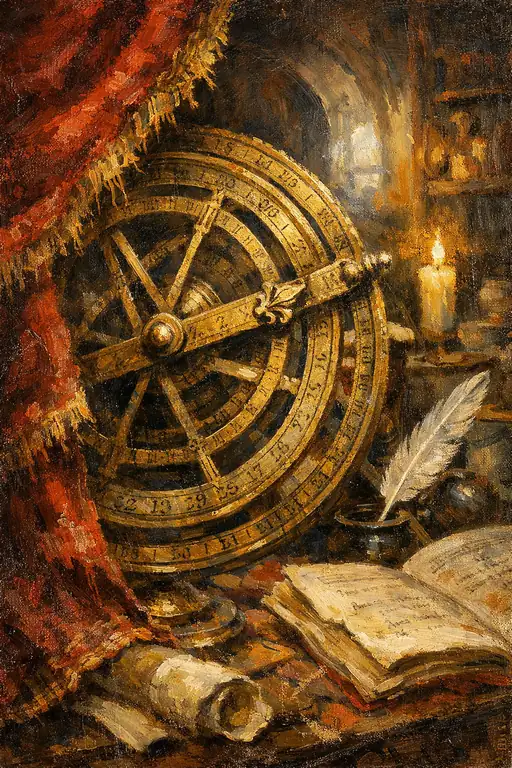 Echoes of Eternity in a Solitary Flame
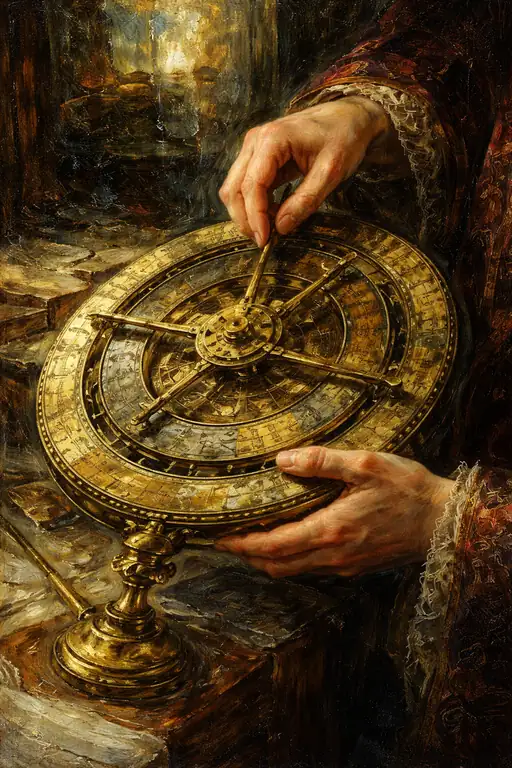 Echoes of the Starlit Ocean
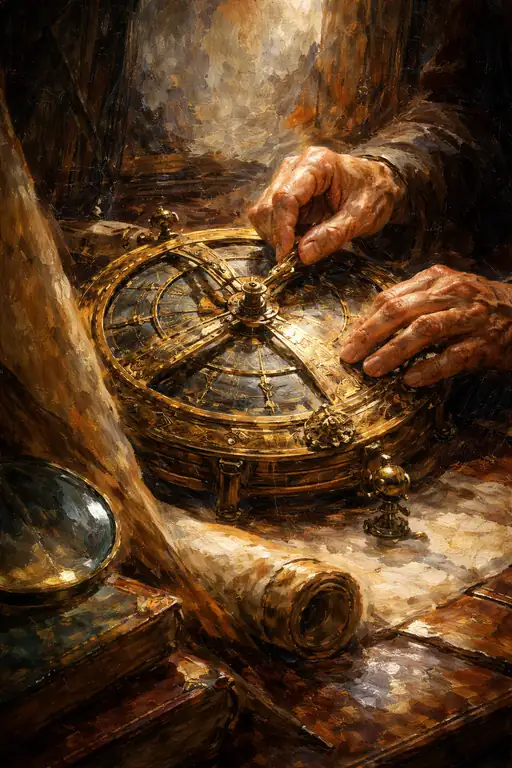 The Architect of Starlight
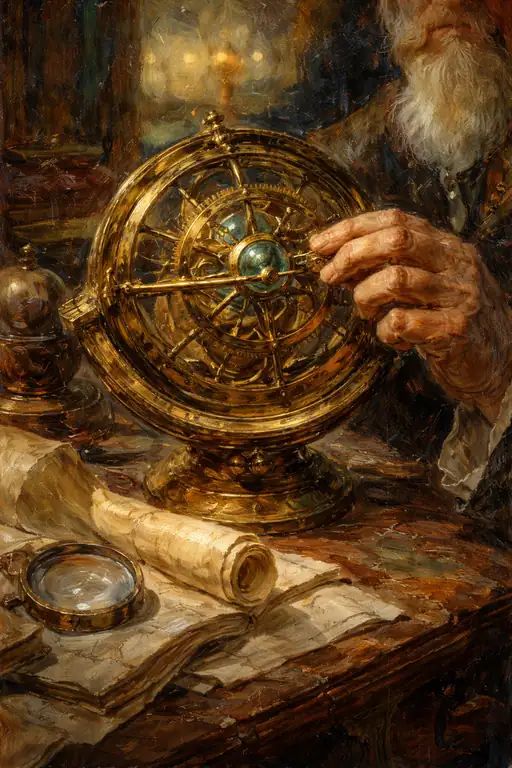 Touching the Infinite
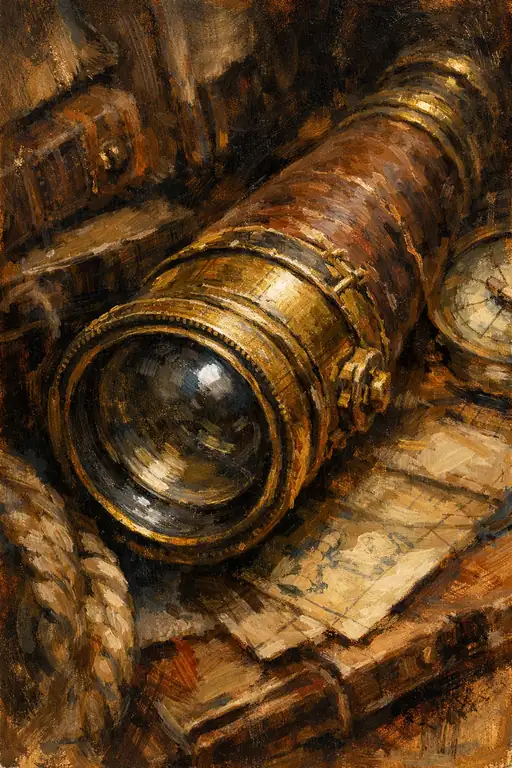 Echoes of the Uncharted Sea
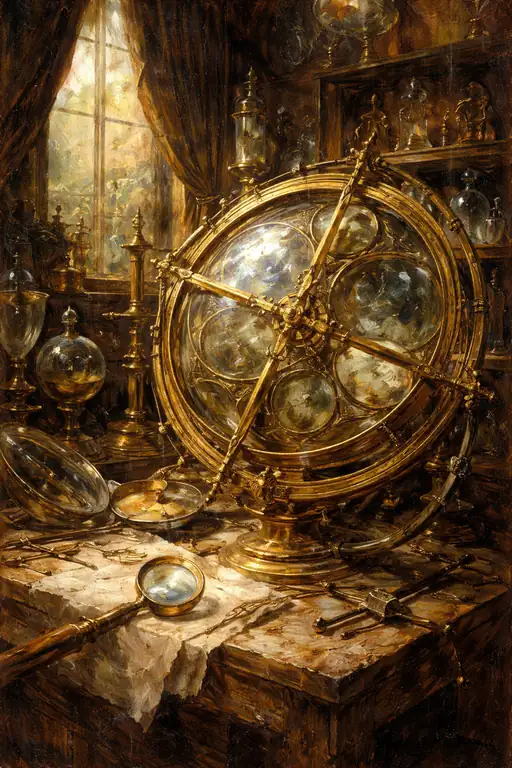 Gleaming Relics of the Astral Study
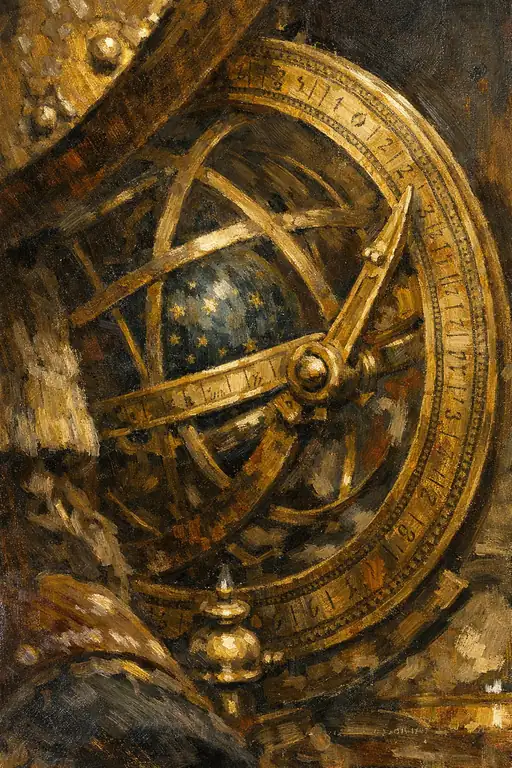 Mechanisms of the Eternal Sky