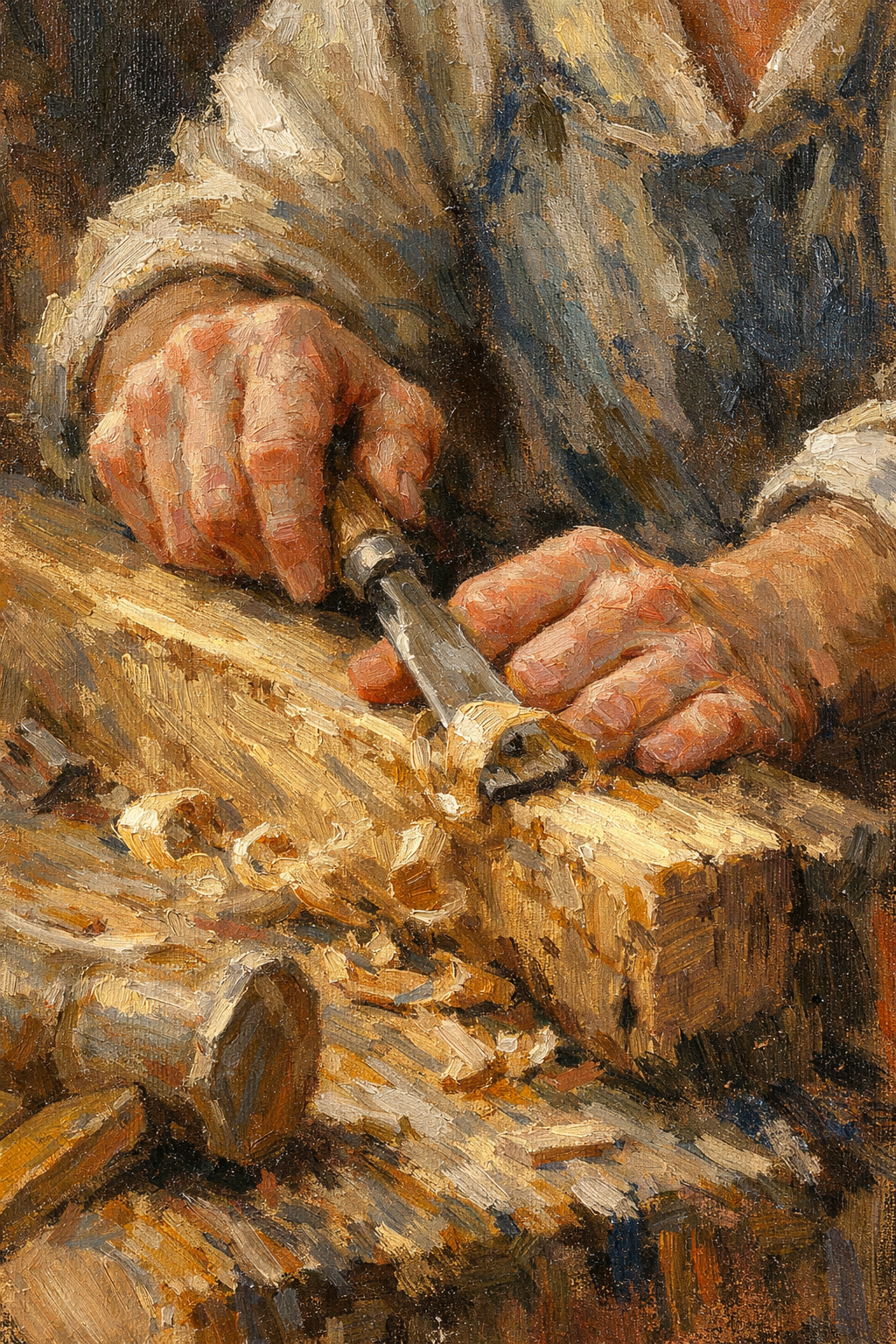
The Last Ember of Hope
Critique
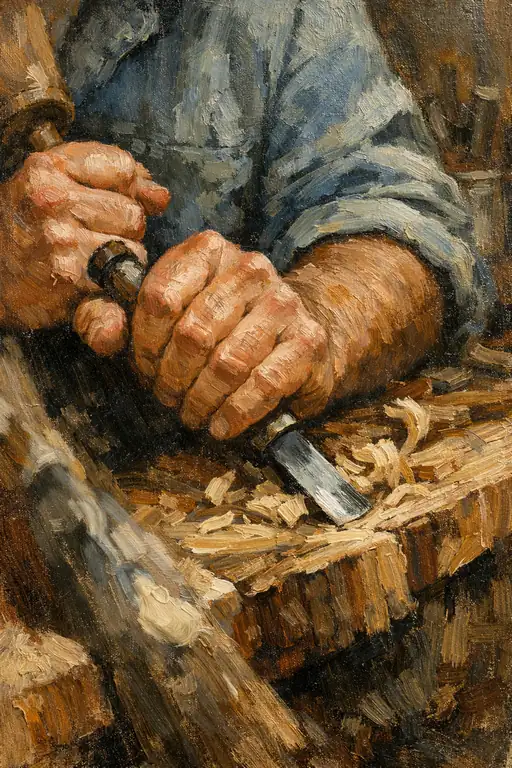
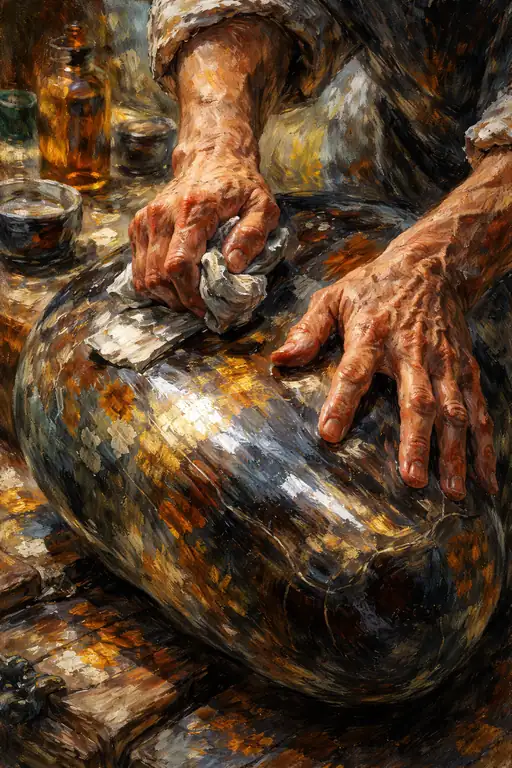
1. Introduction The work presents a powerful close-up of a woodworker's hands in the midst of creative labor, emphasizing the raw physical connection between the artisan and their material. By focusing exclusively on the interaction between the hands, the chisel, and the timber, the composition highlights the concentration and skill required for traditional craftsmanship. This intimate perspective elevates a moment of manual work into a profound study of human agency and the transformative nature of tactile effort. 2. Description At the center of the frame, a pair of rugged, weathered hands are shown firmly gripping a metal chisel. The tool is actively carving into a thick block of pale wood, with fresh, curled shavings scattered around the point of contact. The woodworker wears a textured, off-white garment that suggests a workshop environment. In the foreground, other wooden elements and tools are visible, partially obscured by the dynamic arrangement of wood chips. The entire scene is depicted with broad, expressive brushstrokes that emphasize the ruggedness of the surfaces and the intensity of the action. 3. Analysis The artist employs a warm, earthy color palette dominated by browns, ochres, and flesh tones, which creates a sense of groundedness and warmth. The lighting is focused and directional, casting strong shadows that define the musculature of the hands and the rough grain of the wood. The most notable formal element is the heavy impasto and visible brushwork, which adds a physical dimension to the painting. This technique effectively mimics the splintered texture of the wood and the tough skin of the artisan, making the process of carving feel tangible to the viewer. 4. Interpretation and Evaluation This painting can be interpreted as a celebration of manual labor and the enduring value of traditional trades. The focus on the hands, rather than the face of the artisan, suggests that the true identity of the worker is found in their actions and the objects they create. The technical execution is exceptional, with the artist's confident use of texture and light bringing a sense of immediacy and life to the scene. The composition is compact and focused, successfully conveying the intense concentration and physical power inherent in the craft. 5. Conclusion The initial impression of a simple vocational study deepens into a significant appreciation for the dignity and skill found in physical labor. The work succeeds in turning a routine task into a compelling artistic exploration through its masterful handling of texture and formal elements. Ultimately, the painting serves as a poignant reminder of the vital link between the human spirit and the materials we shape through our persistent and dedicated effort.
Same Subcategory
 Echoes of the Sunbaked Harvest
 Sparks of the Forged Soul
Similar Artworks
 The Graceful Curve of Craftsmanship
 Carving Time with Weathered Hands
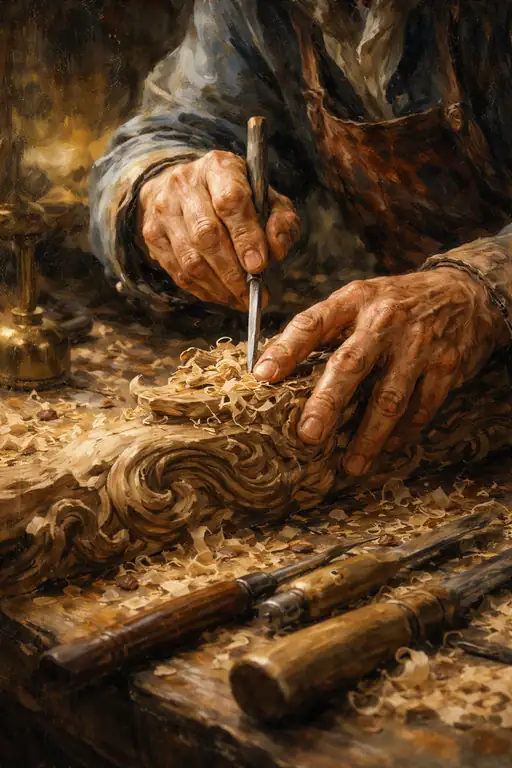 The Soul Carved in Wood
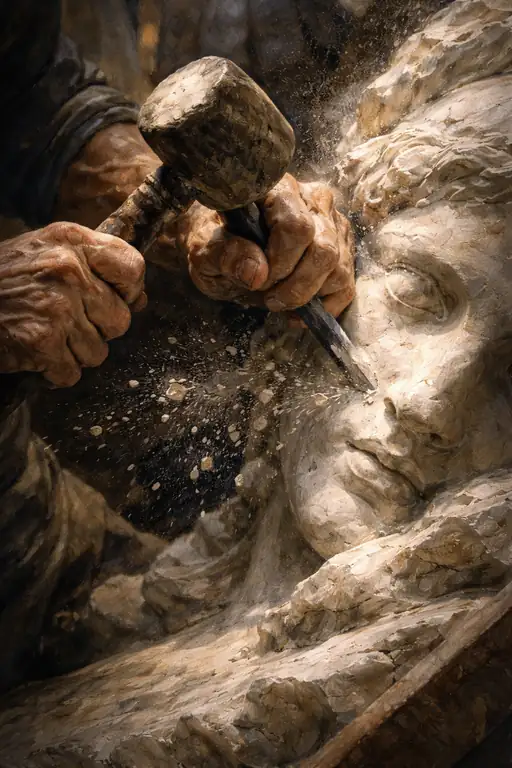 The Chisel's Climax: Birth from Stone
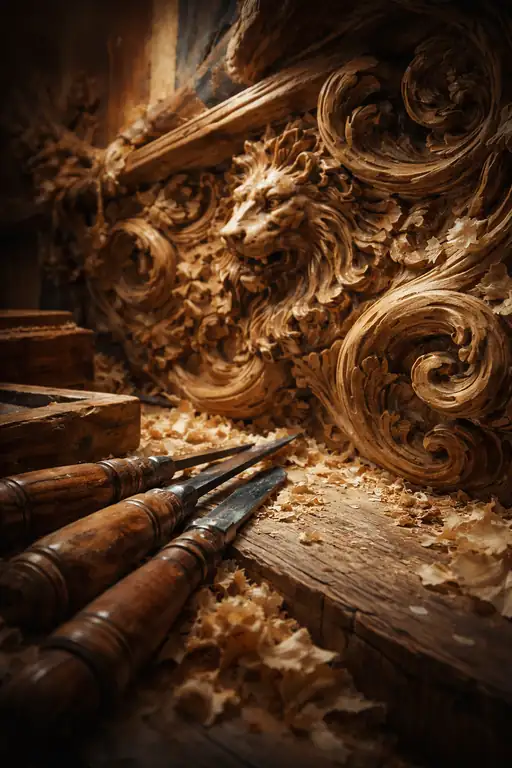 Breath of the Timber
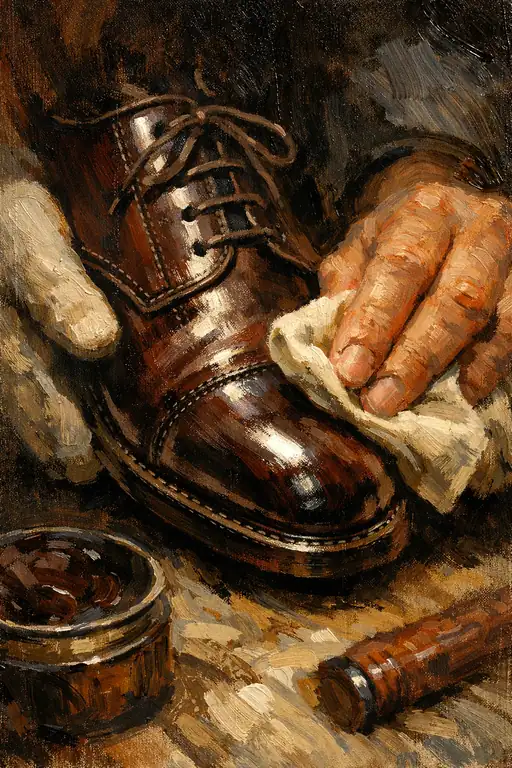 The Polished Pride: A Artisan's Touch
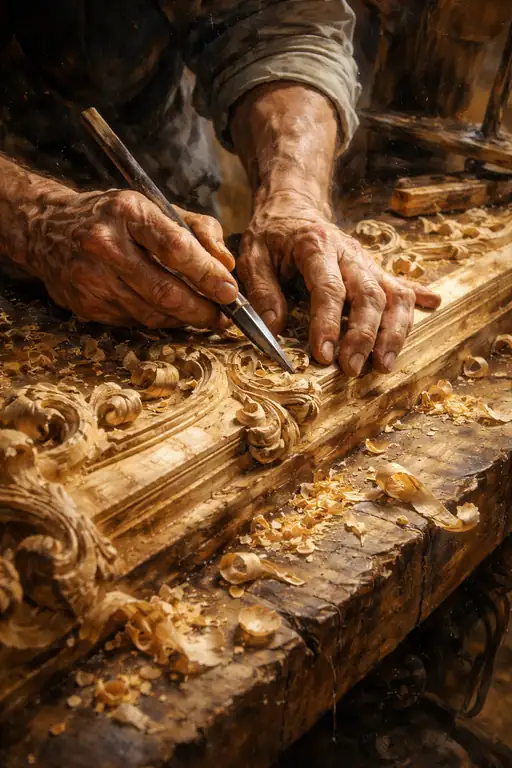 The Enduring Legacy of Woodcarving
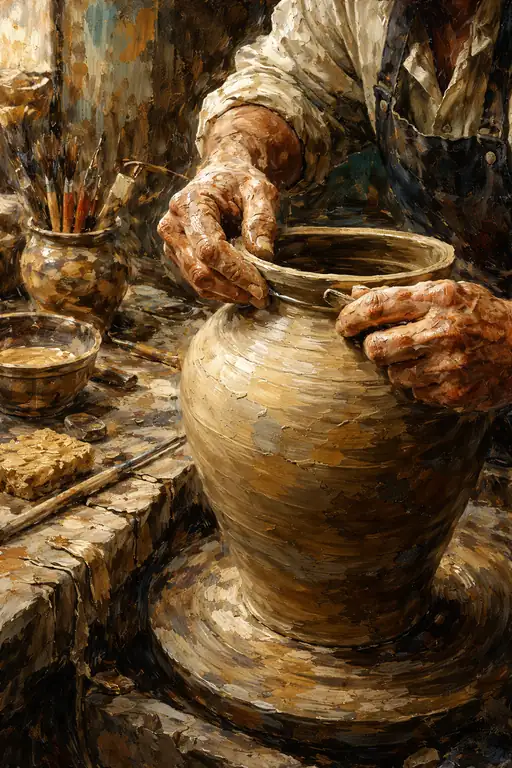 Hands of the Earth: A Silent Symphony of Clay
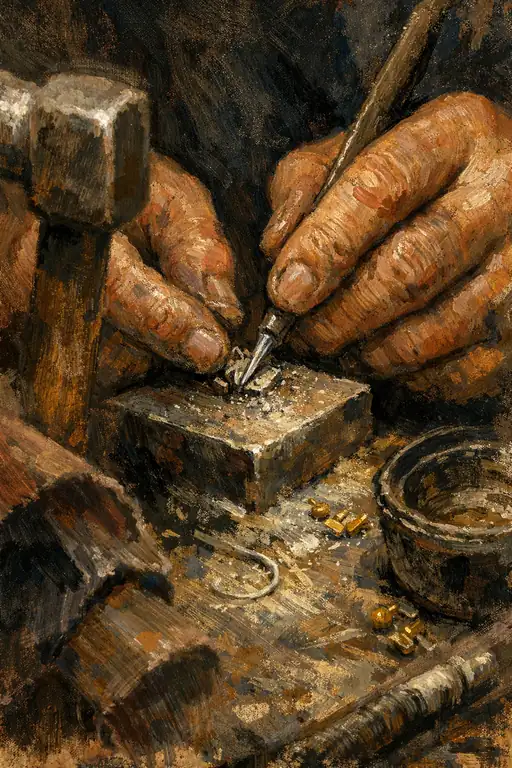 The Weight of Time in Calloused Hands
 The Dignity of Dust: Unpolished Echoes of Labor