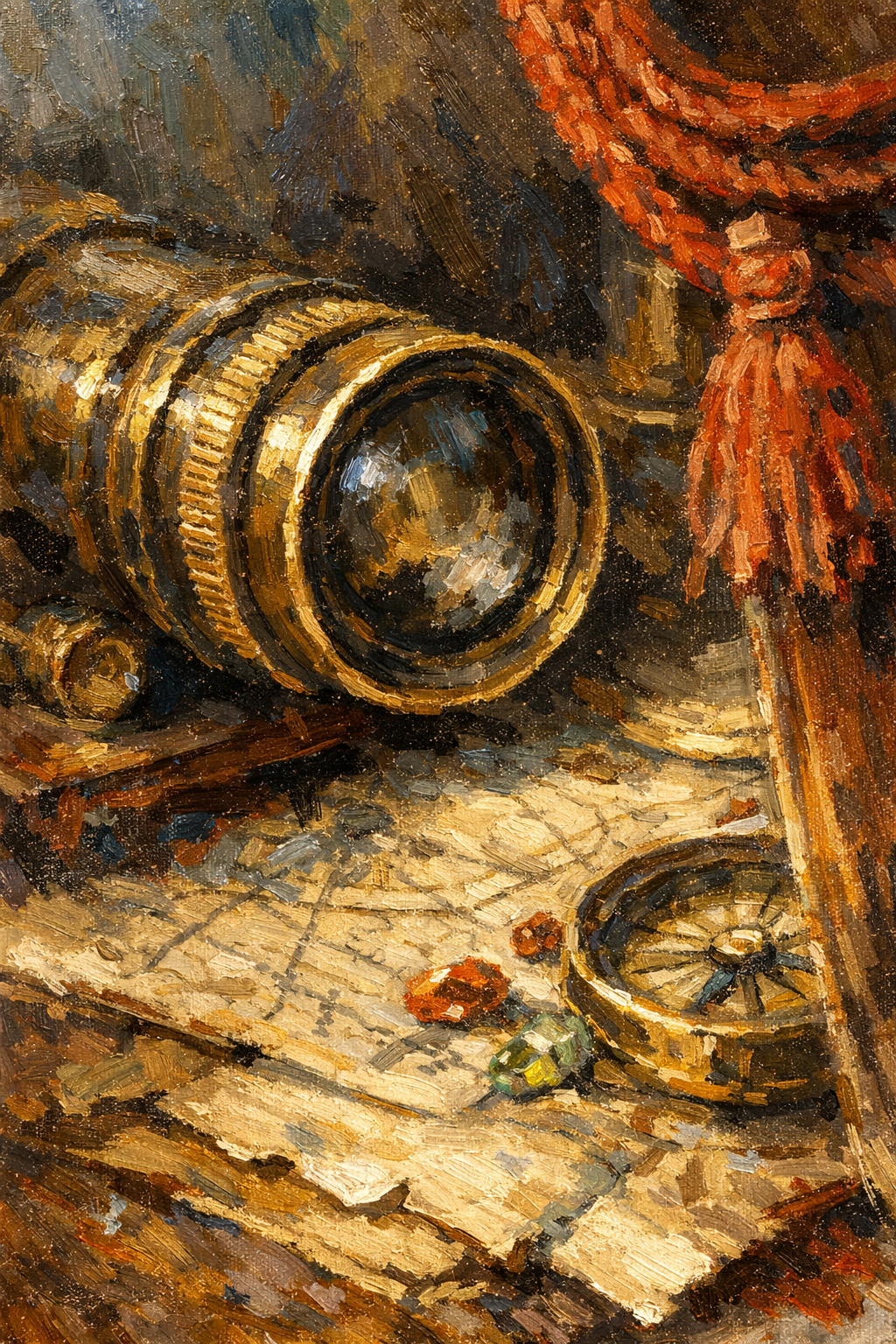
Fragments of a Broken Dream
Critique
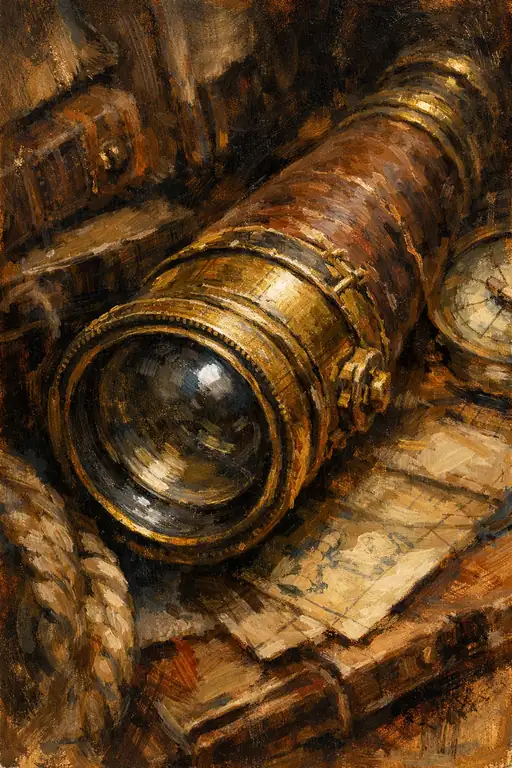
1. Introduction The work presents a captivating still life that evokes the spirit of exploration and discovery through a collection of navigational instruments and precious items. This composition centers on a large telescope and a compass resting upon an aged map, suggesting a narrative of historical maritime journeys. By employing a dense and expressive painterly style, the artist imbues these inanimate objects with a sense of energy and historical weight, inviting the viewer to contemplate the age of discovery. 2. Description The composition is dominated by a prominent brass telescope on the left, its lens reflecting the ambient light in a series of bright, energetic strokes. Below it lies a worn, light-colored map with visible grid lines and geographical details. To the right, a classic compass is positioned, its metallic casing and needle rendered with significant detail despite the broad brushwork. Scattered across the map are several small, colorful jewels in shades of amber and green. A thick, red decorative tassel or rope frames the right side of the image, adding a splash of vibrant color and a vertical element to the otherwise horizontal arrangement. 3. Analysis The artist utilizes a warm, limited color palette dominated by ochres, browns, and golds, which effectively simulates the appearance of aged brass and paper. The lighting is dramatic and directional, creating high-contrast highlights on the metallic surfaces and deep shadows that enhance the three-dimensional form of the objects. The most striking formal element is the impasto technique; the paint is applied in thick, visible slabs that create a tactile surface texture. This heavy brushwork adds a layer of abstraction and dynamism to the scene, making the light seem to vibrate across the different materials. 4. Interpretation and Evaluation This painting can be interpreted as a tribute to the human thirst for knowledge and the adventurous spirit that drove explorers to chart unknown territories. The combination of instruments and jewels suggests both the scientific nature of navigation and the material rewards of successful voyages. The technical execution is highly successful in its ability to balance representational accuracy with expressive mark-making. The composition is dynamic yet stable, with the diagonal orientation of the telescope creating a sense of movement that is grounded by the horizontal map and the vertical tassel. 5. Conclusion The initial impression of a historical still life evolves into a deeper appreciation for the artist's ability to convey the excitement and mystery of exploration through purely formal means. The work succeeds in elevating its subject matter through a masterful application of texture and light, turning functional objects into powerful symbols of human endeavor. Ultimately, the painting serves as a visually stimulating reminder of the enduring allure of the unknown and the tools we create to understand it.
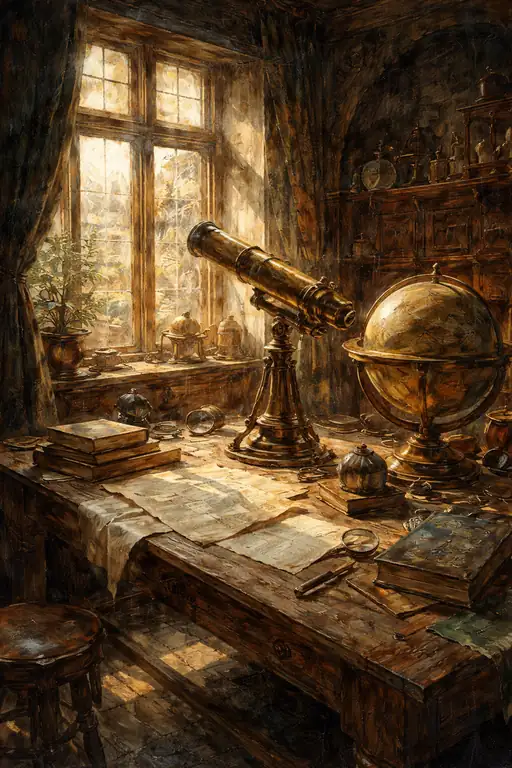 Chronicles of the Starry Abyss
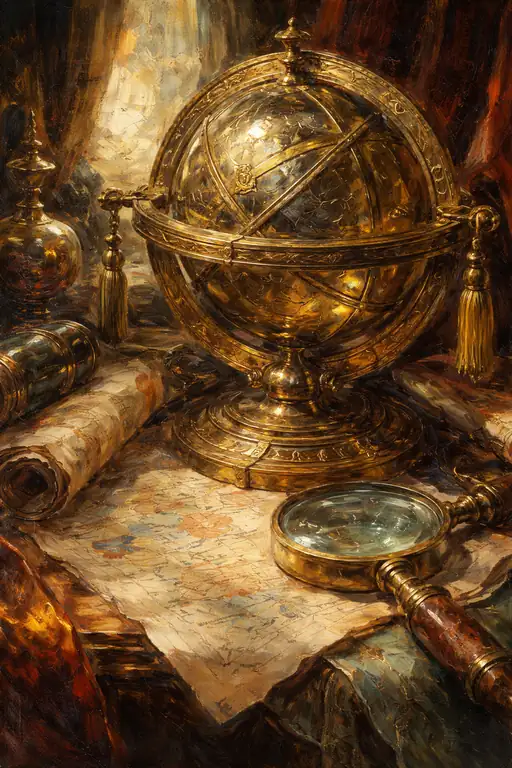 The Golden Map
 A Golden Globe of Forgotten Dreams
 Navigating the Unknown
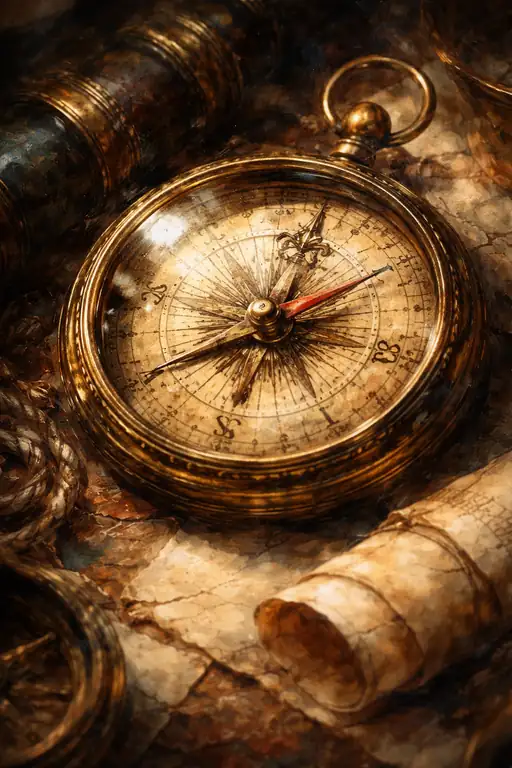 The Compass that Knows My Heart's Direction
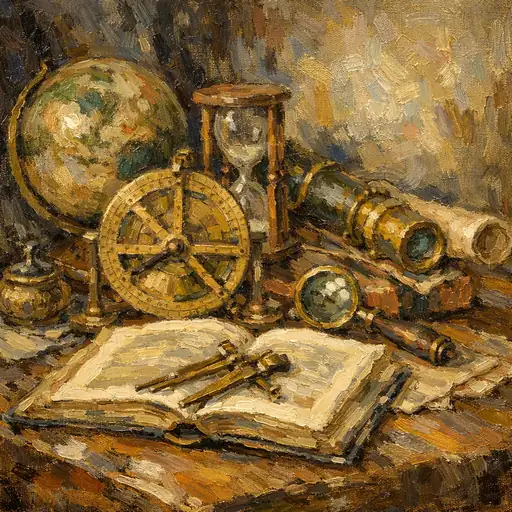 Navigator's Reverie
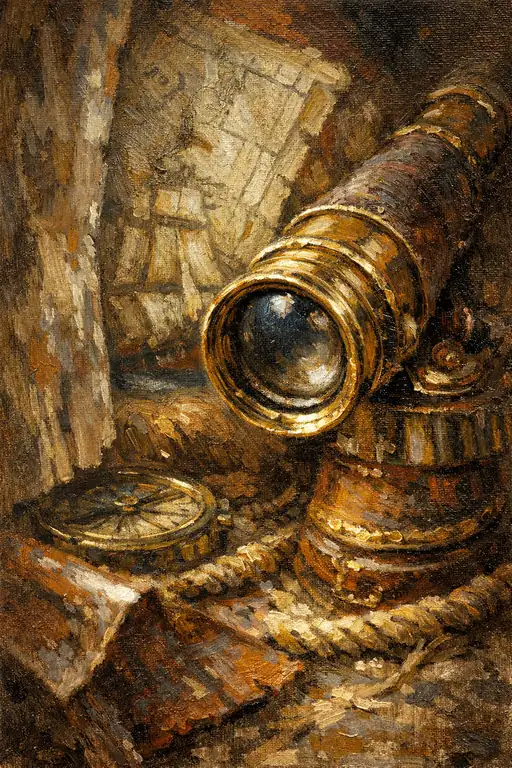 Voyage Through Amber Dust
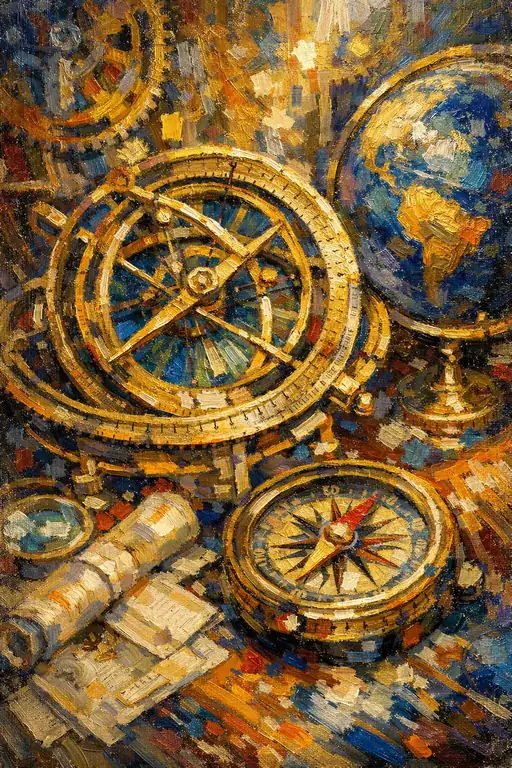 The Old Compass Beckoning to an Unseen World
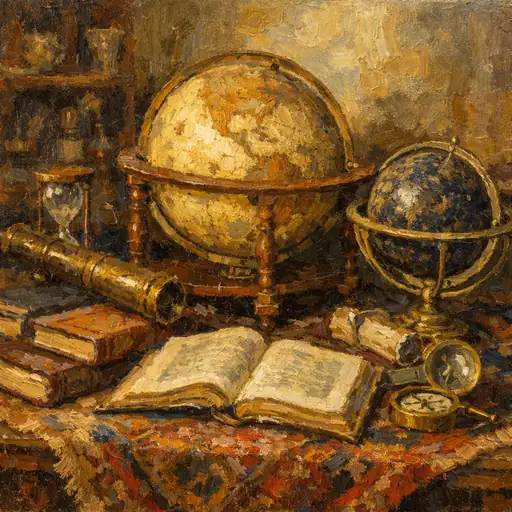 The Weight of Knowledge
 Echoes of the Uncharted Sea
 Tracing the Horizons of Curiosity