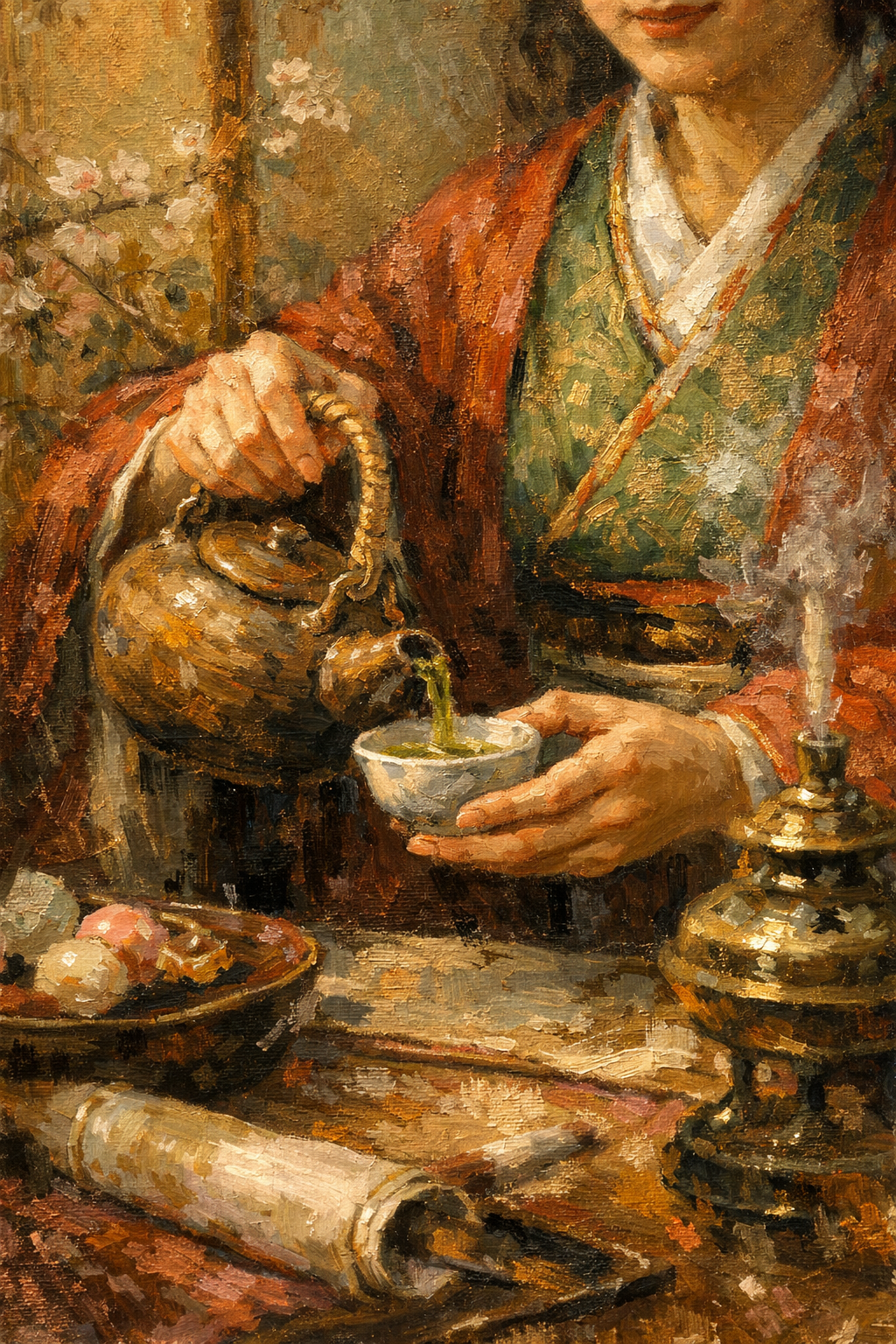
Symphony of the Blooming Spring
Critique
1. Introduction The work captures a serene moment of a tea ceremony, focusing on the intimate interaction between the figure and the ritual objects. The composition is tightly cropped, emphasizing the tactile qualities of the scene and the meticulous nature of the actions performed. By situating the viewer in close proximity to the subject, the artist creates an immersive experience that highlights the cultural and spiritual significance of the tea-making process. 2. Description In the center of the frame, a person dressed in a richly patterned red and green garment is shown pouring green tea from a rustic teapot into a delicate white bowl. The figure's hands are depicted with great attention to anatomical detail and movement, conveying a sense of practiced grace. Around the main action, several supporting elements are visible, including a bowl of sweets on the left, a rolled-up scroll in the foreground, and a steaming metal container on the right. The background features subtle floral patterns, suggesting a domestic or ceremonial interior. 3. Analysis The artist employs a vibrant color palette dominated by warm earth tones, deep reds, and lush greens, which imbue the scene with warmth and vitality. The lighting appears to be soft and directional, casting gentle shadows that enhance the three-dimensional form of the teapot and the figure's hands. The brushwork is bold and expressive, with visible impasto in certain areas that adds a physical texture to the canvas. This technique creates a dynamic surface where the play of light and shadow is particularly effective in defining the various materials, from the heavy ceramic of the pot to the soft fabric of the clothing. 4. Interpretation and Evaluation This painting can be interpreted as a celebration of traditional customs and the quiet beauty of everyday rituals. The focus on the hands and the objects suggests a deep respect for craftsmanship and the meditative quality of the tea ceremony. The technical execution is highly successful, with the artist's confident use of color and texture bringing a sense of life to the still-life elements. The composition effectively guides the viewer's eye through the sequence of actions, creating a balanced and harmonious visual narrative that honors the subject's heritage. 5. Conclusion The initial impression of a simple domestic scene evolves into a profound appreciation for the deliberate and meaningful nature of traditional practices. The work succeeds in elevating a routine action into a significant artistic statement through its masterful handling of formal elements. Ultimately, the painting serves as a powerful reminder of the enduring value found in the preservation of cultural rituals and the quiet moments of connection they facilitate.
Same Subcategory
Similar Artworks
 Vibrant Burst of a Summer's Heart
 Feline Frenzy at Dinnertime
 Laughter in the Warm Glow of the Hearth
 Harmony of the Harvest
 Anticipation Bathed in Candlelight
 Breath of the Fire Tamer
 Forged in the Heart of the Inferno
 Blood of the Earth: The Harvester's Reward
 The Meditative Flow of Matcha
 Fleeting Elegance: A Sip of Golden Serenity