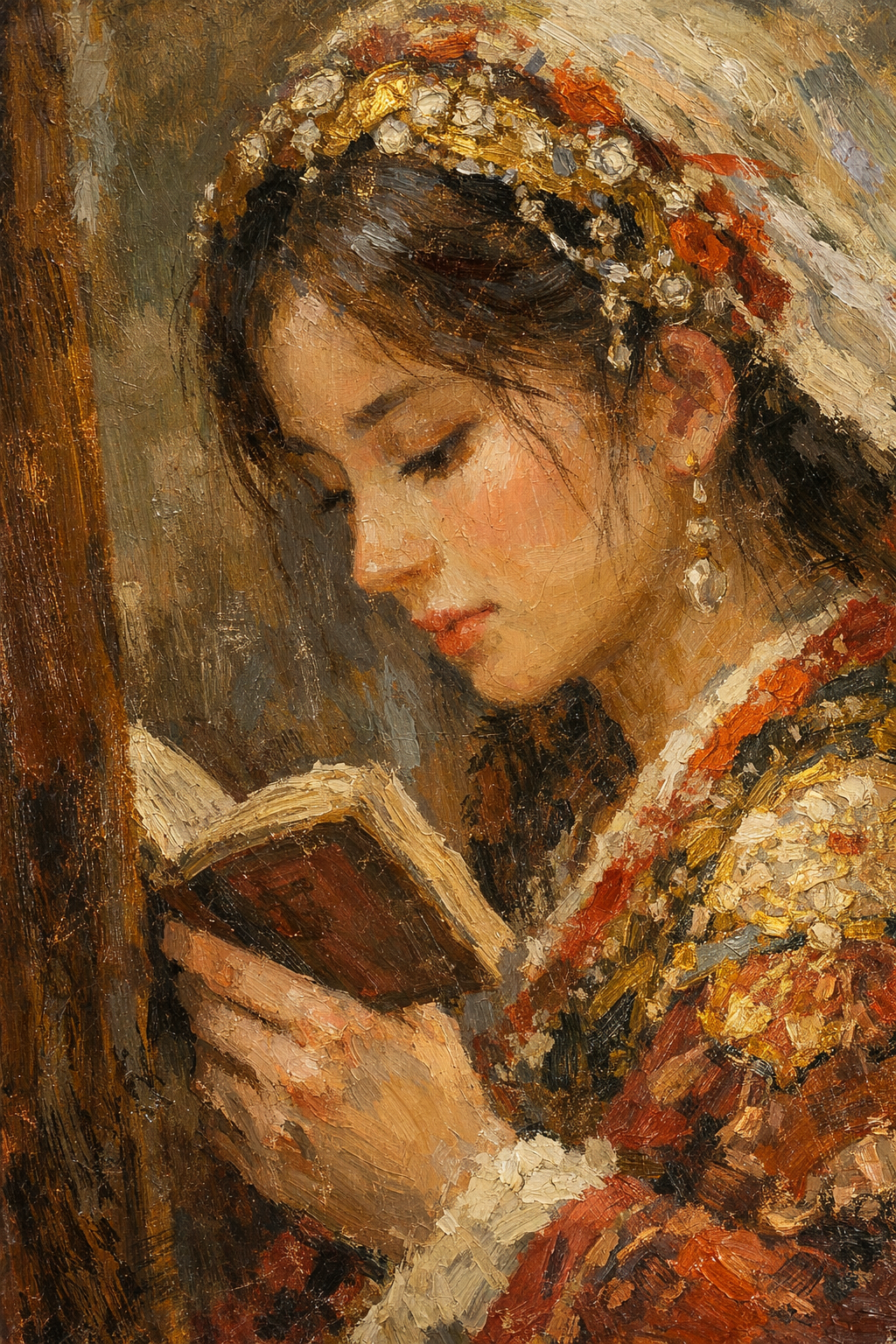
Shadows of the Fallen Leaves
Critique
1. Introduction This intimate portrait depicts a young woman deeply engrossed in reading a small book, presented with a rich and tactile painterly style. The work captures a quiet moment of intellectual engagement, wrapped in an atmosphere of classical opulence and warmth. Through its heavy textures and focused composition, the painting invites the viewer to share in the subject's concentration and the serene world of the written word. 2. Description The subject is shown in profile, her head tilted slightly downward toward the open book held in her hands. She is adorned with an elaborate headpiece featuring gold accents and rows of white pearls or beads, which contrasts with her dark hair. Her garment is heavily embroidered with intricate patterns in earthy reds, golds, and whites. The background is a dark, textured surface that helps to emphasize the luminous quality of her skin and the detailed ornaments she wears. 3. Analysis The artist employs a strong impasto technique, where thick, visible brushstrokes create a rugged and expressive texture across the entire canvas. The color palette is dominated by warm, autumnal tones, including deep ochre, burnt sienna, and brilliant gold highlights. Light is concentrated on the subject's face and the pages of the book, creating a dramatic chiaroscuro effect that draws the viewer's eye to the central narrative action. The tight framing and the diagonal line of her gaze create a sense of focused energy and internal reflection. 4. Interpretation and Evaluation This painting can be interpreted as an homage to the timeless value of knowledge and the private joy of reading. The combination of luxurious attire and the simple act of reading suggests a character of both high status and intellectual depth. The technical execution is impressive, particularly in how the heavy application of paint successfully conveys the different materialities of fabric, metal, and skin. The work achieves a powerful balance between decorative richness and psychological realism, resulting in a portrait that is both visually stunning and emotionally grounded. 5. Conclusion The portrait is a masterful exploration of light and materiality that elevates a quiet human activity to a monumental level. What begins as a study of a beautifully adorned figure evolves into a deeper meditation on the quietude of the mind. It remains a compelling example of how a robust, textured approach to painting can enhance the emotional and narrative power of a classical subject.
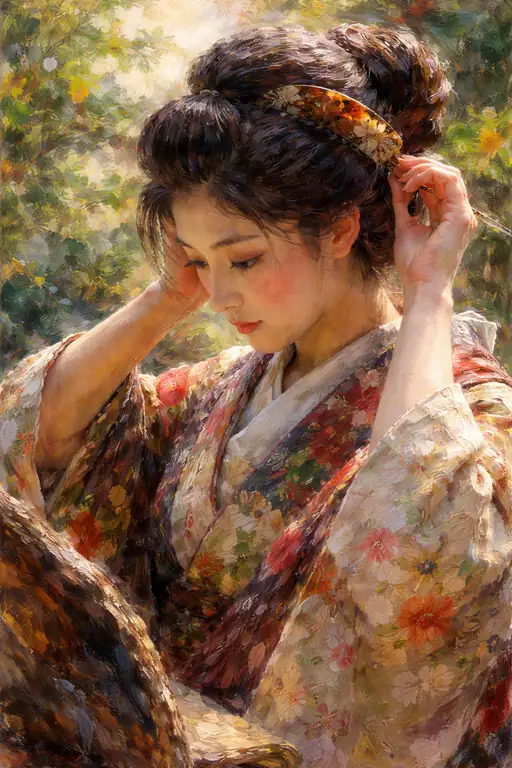 Melody of the Forgotten Sea
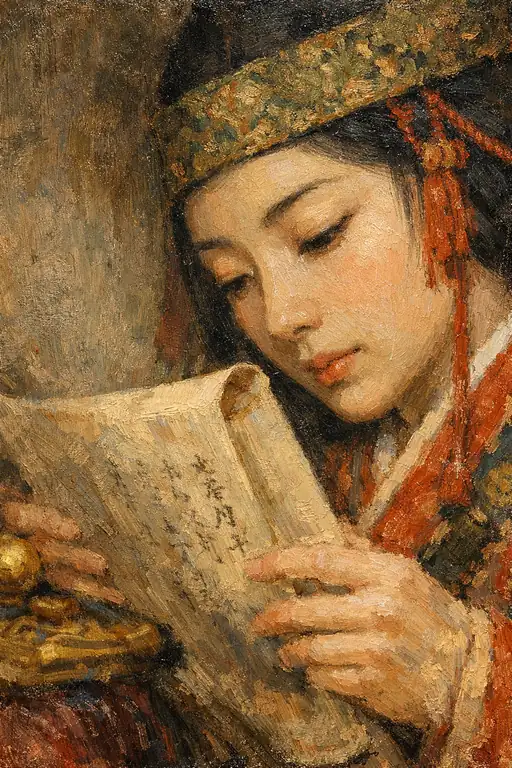 Whispers of the Ancient Scroll
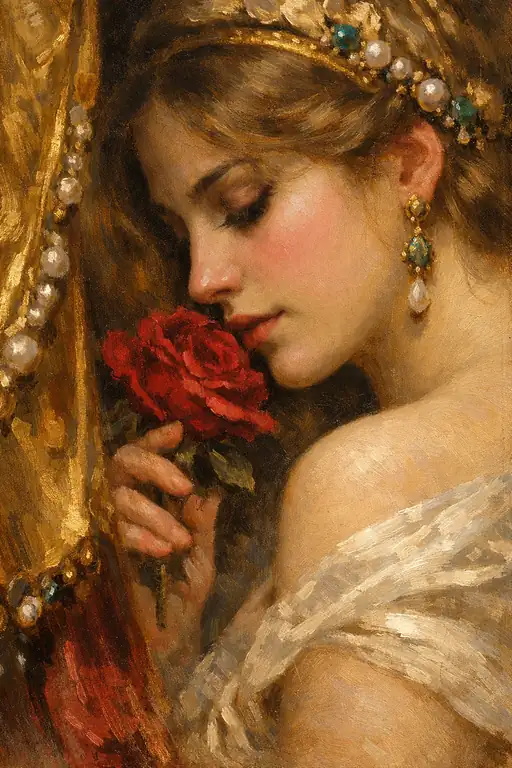 The Scent of Romance
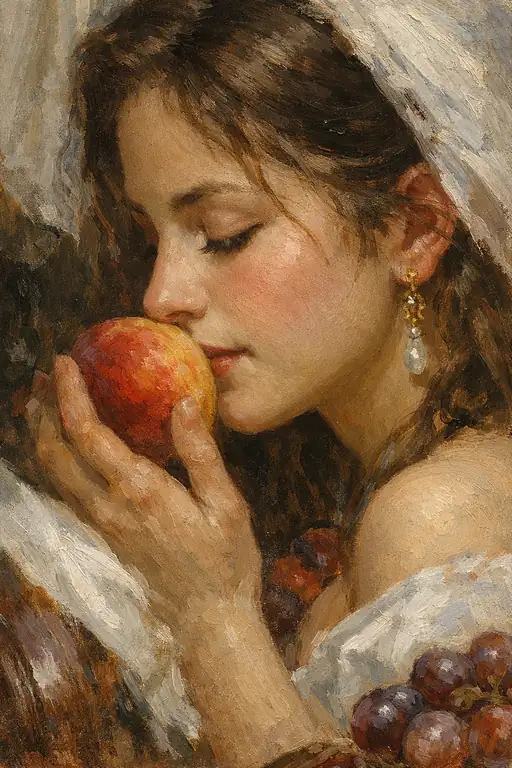 Sweetness and Serenity
 The Golden Aura of the White Iris
 Secrets in the Shadows
 Golden Radiance of Her Soul
 Embers in Repose
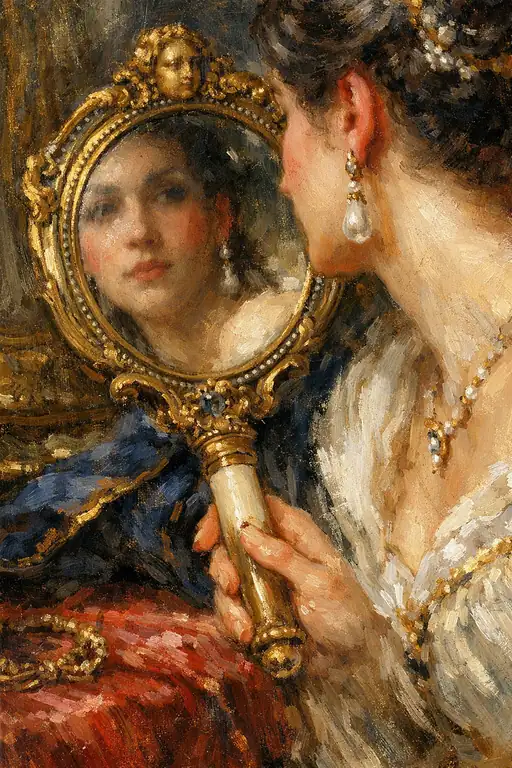 Reflections of an Unspoken Grace
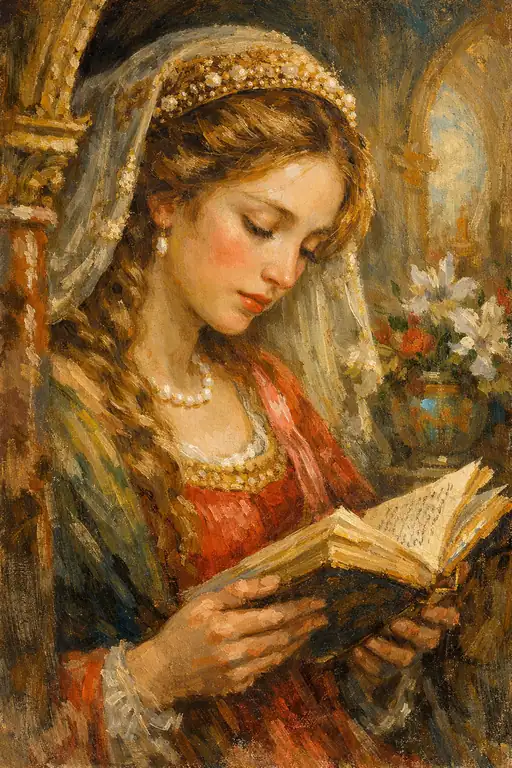 Wisdom's Silent Embrace
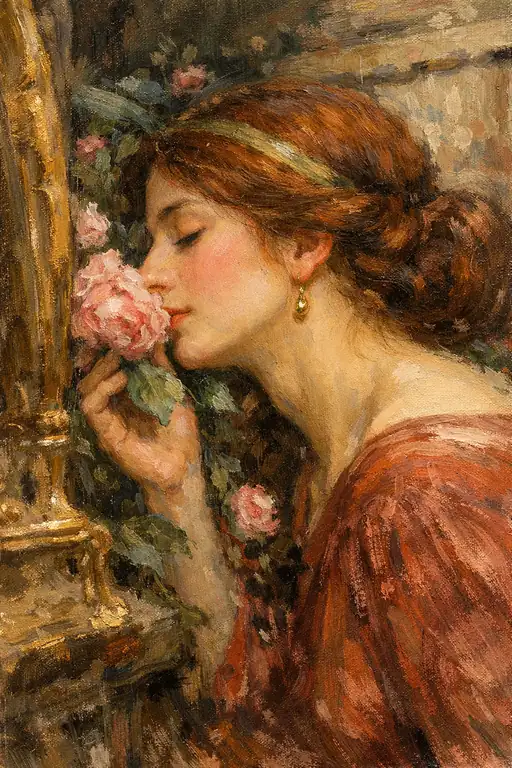 Intimate Essence of a Petal
 The Enigmatic Glance from the Shadows