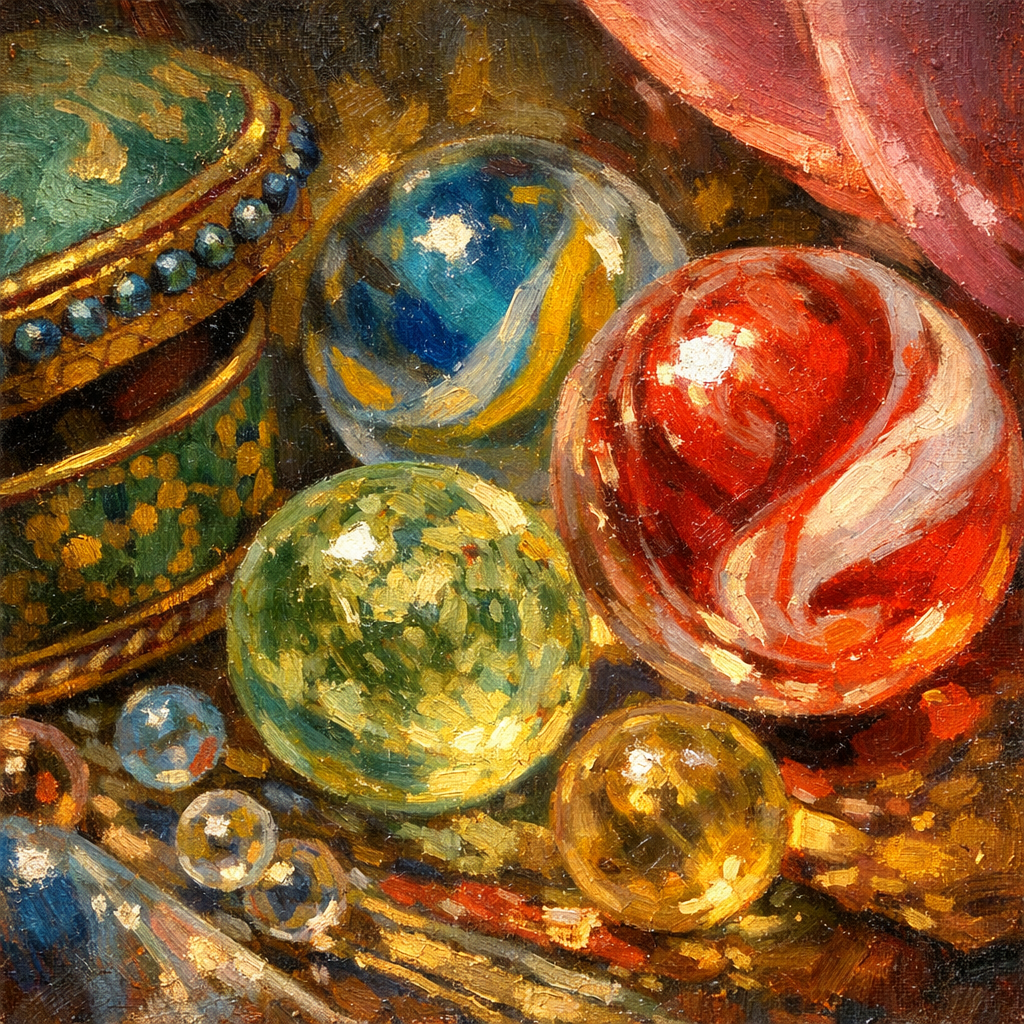
Dance of the Starlight Illusions
Critique
1. Introduction This vibrant still life painting focuses on a collection of marbles and a decorative box, captured with an energetic and tactile approach. The work invites the viewer to appreciate the beauty in everyday small objects, transforming them into a rich tapestry of color and light. The intense focus on texture and luminosity creates a compelling visual experience that transcends simple representation. 2. Description The composition is dominated by several large, colorful marbles in the center and right foreground, including a striking red one with white swirls and a shimmering green one. To the left sits a circular, ornate box decorated with gold patterns and blue beads. Smaller, transparent glass beads are scattered at the bottom left, catching the light. The background is dark and indistinct, which serves to push the brightly colored objects forward, while a hint of pink fabric appears in the upper right corner. 3. Analysis The artist uses a bold impasto technique, where thick layers of paint create a physical texture that mimics the tactile quality of the objects. The color palette is exceptionally rich, featuring deep reds, emerald greens, and brilliant golds that contrast against the dark shadows. Light is treated as a physical presence, with bright highlights on the surfaces of the glass marbles suggesting a nearby light source. The circular forms of the marbles and the box create a sense of unity and rhythm across the canvas. 4. Interpretation and Evaluation This painting can be interpreted as a celebration of childhood wonder and the jewel-like qualities of simple materials. By enlarging these small objects, the artist elevates their status, prompting the viewer to reconsider the aesthetic value of the mundane. The technical skill displayed in the heavy brushwork is impressive, successfully conveying both the weight of the box and the translucency of the glass. The composition feels dense and opulent, reflecting a high degree of artistic confidence and originality. 5. Conclusion The work succeeds in transforming a humble subject into a powerful exploration of light, color, and texture. What initially appears as a random assortment of trinkets reveals itself to be a carefully orchestrated study of form and materiality. It remains a striking example of how a focused artistic vision can breathe extraordinary life into the most ordinary of objects.
Same Subcategory
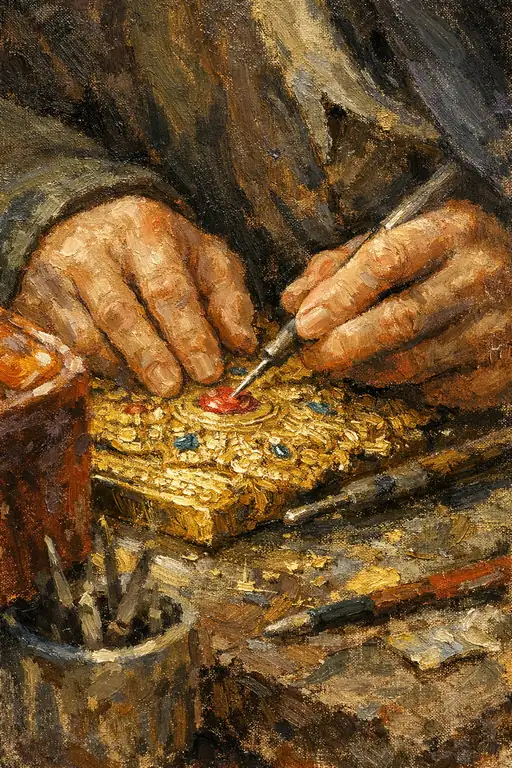 The Alchemist of Beauty: Hands That Shape Eternity
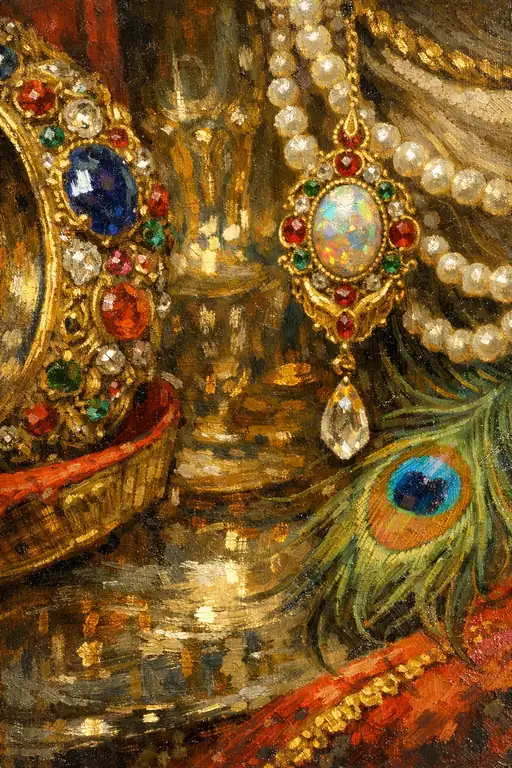 The Weight of Vanities
Similar Artworks
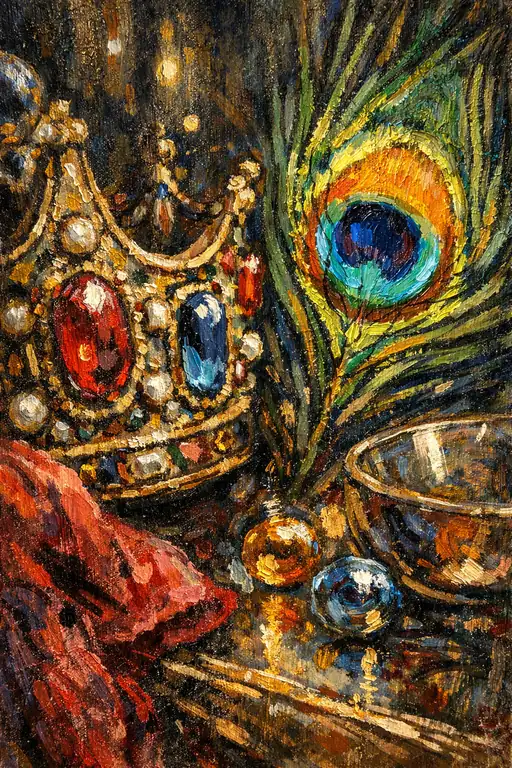 Majesty Interwoven with Earthly Beauty
 The Dancer's Melancholy
 Treasures of a Fleeting Dream
 The Gatekeeper of Forgotten Stories
 Memories of a Venetian Masquerade
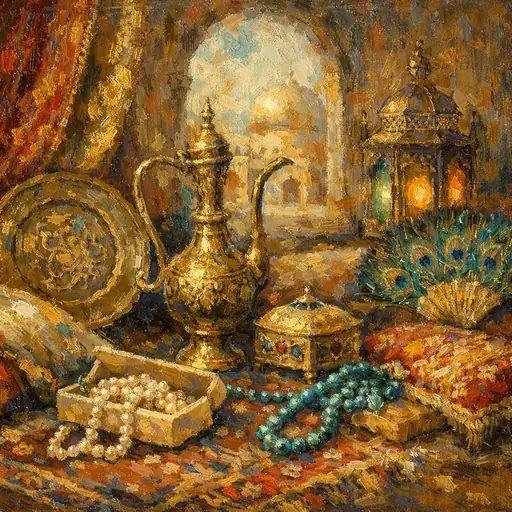 Treasures of a Distant Serenade
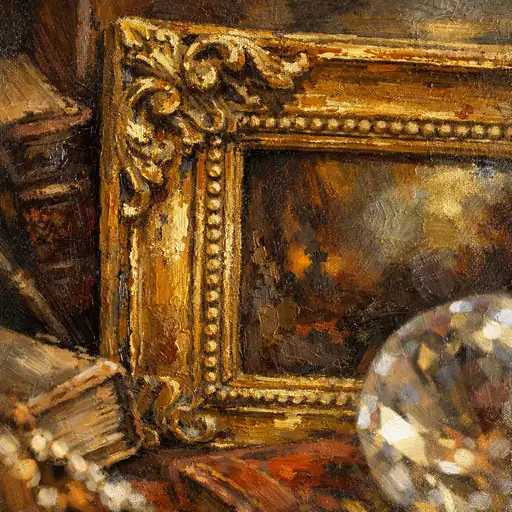 The Golden Frame of Preserved Memories
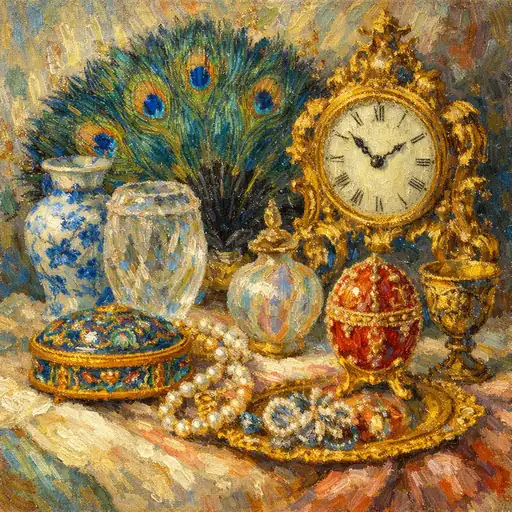 Still Life with a Golden Clock and Peacock Feathers
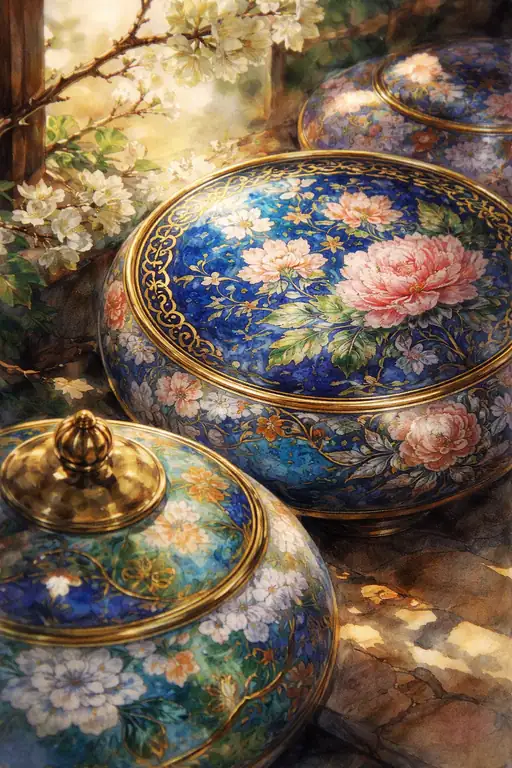 Springtime Captured in Azure Porcelain
 Reflections of a Timeless Elegance