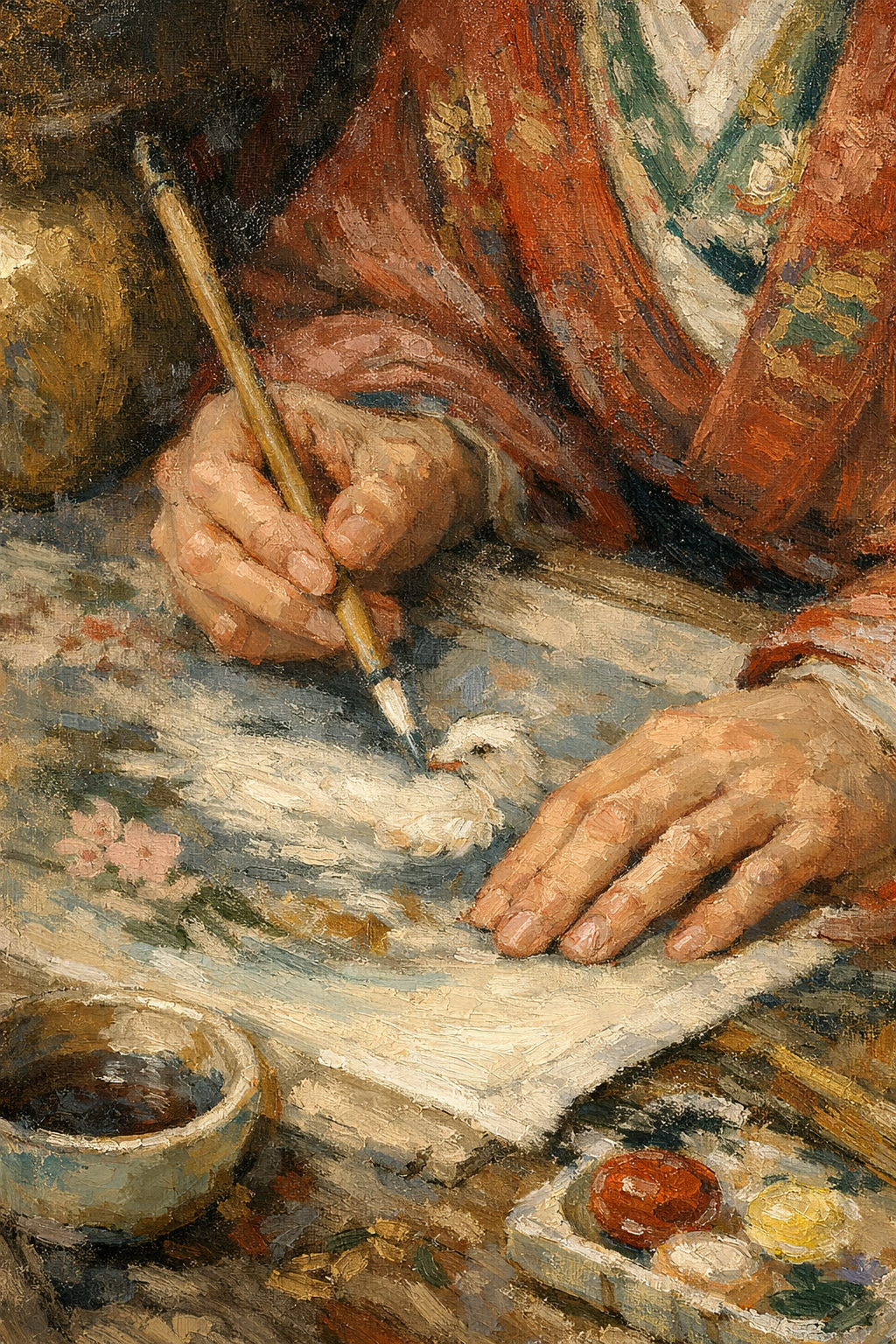
The Genesis of the Dove: When Colors Take Flight
Critique
1. Introduction This oil painting presents a compelling close-up view of an artist's hands engaged in the delicate process of creation. The composition centers on the very moment a brush makes contact with the surface, depicting the birth of a white bird. By isolating the act of painting itself, the work invites viewers to contemplate the profound connection between the creator and the created. This piece serves as a silent witness to the intimacy and focus required in the artistic endeavor. 2. Description The upper portion of the canvas shows the richly textured sleeves of a red garment adorned with golden patterns. From these sleeves, two expressive hands emerge, positioned centrally over a piece of paper. The right hand grips a slender brush, carefully applying white paint to the head of a bird figure. The left hand rests steadily on the paper, providing a sense of grounding and stability. In the foreground, a bowl of dark ink and a palette with vibrant pigments complete the scene. 3. Analysis Technically, the artist employs a robust impasto technique, where visible brushstrokes create a tangible sense of depth and materiality. The color palette is dominated by warm, earthy tones, with the brilliant red of the robe providing a striking visual anchor. Lighting appears to originate from the upper right, casting soft shadows that define the contours of the fingers and the folds of the fabric. This intentional lighting enhances the three-dimensional quality of the forms, bringing a lifelike presence to the hands. 4. Interpretation and Evaluation The work can be interpreted as a metaphor for the divine spark inherent in human creativity. The choice of a white bird as the subject suggests a pursuit of purity or spiritual transcendence through art. The tight framing focuses all attention on the physical manifestation of thought, emphasizing the synergy between mind and muscle. The execution displays remarkable skill in capturing skin textures and fabric details, resulting in an evocative evaluation of the quiet intensity found within a studio environment. 5. Conclusion Upon initial observation, one might see only a skilled depiction of manual labor, but deeper reflection reveals a sacred ritual of manifestation. The detailed rendering of the hands conveys the weight of time and the dedication necessary for artistic excellence. Ultimately, the painting captures a universal truth about the nature of creation and the human spirit. It stands as a powerful testament to the beauty found in the focused, silent moments of the creative process.
Same Subcategory
Similar Artworks
 The Soul's Brushstroke: An Ode to Creation
 Ink and Introspection
 Elegance of the Brush
 Ink Stains on Autumn Paper
 Whispers in the Incense Smoke
 Illuminations in the Solitude of Night
 Ephemeral Elegance in Bloom
 Whispers in the Morning Light
 Ink and Illumination
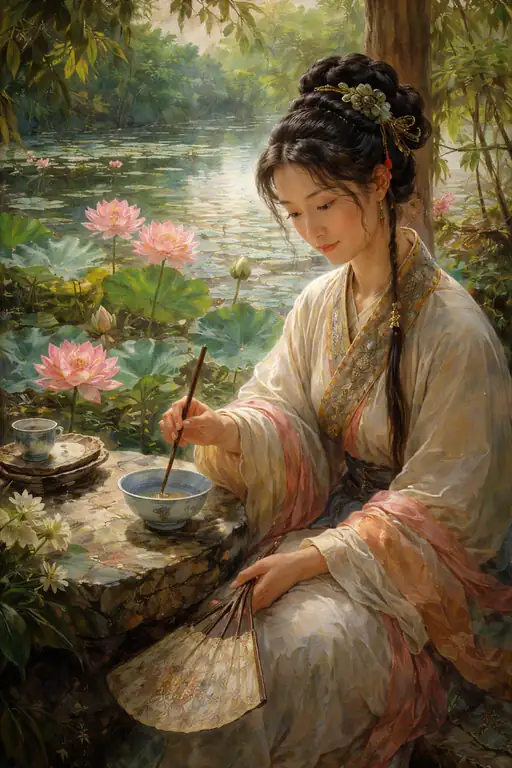 Serenity Blooming in the Quiet Lotus Pond