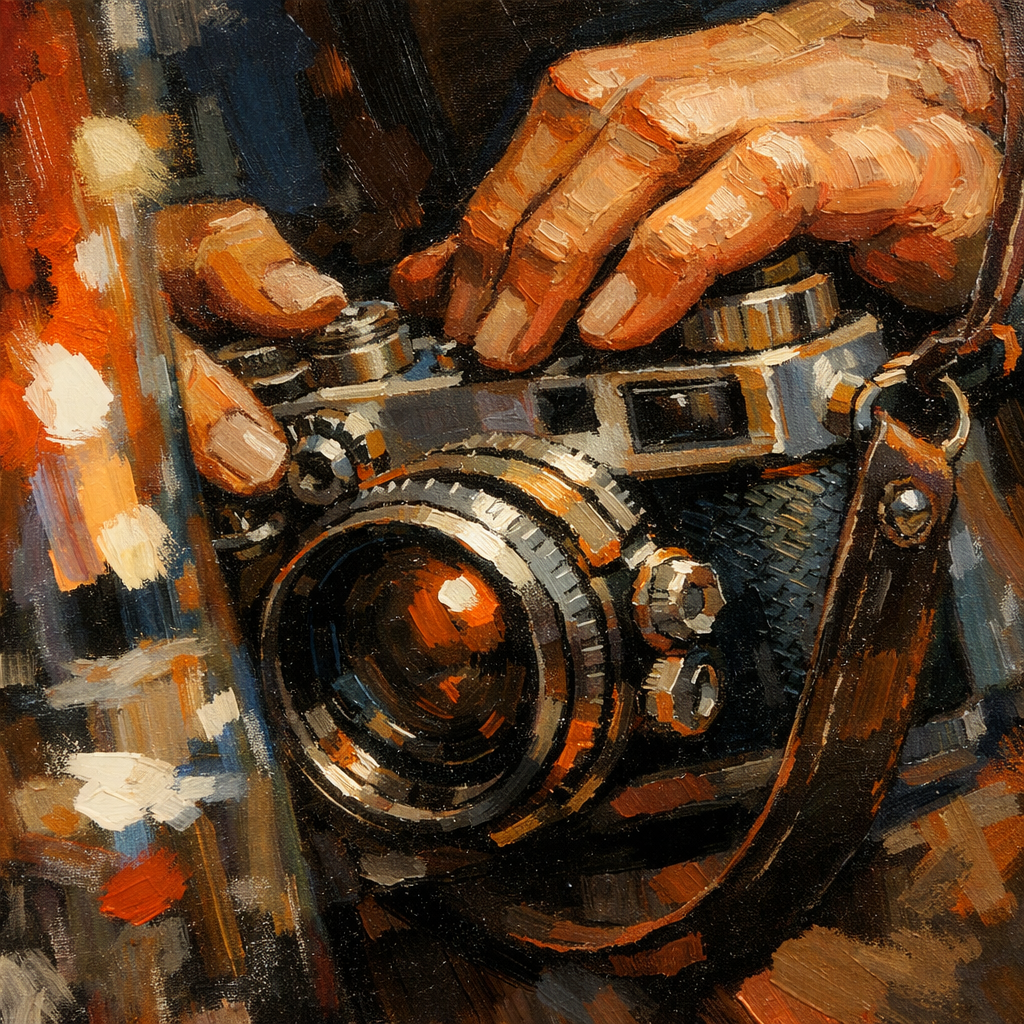
The Weight of Memory in Silver
Critique
1. Introduction This artwork is a close-up study of hands holding a classic, vintage camera, rendered with a powerful impasto technique. The silver metallic texture of the camera dominates the center, with the subject's hands gently resting upon its controls. Dramatic, warm lighting emphasizes the minute details and contours, highlighting the physical presence of the objects. This piece expresses the functional beauty of machinery and the warmth of human touch through thick, layered applications of paint. 2. Description The central camera displays geometric shapes, from the circular lens to the linear top plate, captured with heavy brushstrokes. An orange reflection of light appears on the glass surface of the lens, while metallic dials and the leather strap are distinctly portrayed. The fingers supporting the device show emphasized joints, suggesting experienced skill. The background consists of dark brown tones, with scattered red and white strokes on the left adding an abstract sense of movement to the scene. 3. Analysis Regarding color, the silver of the camera and warm skin tones of the hands are composed to emerge from the dark background. The composition places the camera at an angle to create depth and rhythm, drawing the viewer's eye toward the lens. Technically, the raised paint allows the viewer to visually sense the hard metallic surfaces and the softness of the leather. By capturing the behavior of light, the artist simplifies complex mechanical structures while maintaining a solid sense of volume. 4. Interpretation and Evaluation This painting can be interpreted as symbolizing affection for the technology of a bygone era and the weight of the act of recording. The artist's descriptive power is evident in the harmonious treatment of different materials, such as metallic luster and human skin, within the same thick-painting style. Reinterpreting a cold machine through the warm texture of oil paint reveals a unique aesthetic. The work achieves a high degree of completion in its creation of three-dimensionality through light reflection and persuasive texture. 5. Conclusion While the viewer is initially drawn to the specificity of the camera, the abstract beauty of the raised paint eventually becomes captivating. The expression successfully suggests the history and affection of the user within the stationary object. Ultimately, the intersection of mechanical formal beauty and organic human touch is fused at a high level within the frame, resulting in a memorable and masterful work.
Same Subcategory
Similar Artworks
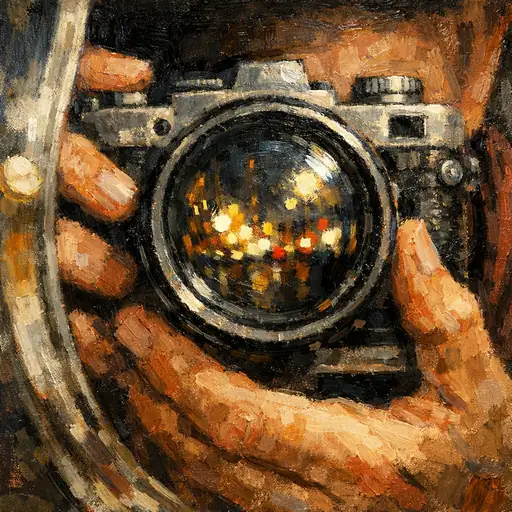 Cradling the Eye of Memory
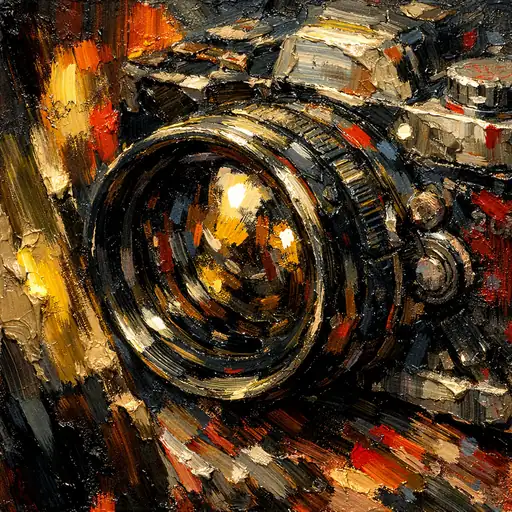 The Mechanical Eye That Captures Time
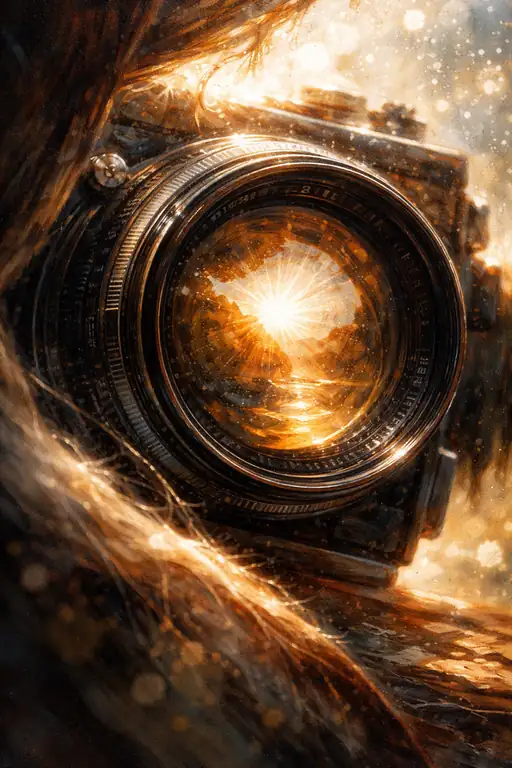 The Transient Sun Caged in Glass
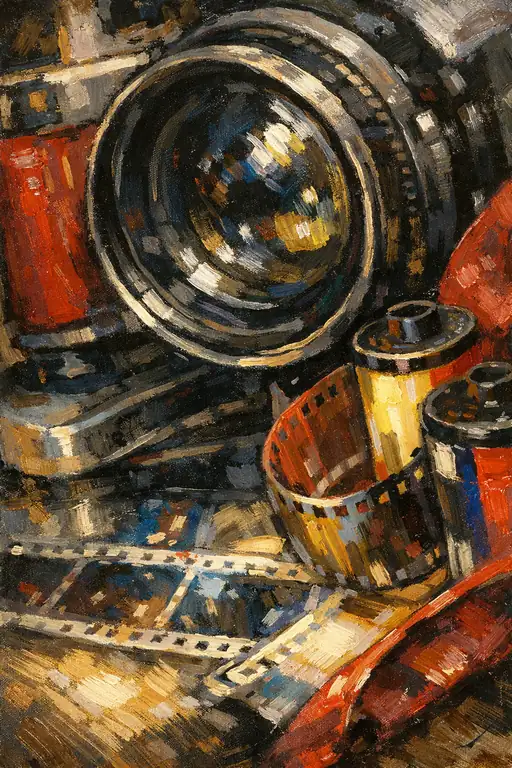 The Analog Eye's Fractured Memory
 The Quiet Resonance of Creation
 The Eye of Endless Wonder
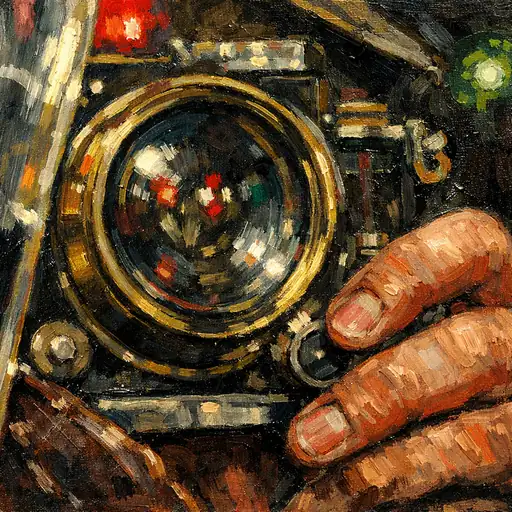 The Touch of Time
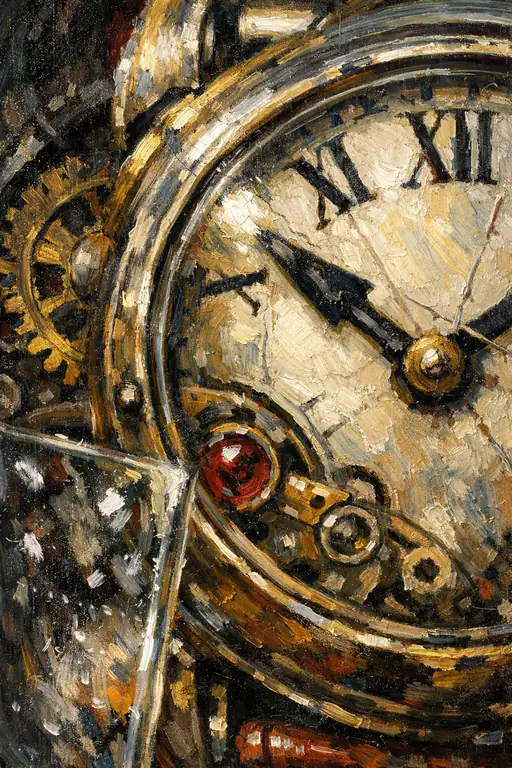 The Relentless Gears of Time
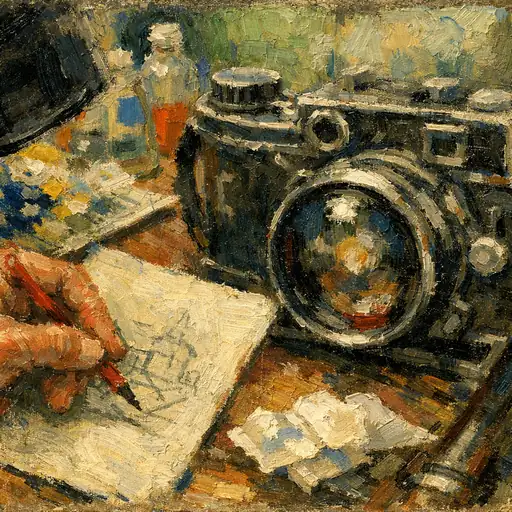 Capturing the Fleeting Moment
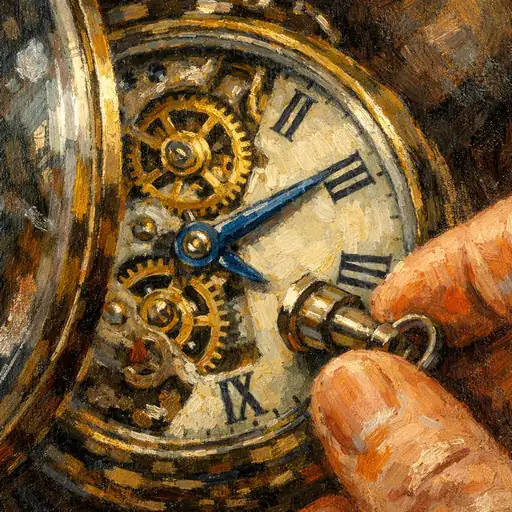 Heartbeats of the Golden Mechanism