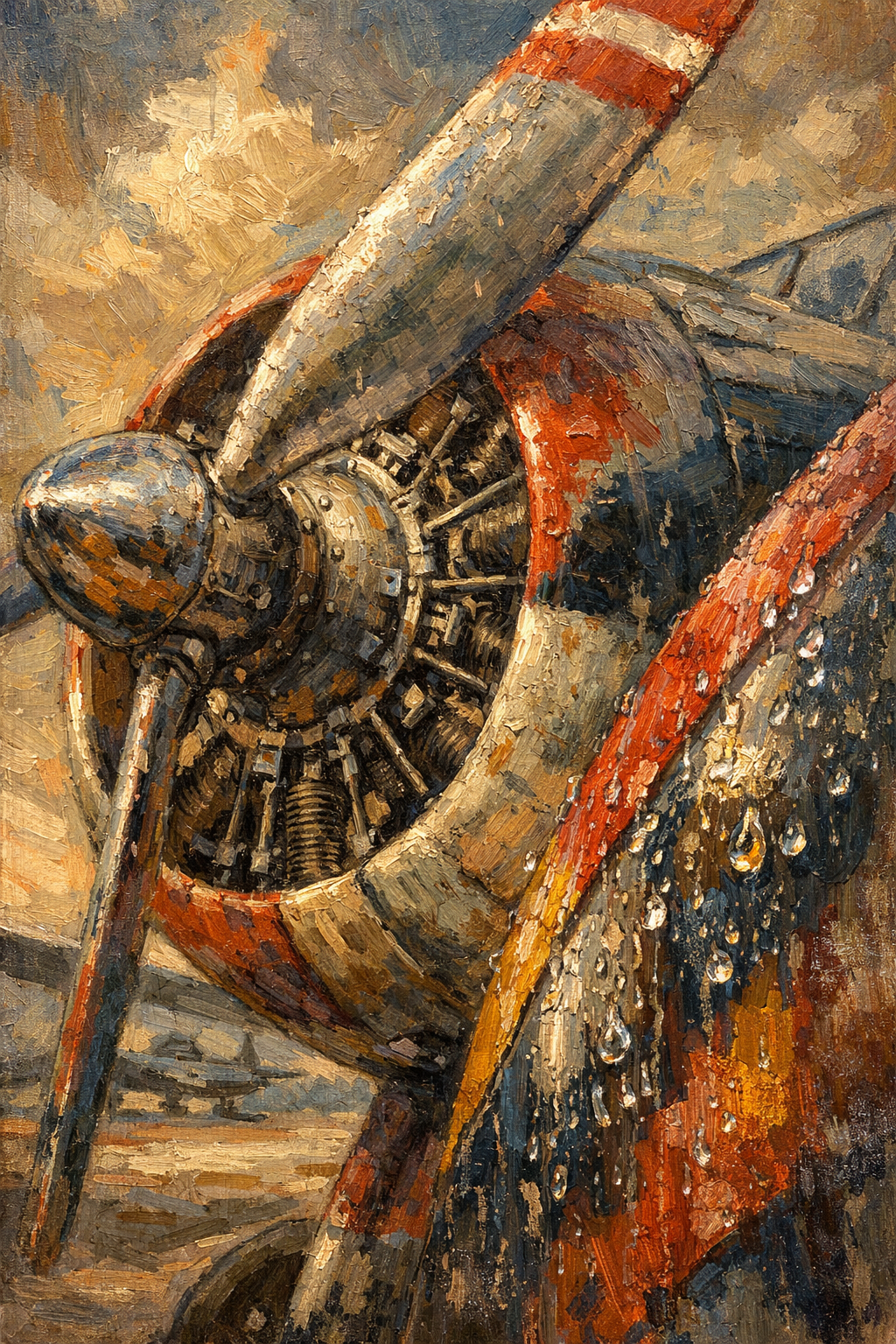
Tears on Steel Wings
Critique
1. Introduction The painting presents a dramatic, close-up study of a vintage propeller aircraft, focusing specifically on its radial engine and the nose section. The work captures the rugged, weathered beauty of historical aviation technology through a thick, expressive application of oil paint. By choosing a tight, slightly tilted perspective, the artist emphasizes the mechanical complexity and the sheer physical scale of the machine, evoking a sense of grounded power. 2. Description A three-bladed propeller extends diagonally across the frame, its surfaces marked by wear and highlights of reflected light. Behind it, the intricate cylinders of the radial engine are depicted with deep shadows and rough, textured brushstrokes that suggest oil and grime. The aircraft's fuselage features bold orange and white stripes, and in the immediate foreground, large, translucent dewdrops or raindrops are scattered across the metal surface, catching the ambient light. 3. Analysis The artist窶冱 use of the impasto technique is central to the work窶冱 impact, providing a tactile quality that mirrors the aged metal and greasy engine parts. There is a compelling visual contrast between the heavy, opaque layers of paint used for the engine and the delicate, transparent highlights that define the water droplets. The diagonal orientation of the propeller blades creates a sense of latent energy, as if the engine is ready to roar back to life. 4. Interpretation and Evaluation This work serves as a poignant exploration of the intersection between human engineering and the elements of nature. The presence of water droplets on the cold, hard metal introduces a layer of vulnerability and temporal beauty to an otherwise sturdy industrial subject. The artist窶冱 technical execution is superb, particularly in how they manage to convey both the weight of the aircraft and the ephemeral sparkle of moisture, creating a rich, multi-layered visual experience. 5. Conclusion While the focus is on a static, aging machine, the vibrant brushwork and light effects imbue the scene with a remarkable sense of vitality. The painting successfully transforms a technical object into a subject of profound aesthetic interest, celebrating the endurance and character of historical machinery. It is a powerful testament to the beauty found in the details of the mechanical world, leaving the viewer with a sense of admiration for the past.
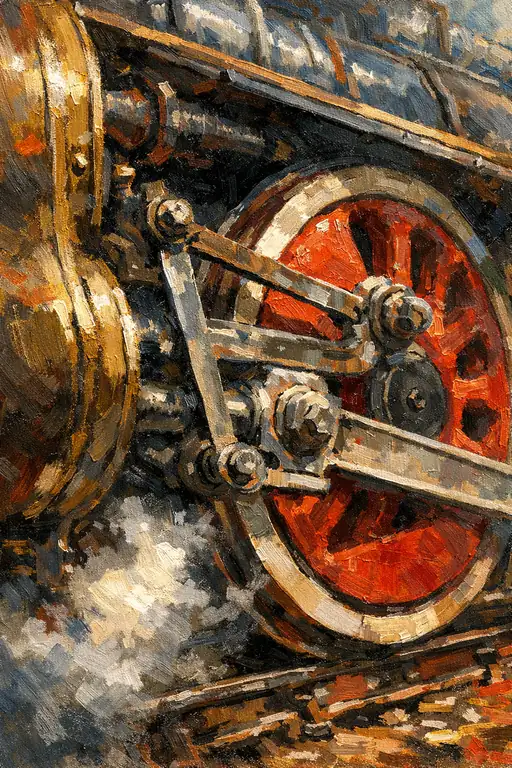 Heartbeat of Iron and Steam
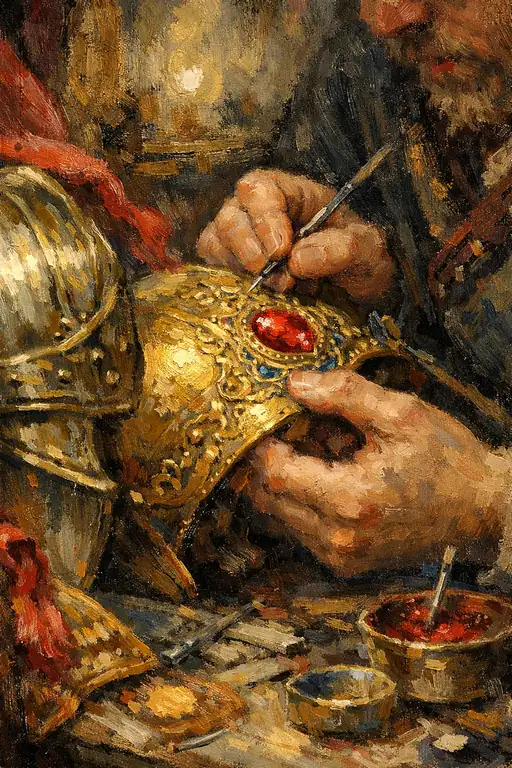 Forging Beauty in the Crucible of Creation
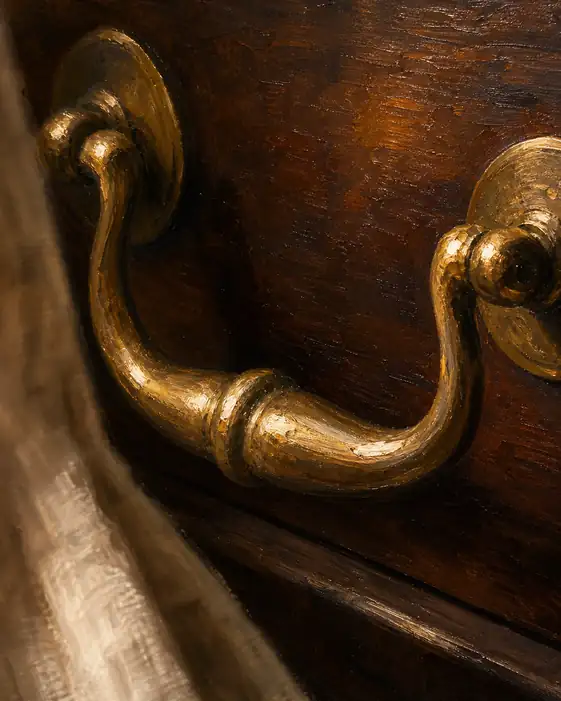 The Gilded Grip of Time
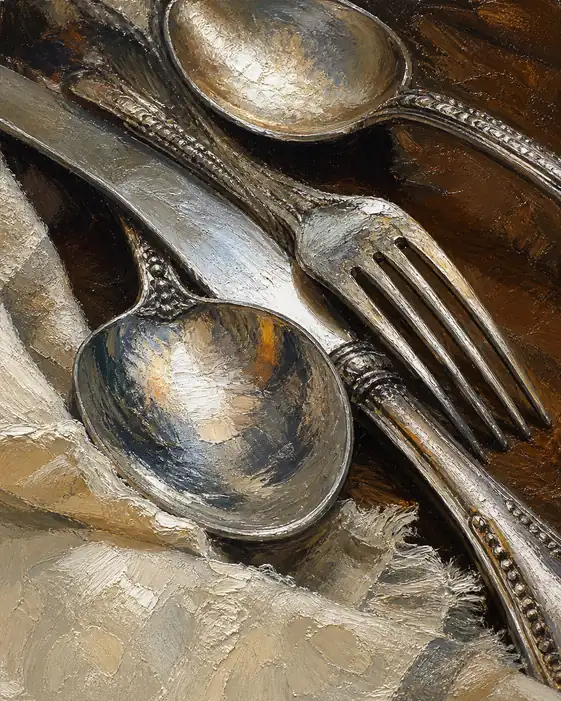 The Silver Echo
 Warmth of the Copper Soul
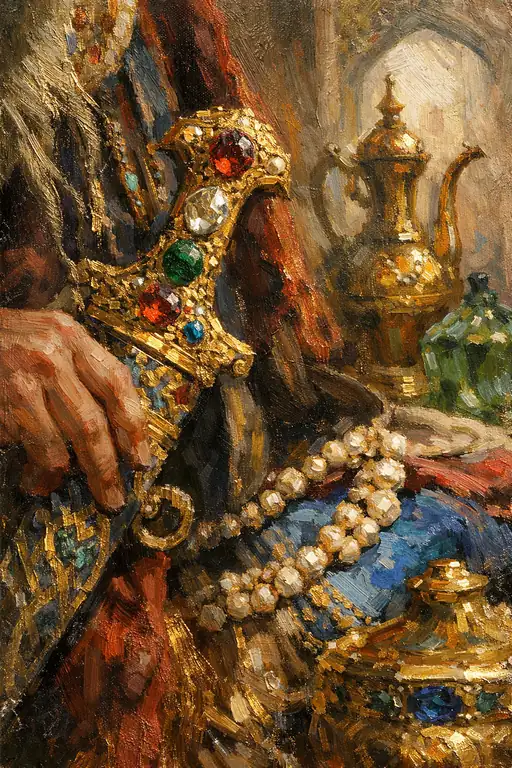 The Weight of a King's Legacy
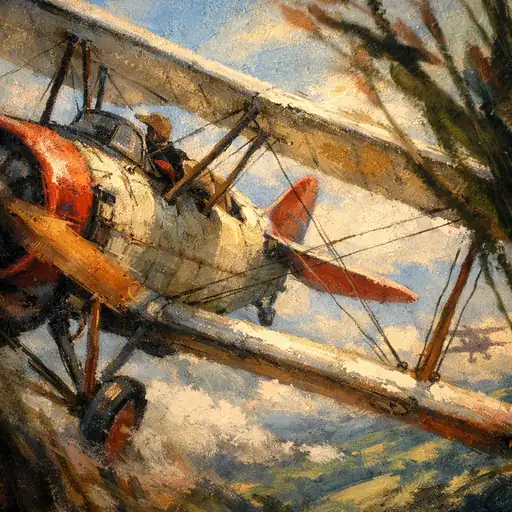 Biplane Ballet: Roaming the Orange Sky
 Festive Hors d'Oeuvres Assortment
 Savory Noodles from the Depth
 Gilded Abundance
 A Moment Suspended in Fragrance