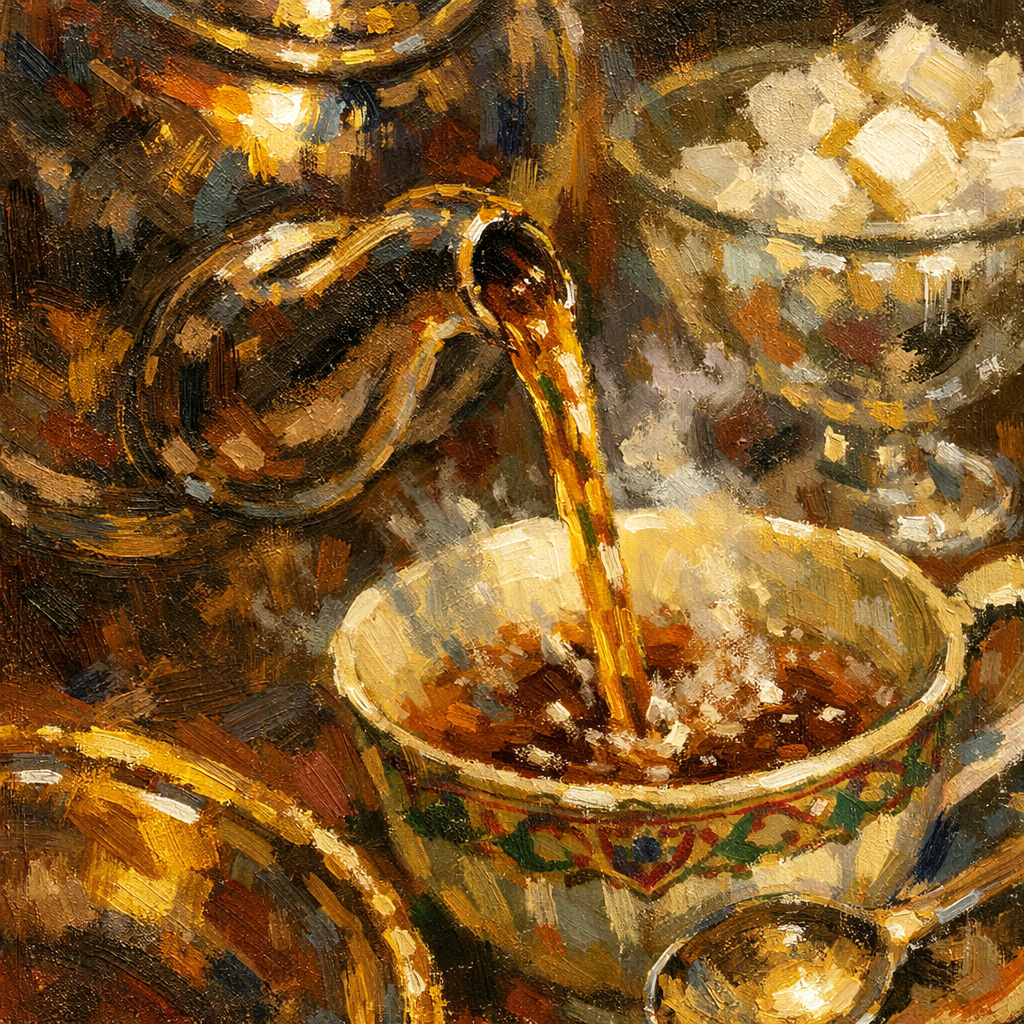
The Sweet Alchemy of Afternoon
Critique
1. Introduction The painting presented here is a compelling still life that focuses on a close-up view of a tea service, emphasizing the tactile qualities of the objects and the interplay of light. It depicts the precise moment of pouring tea into a cup, surrounded by elements such as a sugar bowl and a spoon. The composition creates an intimate and substantial domestic scene that invites the viewer to appreciate the richness of a mundane ritual. 2. Description In the center of the frame, a dark, lustrous teapot pours a stream of amber liquid into a cup adorned with intricate colorful patterns. To the right, a glass vessel filled with sugar cubes reflects the light, with each white cube rendered as a distinct geometric form. In the lower right foreground, a metallic spoon exhibits sharp highlights, providing a clear visual accent that complements the various textures of ceramic, glass, and liquid. 3. Analysis The defining characteristic of this work is the vigorous impasto technique, where thick layers of paint create a highly textured surface. Each brushstroke remains visible, contributing to a complex mosaic of light and shadow that enhances the three-dimensionality of the subjects. The color palette is dominated by warm ochre, sienna, and gold, while the white of the sugar and the green accents on the cup provide necessary visual relief and balance. 4. Interpretation and Evaluation This work succeeds by prioritizing the sensory experience of light and material over literal precision. By reinterpreting a classical still life theme through expressive brushwork, the artist achieves a dynamic tension between the movement of the liquid and the stillness of the vessels. The skillful differentiation between the reflective qualities of metal, glass, and porcelain demonstrates a sophisticated mastery of the medium and a keen observational eye. 5. Conclusion A viewer is initially struck by the raw energy of the brushstrokes, but soon becomes immersed in the multisensory atmosphere of the scene, feeling the warmth of the tea and the cool surface of the sugar. The piece effectively captures the dramatic potential inherent in daily life. It remains a powerful and elegant example of how artistic technique can elevate a simple domestic interlude into a significant visual statement.
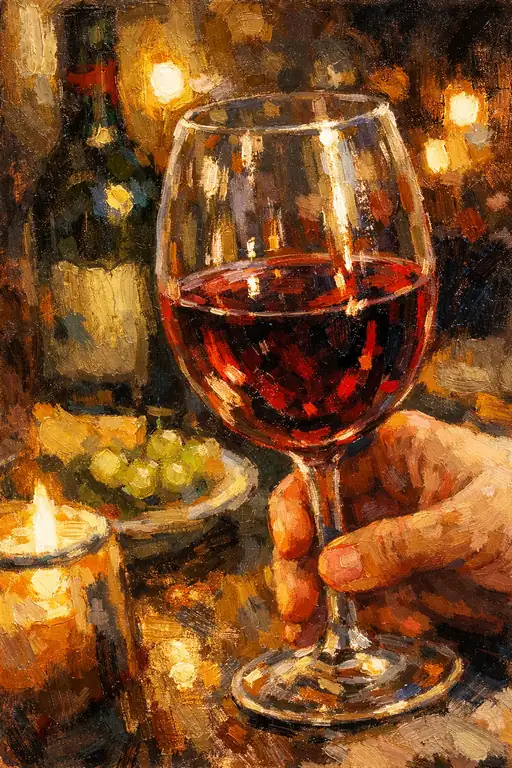 Echoes of a Crimson Evening
 A Toast to the Evening Glow
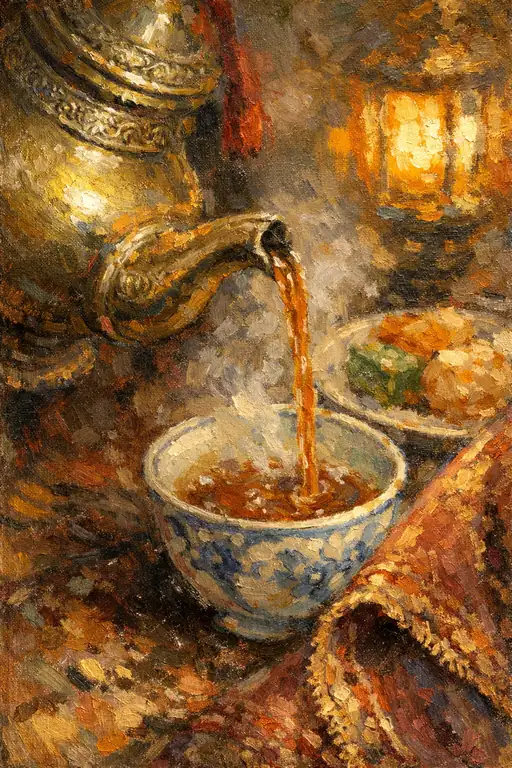 Golden Warmth of Twilight
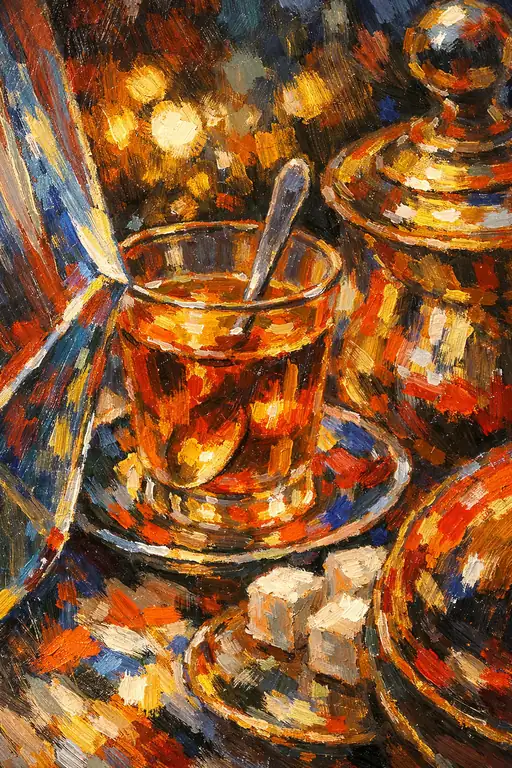 Golden Infusion
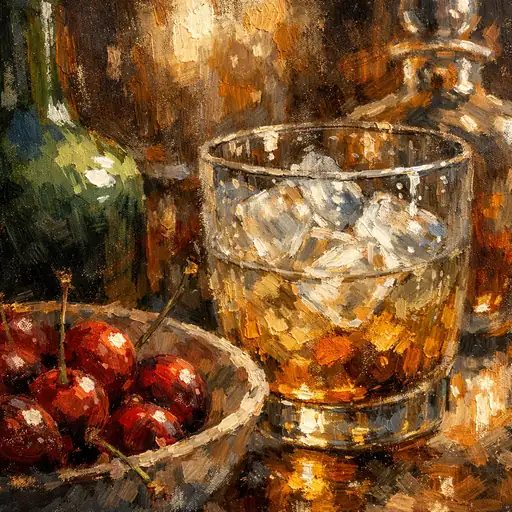 Amber Reflections of Time
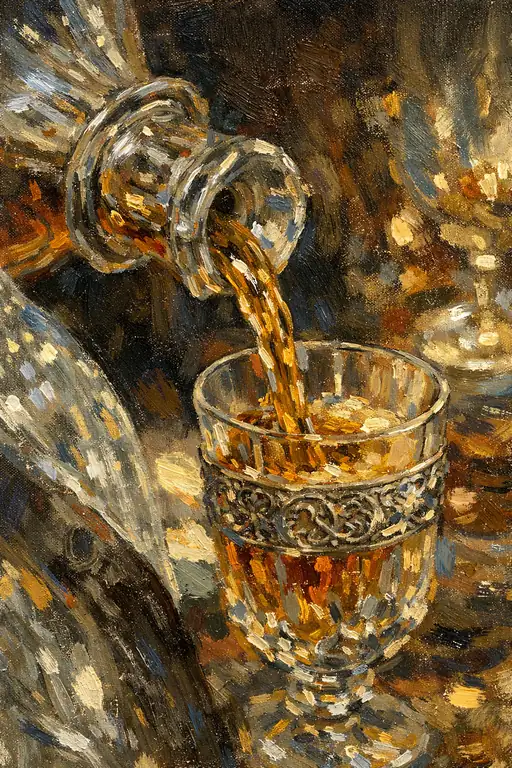 The Golden Pour of Twilight
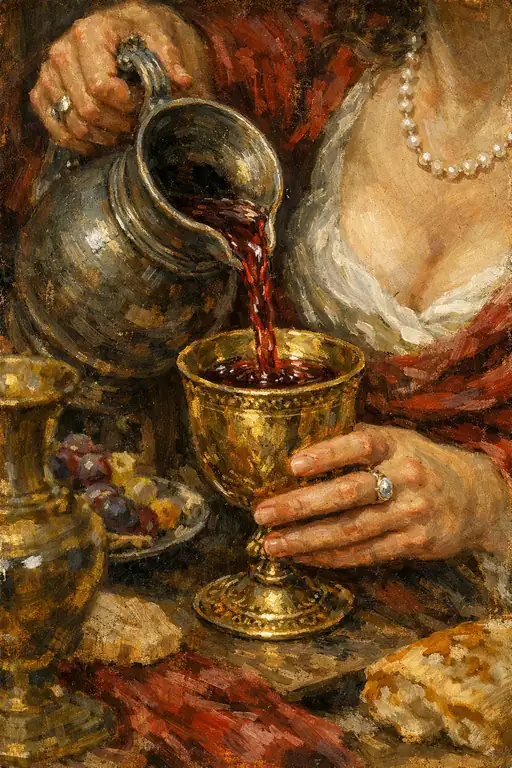 Crimson Offering
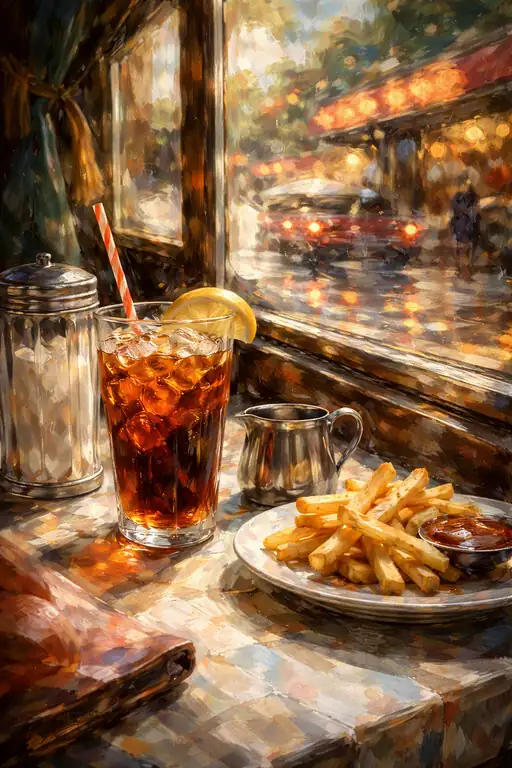 A Solitary Sip in the Rainy Neon Glow
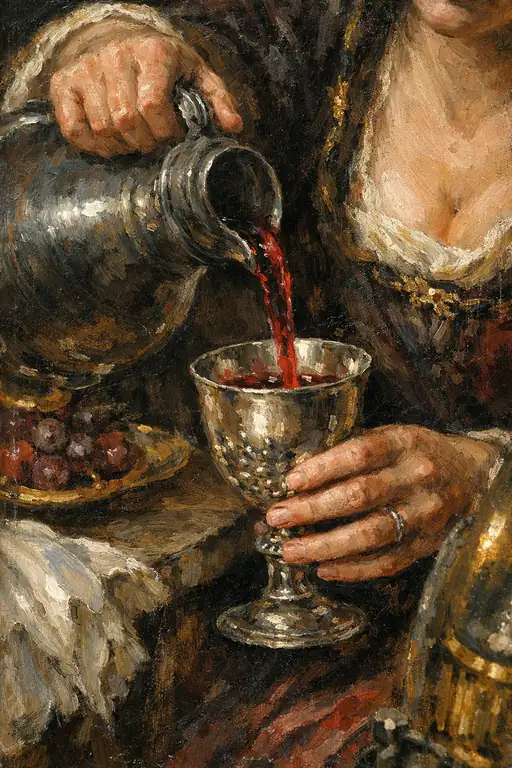 The Ruby Pulse in the Shadows
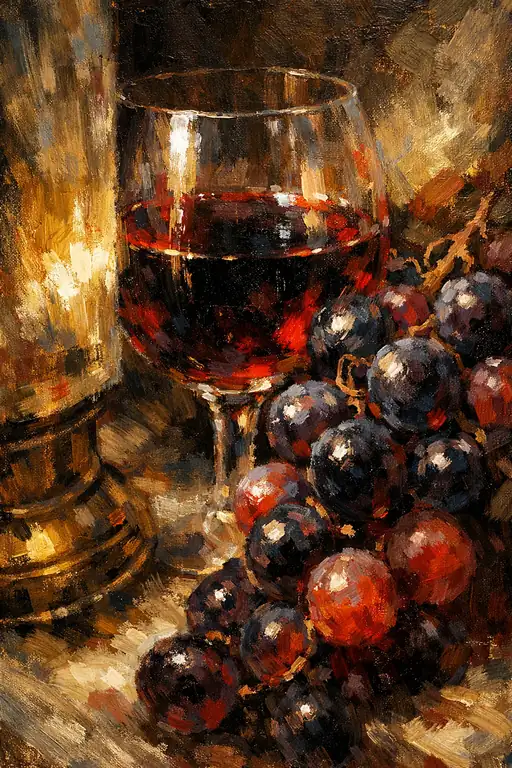 Crimson Nectar of the Night
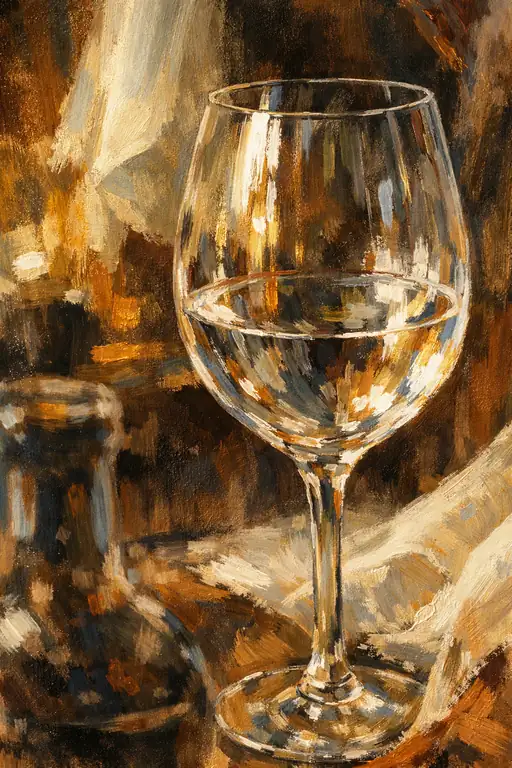 Amber Meditation