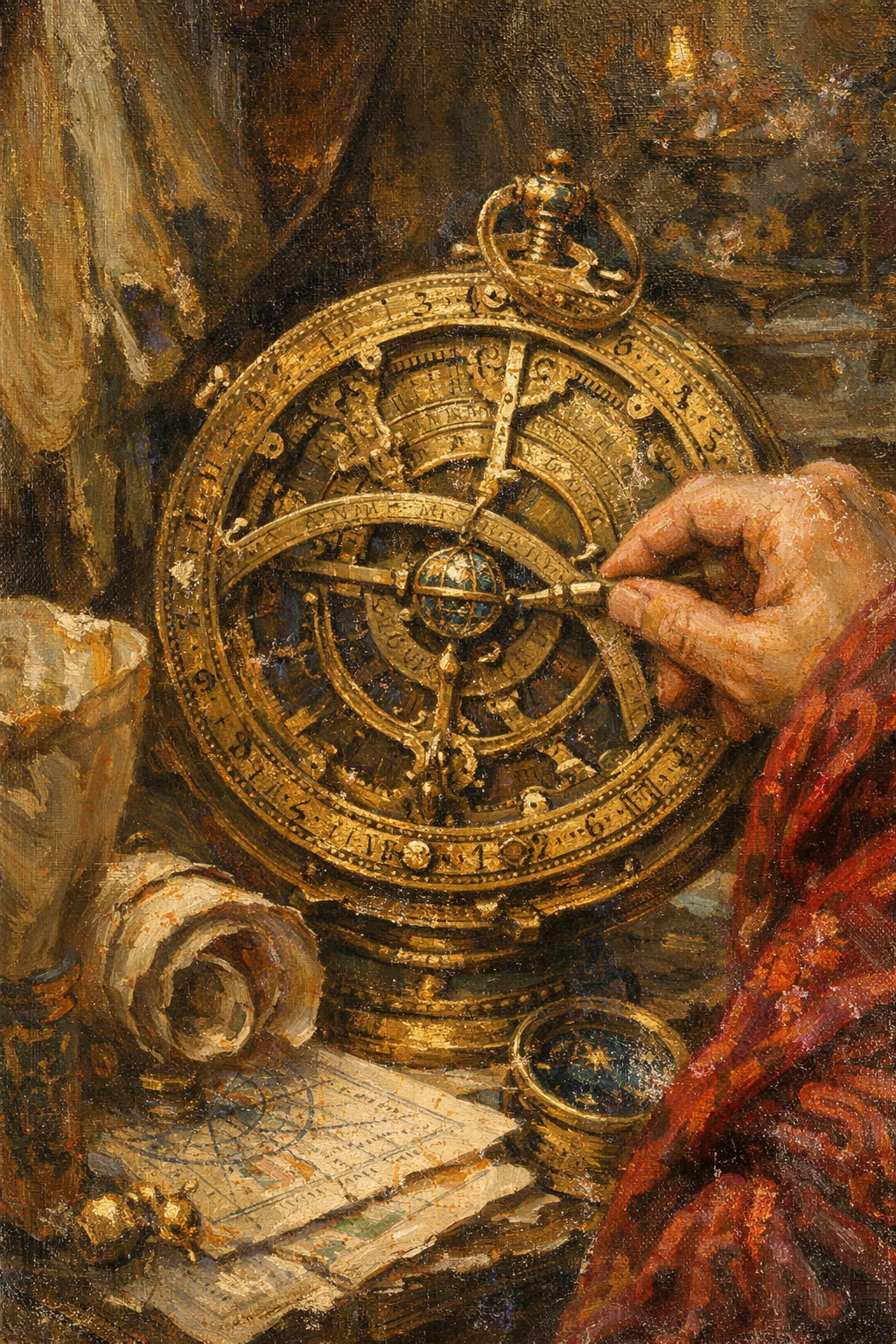
Grasping the Celestial Mysteries
Critique
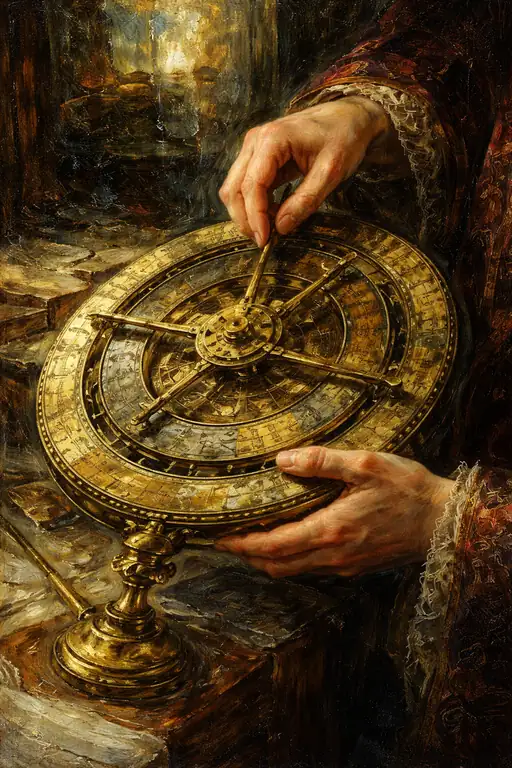
1. Introduction This detailed oil painting depicts an intricate scene centered on an ancient astronomical instrument, likely an astrolabe or armillary sphere. The composition focuses on a human hand carefully adjusting the device, surrounded by the tools of a scholar or navigator. Through its rich, golden tones and textured brushwork, the work evokes a sense of historical intellectual pursuit and the mystery of the cosmos. 2. Description The central focus is a large, ornate golden instrument featuring numerous rings, dials, and engraved markings. A hand, clothed in a deep red sleeve, is shown in the act of manipulating one of its small pointers. Below the device lie rolled scrolls and a parchment map filled with geometric diagrams, while a small nautical compass is positioned to the right, its surface reflecting a faint blue light. 3. Analysis The artist employs a sophisticated use of impasto to convey the metallic sheen of the gold and the weathered texture of the parchment. The lighting is dramatic, casting deep shadows and highlighting the intricate relief of the instrument's components. The warm color palette, dominated by gold, brown, and crimson, creates a unified and scholarly atmosphere, while the tightly cropped composition emphasizes the tactile nature of the scene. 4. Interpretation and Evaluation This work successfully captures the intersection of art and science during the Age of Discovery. The meticulous rendering of the scientific tools suggests a deep respect for human ingenuity and the quest for knowledge. The composition is expertly balanced, and the contrast between the rigid metal of the instrument and the soft folds of the sleeve demonstrates a high level of technical skill and artistic sensitivity. 5. Conclusion Ultimately, the painting serves as a tribute to the timeless human desire to measure and understand the universe. The viewer is invited to appreciate the intricate craftsmanship of the past through the rich, expressive medium of oil paint. An initial fascination with the golden instrument evolves into a broader reflection on the history of science and the enduring legacy of intellectual exploration.
Same Subcategory
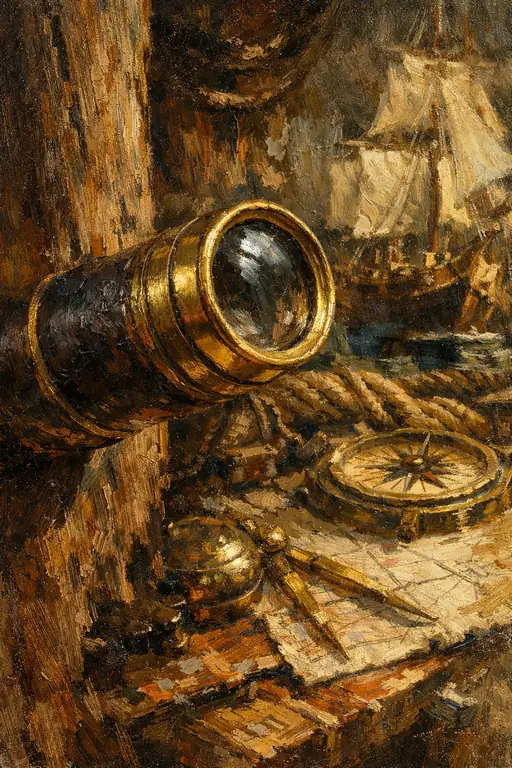 Looking Towards the Unknown Sea
Similar Artworks
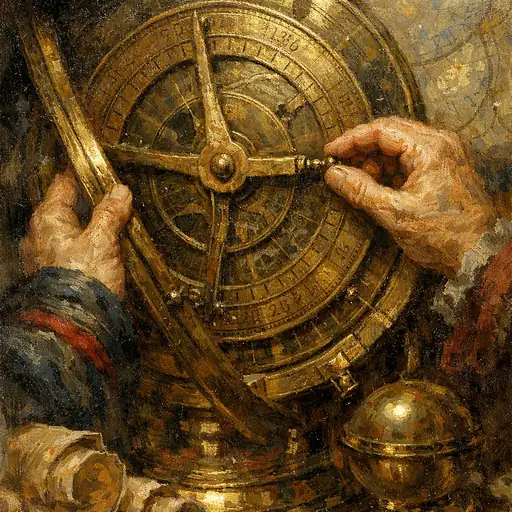 Whispers of the Spring Breeze
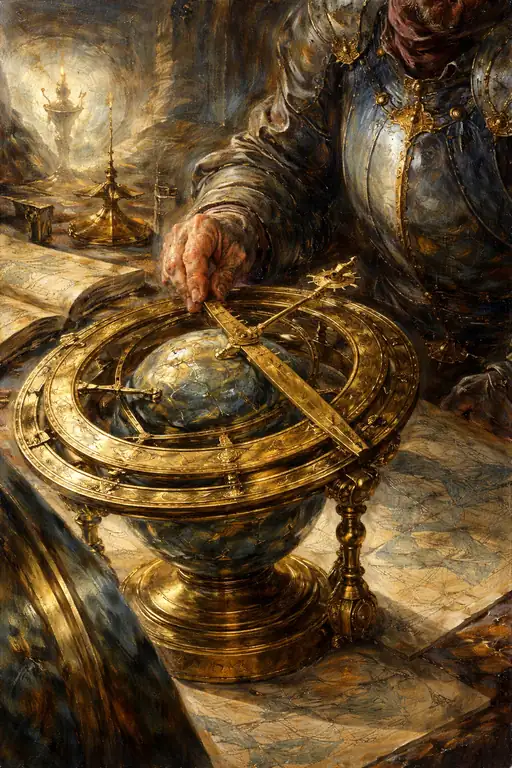 The Scholar Knight's Celestial Discovery
 Echoes of the Starlit Ocean
 Echoes of the Uncharted Sea
 Reaching for the Horizon
 The Compass that Knows My Heart's Direction
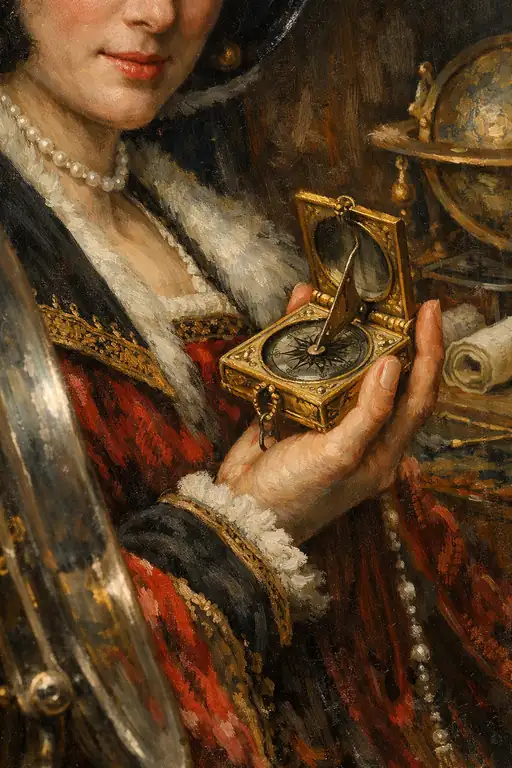 Charting the Heart's Uncharted Course
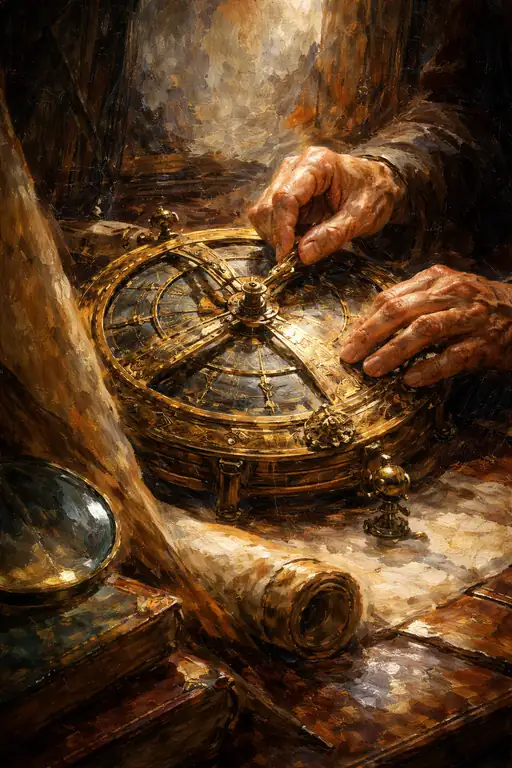 The Architect of Starlight
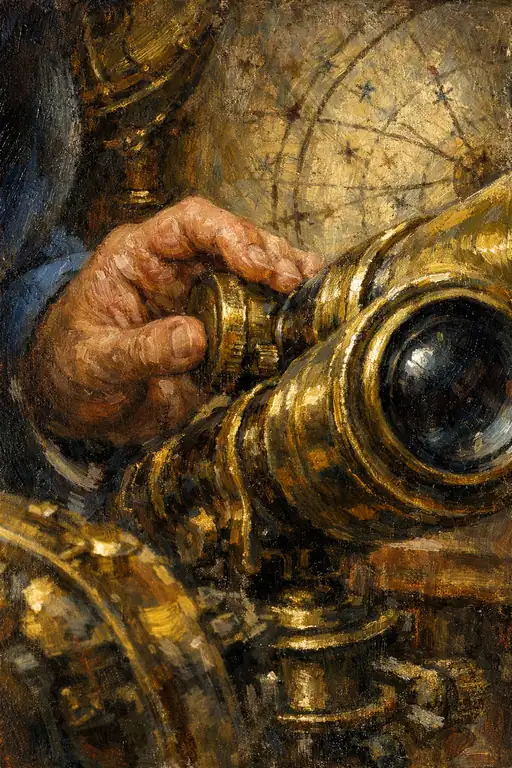 Guiding the Heavens: The Touch of Discovery
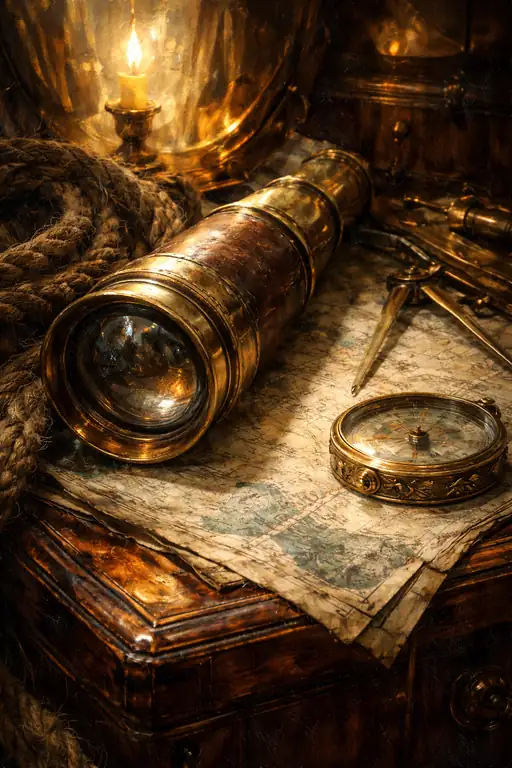 Whispers of the Uncharted Sea