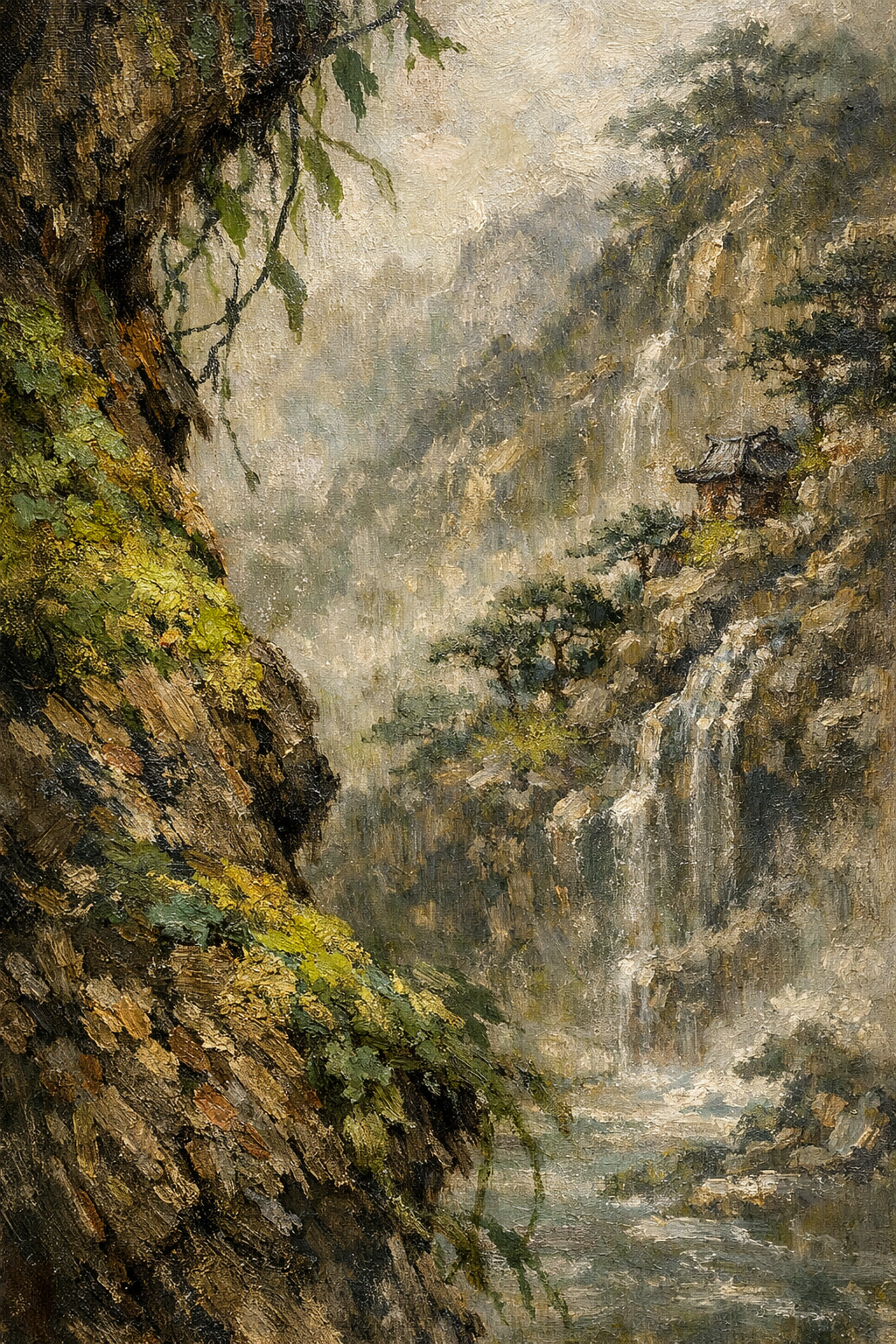
Shrine of the Weeping Cliff
Critique
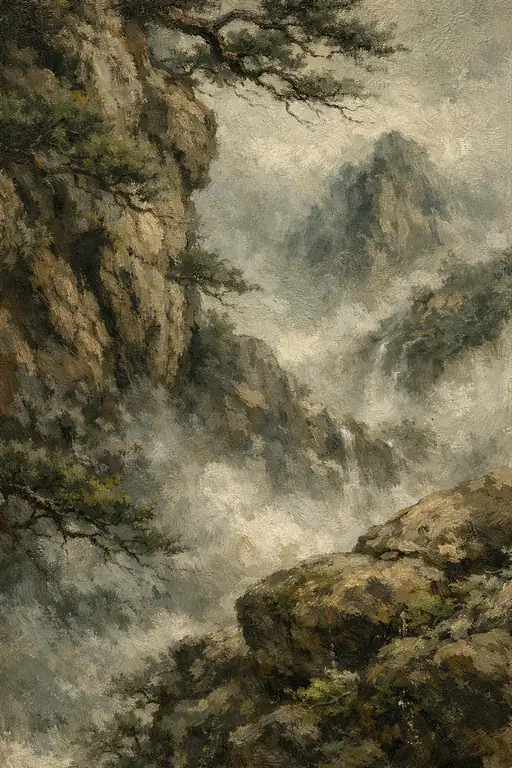
1. Introduction This work is an oil painting with an expressionistic flair, simultaneously depicting the roughness and silence of nature through heavy impasto techniques. The contrast between the boldly placed rock face in the foreground and the mystical mountain scenery in the background provides a powerful visual impact. While using traditional landscape motifs, the vitality of nature is materially expressed through the heavy matiティre characteristic of oil painting. Through this tactile texture, the viewer experiences being drawn into the depths of nature. 2. Description On the left side of the frame, a massive rock face intertwined with moss and plants is depicted as a large foreground element, its complex irregularities expressed through thick layers of paint. In the middle to background, a waterfall cascades down a steep cliff, with a traditional temple standing quietly nearby. The surroundings are enveloped in thick mist, and the mountain ridges dissolve into the atmosphere. The colors mix the brownish tones of the rocks, the vivid green of the moss, and the grayish-white of the mist, creating complex gradations throughout the frame. 3. Analysis The most prominent formal characteristic is the powerful brushwork and expression of texture using the impasto technique. Traces of palette knives or thick brushes are evident in the depiction of the rock face, where the ridges of paint diffusely reflect light, emphasizing a material sense of reality. The vertical lines of the waterfall and the complex forms of the rocks bring a dynamic rhythm and visual tension to the composition. Light diffuses through the mist, and the chiaroscuro contrast between the dark foreground rocks and the bright background creates deep spatial perspective. 4. Interpretation and Evaluation This artwork symbolically depicts the immortal vitality of nature and architecture as a spiritual haven for humanity within it. The foreground rock mass serves as a symbol of overwhelming materiality, contrasted with the distant temple as a symbol of spirituality seeking harmony with nature. The bold manipulation of color and texture directly expresses the energy of nature itself beyond mere landscape description, which is highly commendable. The excellent treatment of matiティre and the strength of the composition give this work universal aesthetic value. 5. Conclusion While it appears to be a heavy and powerful landscape painting at first glance, closer observation reveals the delicate expressions and quiet emotions of nature. In the process of moving the gaze from the coarse textures in the foreground to the mystical scenery in the back, the viewer is guided from a material dimension to a spiritual one. The initial overwhelming presence transforms into a deep sense of awe toward nature and harmony upon finishing the observation. This piece is an extremely high-quality work of art where tradition and modern expression are highly integrated.
Same Subcategory
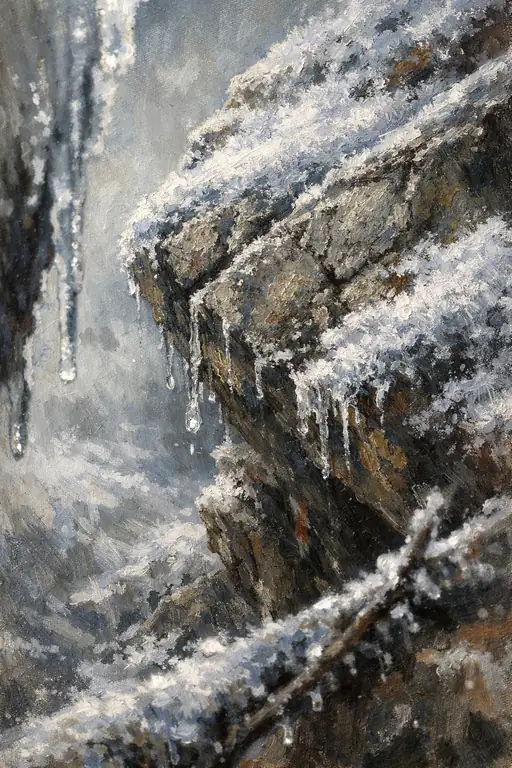 Frozen Tears of the Mountain: The Icicle's Grip
Similar Artworks
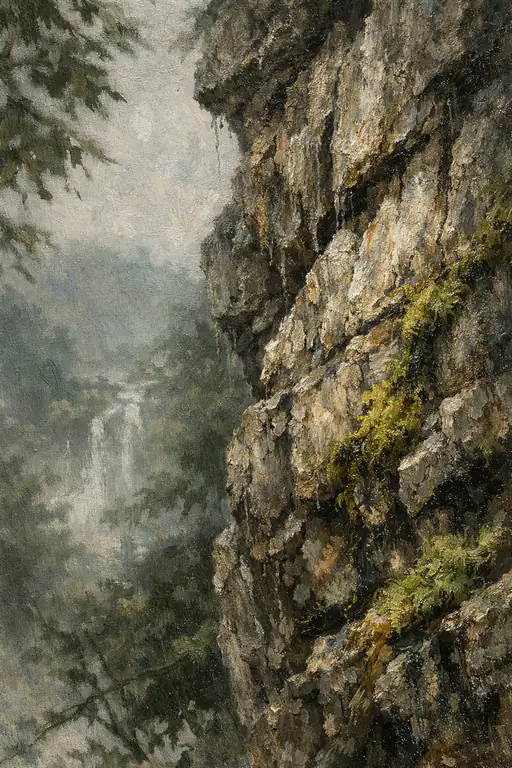 Breath of the Abyss
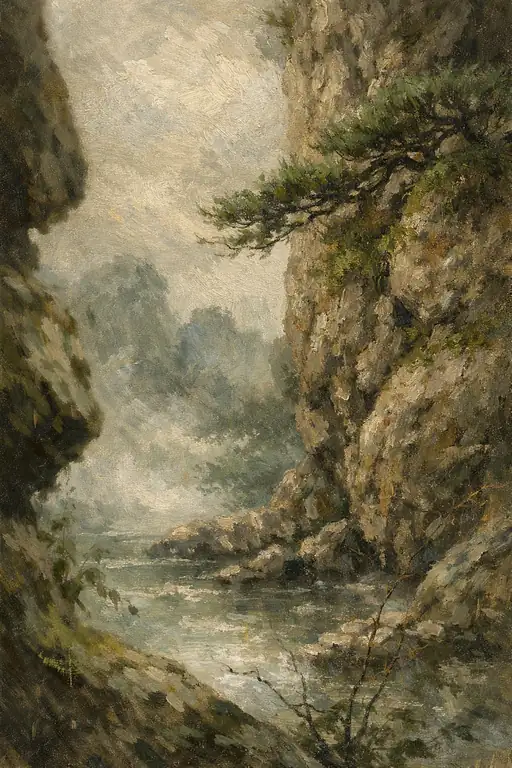 Resilience Carved in the Deep Gorge
 Whispers of the Misty Peaks
 Timeless Pillars: The Quartz Sentinels of Wulingyuan
 Pillars of the Earth: The Mist-Shrouded Canyons
 Eternal Roots at the Roaring Summit
 Sovereign of the Sea of Clouds
 Awakening of the Ancients
 Gateway to the Wild
 Eternal Pillars in the Mist