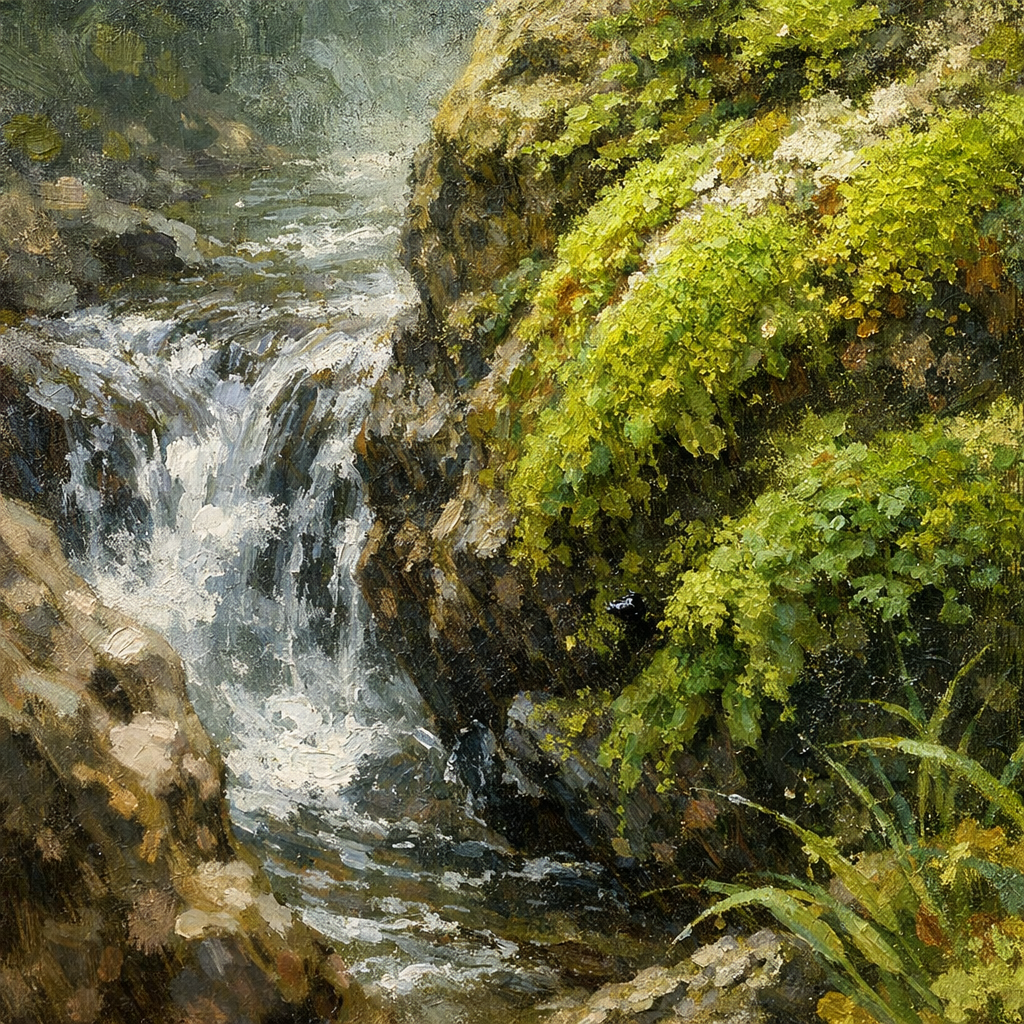
Veil of the Wild Waters
Critique
1. Introduction This vertical landscape painting presents a vivid close-up of a turbulent forest stream cascading over rugged rocks. The artist focuses on the immediate physical textures of water and stone, creating a sensory-rich experience of the natural wilderness. The work captures the dynamic energy found in the smaller, often overlooked corners of a mountainous environment. 2. Description The left side of the composition features a energetic burst of white water plunging between jagged, dark-toned rocks. On the right, a massive stone outcrop is heavily draped in vibrant green moss and dense foliage, suggesting a damp and fertile habitat. In the bottom right corner, a few sharp blades of tall grass extend into the frame, adding to the sense of wild, untamed growth. 3. Analysis The color palette is anchored by deep, earthy browns and greys, contrasted sharply with the brilliant, luminous greens of the vegetation. The artist utilizes a thick impasto technique, where heavy layers of paint are applied to mimic the physical roughness of the rock and the frothy volume of the rushing water. The lighting is focused on the central cascade and the sun-lit patches of moss, creating a strong sense of depth. 4. Interpretation and Evaluation This work explores the themes of vitality and the relentless movement of nature. The juxtaposition of the enduring, immobile rock with the fleeting, ever-changing splash of water creates a powerful visual metaphor for time and change. The artist窶冱 technical mastery is particularly evident in the rendering of the splashing foam, which feels both heavy and fluid. 5. Conclusion In summary, the painting is an effective and evocative study of natural textures and dynamic forces. The compact composition draws the viewer into an intimate encounter with the stream, making the sound of the water almost audible. What starts as a simple depiction of a cascade matures into a deep appreciation for the complex beauty and life-sustaining power of the forest.
Same Subcategory
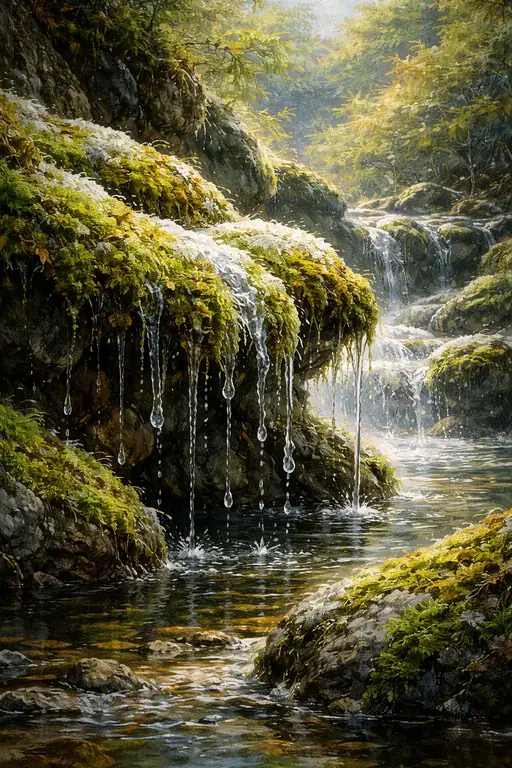 Symphony of the Forest Stream
Similar Artworks
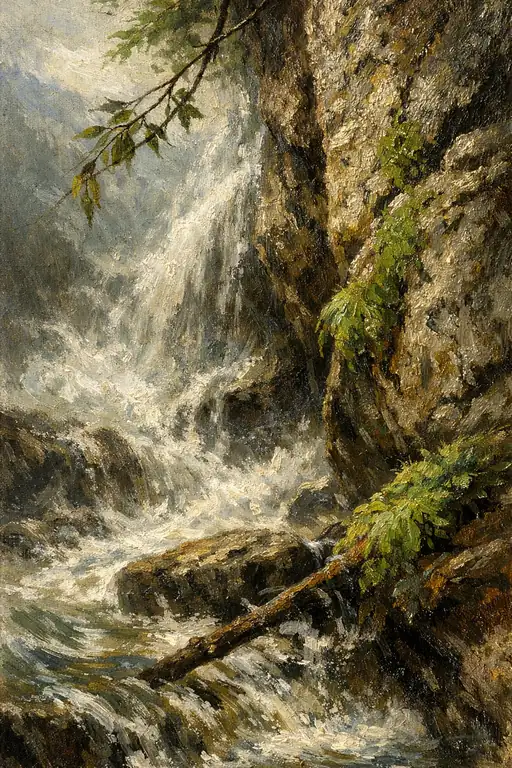 Turbulence Against the Fallen Wood
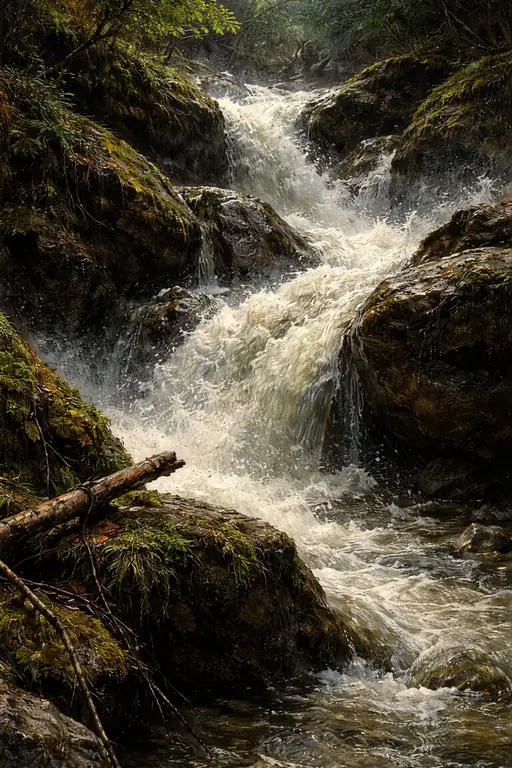 The Eternal Roar of the Forest Cascade
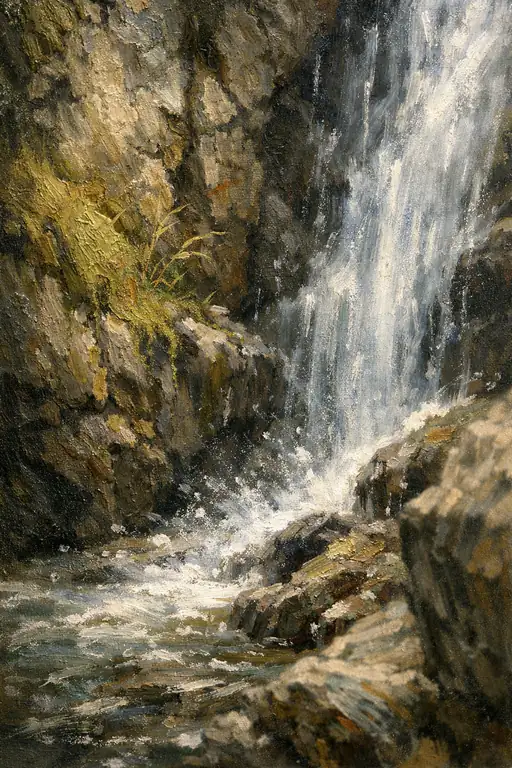 Eternity in a Waterfall's Embrace
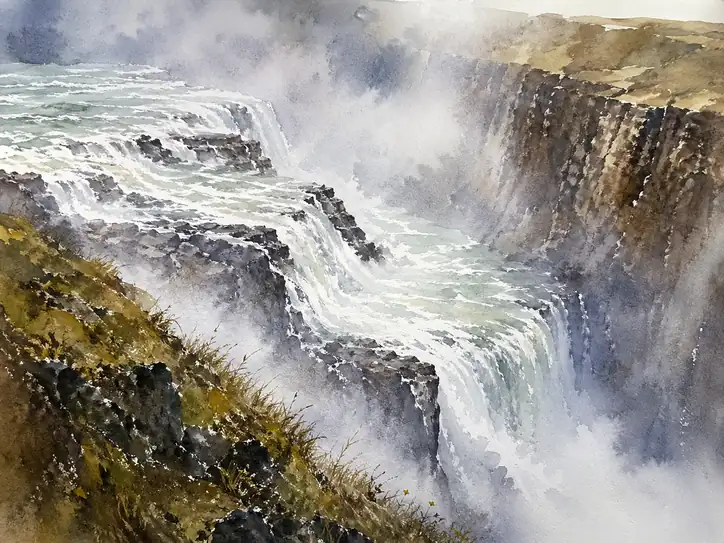 Roar of the Untamed Wild
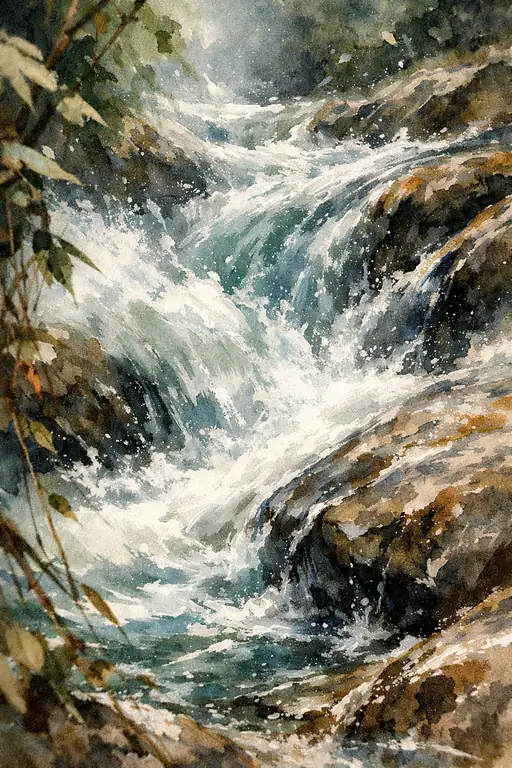 Turbulent Rush Over Rugged Stones
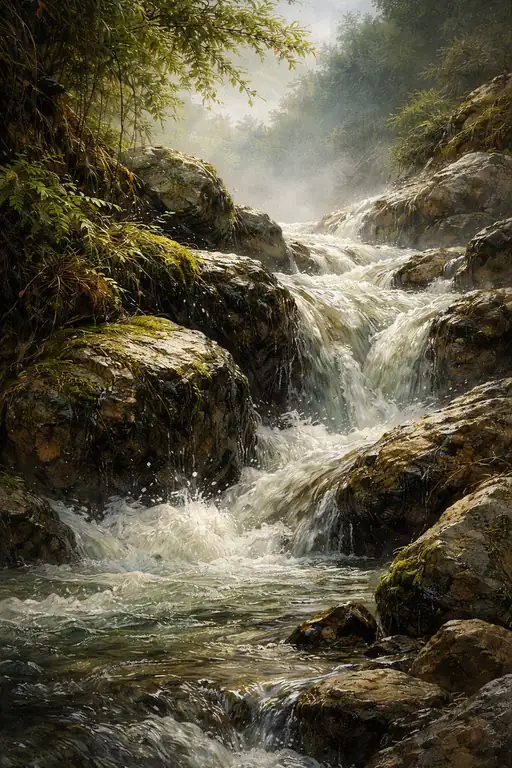 Vigorous Flow of the Deep
 The Whispering Veils of Autumn
 Echoes of the Emerald Gorge
 Mystical Morning Forest
 Rushing Waters: A River Cutting Through a Steep Moss-Covered Gorge