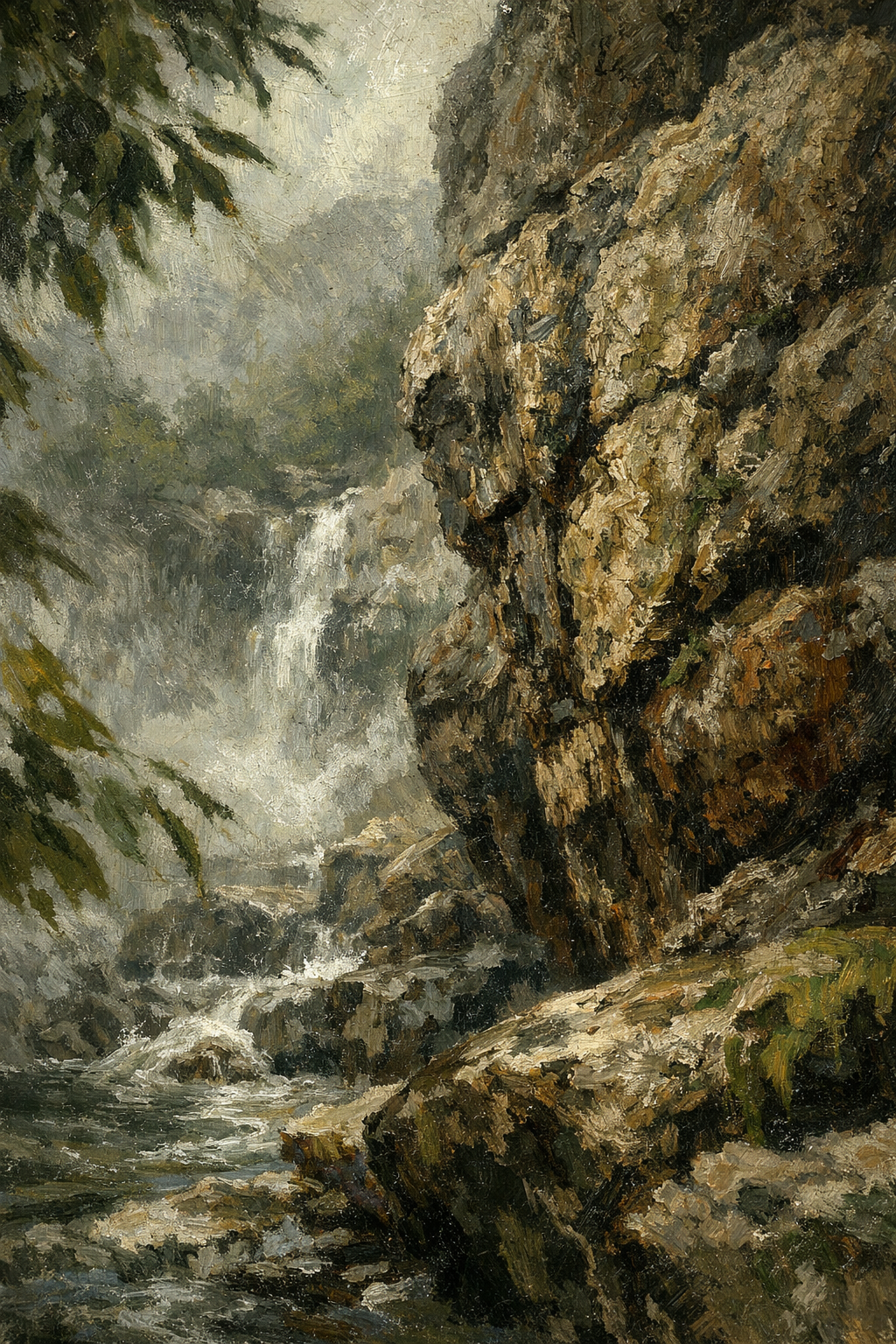
Roar of the Mist
Critique
1. Introduction This landscape painting offers a dramatic and expressive view of a mountain waterfall, emphasizing the sheer scale of the natural environment. The composition is dominated by a massive, weathered cliff on the right, which creates a powerful sense of verticality and weight. The artist uses a painterly approach to evoke the atmosphere of a rugged, untamed wilderness. 2. Description The foreground consists of dark, jagged rocks at the base of the cliff, where the water from the falls crashes and flows into a stream. In the mid-ground, a white cascade of water descends through a misty, rocky opening, its details softened by distance and the surrounding spray. Overhanging branches with dark green leaves frame the upper left corner, adding a sense of depth and enclosure to the scene. 3. Analysis The artwork is characterized by its bold, impasto-like brushwork, which gives the rock faces and foliage a highly tactile quality. The color palette is relatively muted, relying on deep browns, grays, and forest greens to convey a moody, overcast atmosphere. Light is diffused throughout the scene, with the brightest areas reserved for the falling water, creating a focal point that contrasts with the dark, solid forms of the rocks. 4. Interpretation and Evaluation The painting successfully captures the sublime and slightly melancholic beauty of the high mountains. The contrast between the unyielding, ancient stone and the ephemeral, moving water serves as a metaphor for the passage of time and the enduring power of nature. The expressive technique demonstrates the artist窶冱 ability to move beyond literal representation to capture the emotional essence of a place. This work is highly effective in its mood and technical execution. 5. Conclusion In conclusion, this work is a powerful study of mountain scenery that balances monumental form with atmospheric sensitivity. While the initial impression is one of rugged intensity, the viewer eventually discovers a quiet, meditative quality in the misty falls and the somber tones. The painting stands as a distinguished example of how expressive brushwork can bring a landscape to life with both physical and emotional depth.
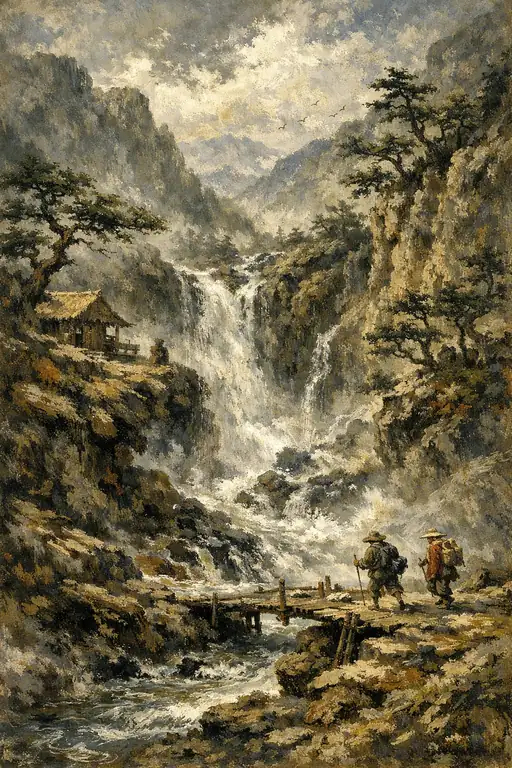 Majesty of the Cascade
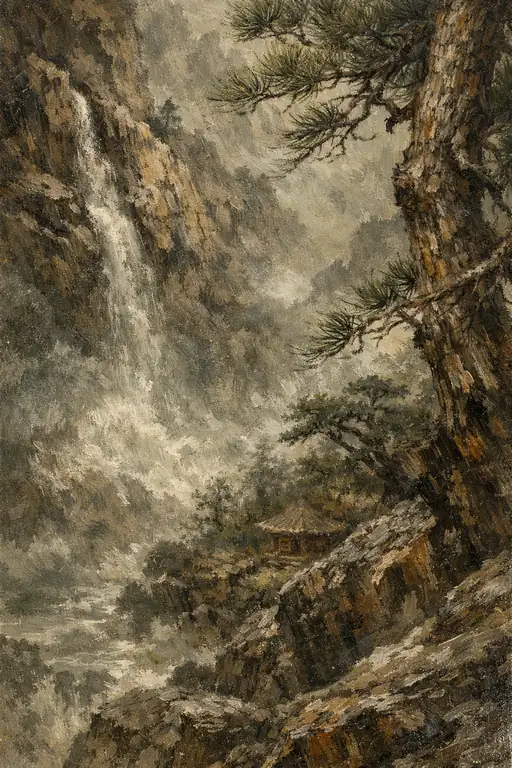 Solitude Above the Clouds
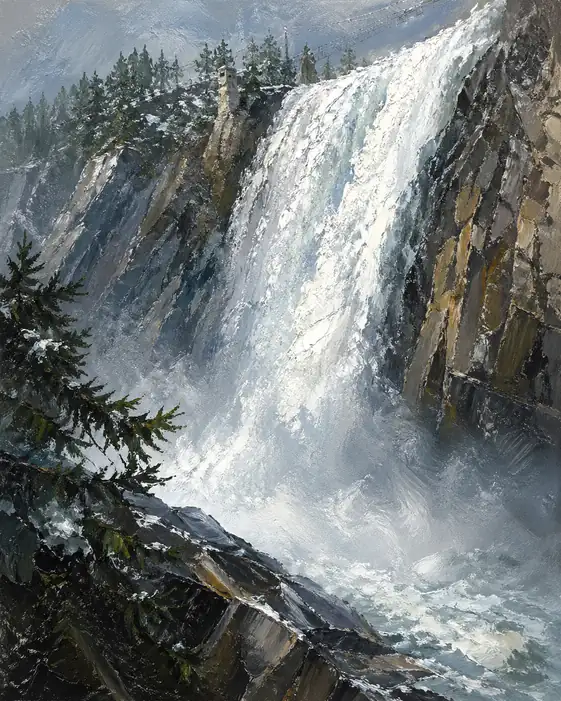 The Roar of Eternity
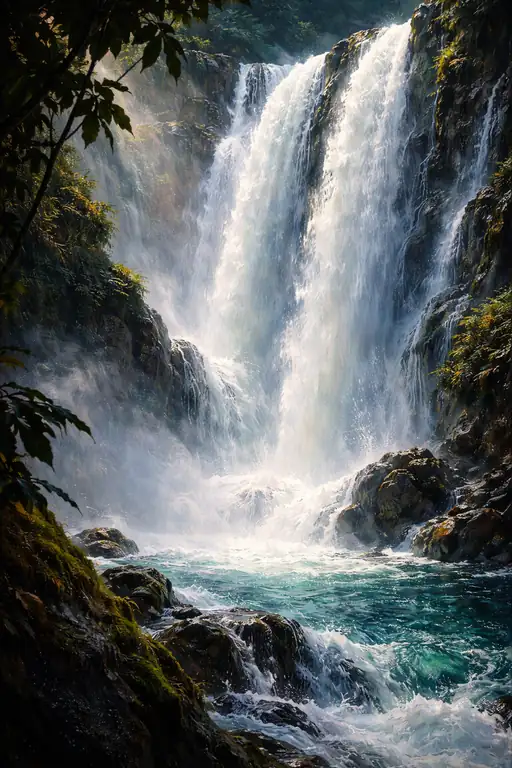 Echoes of the Vertical Roar
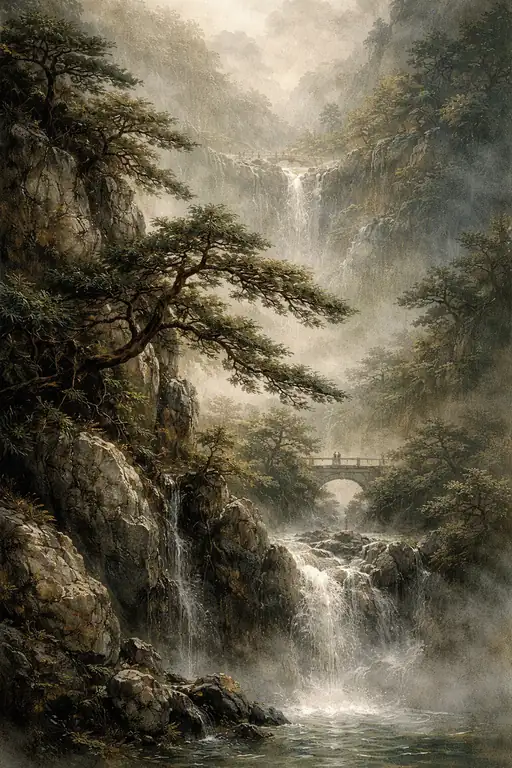 The Gilded Protector
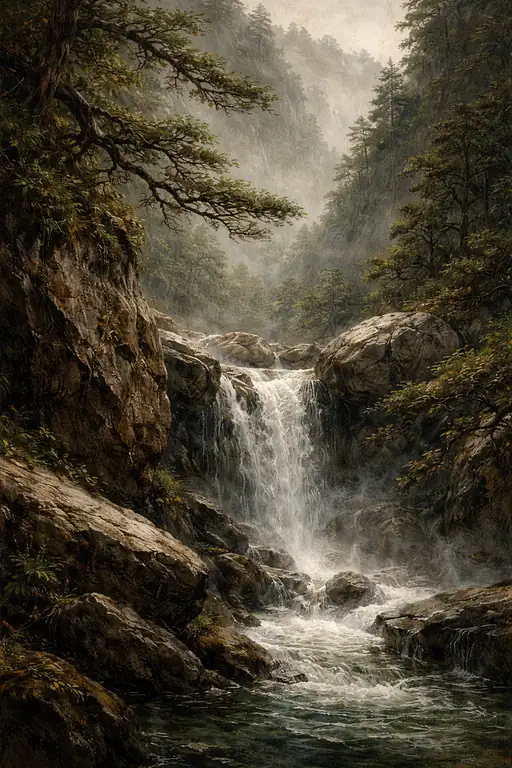 The Roar of Eternity Amidst Timeless Stones
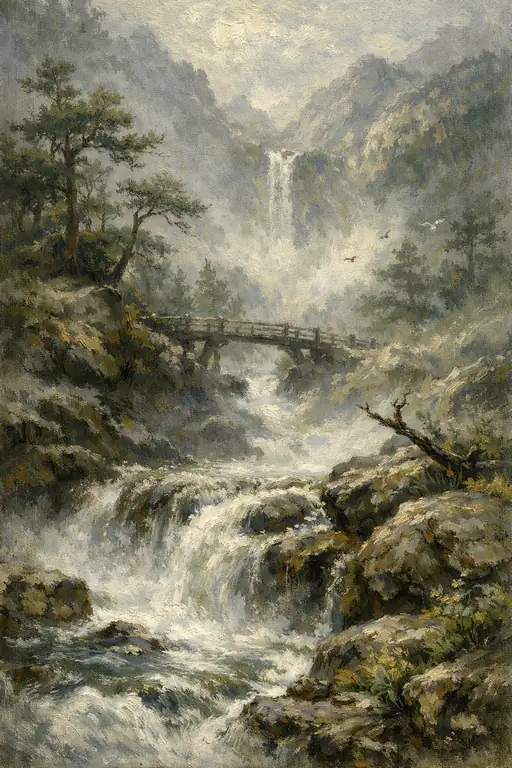 Mist Over the Roaring Falls
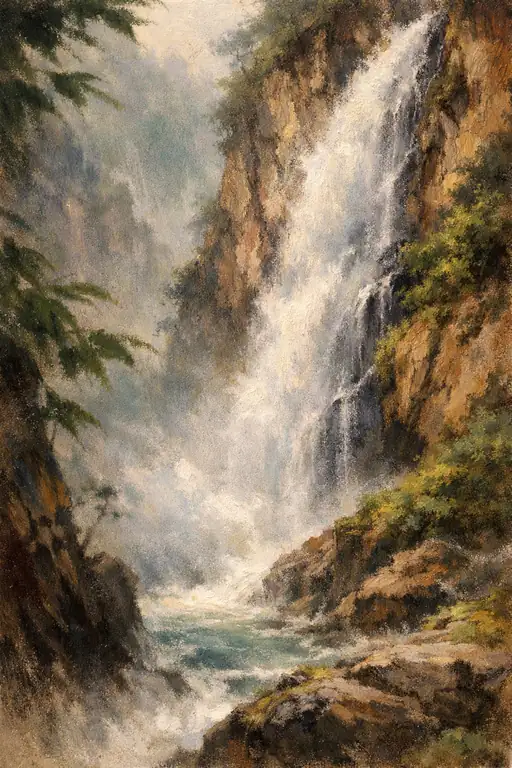 Thunderous Majesty in the Secluded Canyon
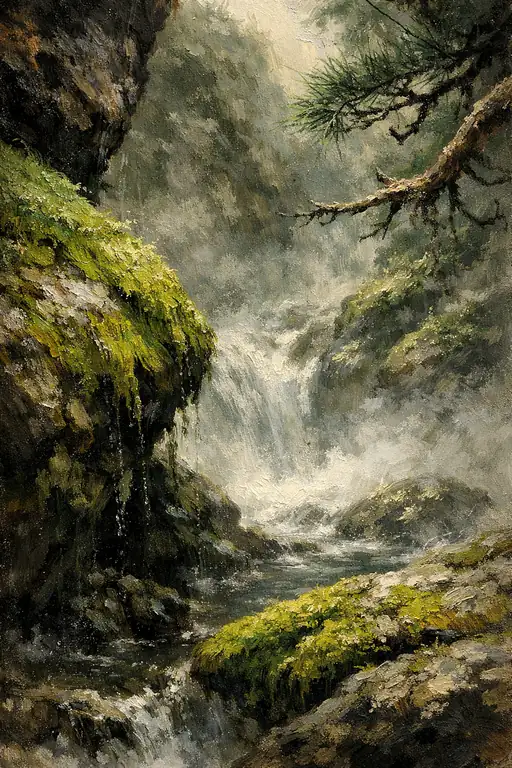 The Impasto of Souls
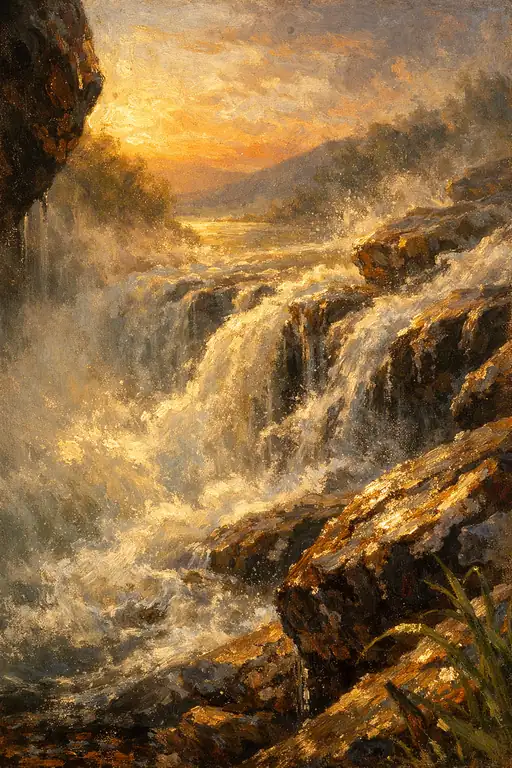 Radiance Piercing the Mist
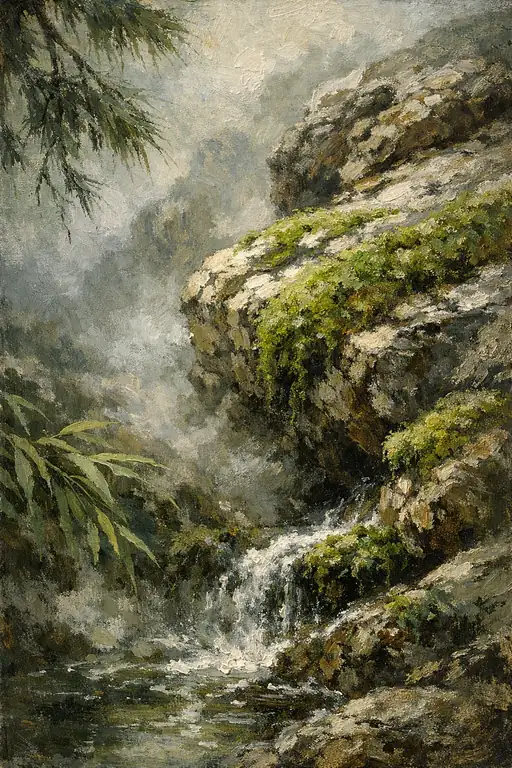 Tears of the Rugged Cliff