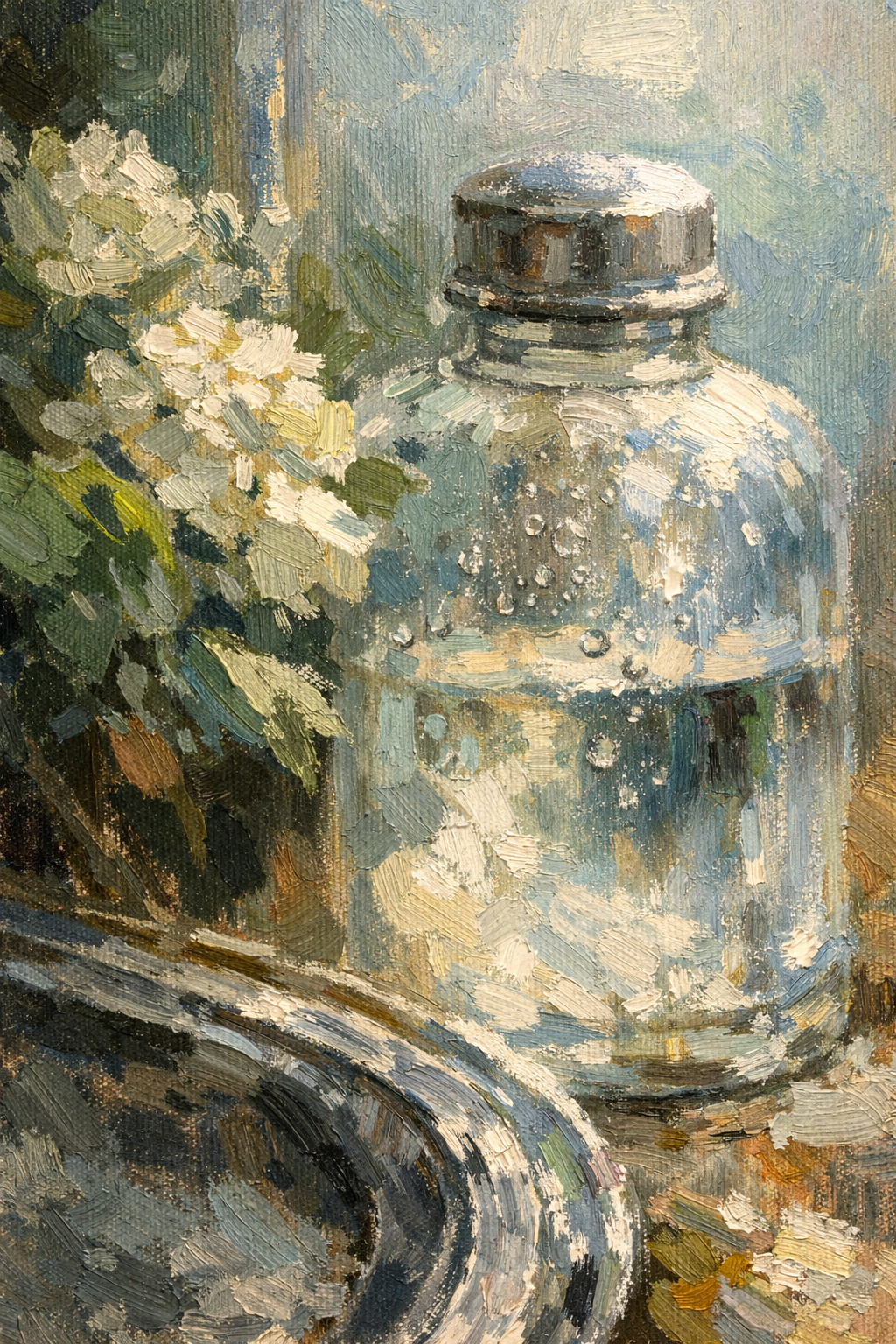
Symphony in Glass and Light
Critique
1. Introduction This vertical still life painting features a glass jar and a cluster of white flowers, presented in a rigorous impressionistic style. The composition focuses on the interplay of light and reflection across various surfaces, utilizing a technique of fragmented, energetic brushstrokes. By eschewing smooth gradients in favor of distinct dabs of color, the artist emphasizes the materiality of the oil medium while capturing a sense of atmospheric presence. The artwork is a sophisticated study of everyday objects, transformed through a focused observation of light and texture into a vibrant visual experience. 2. Description The central subject is a clear glass jar topped with a metallic, screw-on lid. The glass surface is covered with numerous highlights and reflections, rendered with thick, opaque applications of white and pale blue paint. Small, circular marks on the jar窶冱 body suggest the presence of condensation or air bubbles within a liquid. To the left, a dense bunch of white flowers, possibly hydrangeas, provides a soft, organic contrast to the hard surfaces of the jar. In the lower-left corner, a dark, curved object, likely the edge of a plate or tray, anchors the scene. 3. Analysis The color palette is predominantly cool, consisting of a range of blues, grays, and whites, accented by subtle touches of yellow and green in the foliage. The lighting is bright and directional, creating high-contrast reflections on the glass and the metallic lid that serve as the painting窶冱 tonal anchors. The brushwork is particularly expressive; each stroke remains visible, creating a mosaic-like surface that pulses with energy. This technique of broken color allows the viewer窶冱 eye to blend the individual marks, resulting in a convincing representation of transparency and metallic luster despite the lack of traditional blending. 4. Interpretation and Evaluation This work successfully elevates a humble arrangement into a complex exploration of visual perception. The choice to render transparent glass through opaque, textural strokes is a bold technical decision that demonstrates a deep understanding of light behavior. The juxtaposition of the structured, man-made jar with the irregular, natural forms of the flowers creates a harmonious balance within the frame. Evaluation of the piece reveals a high degree of technical skill in capturing the essence of light and the specific character of different materials through a consistent and confident application of the impressionistic method. 5. Conclusion In conclusion, the painting is a masterful example of how a limited subject can provide a wealth of artistic information. While the initial impression may be one of casual observation, a deeper analysis reveals a highly calculated approach to color and composition. The artist窶冱 ability to evoke the coolness of glass and the softness of petals through a unified brushwork style is remarkable. This piece serves as a potent reminder of the beauty found in the mundane when viewed through a lens of artistic sensitivity and technical mastery over the medium.
Same Subcategory
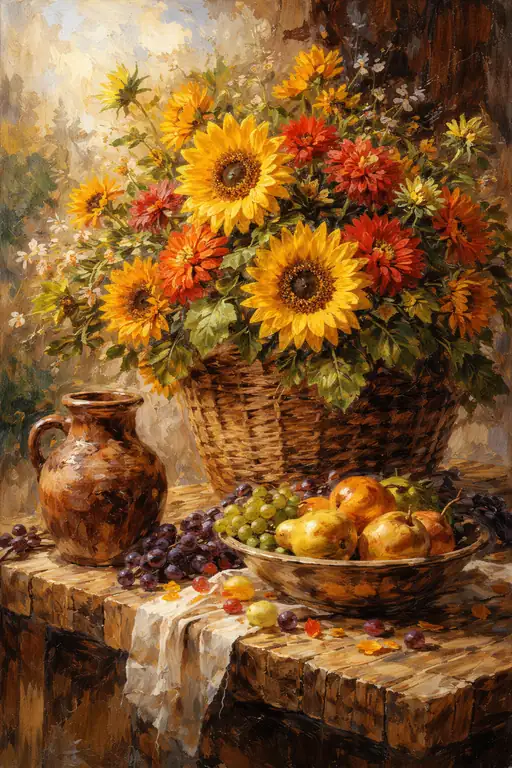 Golden Hymn of the Autumn Table
Similar Artworks
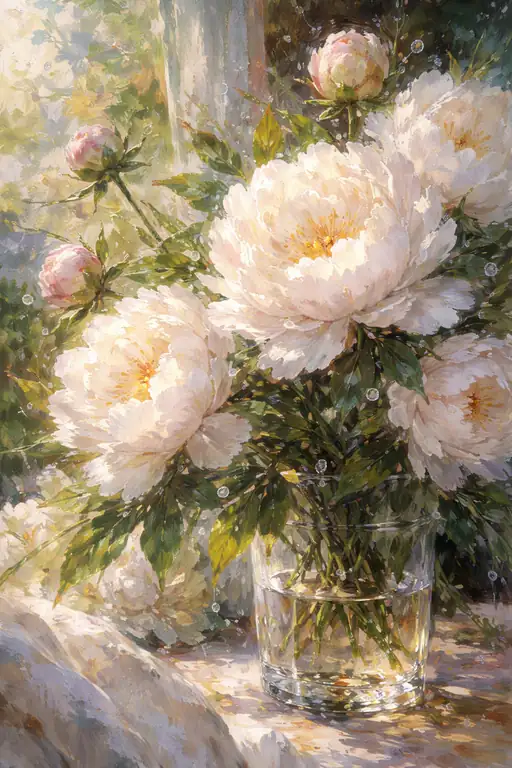 Blush of the Dancing Peonies
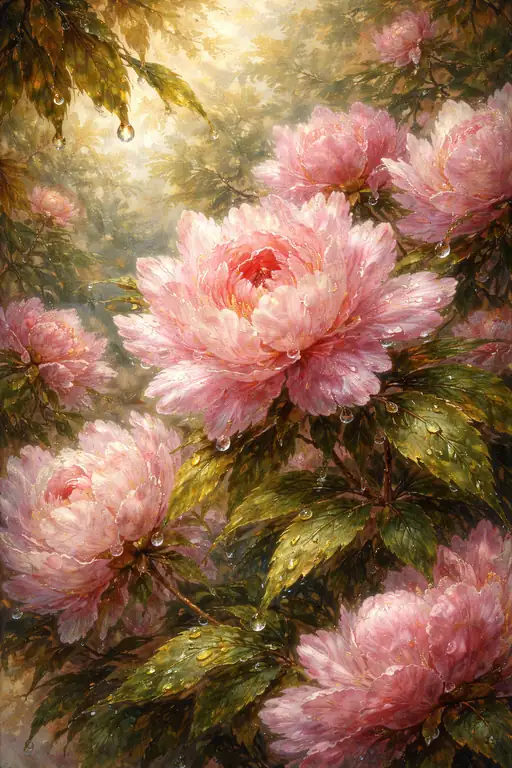 Morning Tears on Pink Peonies
 Sunlit Symphony of the Hearth
 Symphony of the Bountiful Bloom
 Eternal Elegance Framed in Modern Strokes
 Breeze Through the Hydrangeas
 Whispering Pansies
 Whispers of the Eternal Bloom
 Symphony of the Crimson Bloom
 Sunlight Bathing the Spring Bloom