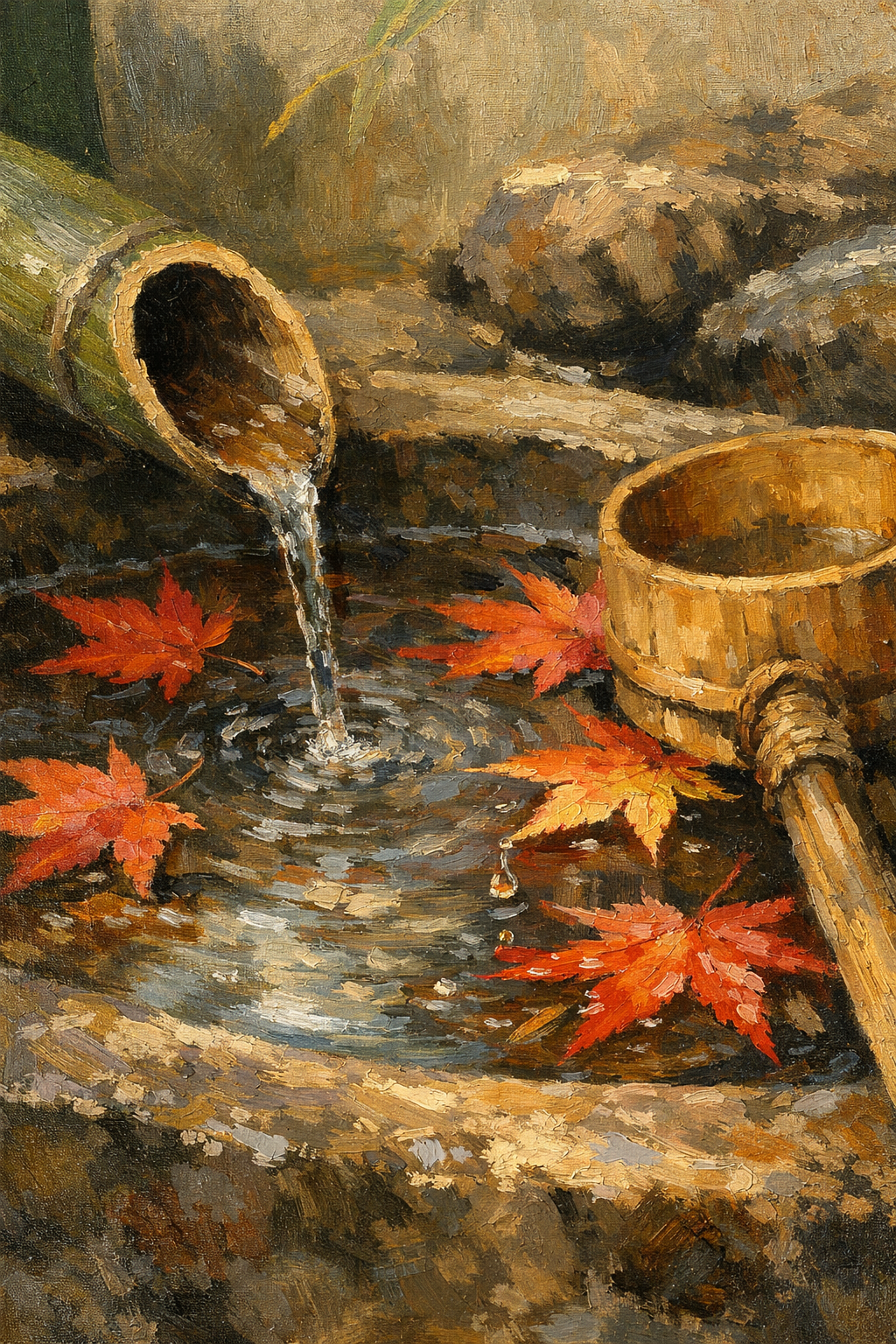
Echoes of Crimson Water
Critique
1. Introduction This oil painting depicts a traditional Japanese stone water basin, or tsukubai, during the autumn season. The scene captures the essence of a quiet temple garden, where the gentle sound of water and the vibrant colors of fallen leaves create a meditative atmosphere. The work focuses on the physical textures of the elements, employing a bold, impressionistic style that emphasizes the materiality of the objects and the fleeting nature of the season. 2. Description In the upper left, a bamboo pipe (kakehi) pours a steady stream of water into a shallow stone basin. Several bright red maple leaves (momiji) float on the surface of the water, while others rest on the surrounding stone edge. To the right, a wooden ladle (hishaku) lies ready for use, its textured handle extending toward the lower right corner. The water surface ripples where the stream hits it, reflecting the surrounding earthy tones and the brilliant red of the leaves. The overall color palette is dominated by warm ochres, deep browns, and fiery reds. 3. Analysis The painting is characterized by its heavy impasto technique, where thick layers of paint create a tactile, three-dimensional surface. The artist uses these visible brushstrokes to define the rough texture of the stone, the fibrous quality of the wood, and the fluid motion of the water. Compositionally, the circular form of the basin is intersected by the diagonal lines of the bamboo pipe and the ladle's handle, creating a balanced yet dynamic structure. The contrast between the cool, dark water and the warm, bright maple leaves provides a strong visual focus. 4. Interpretation and Evaluation The work embodies the Japanese aesthetic of wabi-sabi, finding beauty in the simple, the rustic, and the impermanent. The fallen leaves symbolize the cycle of life and the arrival of autumn, while the constant flow of water represents a sense of purity and renewal. Evaluation-wise, the artist demonstrates exceptional skill in using texture to convey depth and volume. The ability to suggest the transparency and movement of water through such thick, opaque paint is particularly noteworthy, showing a sophisticated mastery of the medium. 5. Conclusion Initially seen as a traditional cultural study, the painting reveals itself as a powerful exploration of texture and light. It successfully translates a quiet, spiritual moment into a vivid physical experience through its expressive brushwork. The piece leaves the viewer with a profound sense of peace and a renewed appreciation for seasonal traditions.
Same Subcategory
 Serenity in the Flow
Similar Artworks
 Autumn's Quiet Breath
 Echoes of Golden Leaves
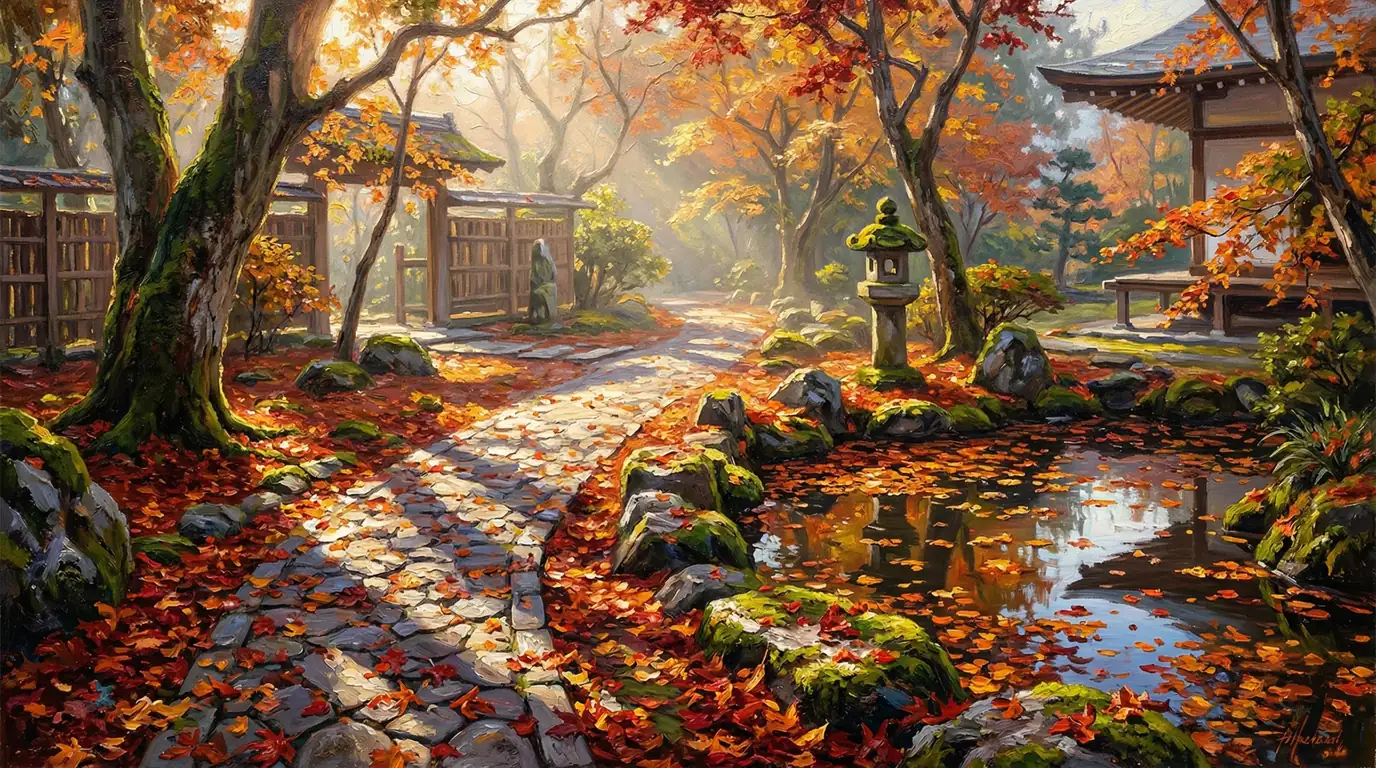 Golden Autumn in the Zen Garden
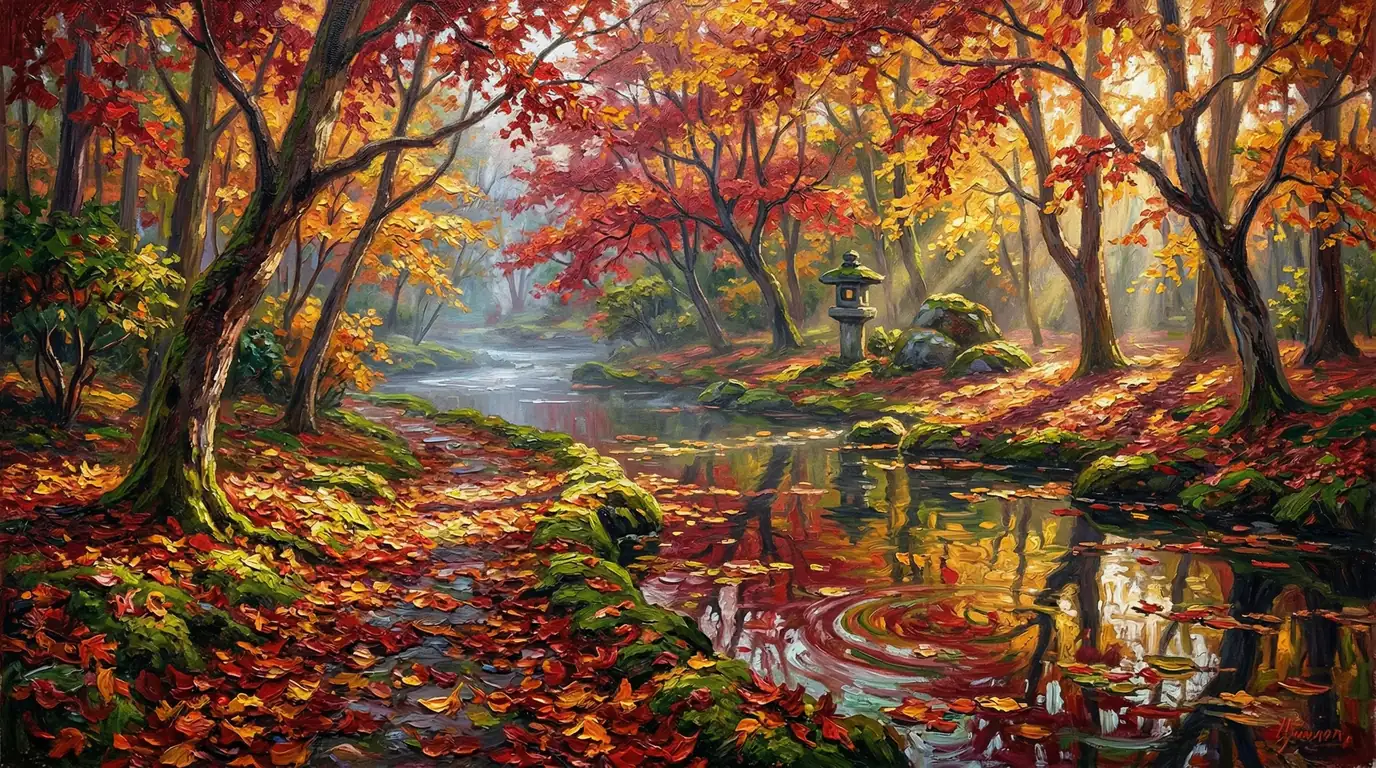 Autumn Glow along the Stream
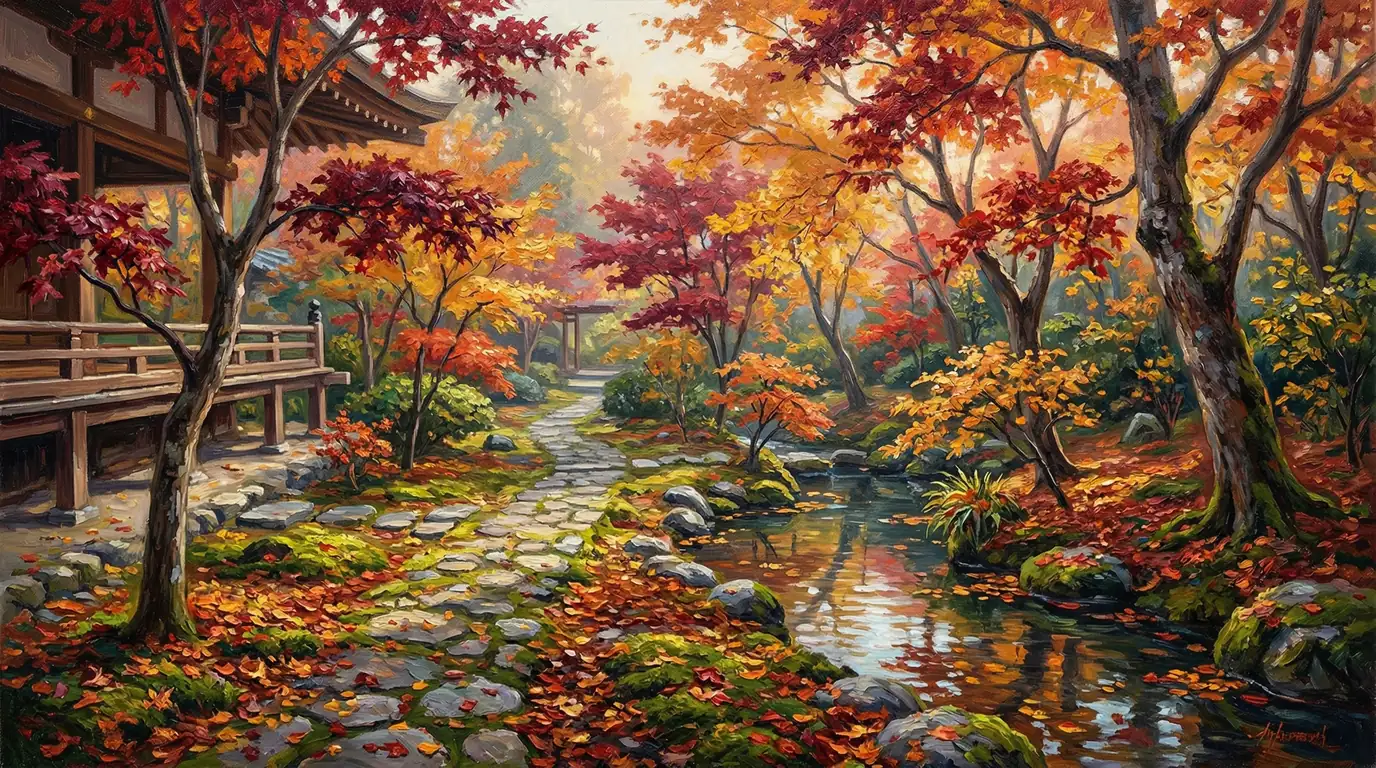 Golden Leaves by the Teahouse
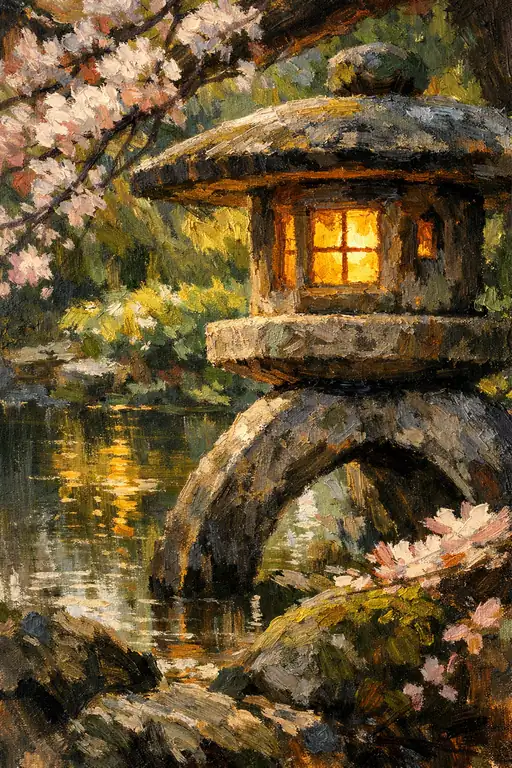 Whispers of the Spring Light
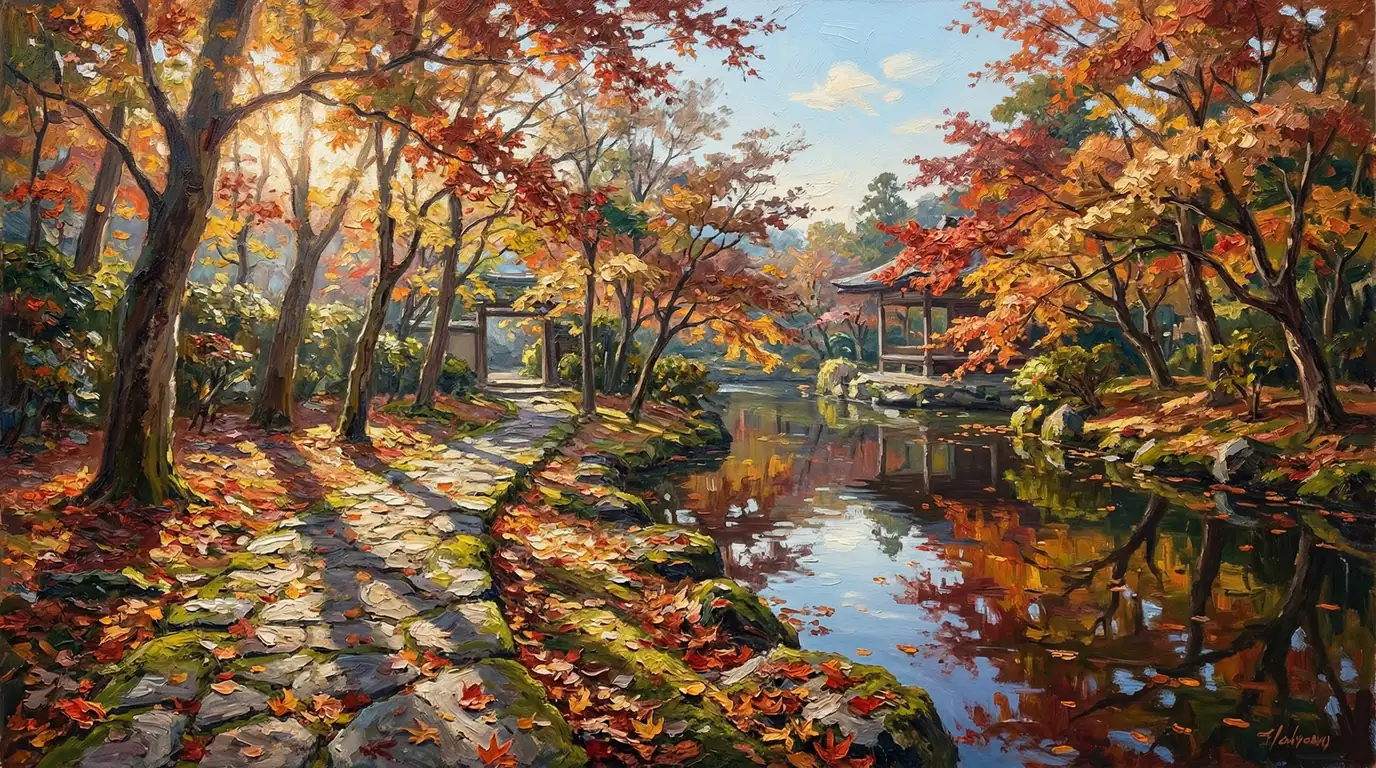 Crimson Canopy of Dreams
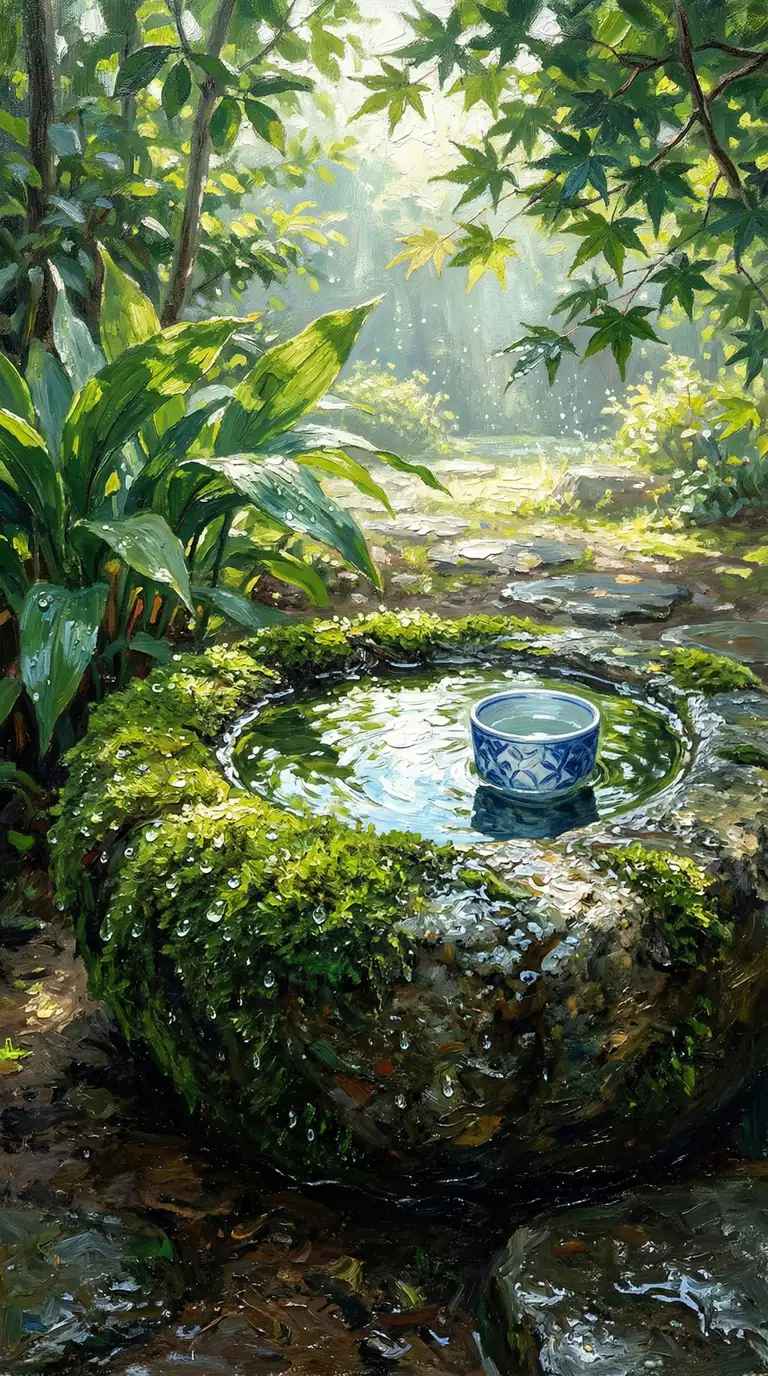 Reflection in the Timeless Basin
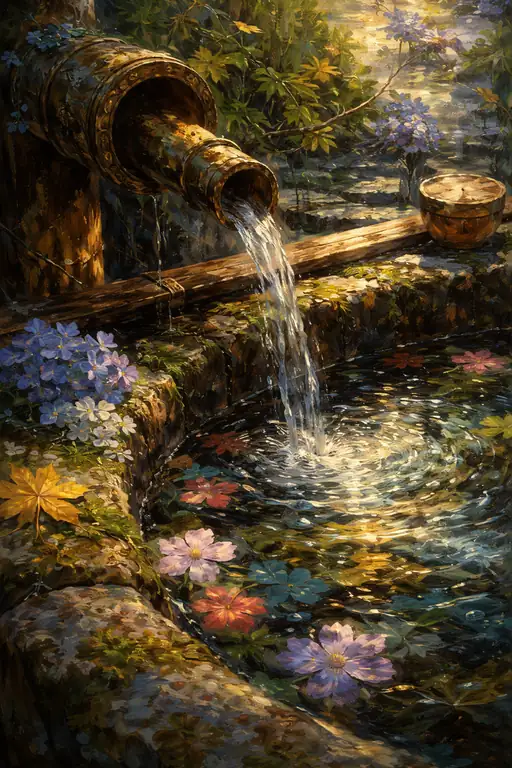 Quiet Flow in the Hidden Garden
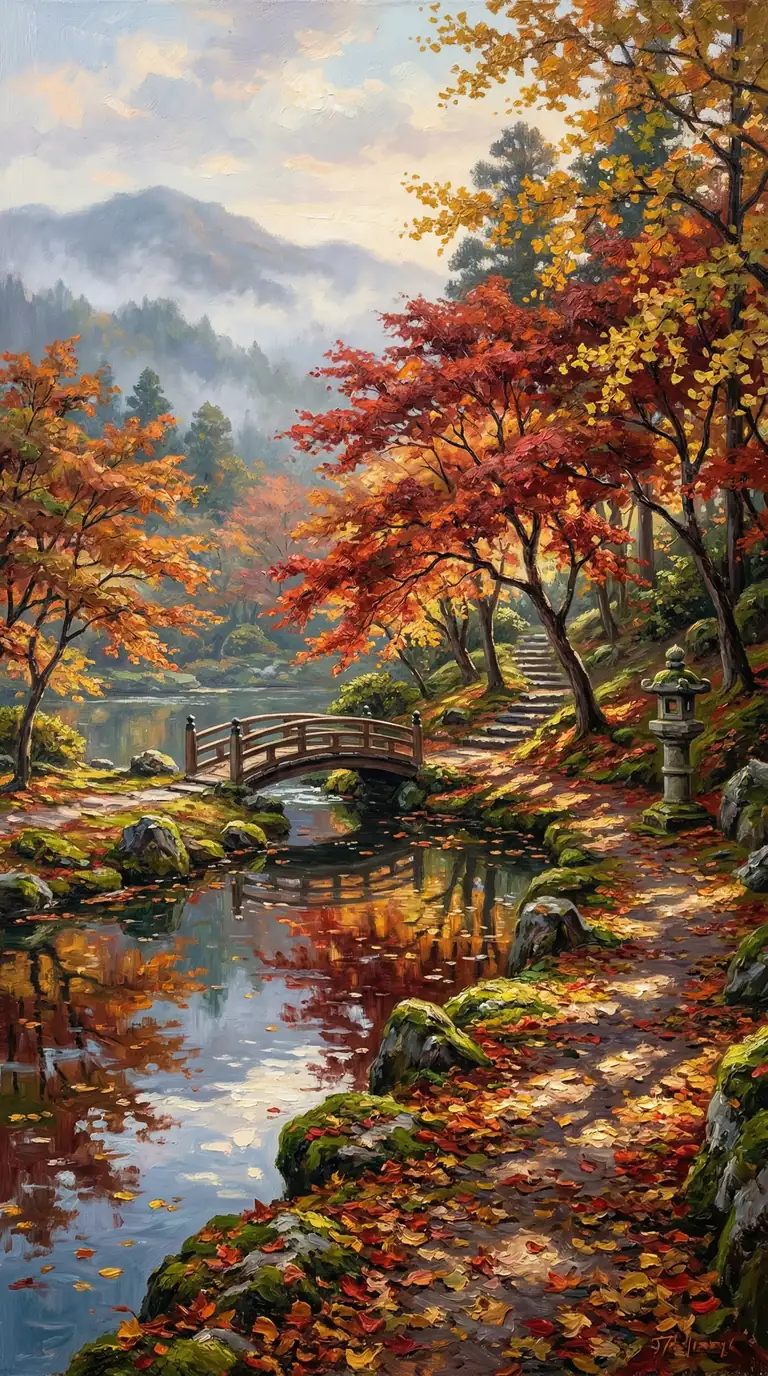 Whispering Crimson: Serenity in the Autumn Garden