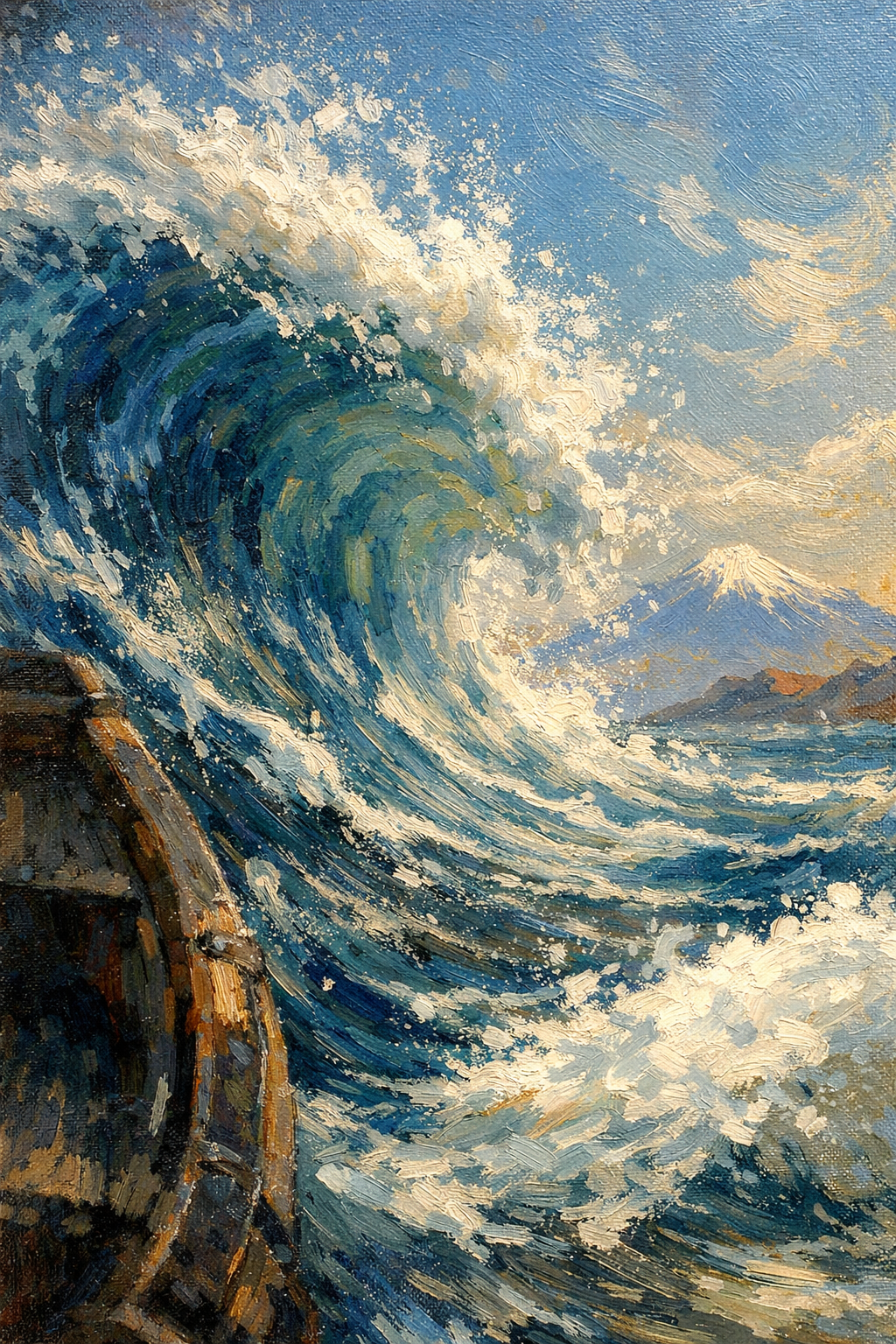
Roar of the Indomitable Tide
Critique
1. Introduction This oil painting presents a powerful and dynamic interpretation of a classic maritime subject, featuring a massive wave crashing against the side of a traditional wooden boat. The work immediately recalls the iconic imagery of Japanese woodblock prints while translating it into the physical language of heavy oil paint. Through its bold use of texture and movement, the painting captures the raw, uncontrollable force of the ocean. This piece stands as a compelling study of the sublime power of nature and human endurance. 2. Description The composition is dominated by a towering, curling wave that occupies the center and left of the frame, its crest exploding into white foam. To the far left, the dark, weathered hull of a wooden boat is visible, seemingly dwarfed by the sheer volume of water. In the distant background, the snow-capped peak of a mountain rises against a pale blue sky, providing a sense of geographical context and stability. The sea below is a chaotic mix of deep blues and churning white water, with individual brushstrokes suggesting the movement of the tides. 3. Analysis The artist utilizes a heavy impasto technique, where thick layers of paint are applied to create a three-dimensional surface that mimics the spray and foam of the sea. This tactile quality gives the wave a palpable sense of weight and energy, making the viewer feel the impact of the water. The color palette is centered on various shades of blue and white, with warm brown tones used for the boat and golden highlights in the sky. The composition uses a strong diagonal line from the wave's crest toward the boat, heightening the dramatic tension of the scene. 4. Interpretation and Evaluation The juxtaposition of the fragile boat and the colossal wave suggests a narrative of survival and the overwhelming power of the natural world. The distant mountain, remaining calm and steadfast, contrasts with the violent motion of the sea, symbolizing the eternal versus the temporary. Technically, the work is highly successful in its ability to convey movement through physical texture, showing a sophisticated understanding of the oil medium. The composition effectively balances the various elements, creating a sense of scale that is both terrifying and beautiful. 5. Conclusion Upon initial viewing, the painting strikes the viewer with its incredible sense of motion and the physical presence of the paint itself. As one observes the details, the dialogue between the different elements of the landscape becomes clear, revealing a profound respect for the forces of nature. The work successfully reinterprets a historical motif with a modern, expressive technique that emphasizes the raw materiality of the art. Ultimately, the painting leaves a lasting impression of the awe-inspiring and relentless energy of the sea.
Same Subcategory
 The Golden Hour's Embrace
 Journey Through the Ice Fire
Similar Artworks
 Fury of the Deep: The Defiant Vessel Against the Tempest
 Golden Bloom by the Serene Shore
 Voyage to the Earth’s Beating Heart
 Echoes of the Fiery Peak
 Bridging the Seto Inland Sea
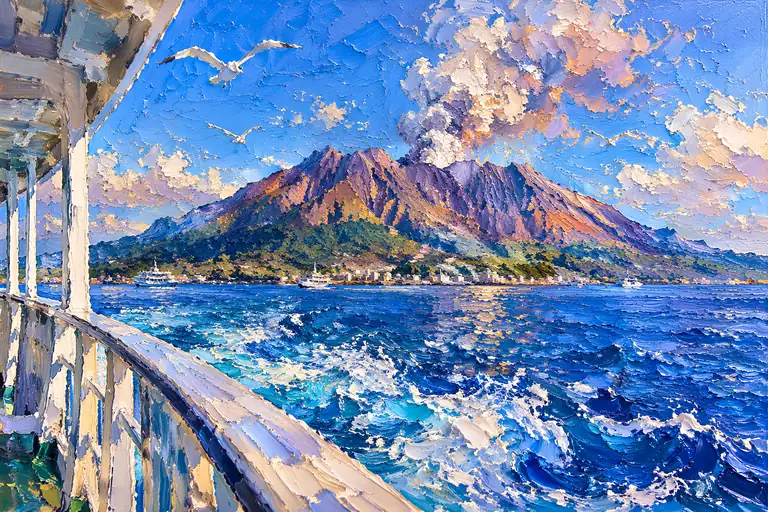 Pulse of the Azure Roar
 Sentinel Above the Blossoms
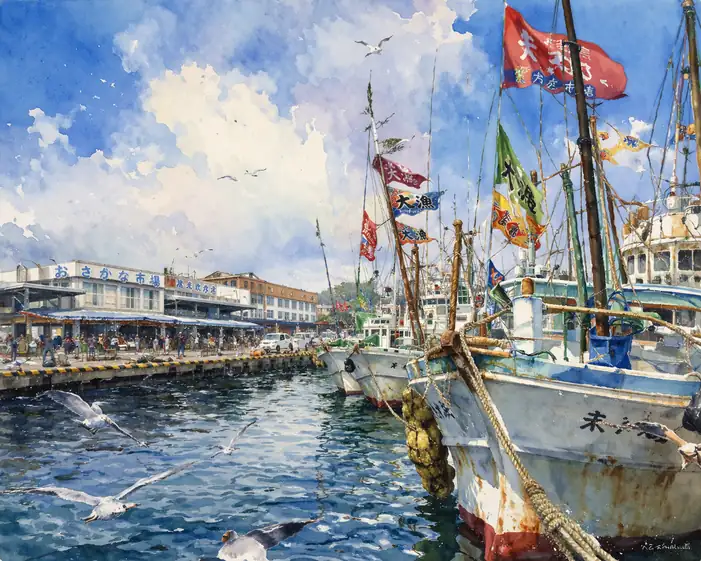 Rhythm of the Morning Tide
 Golden Twilight Over the Islands
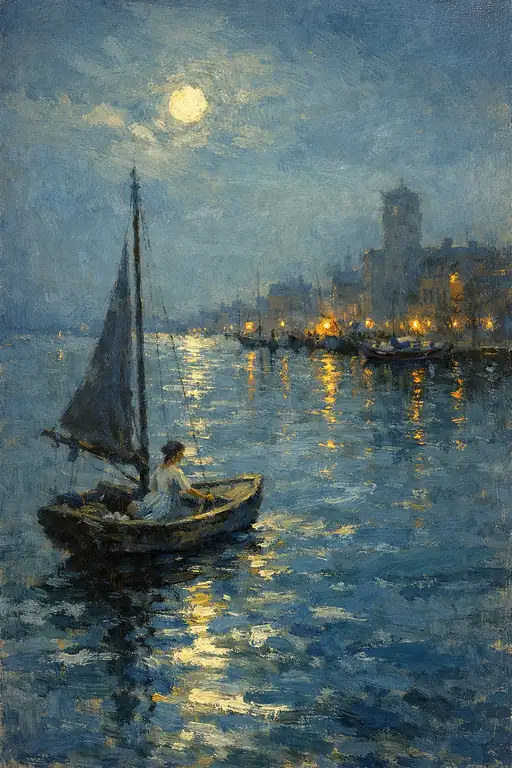 Moonlit Drifting Through the Indigo Night