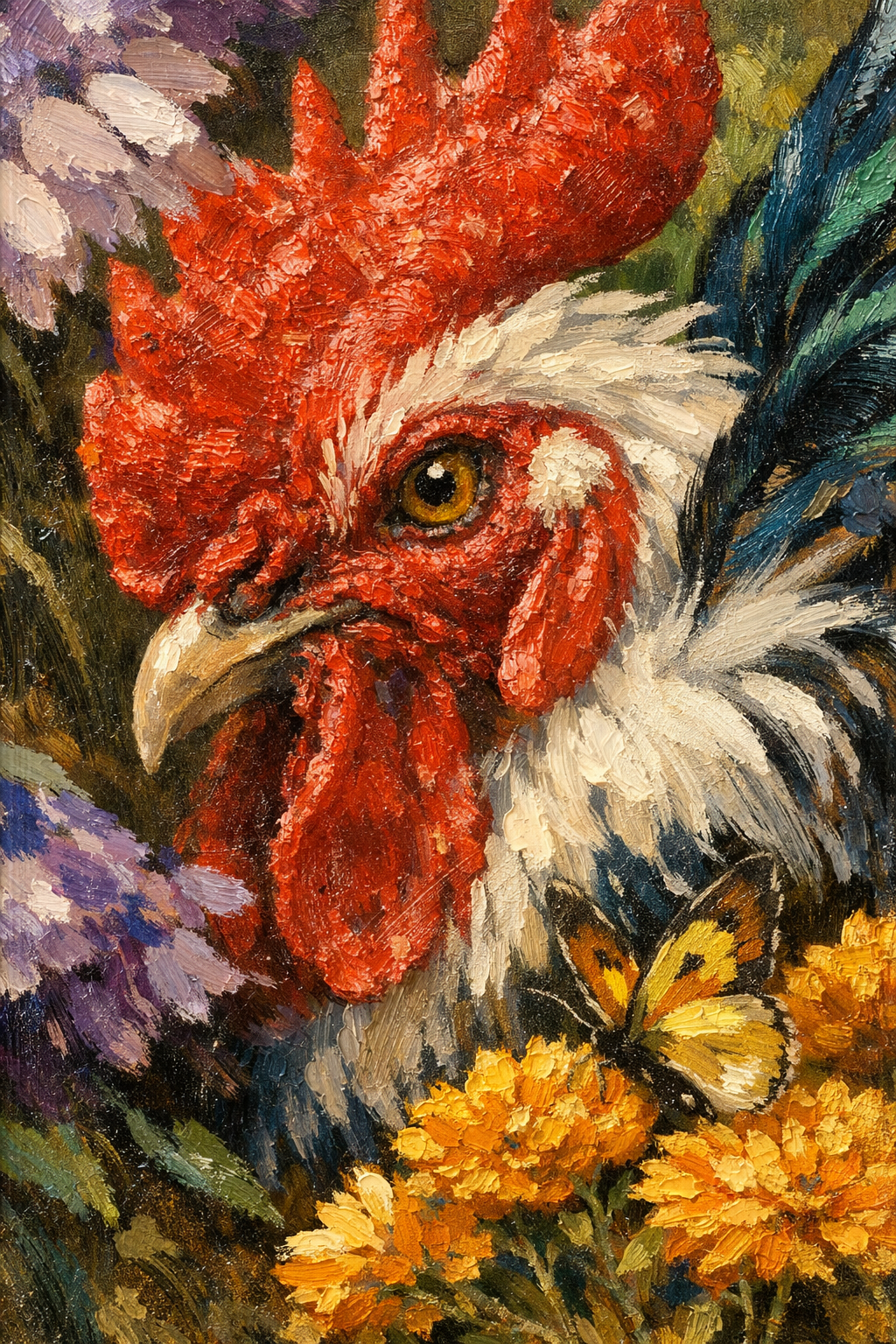
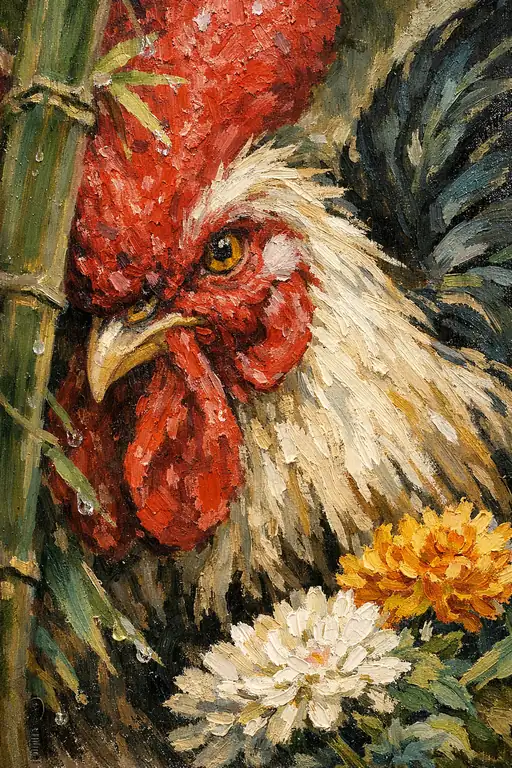
The Proud Rooster's Floral Domain
Critique
1. Introduction This oil painting presents a vivid and intense close-up of a rooster窶冱 head set against a lush floral background. The work captures a momentary stillness that is simultaneously filled with life and energy. Through the use of bold colors and thick textures, the artist invites the viewer into a sensory exploration of nature窶冱 intricate details. This piece stands as a testament to the power of traditional painting techniques in portraying domestic subjects with newfound grandeur. 2. Description The central focus of the composition is the detailed head of a rooster, rendered with a fiery red comb and wattle. Its sharp, golden eye gazes toward the left, conveying a sense of alertness and pride. Surrounding the bird are various flowers in shades of purple, white, and yellow, adding a soft contrast to the rooster窶冱 rugged features. A yellow butterfly rests gracefully on a cluster of yellow marigolds in the foreground. The background is a dense mix of green foliage and deep shadows, which pushes the main subjects forward. 3. Analysis The artist employs a heavy impasto technique, where thick layers of paint create a tactile surface that mimics the texture of feathers and petals. This approach gives the painting a sculptural quality, enhancing its physical presence. The color palette is dominated by warm reds and yellows, balanced by the cool purples of the flowers and the dark greens of the foliage. Light appears to originate from the upper right, casting subtle shadows that define the contours of the rooster窶冱 face. The composition is tightly cropped, which heightens the emotional intensity of the scene. 4. Interpretation and Evaluation The juxtaposition of the rooster, flowers, and butterfly suggests a harmonious yet fleeting moment in a garden ecosystem. The rooster窶冱 stoic expression contrasts with the delicate nature of the surrounding flora and the butterfly, creating a narrative of strength within beauty. Technically, the work is highly successful in its handling of texture and light, showing a sophisticated understanding of oil as a medium. The composition effectively guides the viewer窶冱 eye through the various elements, while the bold brushwork adds a modern flair to a classical subject. 5. Conclusion Upon initial viewing, the painting strikes the viewer with its overwhelming vibrancy and physical depth. As one observes more closely, the subtle interactions between the different natural elements become apparent, revealing a deeper complexity. The work successfully elevates a common farmyard animal into a subject of profound artistic study. Ultimately, the painting leaves a lasting impression of the vitality and richness inherent in the natural world.
Same Subcategory
Similar Artworks
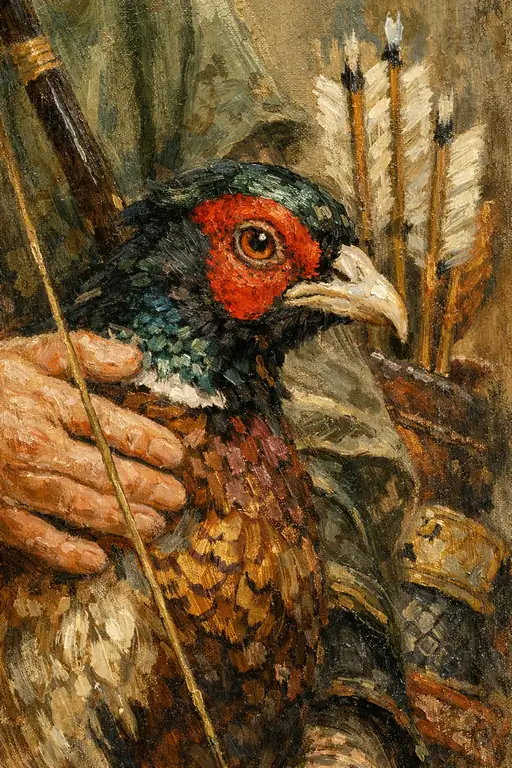 Focus of the Hunter
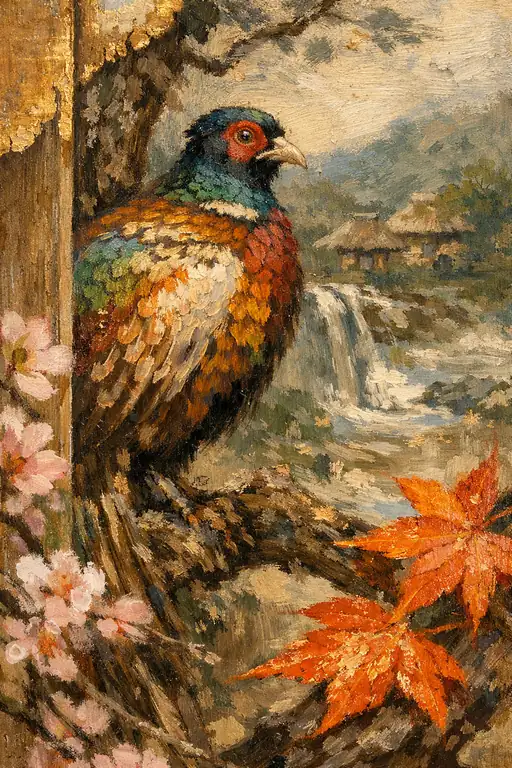 A Vibrant Soul Resting in the Eternal Circle of Changing Seasons
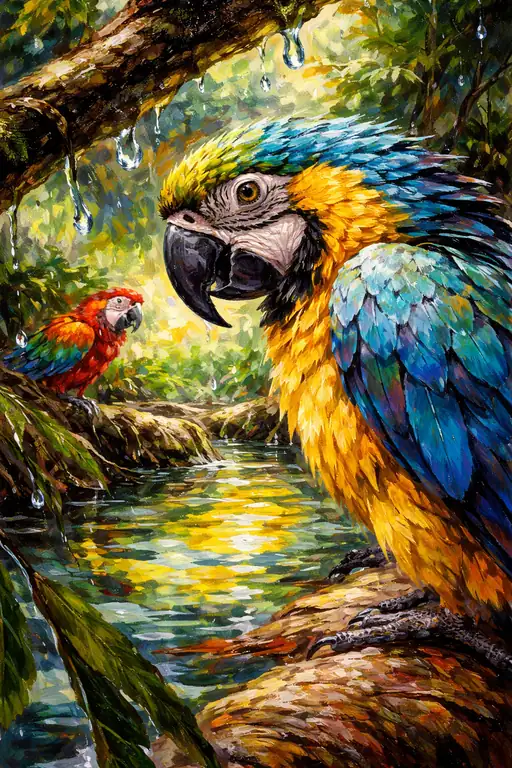 Vibrant Canopy: Macaws in Repose
 Jewel in the Downpour
 Dance of Life Upon the Sun-Drenched Petals
 Memories Carved in Stone
 Whispers of the Eternal Shell
 Gentle Touch of the Monarch
 Chorus of the Sunlit Oasis
 Serenade of the Lakeside Breeze