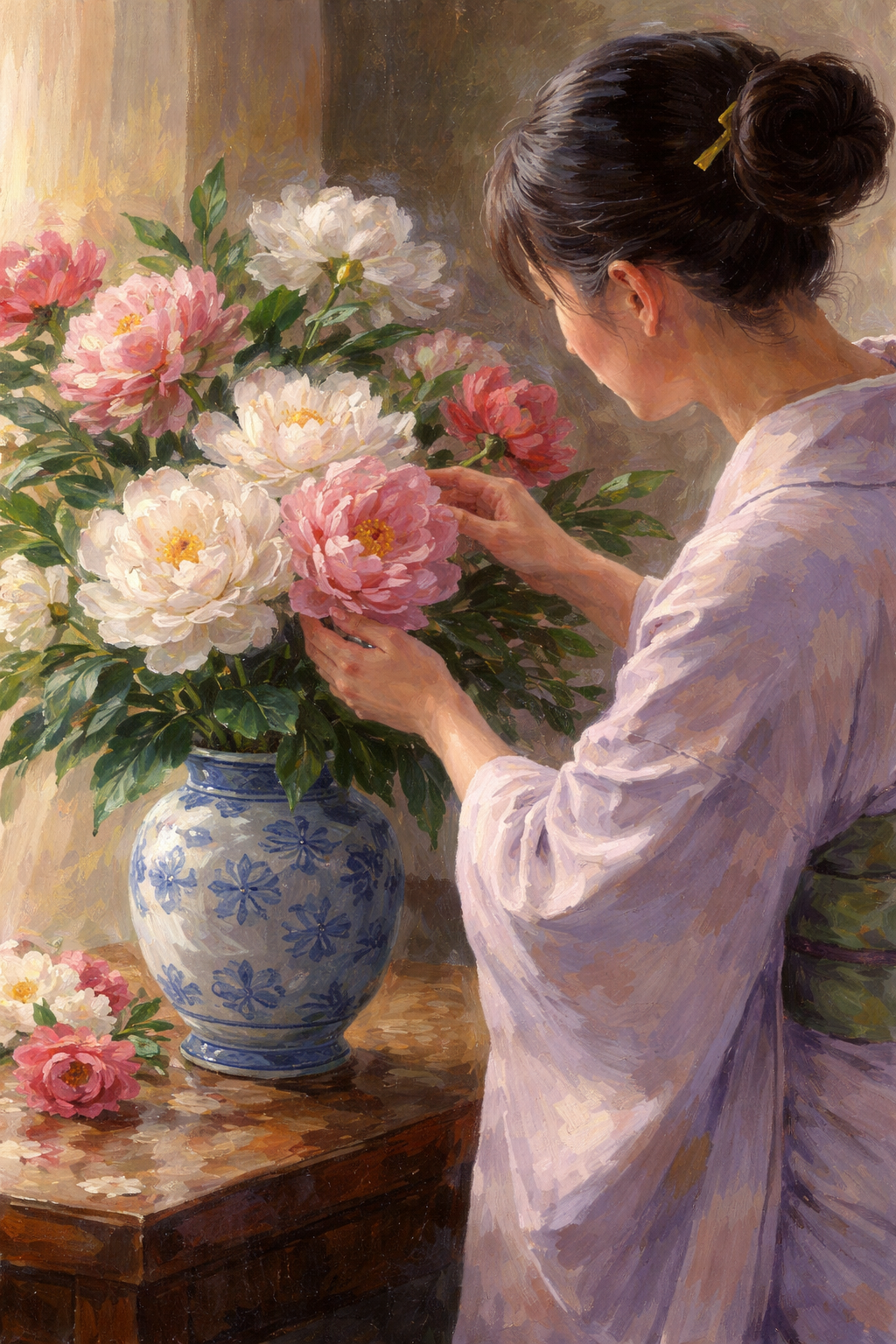
The Tender Breath of Peonies
Critique
1. Introduction This luminous oil painting depicts a woman in a pale purple kimono engaged in the art of flower arrangement. The work captures a tranquil interior scene where the delicate beauty of nature meets human refinement. Through its soft light and expressive brushwork, the painting conveys a sense of peaceful domesticity and aesthetic appreciation. 2. Description The woman is shown from the side and slightly from behind, her hands gently reaching toward a lush arrangement of pink and white peonies. The flowers are gathered in a classic blue and white ceramic vase with floral patterns, which sits on a polished wooden surface. Several petals and smaller blooms are scattered near the base of the vase, while a warm light illuminates the scene from a nearby window. 3. Analysis The composition is centered on the interaction between the woman and the bouquet, creating a balanced and harmonious focal point. The artist uses a delicate color palette of soft violets, pinks, and creams, contrasted with the deep blues of the vase and the warm browns of the table. Short, dabbing brushstrokes create a vibrant texture that suggests the softness of the petals and the fabric of the kimono. 4. Interpretation and Evaluation This artwork successfully captures the ephemeral beauty of a quiet moment. The artist demonstrates a keen sensitivity to light and color, using them to create a nostalgic and serene atmosphere. By focusing on the act of arranging flowers, the piece explores themes of harmony, patience, and the cultivation of beauty in everyday life. Its execution reflects both technical competence and a deep emotional resonance. 5. Conclusion Through its gentle subject matter and refined execution, the painting offers a contemplative look at a traditional cultural practice. The integration of light, color, and texture creates a cohesive and inviting visual experience. It remains a testament to the enduring appeal of floral subjects and the quiet grace found in simple, focused activities.
Same Subcategory
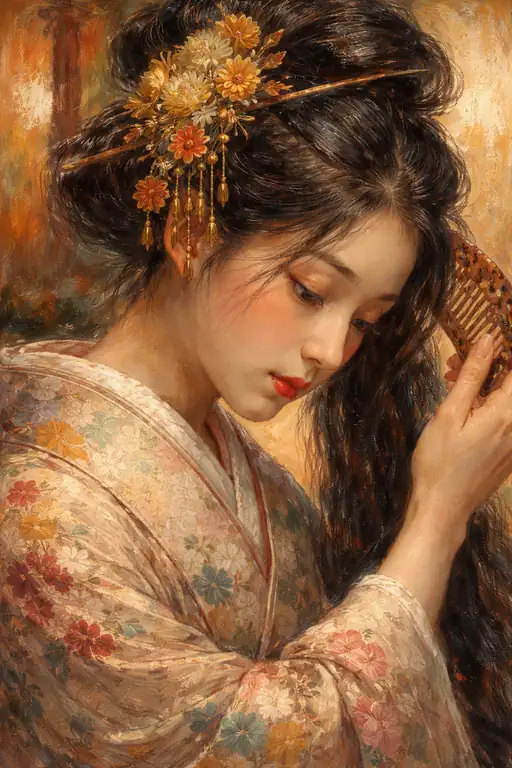 The Golden Threads of Introspection
Similar Artworks
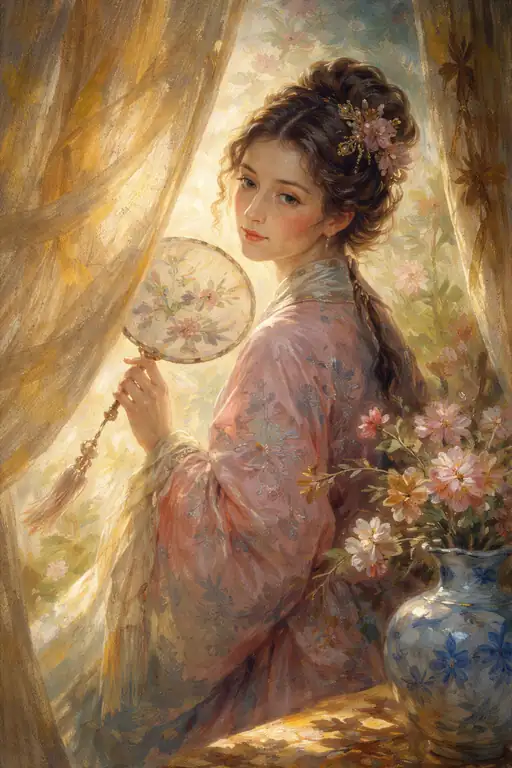 Whispers Through the Silk
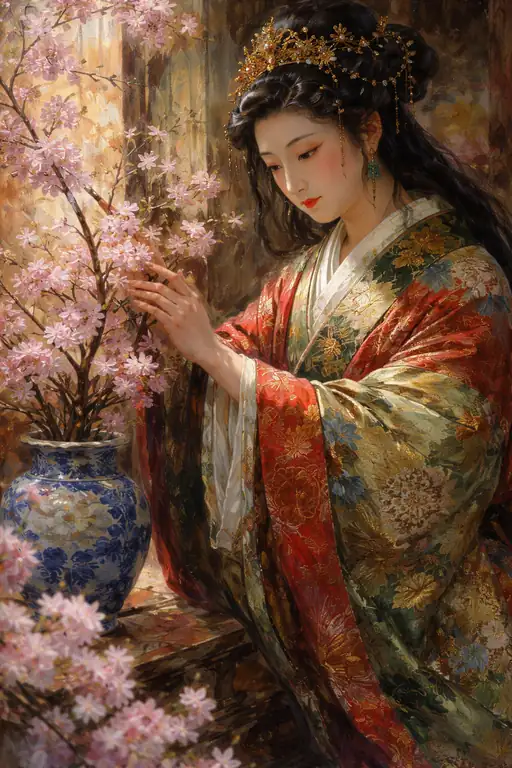 Contemplation Beneath the Spring Petals
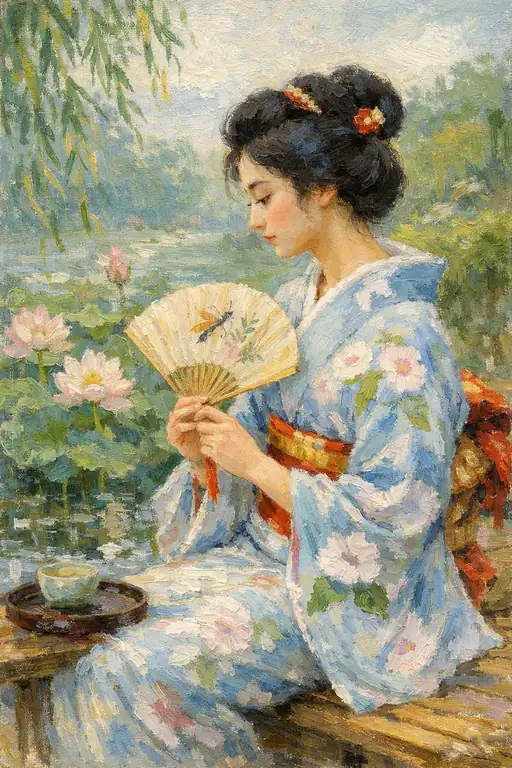 Echoes of a Sunlit Afternoon
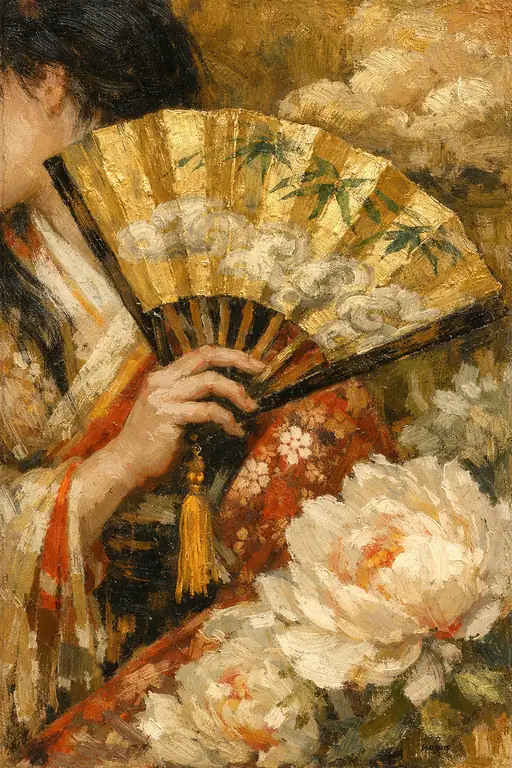 Elegance of the Peony and Golden Fan
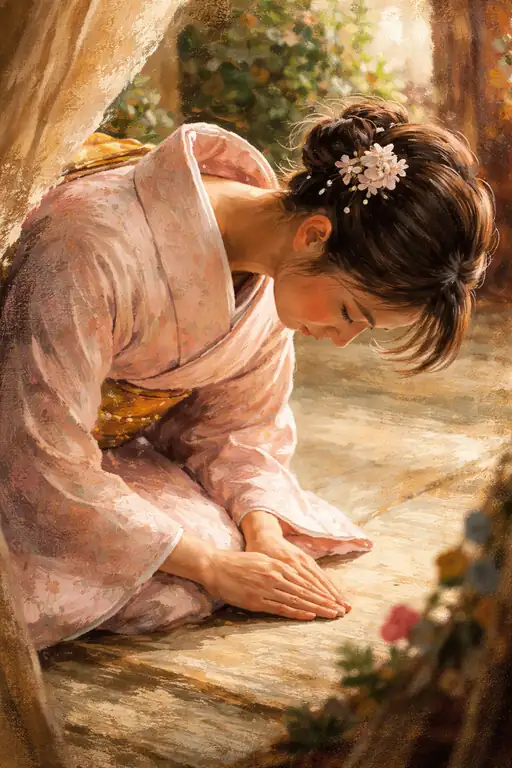 Grace in the Sunbeams
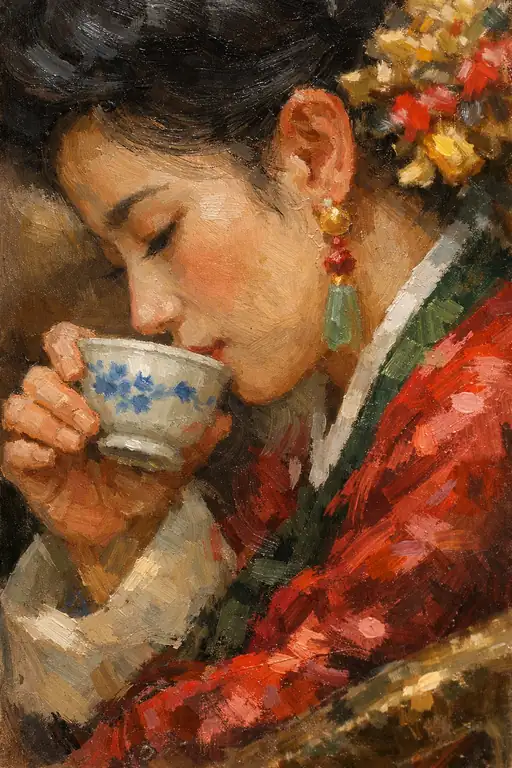 Serenity Steeped in Porcelain
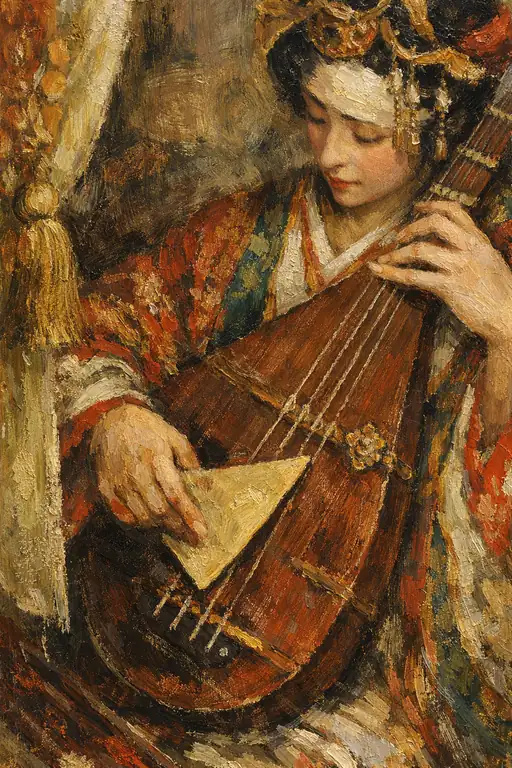 Echoes of the Golden Strings
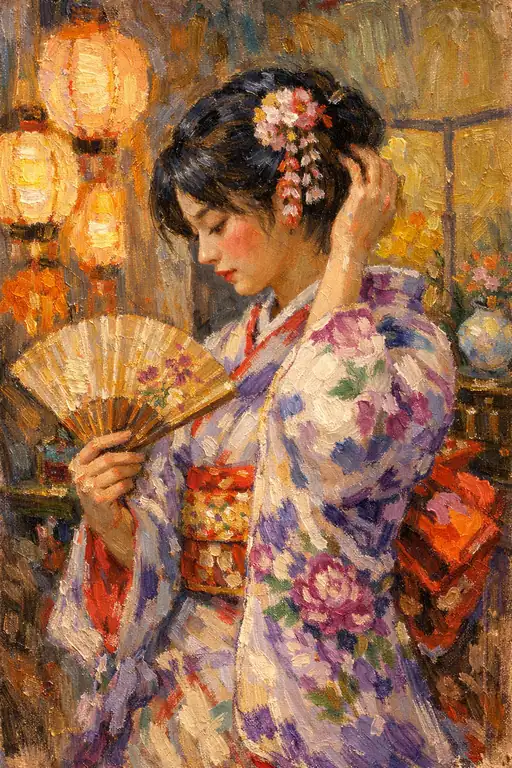 Fleeting Grace in the Spring Breeze
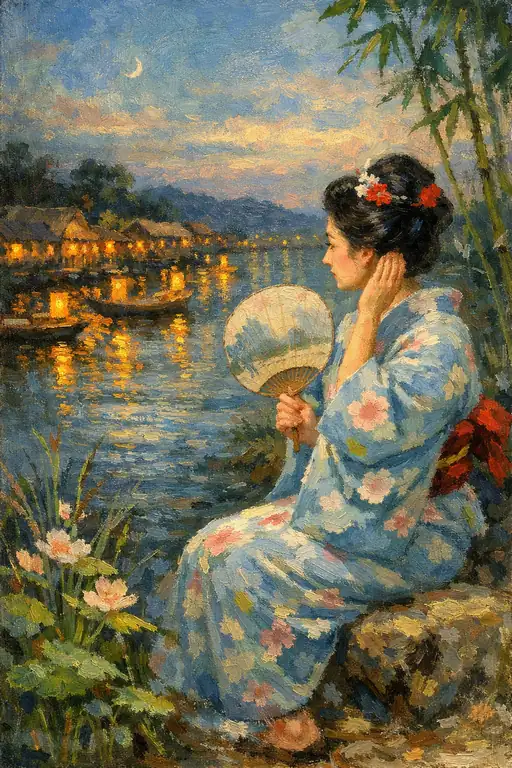 A Nostalgic Gaze in Blue
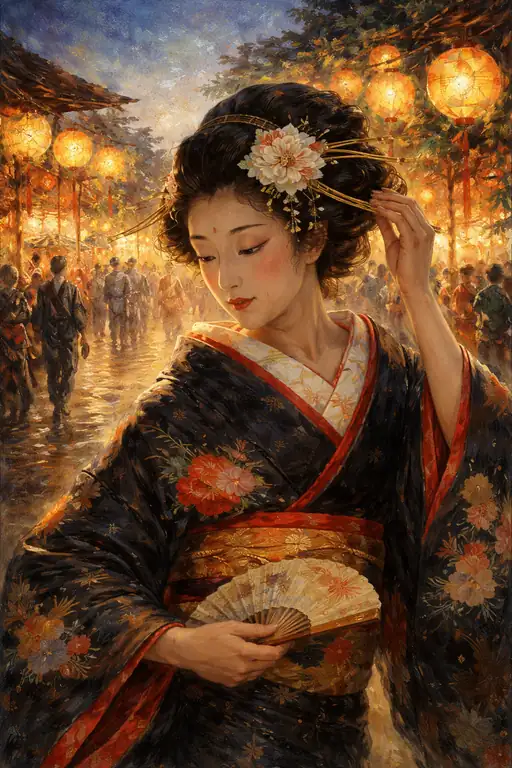 Solitary Reverie Amidst the Golden Glow of the Festival