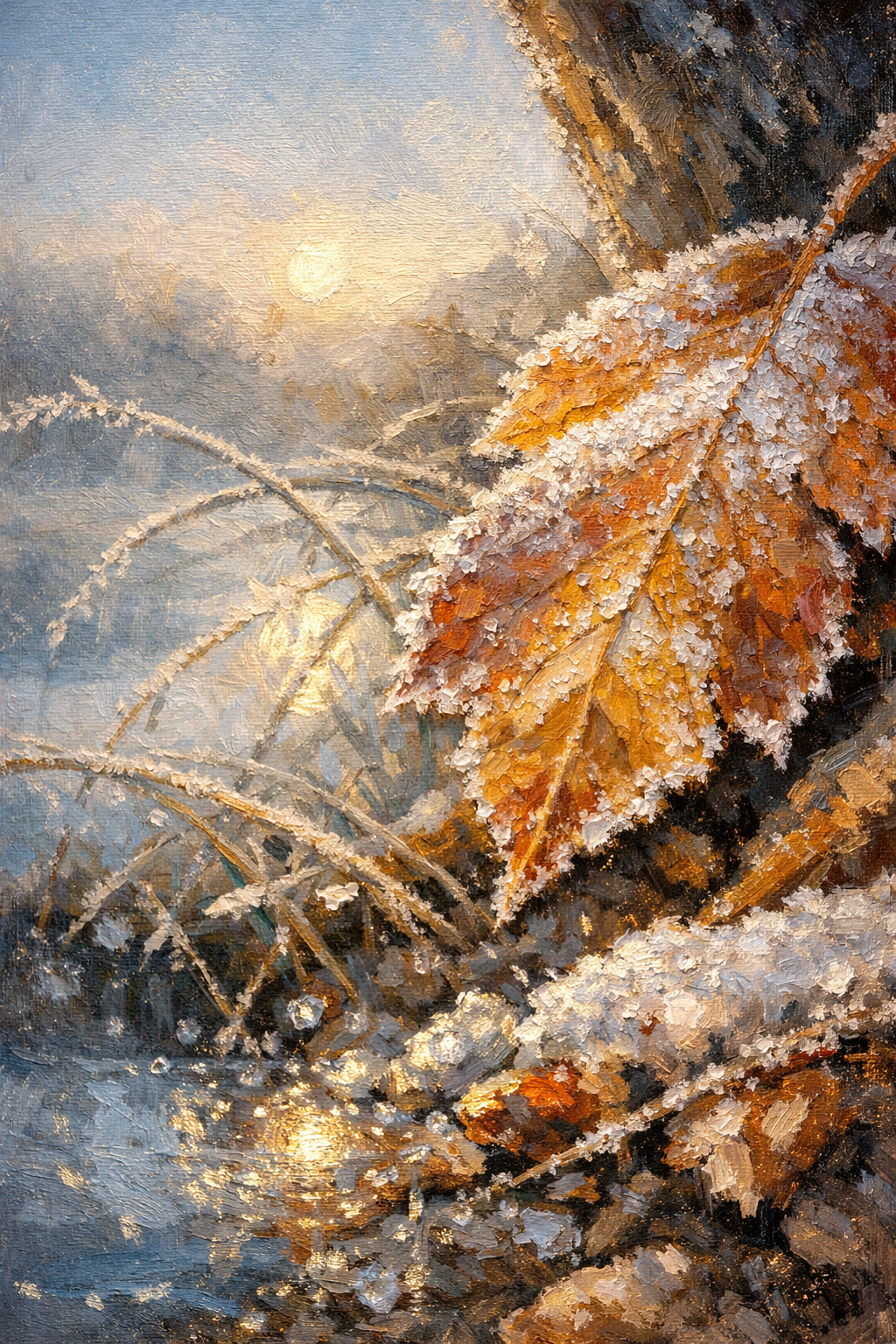
Frost's Gentle Kiss on Autumn
Critique
1. Introduction This work presents an intimate close-up of a frost-covered leaf at the edge of a frozen body of water during sunrise or sunset. The composition emphasizes the delicate transition between seasons, specifically the onset of winter on autumn foliage. The painting is characterized by its luminous atmosphere and rich, tactile surface quality. 2. Description The focal point is a large, withered orange leaf encrusted with white frost crystals. Fine, frost-tipped grasses curve gracefully in the background, mirroring the shape of the leaf. In the distance, a pale sun hangs low in a misty, blue-gray sky, its light reflecting off the water's surface below. The entire scene is rendered with thick, expressive brushstrokes that create a sense of physical depth. 3. Analysis The artist effectively uses a high-contrast lighting scheme to define the crystalline structure of the frost. The warm oranges and ochres of the leaf provide a striking counterpoint to the cool blues and whites of the frost and water. The soft, blurred background contrasts with the sharp detail of the foreground, creating a shallow depth of field. The directional light from the low sun creates a rhythmic pattern of highlights and shadows across the textured surface. 4. Interpretation and Evaluation This piece is a poetic meditation on the fleeting nature of time and the quiet beauty found in small, natural details. The frost acts as a veil that both obscures and enhances the form of the leaf, suggesting themes of preservation and decay. The technical handling of light and the variety of brushwork demonstrate a sophisticated understanding of atmosphere. It is a compelling and original exploration of a classic landscape motif. 5. Conclusion Initially, the viewer is drawn to the sparkling frost, but the painting eventually reveals a profound sense of silence and stillness. The work successfully captures the precise emotional temperature of a cold, sunlit morning. It stands as a masterful example of how macro-level observation can convey a broad and resonant experience of the natural world.
Same Subcategory
Similar Artworks
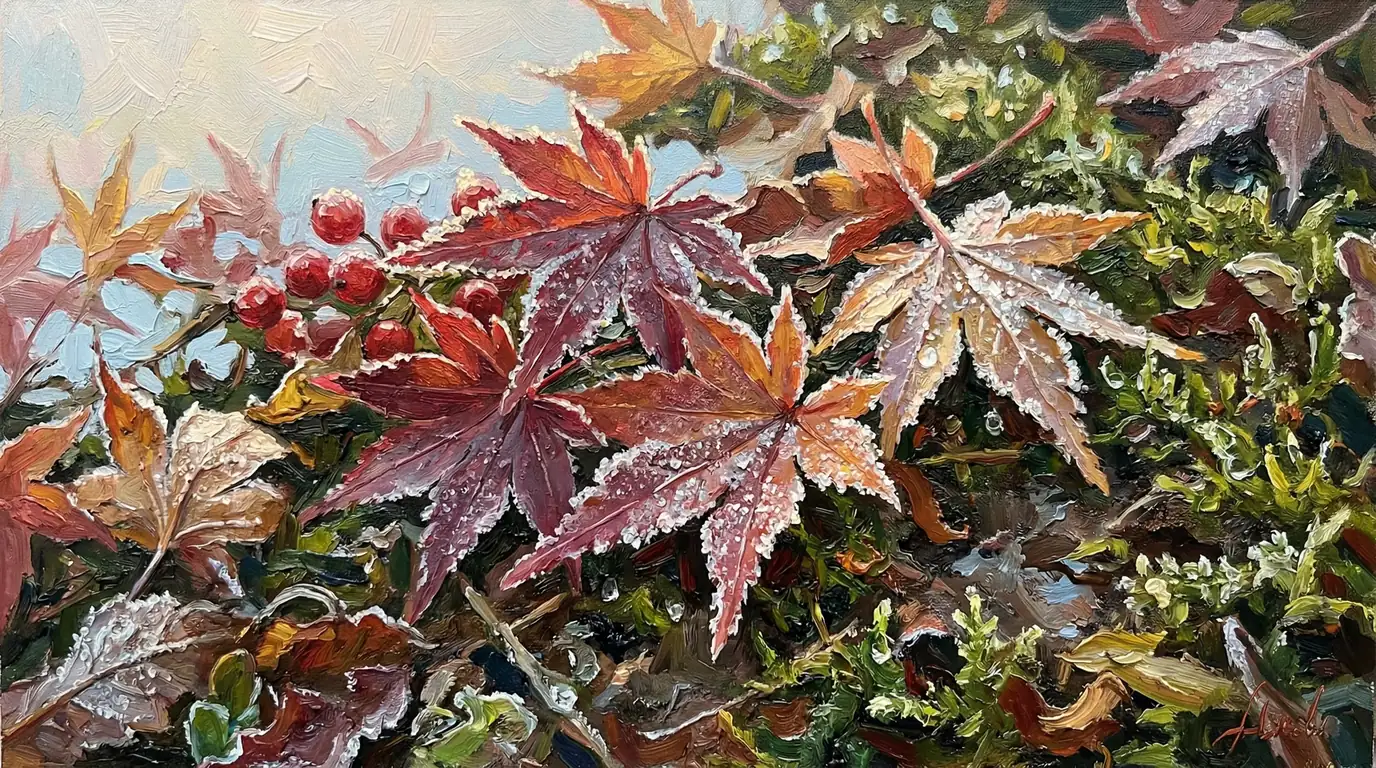 Breath of the Frozen Dawn
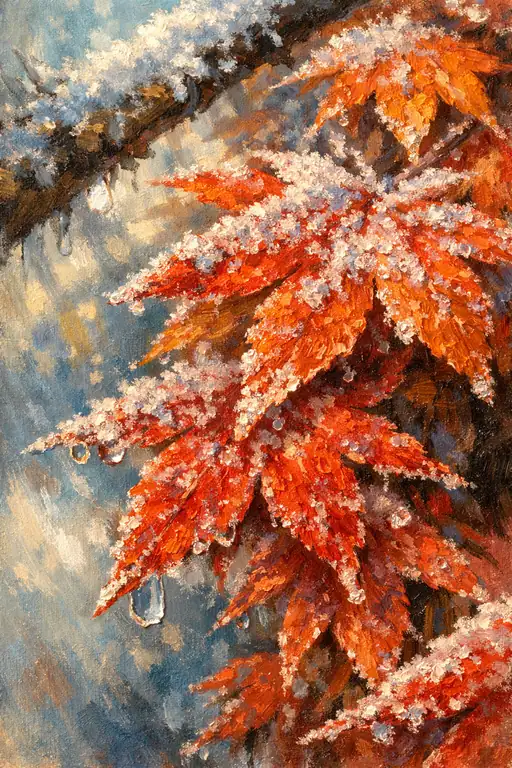 A Solitary Leaf's Winter Elegy
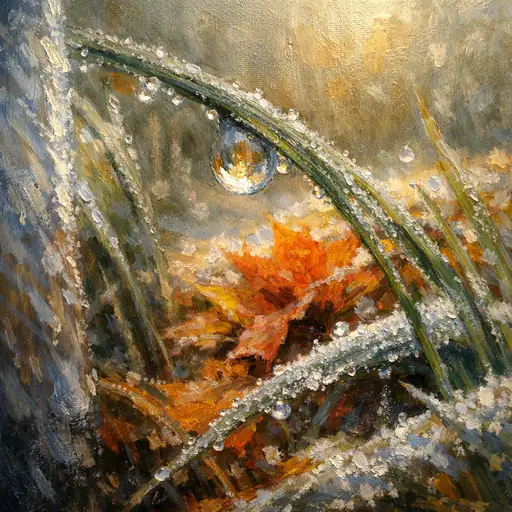 Tears of the Winter Dawn
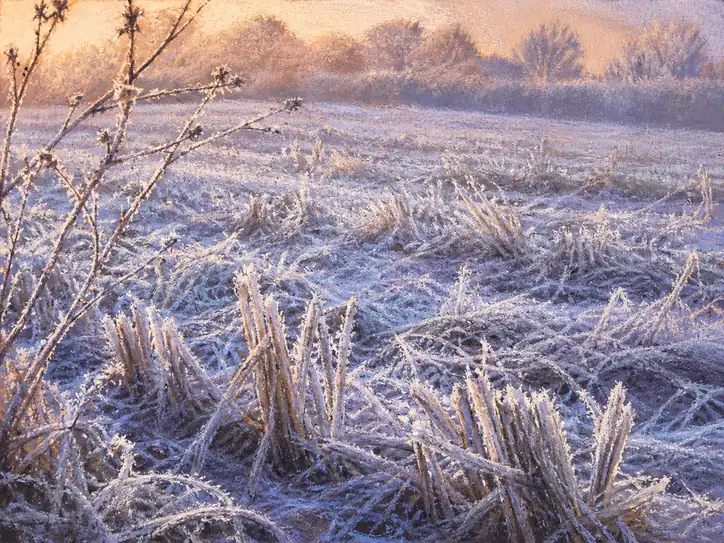 Gilded Awakening in the Frozen Field
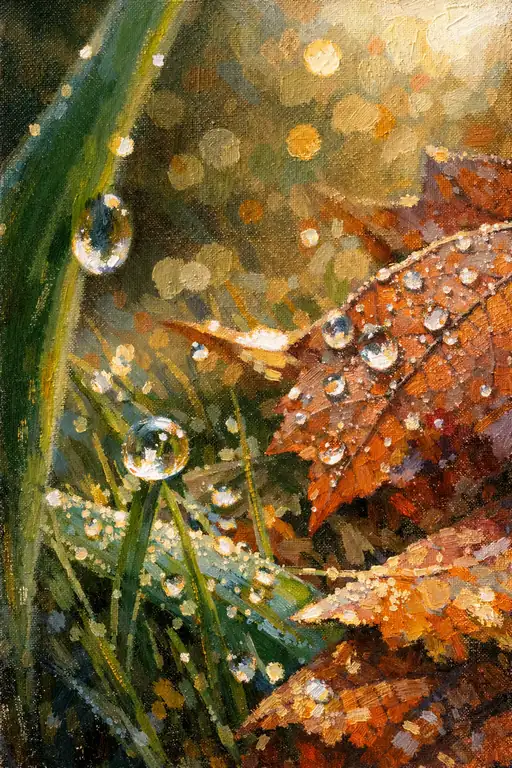 Whispers in the Dew
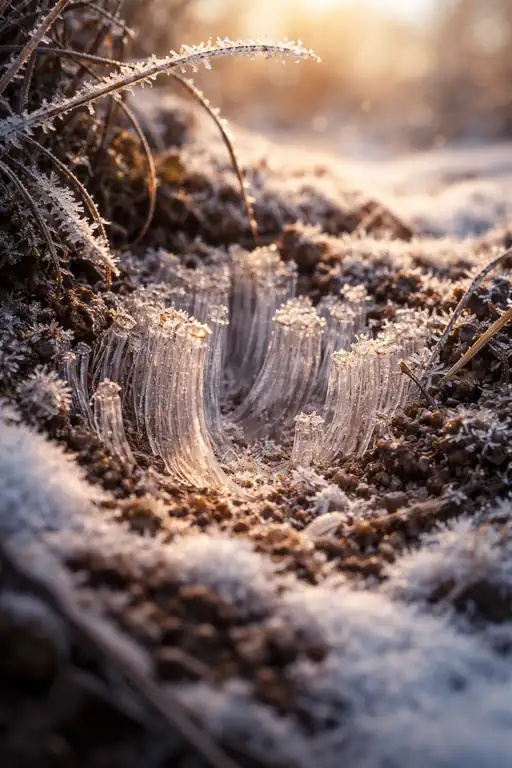 Fragile Spires of the Winter Dawn
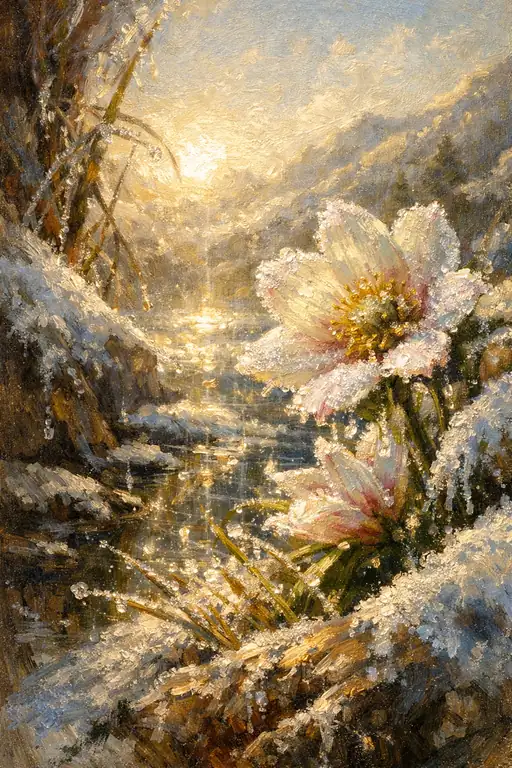 Resilience in the Winter's Embrace
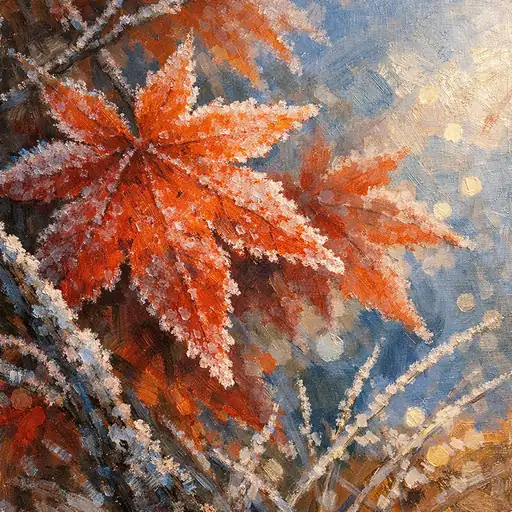 Frozen Embers of the Autumn Sun
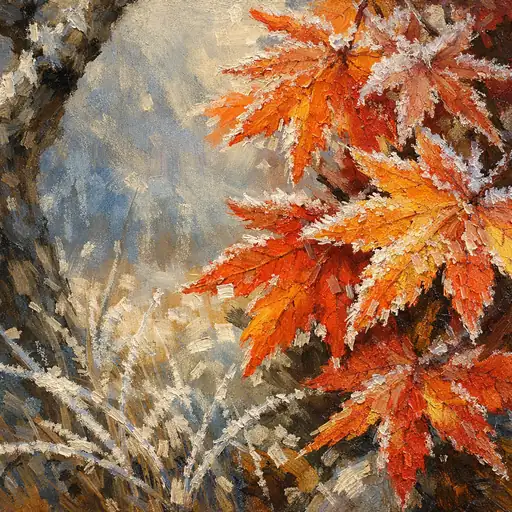 Winter's Embrace on Crimson Fire
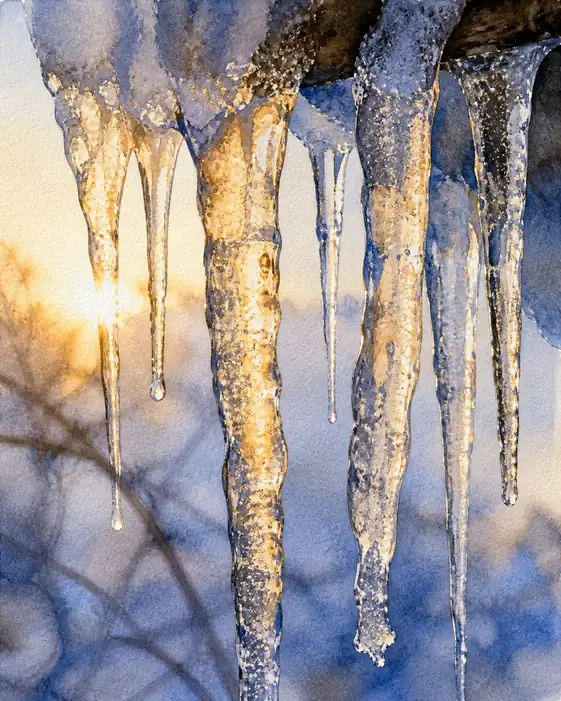 The Golden Threshold: Where Ice Meets Fire