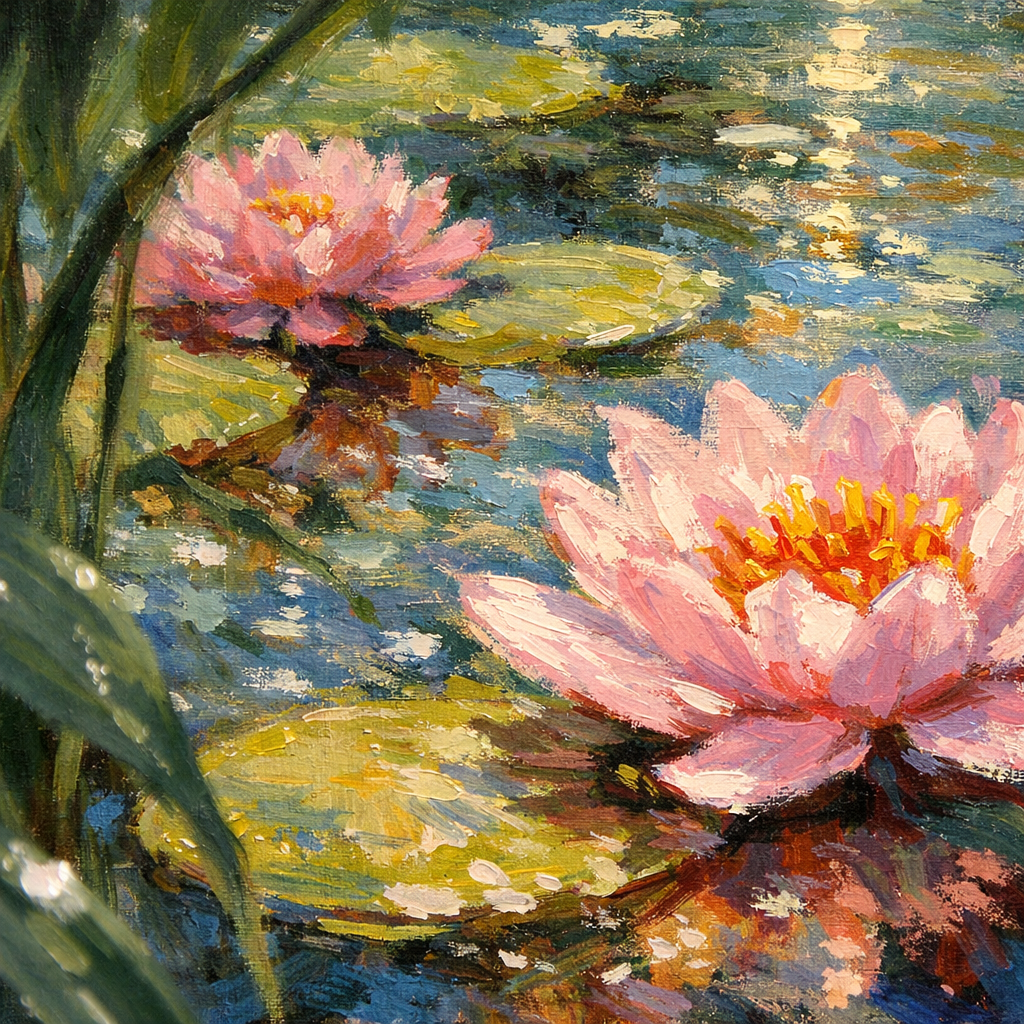
Echoes of the Sunlit Pond
Critique
1. Introduction This oil painting presents a vibrant, close-up study of water lilies floating on a pond. The work is deeply influenced by the Impressionist tradition, focusing on the sensory effects of light and color rather than precise anatomical detail. The composition captures a serene yet dynamic fragment of nature, inviting the viewer into a world of shimmering reflections and lush aquatic life. 2. Description The canvas is dominated by two large pink water lilies. The foreground lily on the right is shown in full bloom, its petals radiating from a bright yellow-orange center. To its left and slightly further back, a second lily rests among green and yellow lily pads. The water surface is a mosaic of blues, teals, and golden highlights, reflecting the surrounding light. Tall, green blades of grass or reeds border the left side of the frame. 3. Analysis The artist utilizes a thick impasto technique, where visible brushstrokes and dollops of paint create a rich, tactile surface. This approach adds physical depth and energy to the blossoms. The color palette is celebratory, using high-contrast yellows and pinks against cool water tones. The interplay of light is particularly noteworthy, as the golden reflections on the water suggest a specific time of day, likely late afternoon. 4. Interpretation and Evaluation The painting can be interpreted as a meditation on the beauty and resilience of nature. The water lilies, appearing both delicate and substantial, symbolize tranquility and purity. The technical execution is bold and confident, showcasing a mastery of color theory and texture. The work successfully captures the fleeting qualities of light and movement, transforming a simple pond scene into a complex visual experience. 5. Conclusion Initially, the painting strikes the viewer with its intense colors and vigorous texture. Over time, the harmony of the composition and the careful balance of warm and cool tones become more apparent. The work successfully bridges the gap between representation and abstraction, offering a timeless tribute to the natural world through a classic impressionistic lens.
Same Subcategory
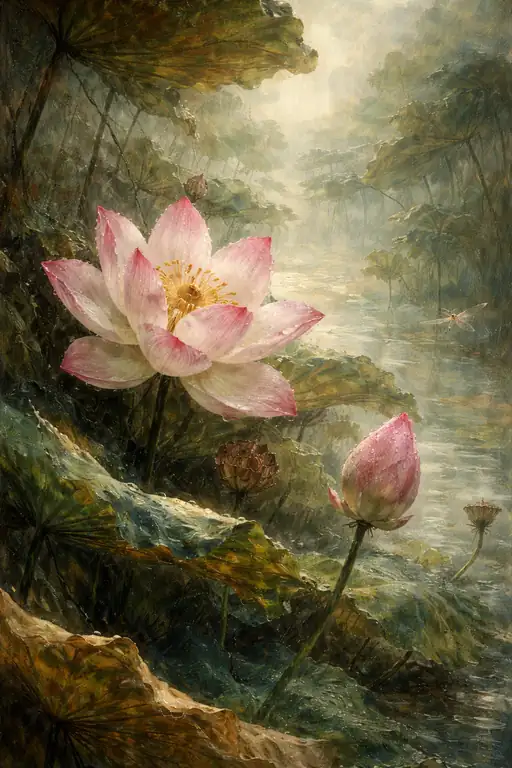 Awakening from the Mist
Similar Artworks
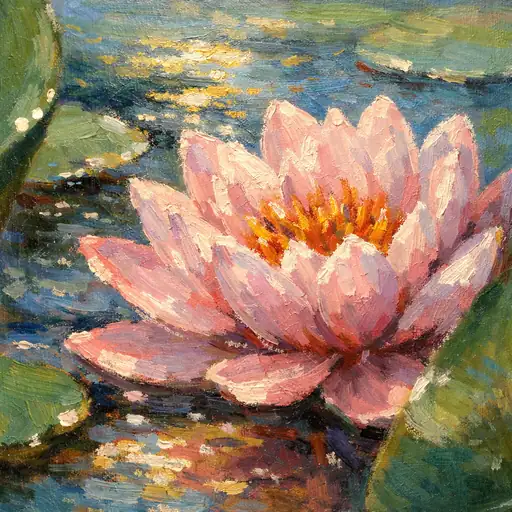 Floating Elegance: Sunlit Petals on the Quiet Pond
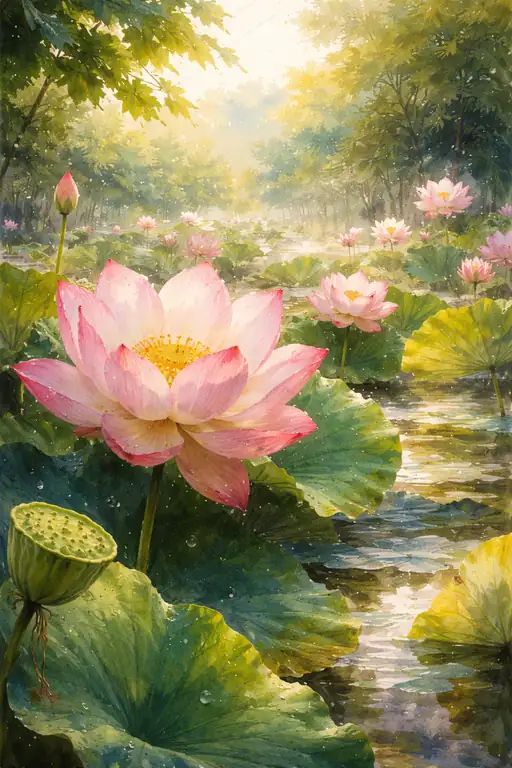 Whispers of the Misty Blossom
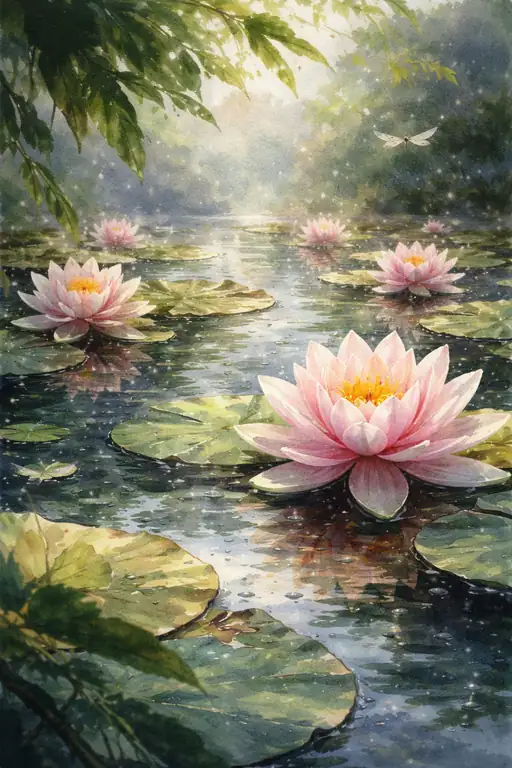 Serenity Floating in Morning Light
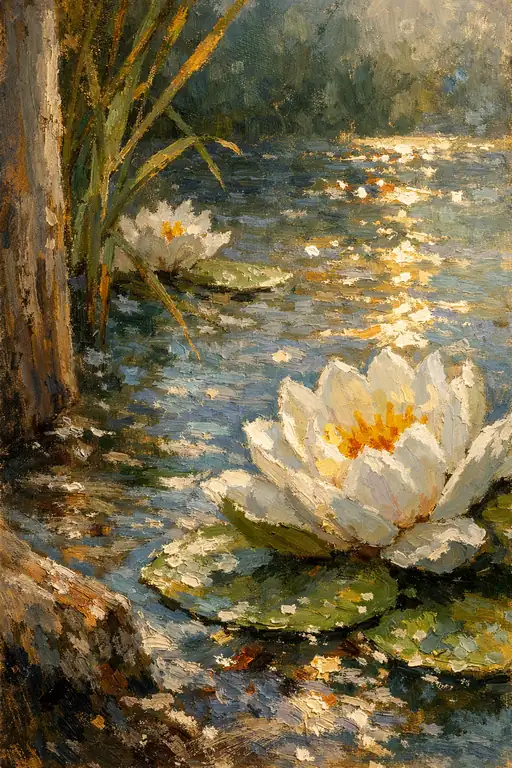 Bathing in the Golden Ripples
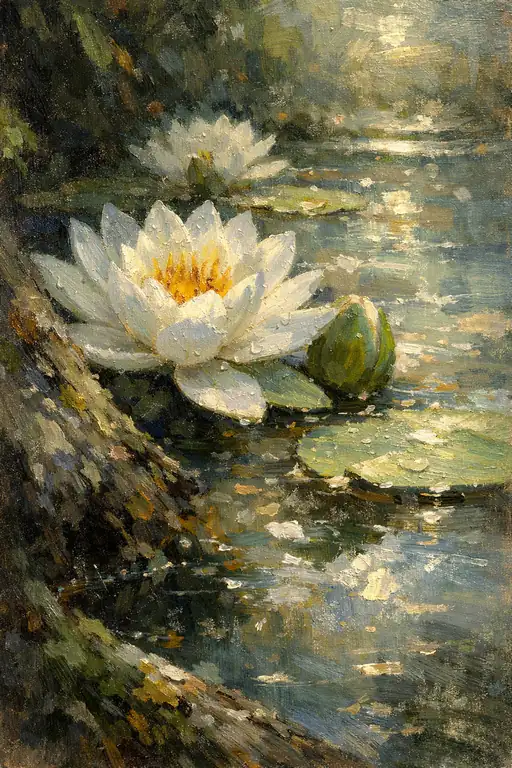 Serenade of the Floating Blossoms
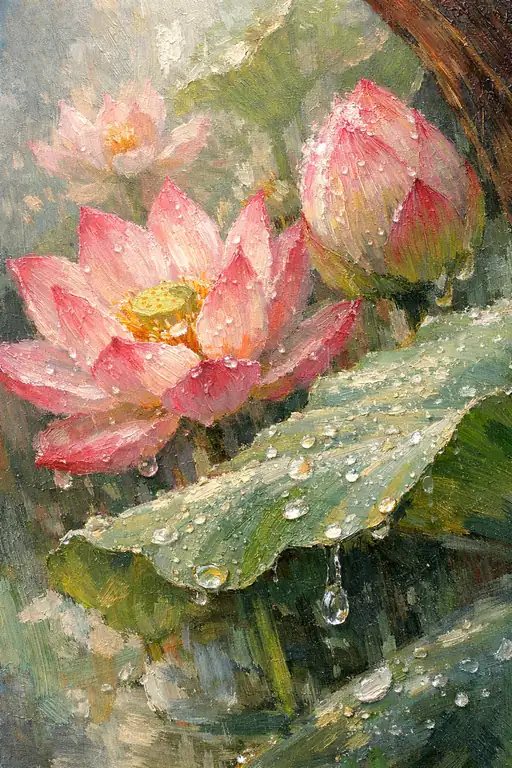 The Silent Symphony of Summer Rain
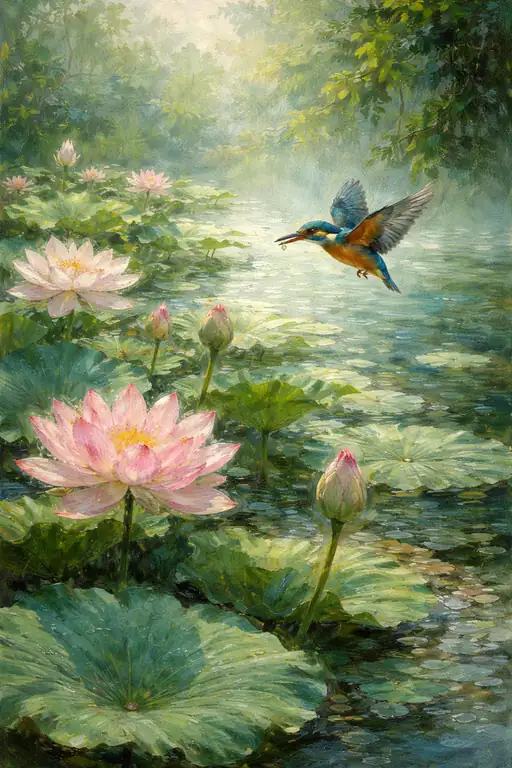 Fairy Descending on the Lotus Pond
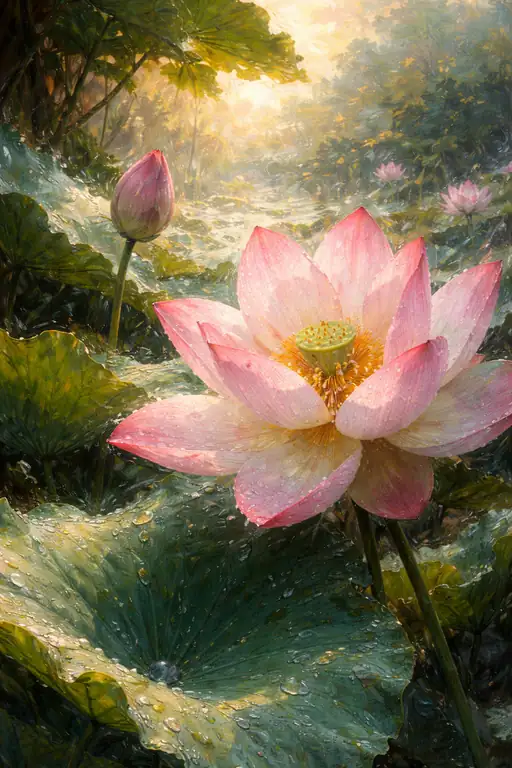 Awakening in the Mist
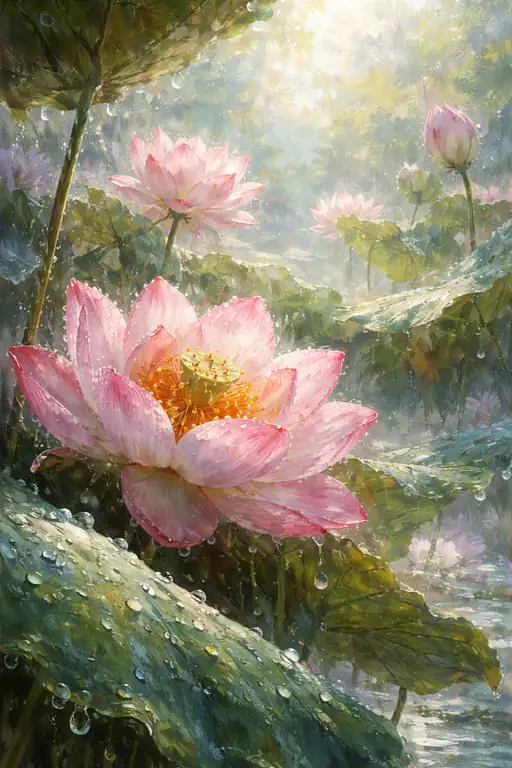 Breath of the Lotus in Morning Mist
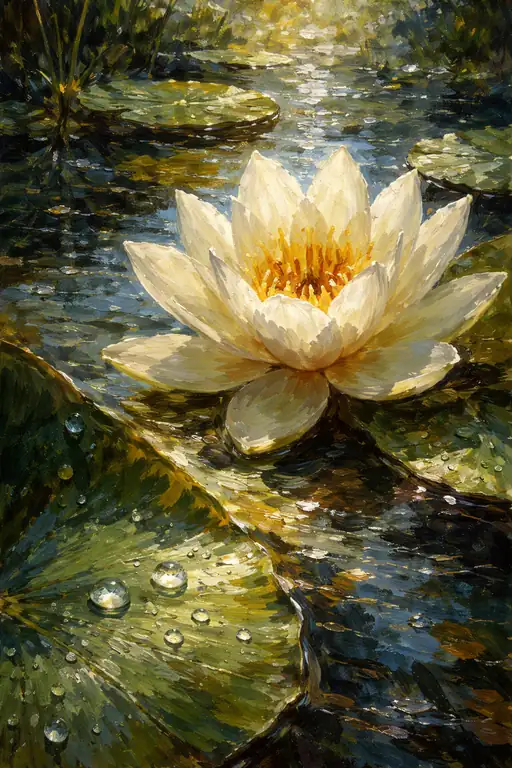 Tears of Morning Dew on the Sacred Petals