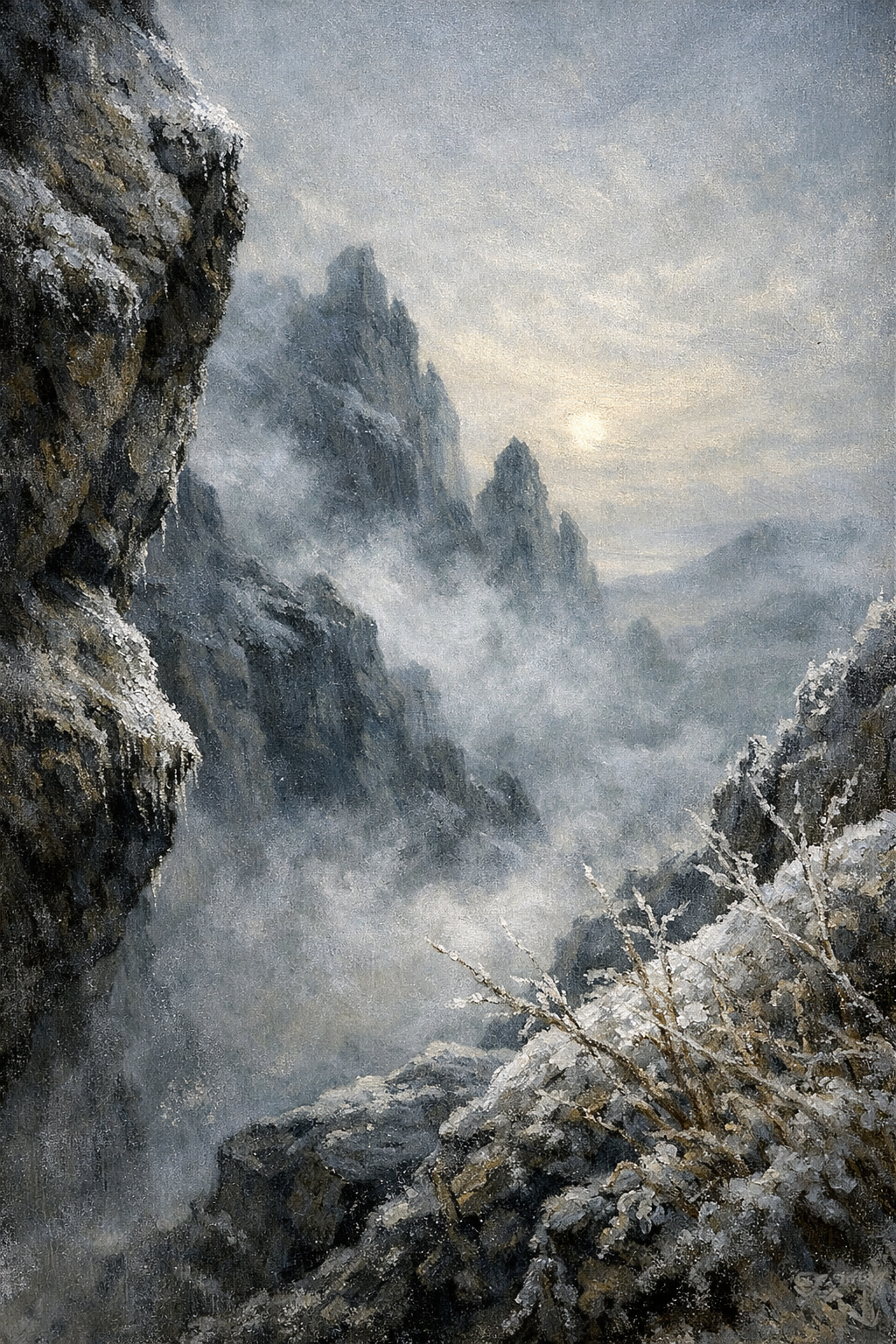
The Silent Majesty of the Frozen Peaks
Critique
1. Introduction This landscape painting presents a silent, majestic view of a mountainous region shrouded in wintry mist. The composition captures a profound sense of isolation and the raw power of nature through its vertical orientation and dramatic use of atmospheric perspective. The scene is dominated by cold tones and textured surfaces that effectively convey a freezing environment. It serves as an invitation to contemplate the stillness of a world untouched by human presence, focusing purely on the elemental interaction between stone, ice, and light. 2. Description In the foreground on the left, a massive, vertical rock face rises sharply, its rugged surface partially covered with crystalline frost and icicles. The right foreground features low-lying, skeletal branches also encrusted with white ice, leading the eye into the depths of the valley. A thick, swirling fog occupies the central space, obscuring the base of the distant peaks. These peaks emerge from the mist as jagged silhouettes against a pale, overcast sky. A soft, hazy celestial body, likely the sun or a full moon, hangs low in the sky, providing a muted source of light that barely penetrates the dense atmosphere. 3. Analysis The artist employs a sophisticated range of cool grays, icy whites, and deep charcoals to establish a cohesive tonal atmosphere. Texture plays a critical role here; the contrast between the sharp, granular appearance of the frost and the soft, ethereal quality of the fog creates a dynamic visual experience. The verticality of the rock formations on the left is balanced by the diagonal slope of the icy ridge in the lower right. Light is diffused evenly throughout the middle ground, which enhances the feeling of depth while simultaneously emphasizing the impenetrability of the winter mist. 4. Interpretation and Evaluation The painting can be interpreted as an exploration of the "sublime," where the overwhelming scale and coldness of nature evoke both awe and a sense of vulnerability. The technical execution is exceptional, particularly in the way the artist rendered the translucent quality of the ice and the varying densities of the fog. The composition successfully guides the viewer's gaze from the detailed foreground into the vast, mysterious background. While the color palette is limited, it is precisely this restraint that allows the subtle shifts in light and texture to resonate so strongly with the viewer. 5. Conclusion A close examination reveals that what initially seems like a desolate landscape is actually a complex study of light and material transition. The interplay between the solid permanence of the rock and the fleeting nature of the mist provides a compelling narrative of environmental change. This work succeeds in capturing the quiet intensity of a winter morning in the high altitudes. Ultimately, the painting stands as a powerful testament to the enduring and silent beauty of the natural world, leaving a lasting impression of serene yet formidable grandeur.
Same Subcategory
Similar Artworks
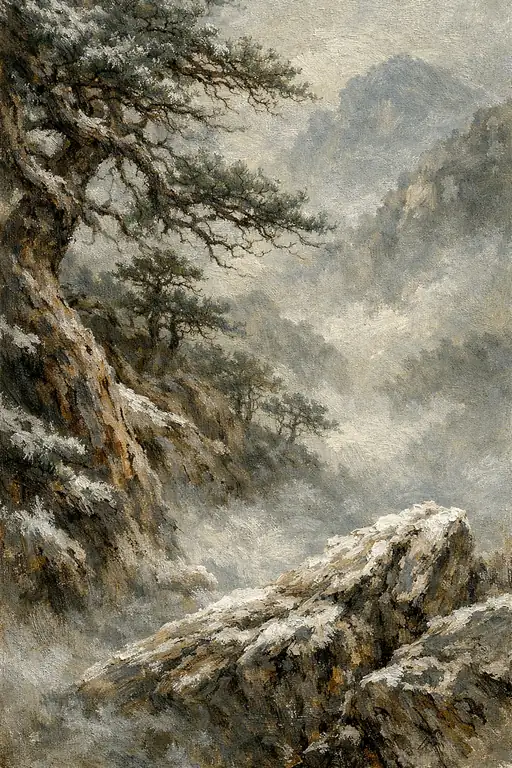 Frost's Silent Sentinel
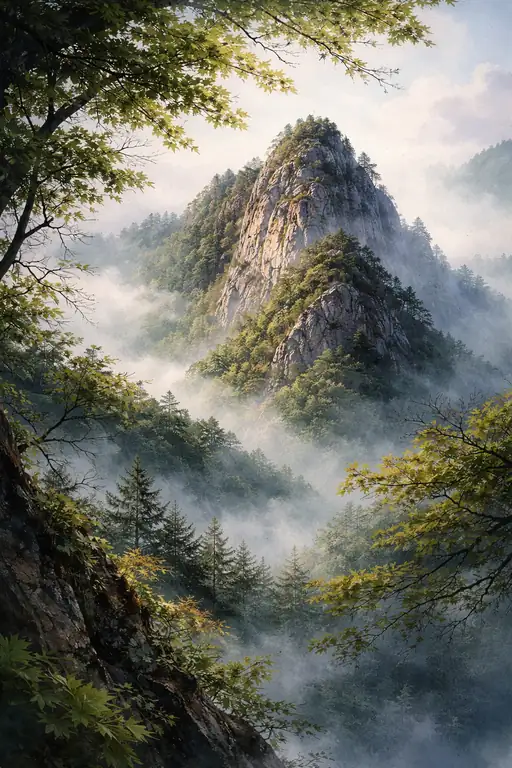 Echoes from the Fog-Kissed Peak
 Crimson Speed: Shiny Red Sports Car
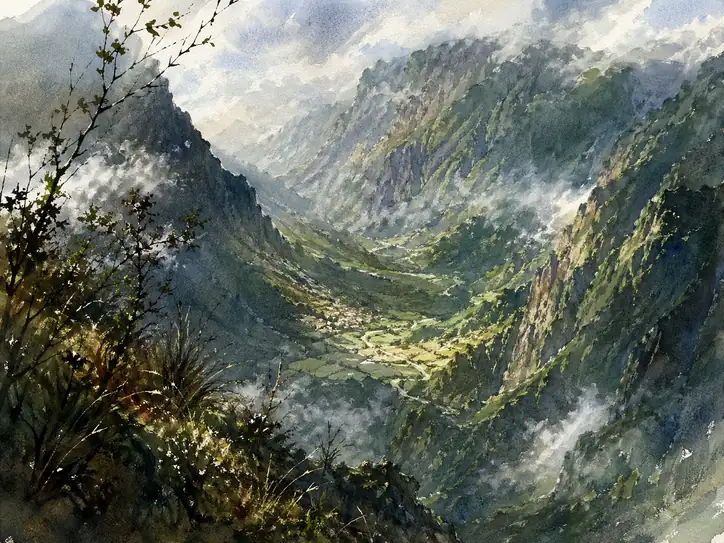 The Prayer of the Mist-Clad Peaks
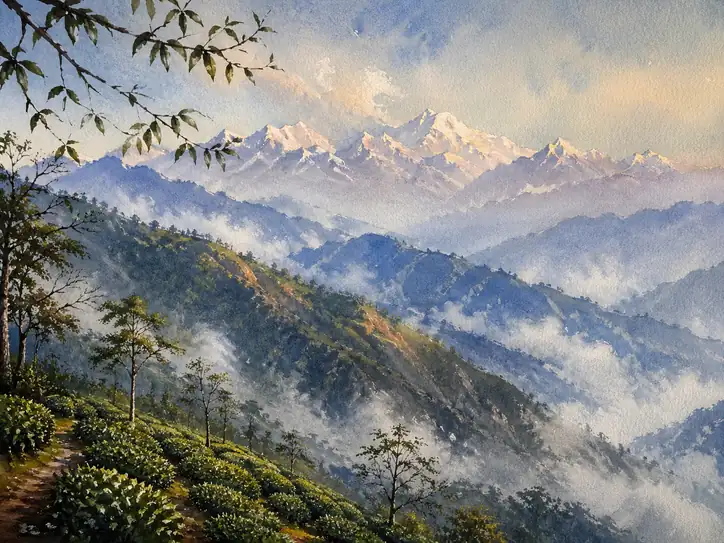 Where Earth Touches the Heavens
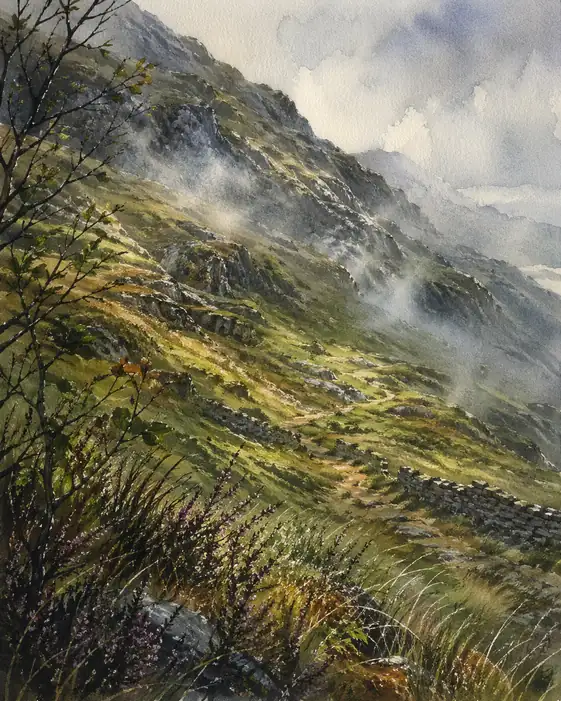 Misty Highland Path
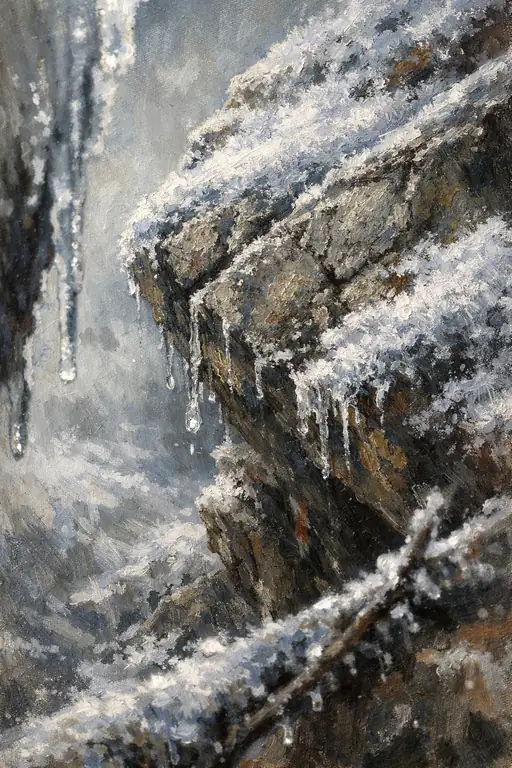 Frozen Tears of the Mountain: The Icicle's Grip
 Mysterious Fog Enveloping the Epic Valley
 Sovereign of the Golden Clouds
 Whispers of the Eternal Autumn Mist