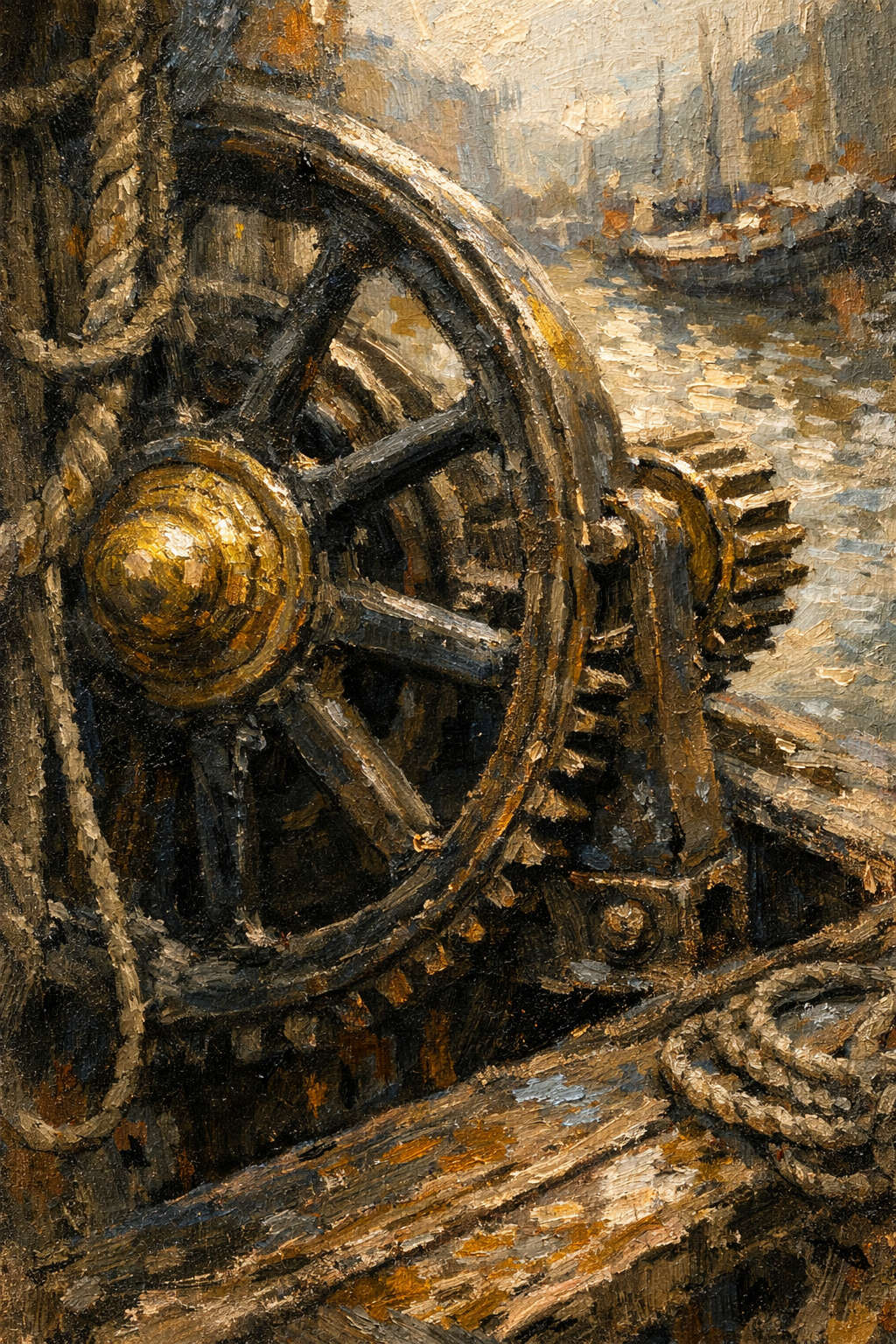
The Rusting Heartbeat of the Harbor
Critique
1. Introduction This striking oil painting offers a close-up examination of maritime machinery, focusing on the intricate gears and ropes of a ship's winch system. Set against a blurred harbor background, the work celebrates the rugged functionality and textured beauty of industrial equipment. It invites the viewer to appreciate the aesthetic qualities of mechanical forms through a highly expressive and tactile execution. 2. Description The composition is dominated by a large, dark wooden wheel with a golden metallic hub, connected to a series of interlocking gears and thick, coiled ropes. These mechanical elements are rendered with thick, visible brushstrokes that emphasize their weathered and worn surfaces. In the background, the hazy shapes of ships and the shimmering reflection of light on the water suggest a busy port at dawn or dusk. 3. Analysis The artist employs a heavy impasto technique, creating a sculptural surface that mimics the coarseness of the ropes and the solidity of the metal. The palette consists primarily of earthy ochres, deep browns, and charcoal blacks, with flashes of gold and pale blue that provide visual interest and depth. The play of light across the gears creates a sense of rhythmic movement and highlights the complex geometry of the mechanism. 4. Interpretation and Evaluation By focusing on the details of machinery rather than a wide-angle view of the sea, the painting elevates functional objects to the status of art. This work is evaluated for its bold use of texture and its ability to convey a sense of weight and history through a dynamic, diagonal composition. The contrast between the solid, dark foreground and the light-filled, ephemeral background effectively communicates the relationship between human industry and the natural environment. 5. Conclusion Upon closer inspection, the initial impression of a chaotic mechanical assemblage resolves into a carefully balanced study of form and texture. The painting successfully captures the atmospheric quality of a working harbor and the enduring strength of maritime tools. It stands as a powerful example of industrial genre painting that finds unexpected beauty in the tools of labor.
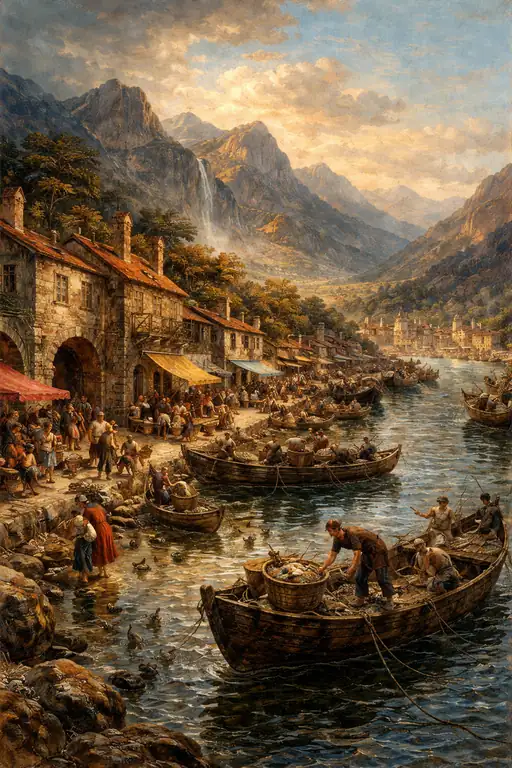 Majesty of the Harbor Peaks
 The Mariner's Resolve Against the Tempest
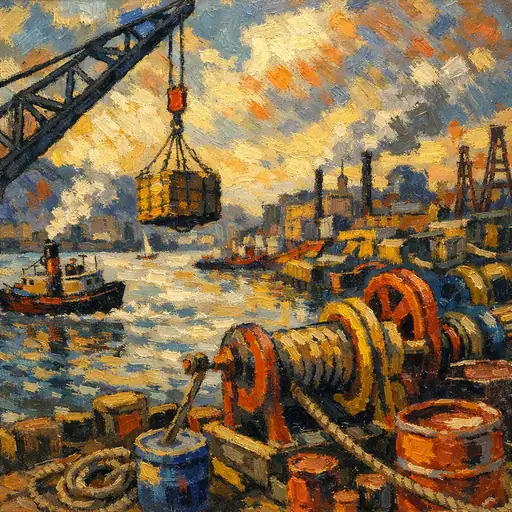 Iron Giants in the Twilight
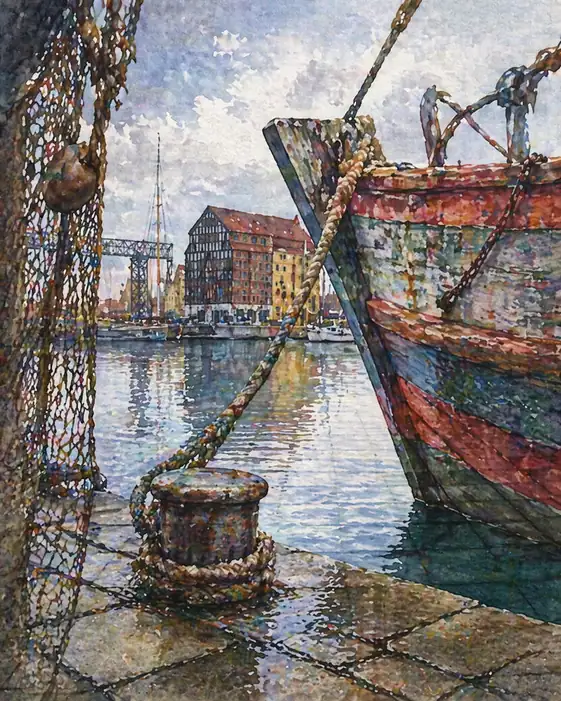 Tethered to the Past
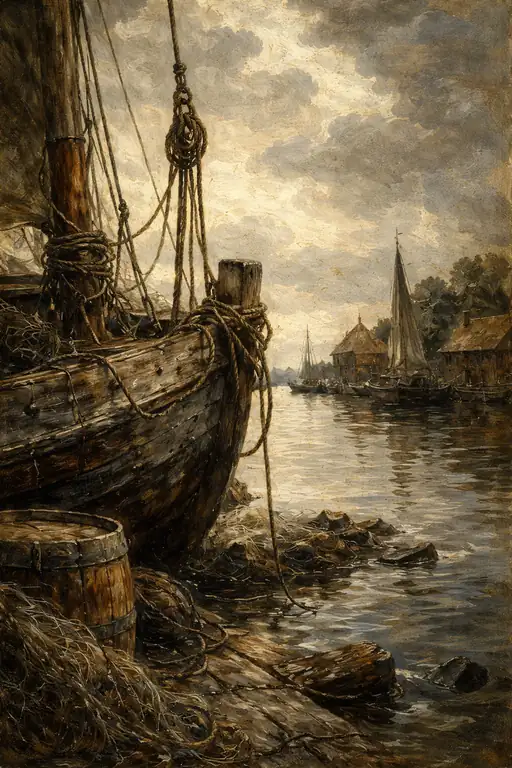 Whispers of the Harbor Wind
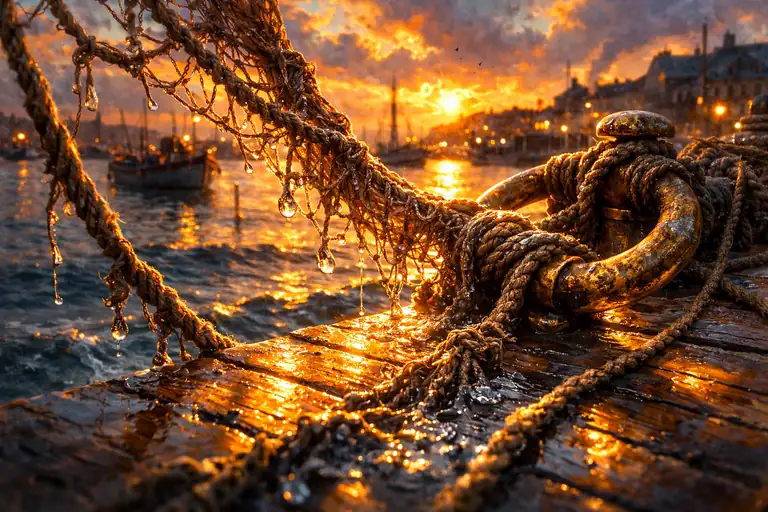 Slumber of the Working Tides
 Tears from the Sea's Embrace
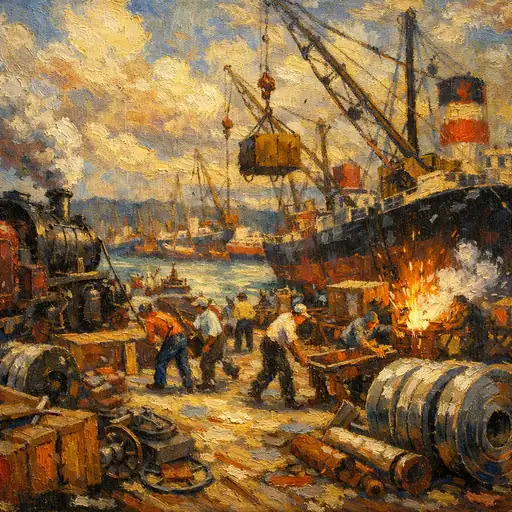 Symphony of Iron and Steam
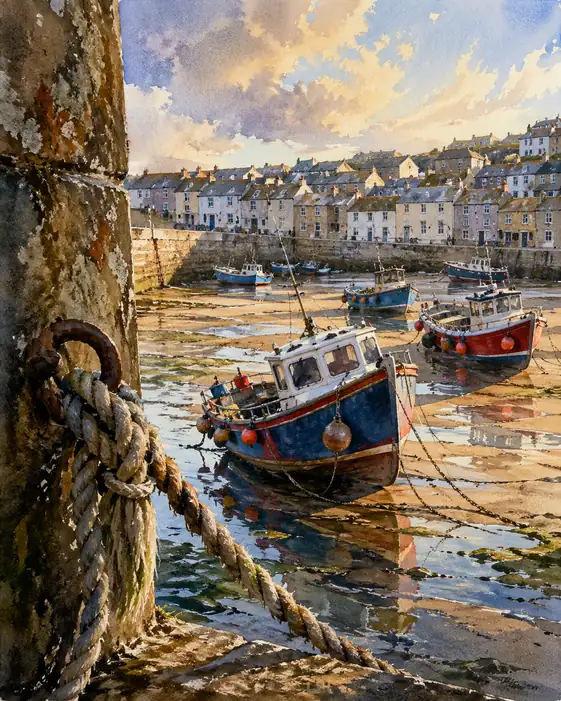 The Restless Fleet at Low Tide
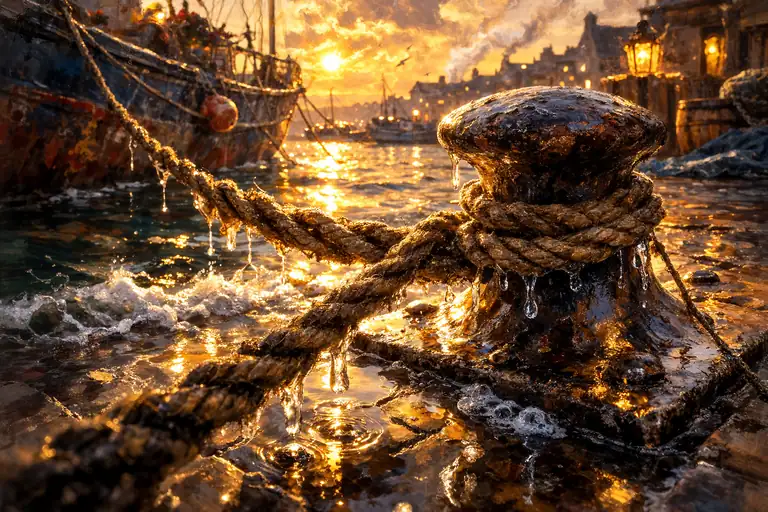 Anchored in the Golden Twilight
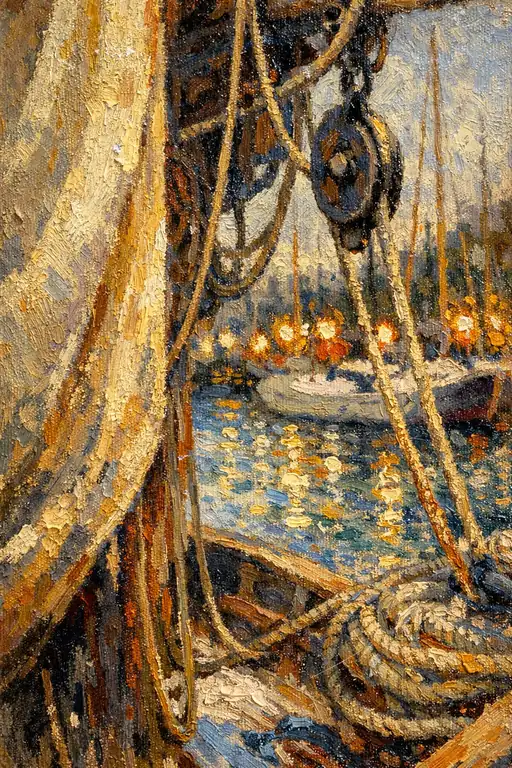 Harbor Lights at Twilight