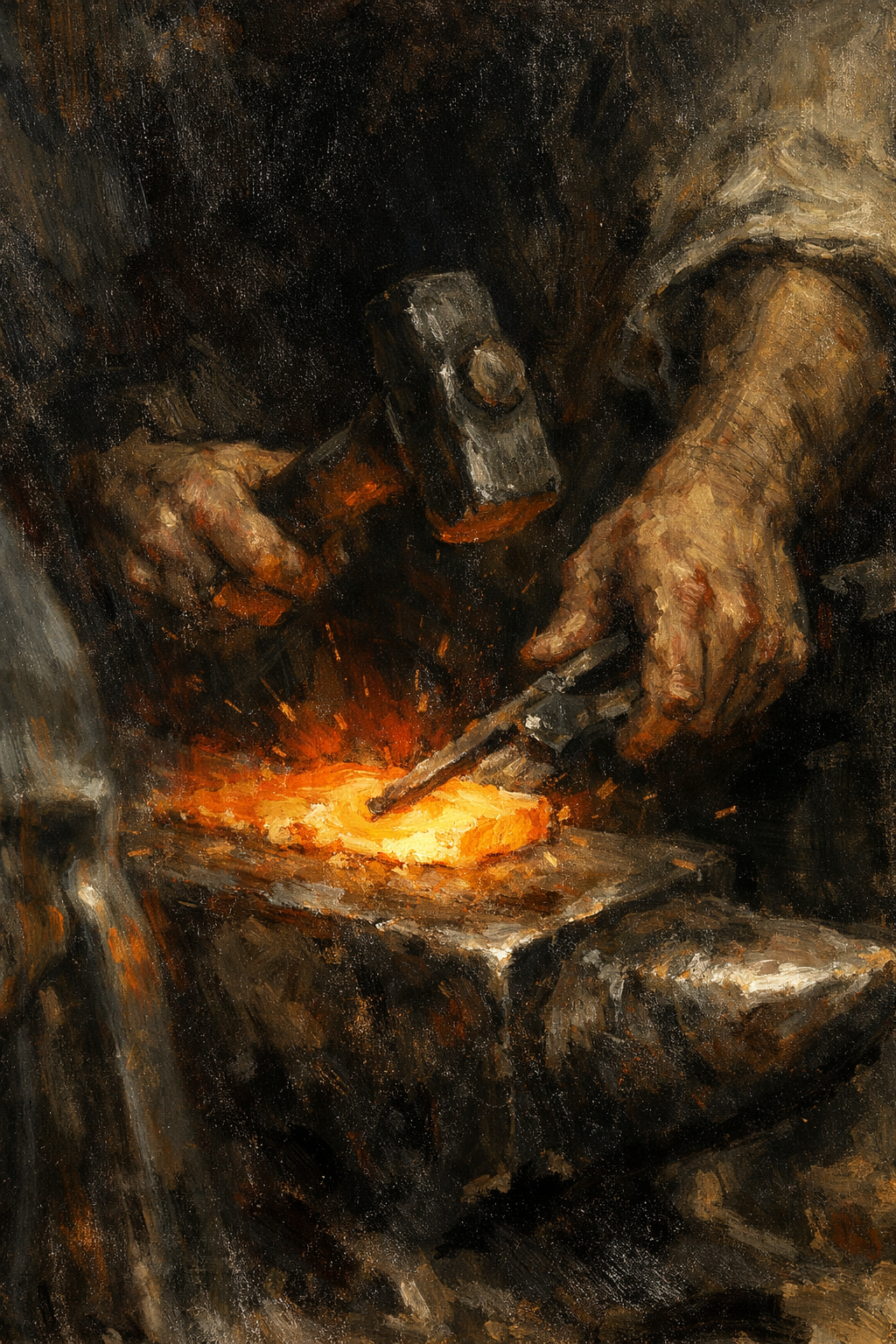
Heartbeat of the Forge
Critique
1. Introduction This evocative painting captures a moment of intense labor within a blacksmith's forge. The focus is placed squarely on the act of creation, as a pair of rugged, weathered hands manipulate glowing metal upon an anvil. Through a dramatic use of light and shadow, the work elevates a scene of manual industry into a powerful study of human perseverance and the mastery of physical elements. 2. Description The composition features two large, muscular hands covered in soot and grime, occupying the central portion of the canvas. One hand firmly grips a heavy, dark hammer poised mid-strike, while the other uses tongs to hold a piece of incandescent orange metal. Beneath the metal lies a solid, dark anvil that reflects the brilliant glow of the heat. Tiny sparks are captured in mid-air, adding a sense of immediate action against the deep, nearly black background. 3. Analysis The artist employs a stark chiaroscuro effect, where the primary light source is the red-hot metal itself. This intense orange light illuminates the textures of the skin and the tools, creating high-contrast highlights against the surrounding darkness. The brushwork is vigorous and thick, particularly in the rendering of the sparks and the reflections on the anvil, which emphasizes the raw energy and heat inherent in the blacksmithing process. 4. Interpretation and Evaluation The painting serves as a tribute to the dignity of manual craft and the transformative power of fire. The absence of the worker's face directs all attention to the hands, symbolizing the essential connection between human skill and the material world. The technical execution is highly successful in its ability to convey the sensory experience of extreme temperature and the rhythmic nature of forge work through a limited but potent color palette. 5. Conclusion The initial focus on the blinding light of the forge gradually reveals the intricate details of the worn hands and the cold steel of the anvil. This contrast between the fleeting brilliance of the sparks and the enduring strength of the tools provides a profound commentary on the nature of work. Ultimately, the painting stands as a masterfully executed representation of the raw, elemental beauty found in the most traditional forms of human labor.
Same Subcategory
 The Quiet Devotion of Stitches in the Dark
Similar Artworks
 The Weight of Time in Calloused Hands
 Sparks of Creation's Forge
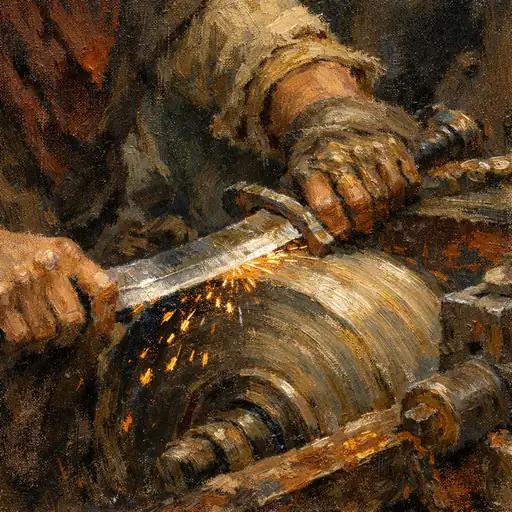 Sparks of the Forged Soul
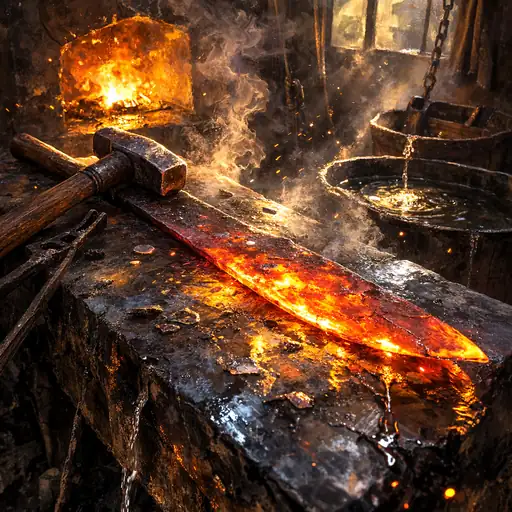 The Pulsation of Hellfire Forging Life
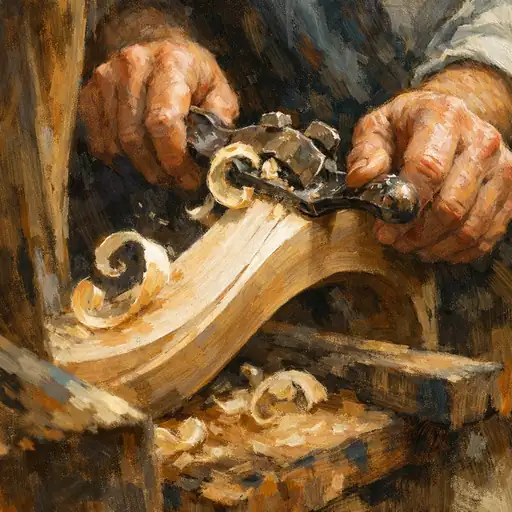 The Graceful Curve of Craftsmanship
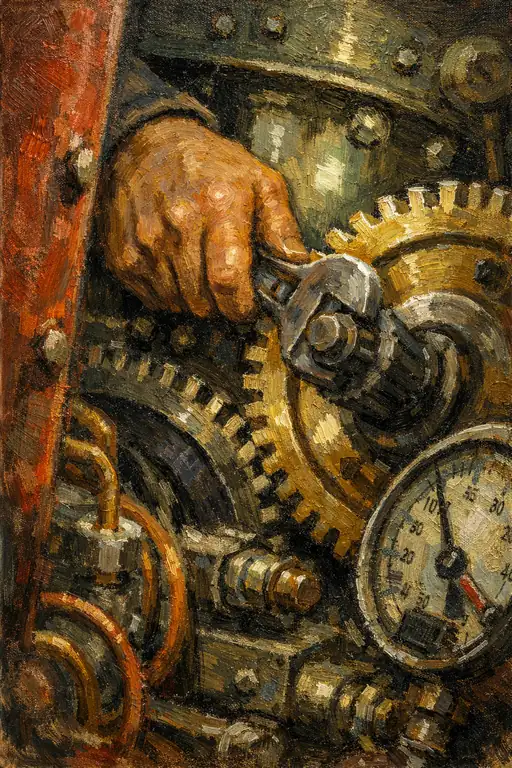 Pulse of the Iron Heart
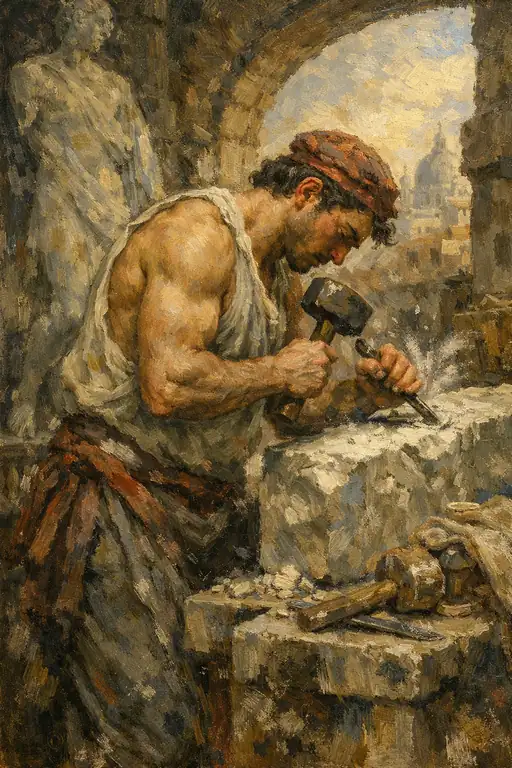 The Soul Carved in Stone
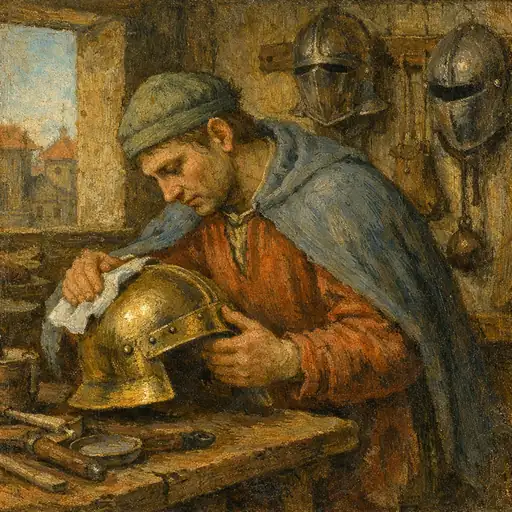 The Golden Reflection of Dedication
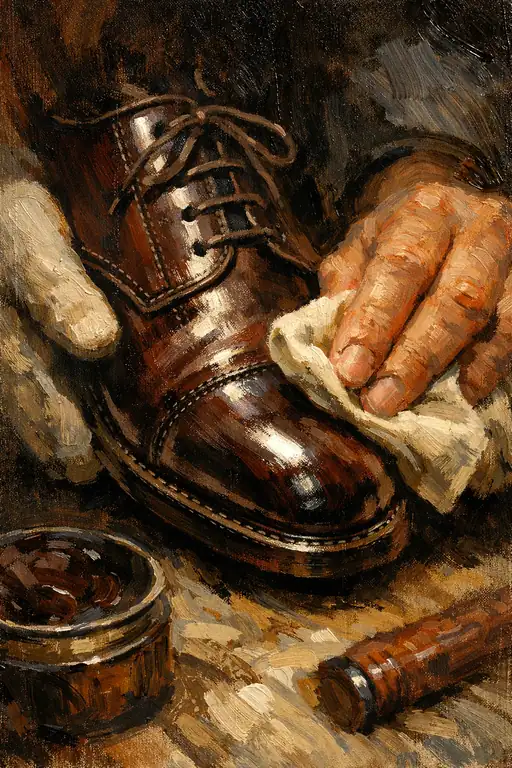 The Polished Pride: A Artisan's Touch
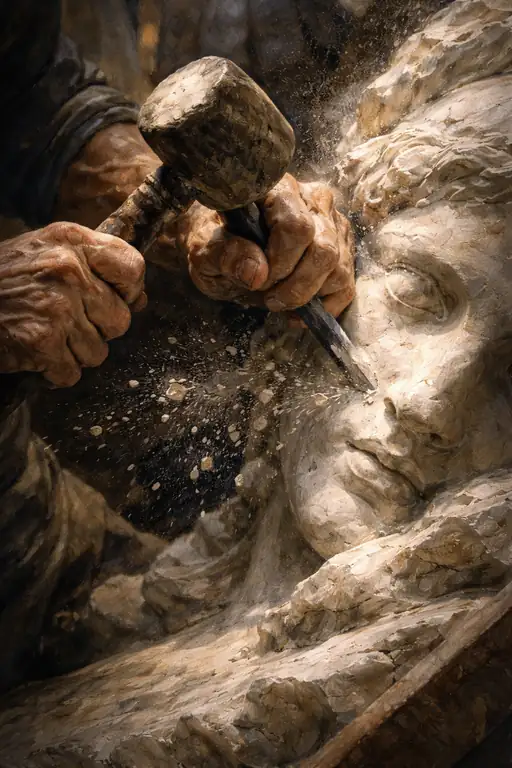 The Chisel's Climax: Birth from Stone