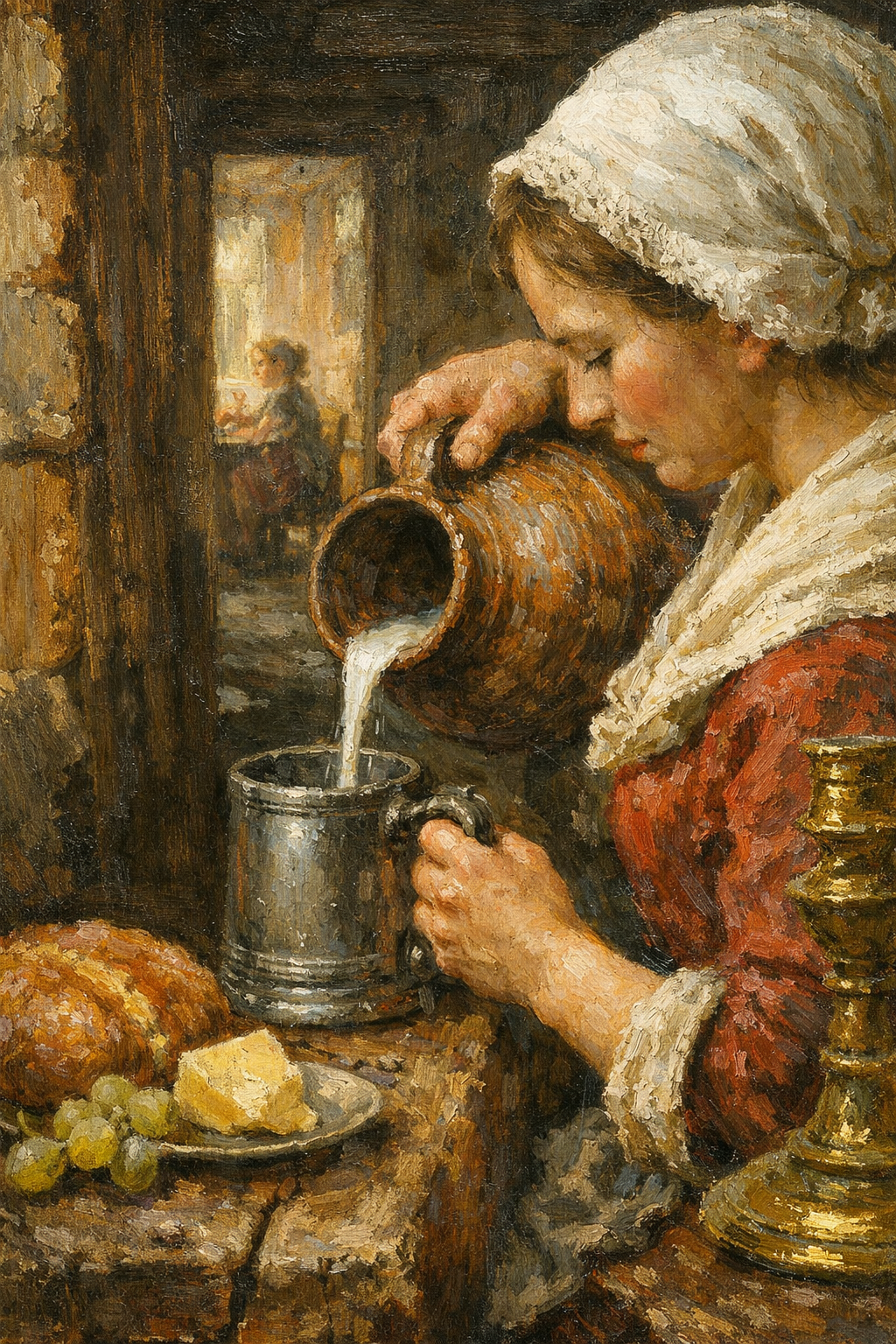
A Holy Moment in the Kitchen
Critique
1. Introduction This oil painting presents a quiet and meticulously detailed kitchen scene, capturing a seemingly ordinary moment of daily life. While drawing from 17th-century Dutch genre painting traditions, it merges classical composition with a contemporary sensibility. The work condenses a sense of vital presence and the beauty of humble living onto a single canvas. It successfully invites the viewer into a space of quiet contemplation and peace. 2. Description A woman wearing a white cap carefully pours milk from an earthenware jug into a pewter mug. She is dressed in a subdued red jacket and a white shawl, her focused gaze fixed on the stream of liquid. In the foreground, a wooden table holds a loaf of crusty bread, a wedge of cheese, and grapes on a plate. Through a background opening, the faint figure of another person working in a separate room is visible. 3. Analysis The composition uses a stable triangular arrangement that effectively directs the viewer's eye toward the woman's hands. Soft light enters from the upper right, creating delicate shadows on her profile and the rough surface of the bread. The contrast between the white milk and the tactile bread is emphasized by skillful paint texture. By blurring the background, the artist heightens the prominence of the central human and still-life subjects. 4. Interpretation and Evaluation This work manifests the sublime stillness of everyday labor through solid realism and spirituality. The representation of textures窶廃articularly of the food窶琶s exceptional, appealing to the viewer's tactile sense. Regarding originality, the piece reinterprets traditional styles with a modern sensitivity to light. The masterful command of composition and the harmonious color scheme bestow an undeniable dignity upon the entire scene, making it a compelling artistic statement. 5. Conclusion While the painting initially appears as a conventional study, closer inspection reveals a mesmerizing interplay of light and shadow. What seems like a simple record of domestic duty reveals a powerful message about the sacredness of mundane activities. Ultimately, the work is a high-quality achievement where still life and human presence intertwine to offer profound tranquility. Initial impressions of simplicity give way to a deep appreciation for the artist's technical depth.
Same Subcategory
 Awakening the Slumbering Stone
 Symphony of the Sunlit Studio
Similar Artworks
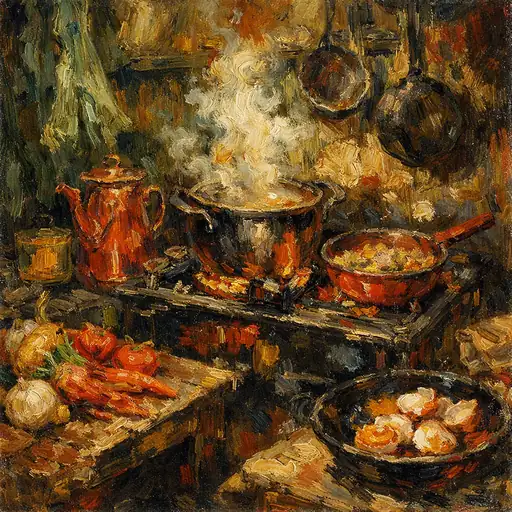 The Soul's Warmth in a Simmering Pot
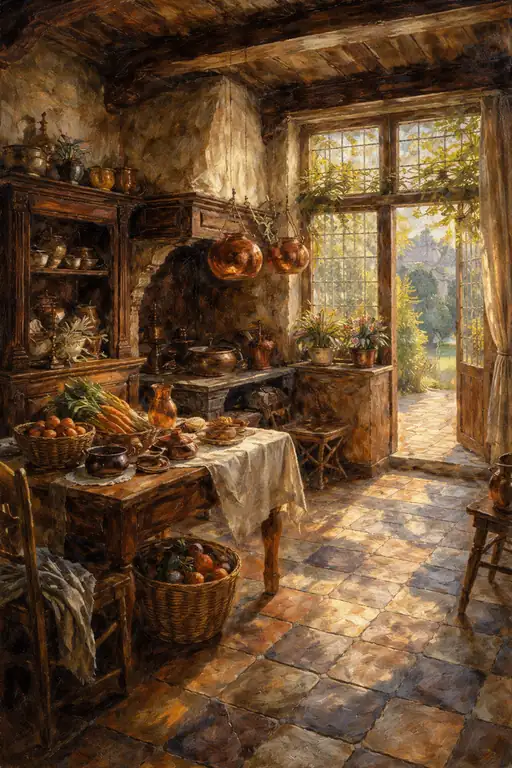 The Hearth's Bountiful Grace
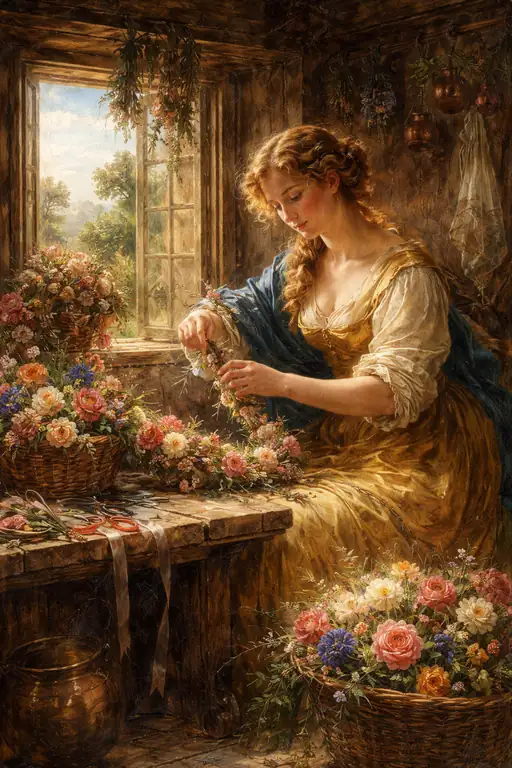 Weaving the Sunlit Petals
 Sunlight on the Attic Pages
 Tears of Gold on the Morning Glass
 The Warmth of Hearth
 The Quiet Symphony of Shadows and Sunlight in the Artisan's Sanctuary
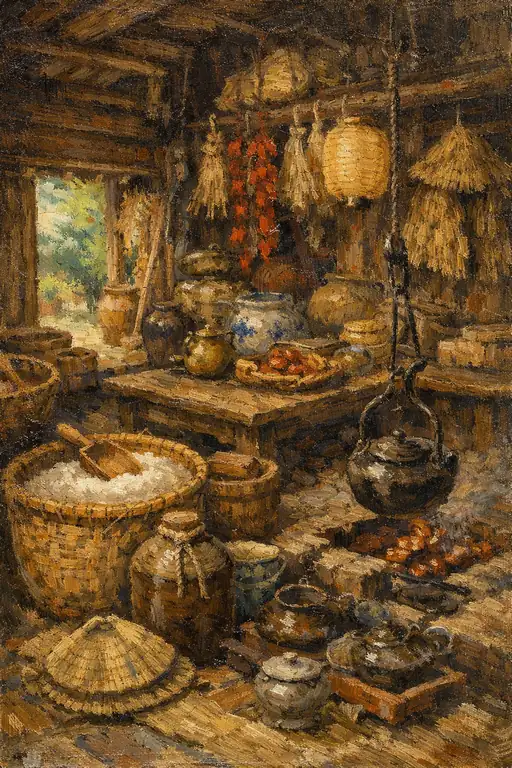 Echoes of the Hearth
 Rhythm of the Searing Flame
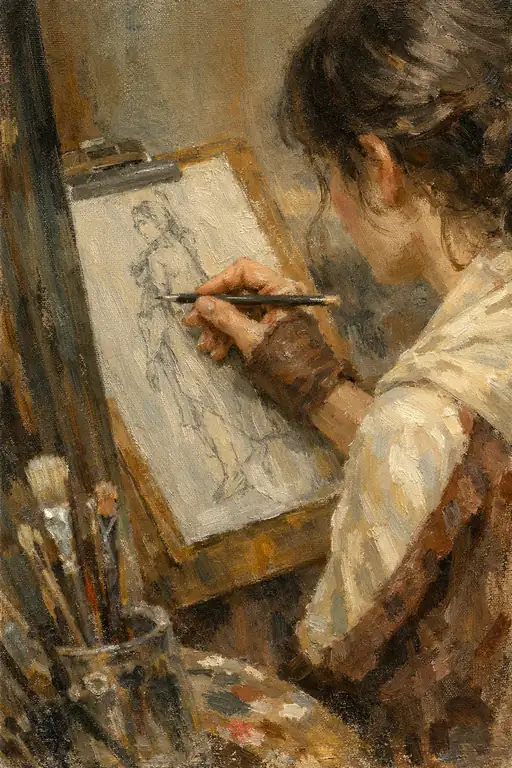 The Genesis of Inspiration