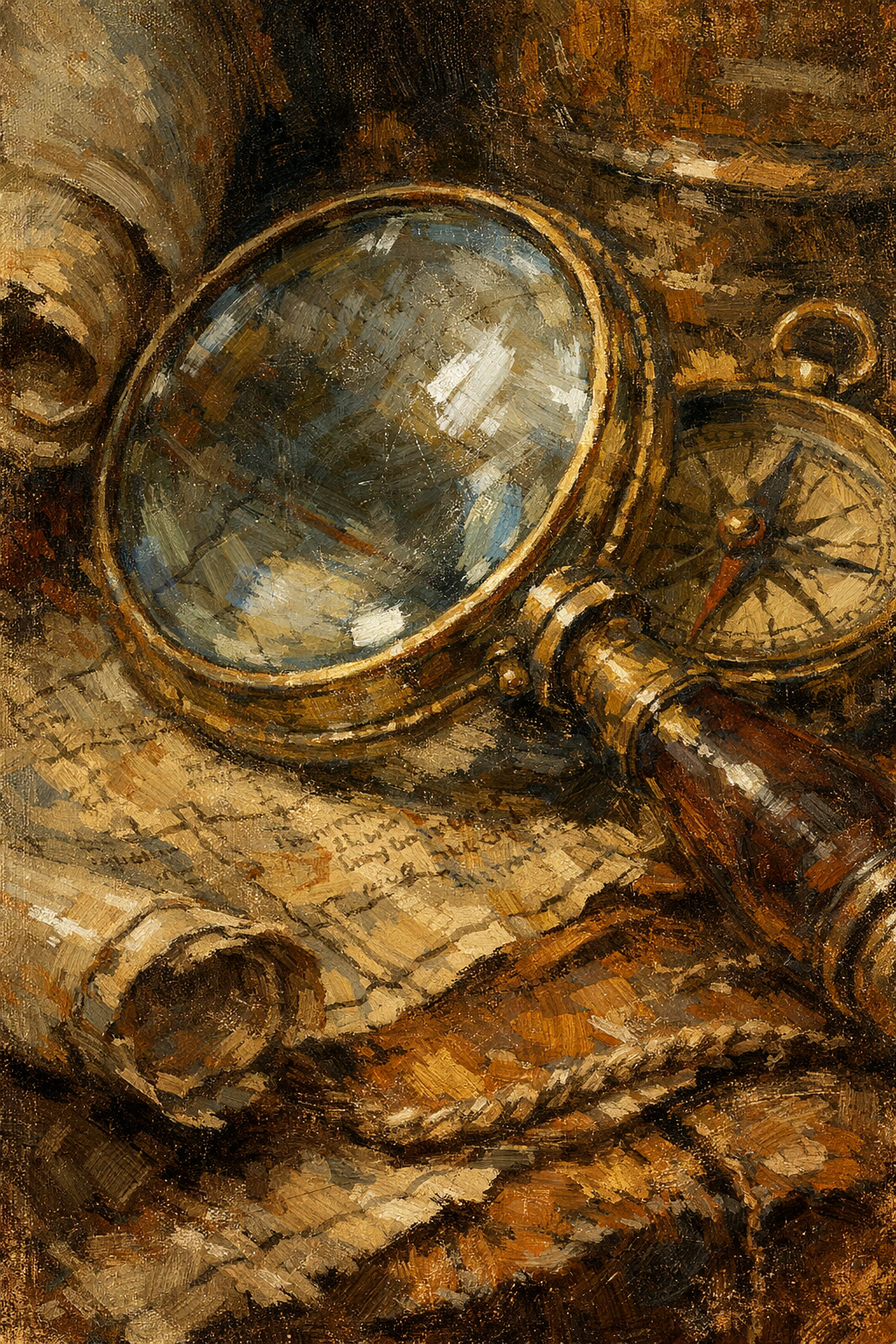
The Navigator's Golden Dream
Critique
1. Introduction This oil painting presents an evocative still life composed of traditional exploration tools, including a prominent magnifying glass, a compass, and weathered scrolls. The arrangement of these objects on a rustic wooden surface suggests a theme of navigation, discovery, and the intellectual pursuit of knowledge. By focusing on instruments of observation and direction, the work invites the viewer into a narrative of historical exploration and the meticulous study of the world. 2. Description The magnifying glass occupies the center of the composition, its golden metallic frame and dark wooden handle rendered with thick, expressive brushstrokes. To the right, a classic brass compass lies open, its needle pointing toward an unseen destination, while old, yellowed maps are scattered and rolled beneath the instruments. The color palette is dominated by warm ochres, deep browns, and burnished golds, creating a unified and nostalgic atmosphere. Sharp highlights are applied to the glass lens and the metallic edges, simulating the reflection of light from an overhead source. 3. Analysis Technically, the artist utilizes a vibrant impasto technique to define the tactile qualities of the glass and metal surfaces. The thick application of paint on the lens of the magnifying glass is particularly effective, creating a sense of distortion and transparency through layered strokes of white and pale blue. The circular motifs of the glass and the compass provide a formal rhythm that balances the irregular, linear shapes of the parchment scrolls. Lighting is used strategically to create deep shadows and bright glints, which enhances the three-dimensional presence of the objects within a shallow pictorial space. 4. Interpretation and Evaluation The painting successfully captures the romantic spirit of the Age of Discovery, evoking a sense of curiosity and the tactile reality of physical maps and instruments. The visible brushwork adds a layer of modern expressionism to a traditional subject, suggesting that the act of seeing is as important as the objects being seen. In terms of evaluation, the work demonstrates a high level of proficiency in handling tonal values and material textures, though the tight focus on the objects limits the sense of environment. Nevertheless, the richness of the surfaces and the cohesive mood make it a compelling study of historical inquiry. 5. Conclusion In conclusion, the work is a powerful homage to the tools of exploration and the human desire to understand the unknown. The initial impression of a simple collection of artifacts evolves into a broader reflection on the history of science and navigation. The artist窶冱 ability to translate the hard surfaces of brass and glass into a textured, painterly language is the primary strength of the piece. It remains a timeless representation of the enduring allure of discovery and the physical remnants of an adventurous past.
 Elixirs of Forgotten Magic
 Whispers of Forgotten Wisdom
 Wandering Through the Celestial Spheres
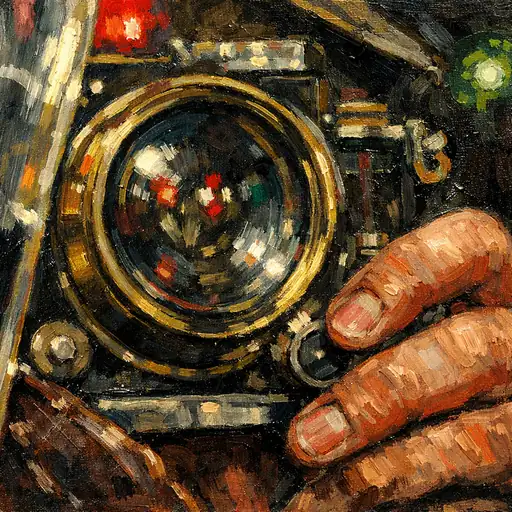 The Touch of Time
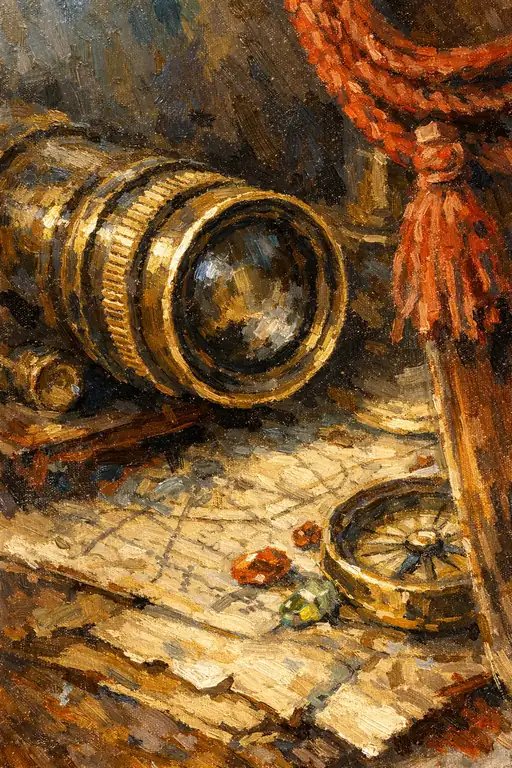 Fragments of a Broken Dream
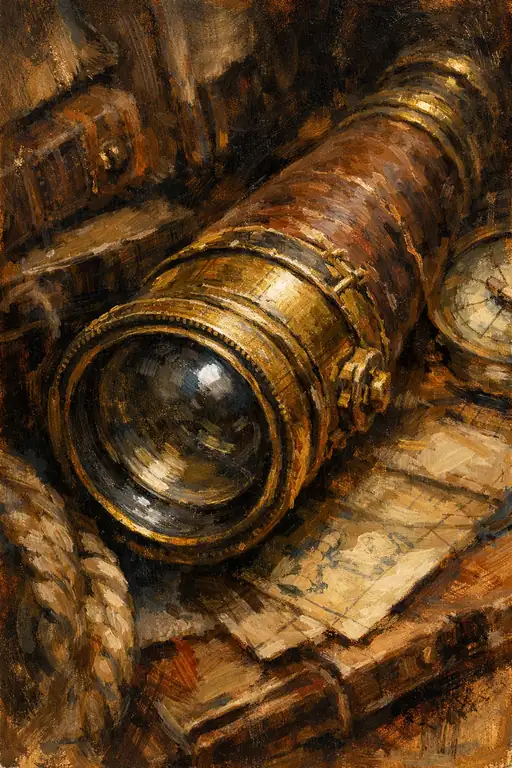 Echoes of the Uncharted Sea
 Navigating the Unknown
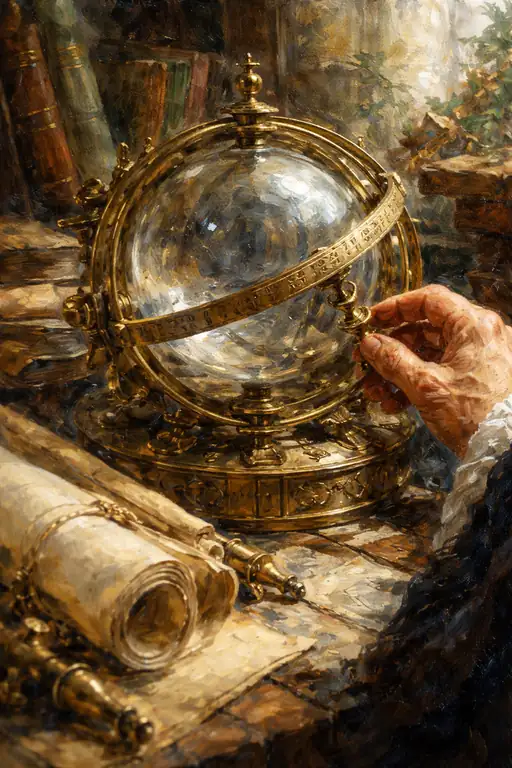 Touch of Time Upon the Stars
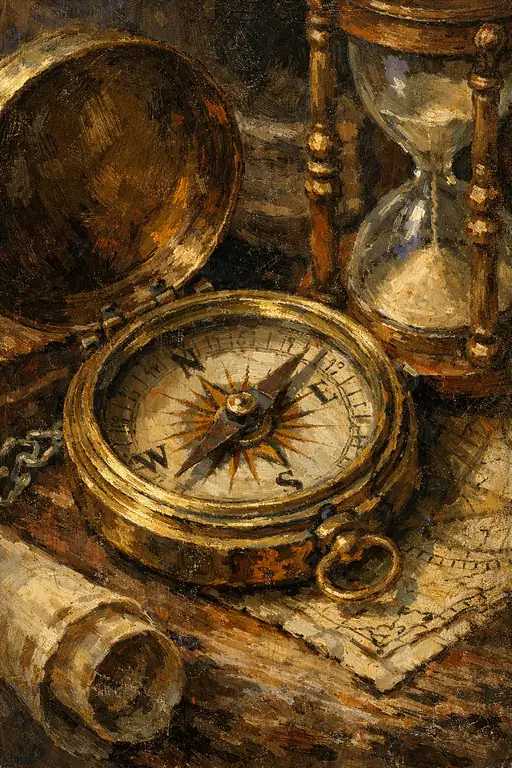 Spark of Creation
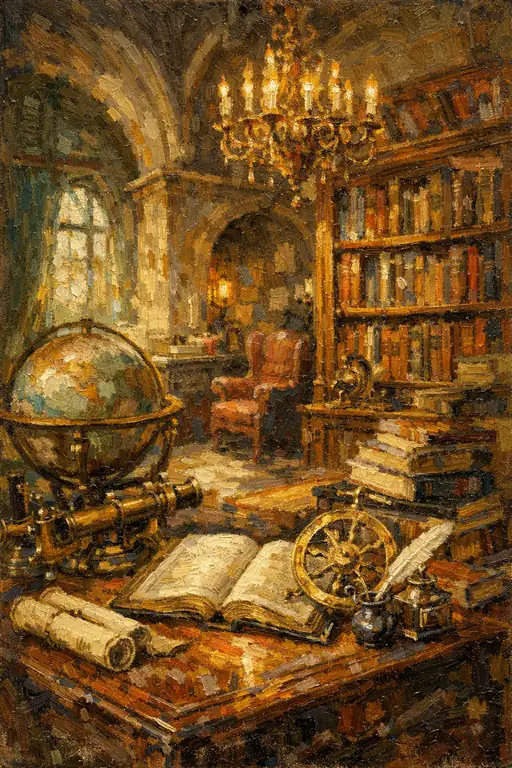 The Warm Embrace of Endless Knowledge
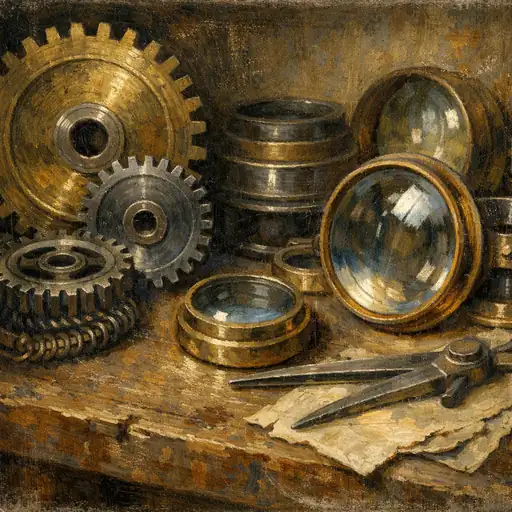 Visions Through the Brass Eye
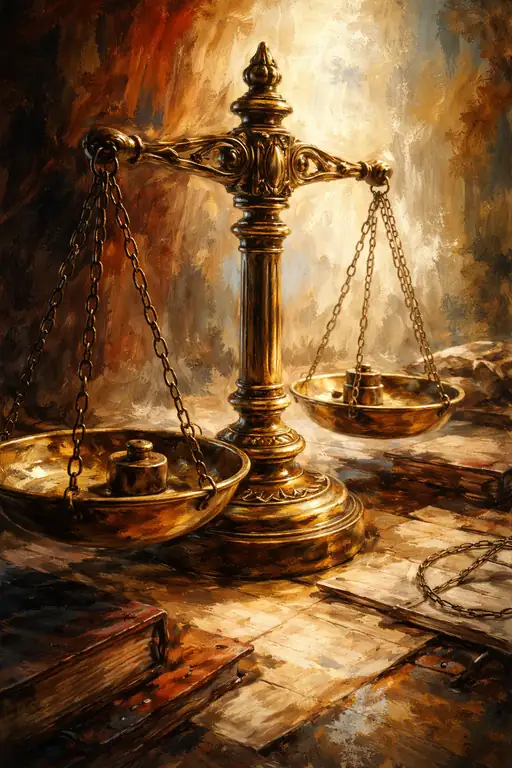 The Golden Weight of Truth