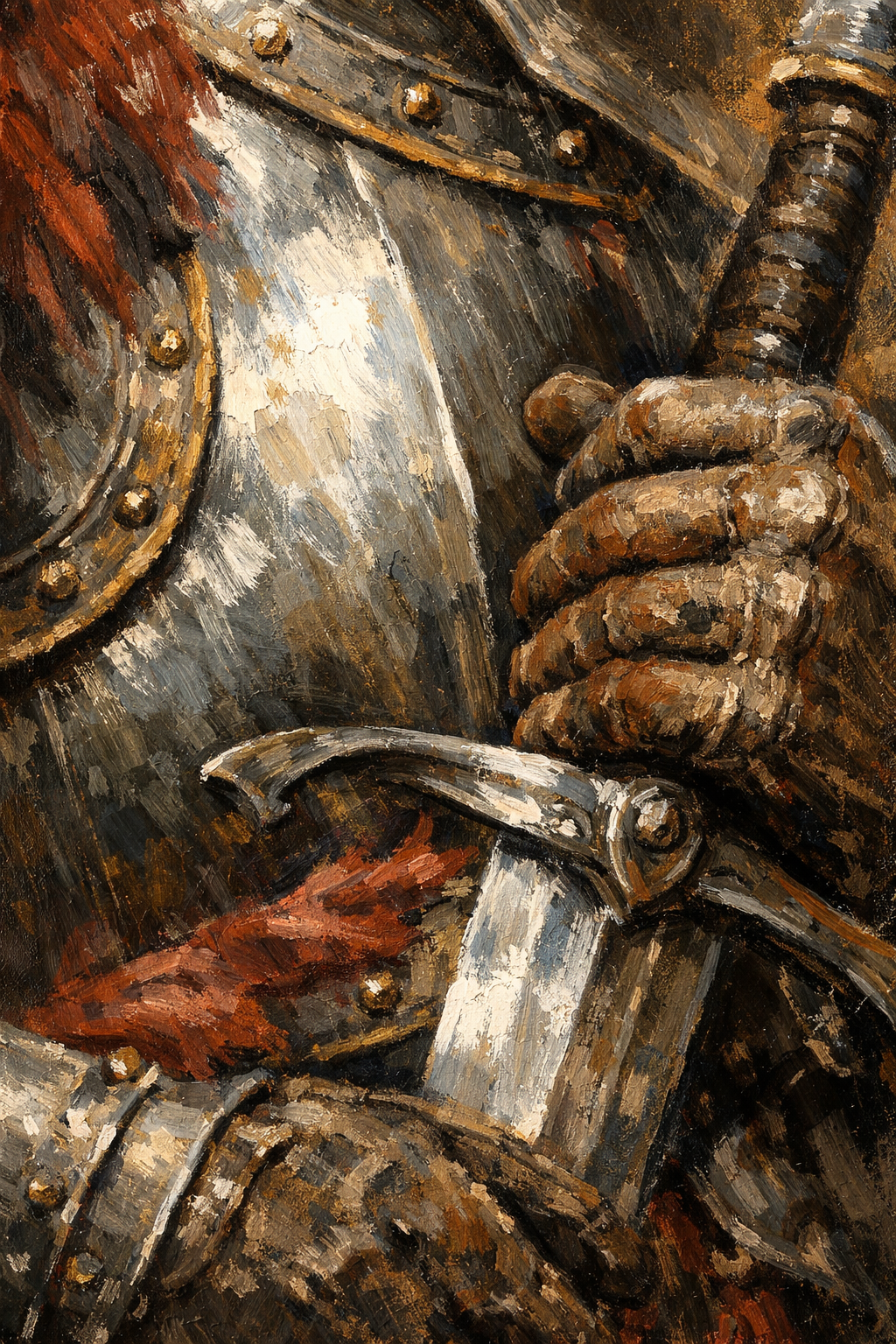
Echoes of a Forgotten Vow
Critique
1. Introduction This oil painting presents a meticulous close-up view of a knight's armored torso and a sword hilt, focusing on the intricate textures of medieval weaponry. The composition centers on the interaction between the cold metallic surfaces and the rugged leather of the gauntlets. By narrowing the field of vision to these specific elements, the work invites a deep contemplation of the materiality and craftsmanship inherent in such defensive gear. 2. Description The canvas is dominated by the overlapping plates of a breastplate, rendered with visible, thick brushstrokes that suggest both weight and wear. A gloved hand, executed in earthy brown tones with heavy impasto, firmly grips the hilt of a sword that extends diagonally across the lower frame. Crimson fabric or plumage provides a stark color contrast against the subdued silvers and ochres of the steel and leather. Small details like the metallic rivets and the reflective sheen on the sword blade are captured with deliberate highlights. 3. Analysis Technically, the artist employs a vibrant impasto technique that imbues the surface with a physical three-dimensionality. The use of light is particularly effective, as bright white and pale yellow streaks simulate the glint of light hitting polished metal, creating a convincing sense of volume. The diagonal orientation of the sword hilt introduces a dynamic energy to an otherwise static subject, guiding the viewer's eye through the dense layers of texture. Furthermore, the color palette is tightly controlled, relying on tonal variations to define form rather than sharp outlines. 4. Interpretation and Evaluation The work succeeds in conveying a sense of historical gravitas and the tactile reality of a warrior's equipment. The visible brushwork and layered paint suggest a battle-worn history, moving beyond a mere decorative depiction to something more visceral and atmospheric. In terms of evaluation, the strength of the piece lies in its exceptional handling of texture and light, which compensates for the lack of a broader narrative context. The choice to omit the wearer's face focuses all attention on the objects, turning the armor itself into a character. 5. Conclusion Ultimately, the painting is an evocative study of metal, leather, and the weight of history. The initial impression of a simple still life of objects gives way to a broader appreciation of the artist's ability to translate hard materials into a fluid, expressive medium. This focused examination encourages the viewer to find aesthetic value in the functional and the weathered. The final result is a powerful statement on the enduring presence of the past through its material remains.
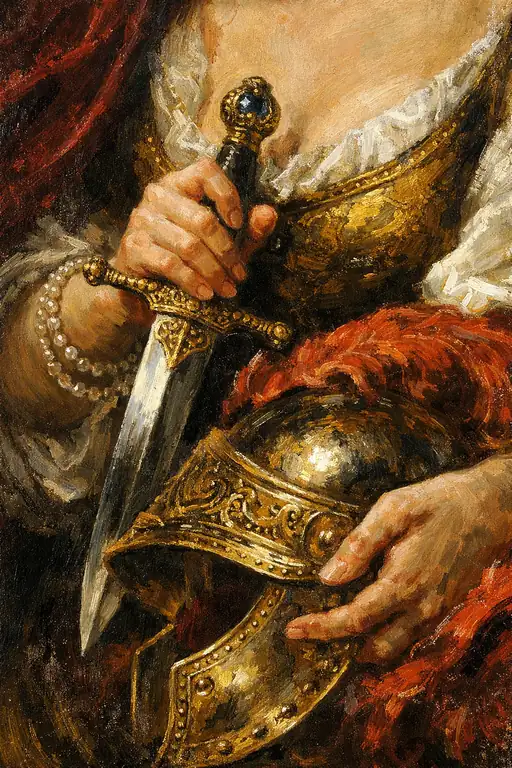 The Golden Burden of Honor
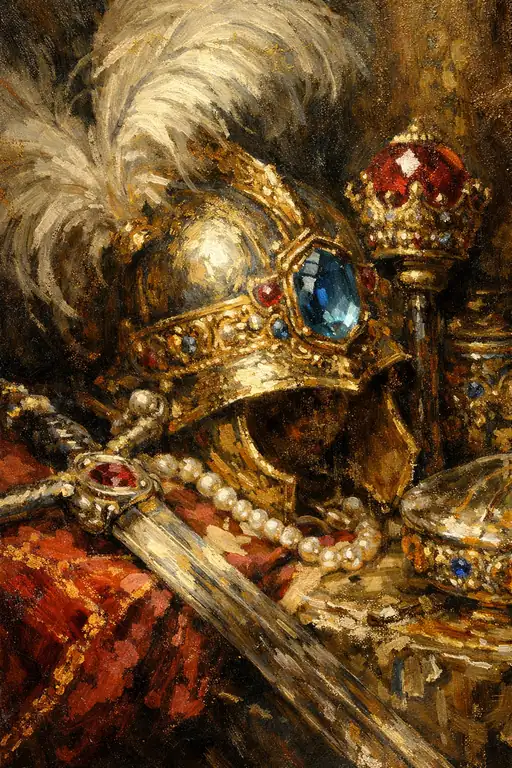 The Weight of Glory and Sapphire Dreams
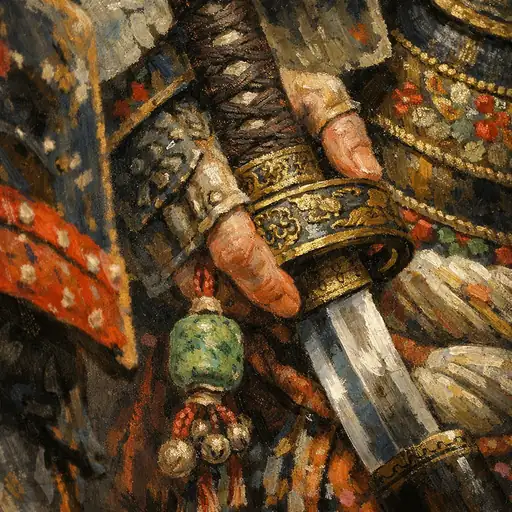 The Warrior's Resolve
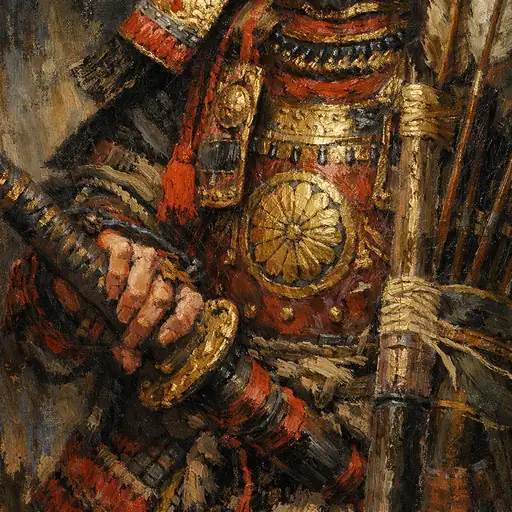 The Silent Will of the Crimson Armor
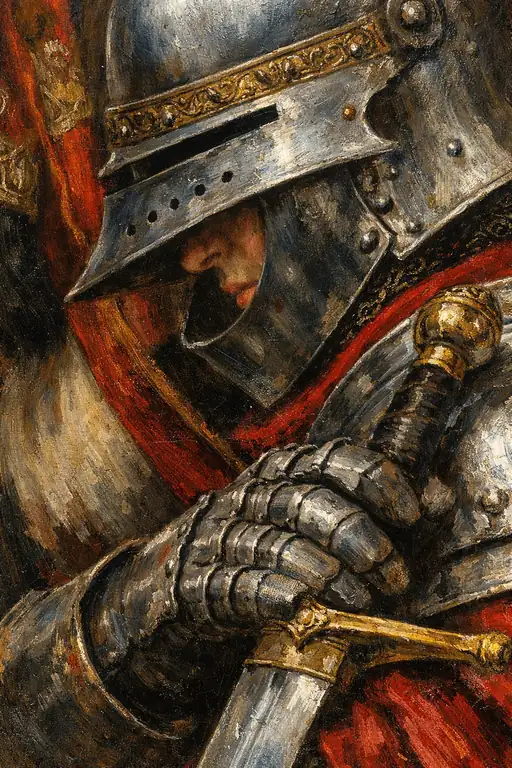 Grip of the Valiant Knight
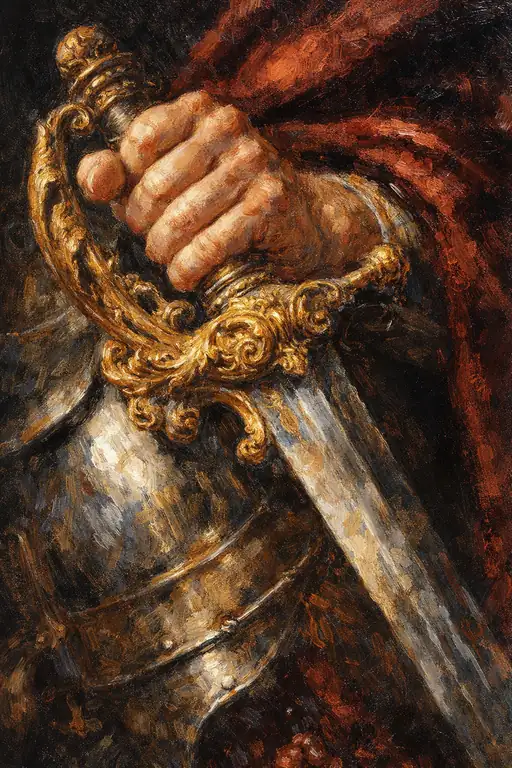 Grip of the Sovereign
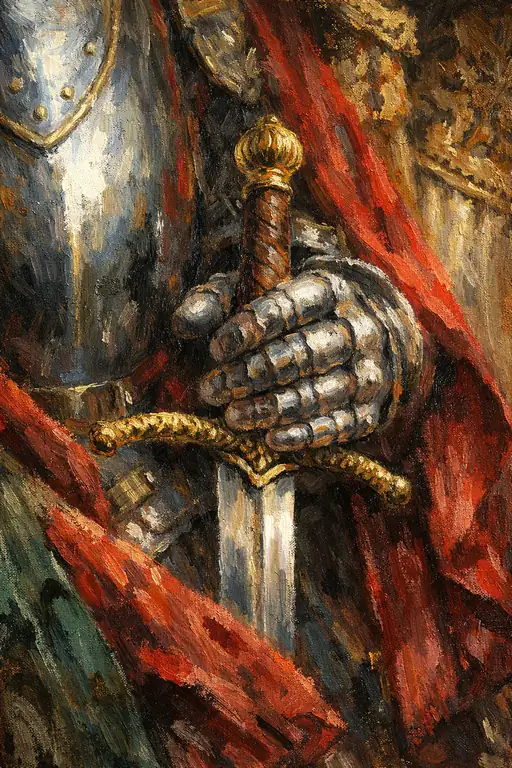 The Iron Resolve
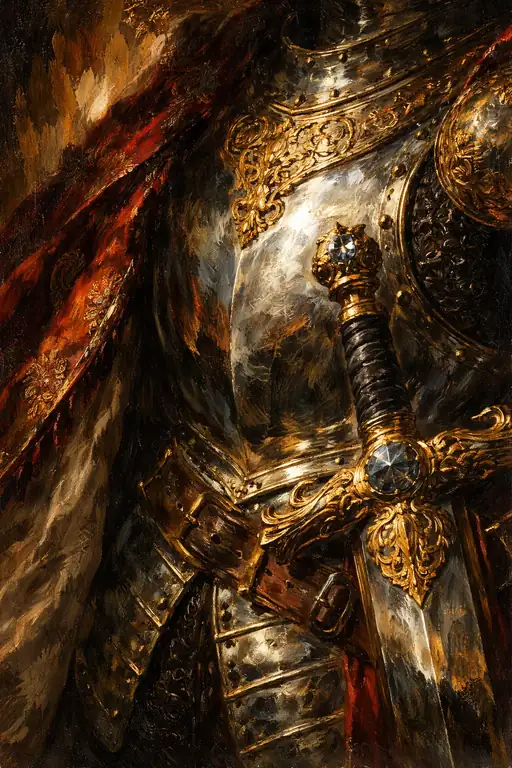 Steel Resolve in Golden Light
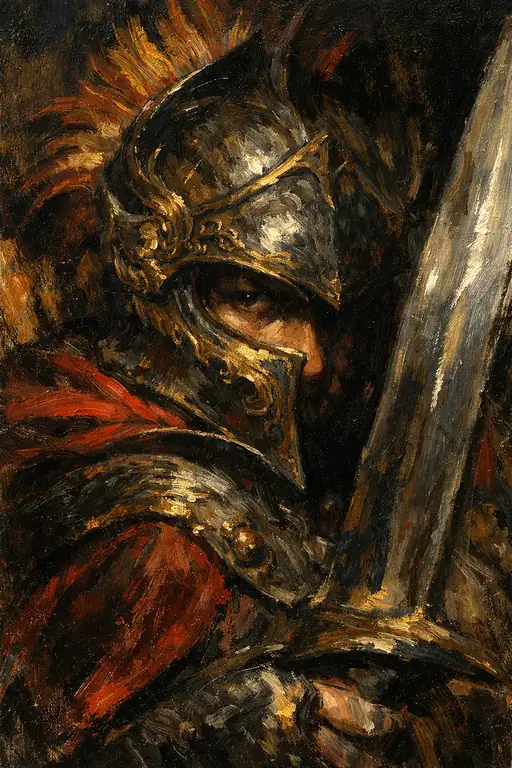 Steadfast Resolve in Iron
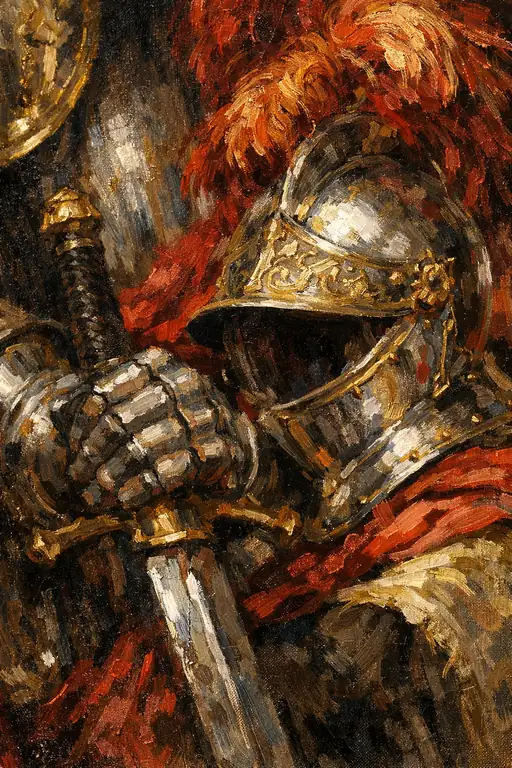 Crimson Pride