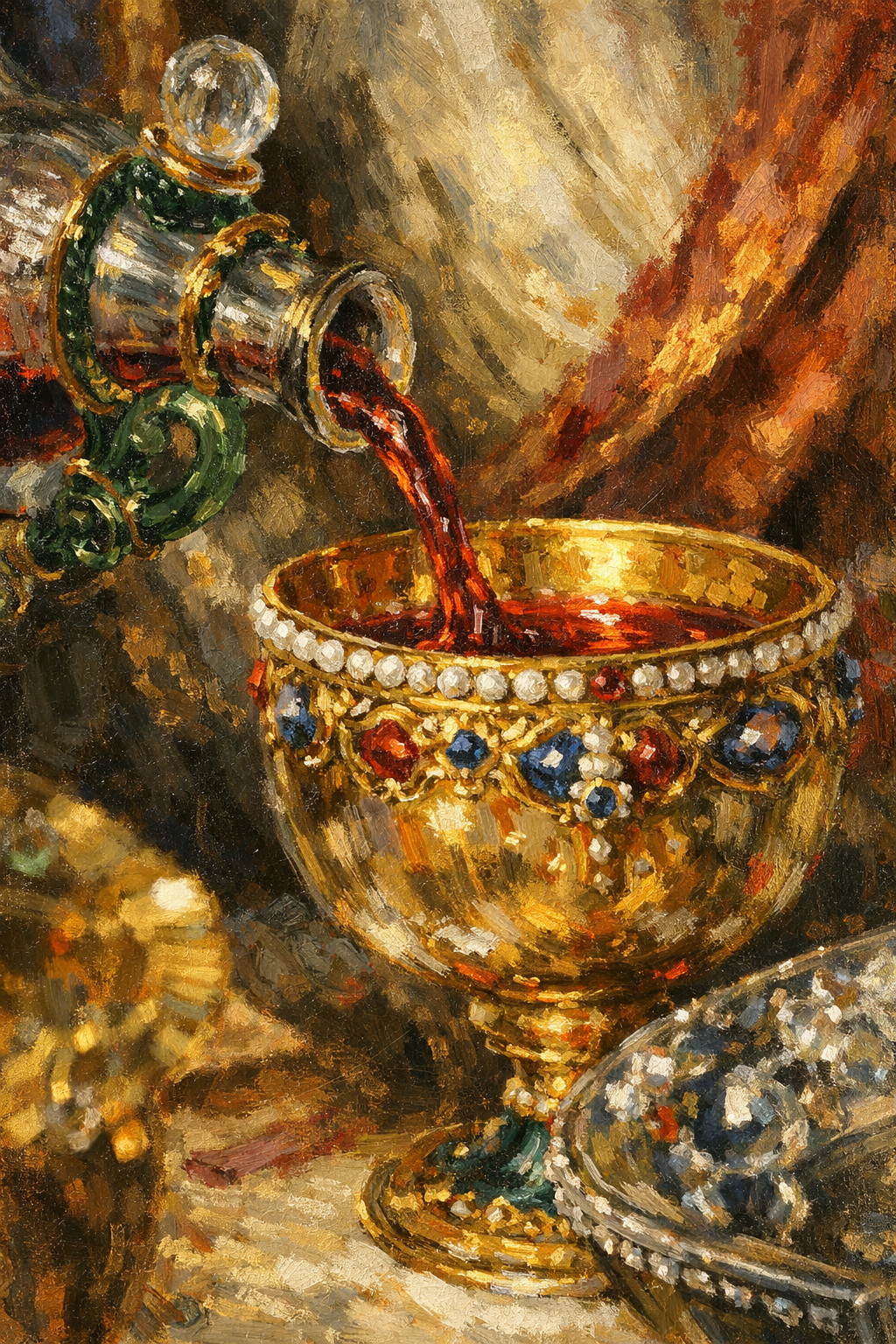
The Crimson Intoxication
Critique
1. Introduction This textured oil painting depicts red wine being poured into a golden chalice encrusted with jewels. The composition centers on the opulent vessel, where the dynamic liquid creates a striking focus. By contrasting static metalwork with flowing wine, the work introduces dramatic tension to the still-life genre. 2. Description The centerpiece is a magnificent golden cup adorned with pearls, sapphires, and rubies. In the upper left, an ornate decanter pours a stream of deep crimson liquid into the chalice. A row of white pearls circles the rim, while blue and red gems are embedded below. The warm, abstract background of brown and gold tones enhances the scene窶冱 overall splendor. 3. Analysis The color palette of gold, crimson, and sapphire creates a regal harmony. The brushwork is exceptionally bold and thick; metallic reflections and liquid textures are achieved through layered impasto. Light from the upper right casts sharp highlights on the chalice, emphasizing the transparency of the wine. The composition utilizes diagonal lines to create a dynamic rhythm following the liquid窶冱 flow. 4. Interpretation and Evaluation The work celebrates material abundance and sensory pleasure. Its strength lies in transforming paint into the brilliance of jewels through a sophisticated alchemical process. Integrating movement within a still-life format displays remarkable originality. The fusion of vigorous brushwork and precise visual effects serves as a testament to the artist窶冱 technical maturity. 5. Conclusion Initially appearing as a display of opulence, analysis of the paint layers reveals a mastery of light. This piece successfully balances visual grandeur with artistic depth. Ultimately, the painting maximizes the material potential of the oil medium, leaving a lasting impression of sensory and technical richness.
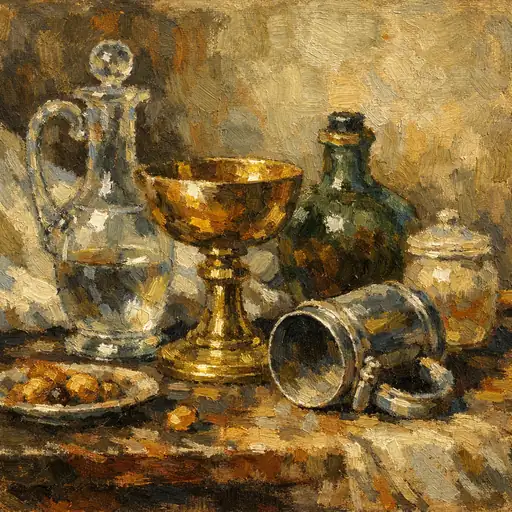 Resonance of Golden Shadows
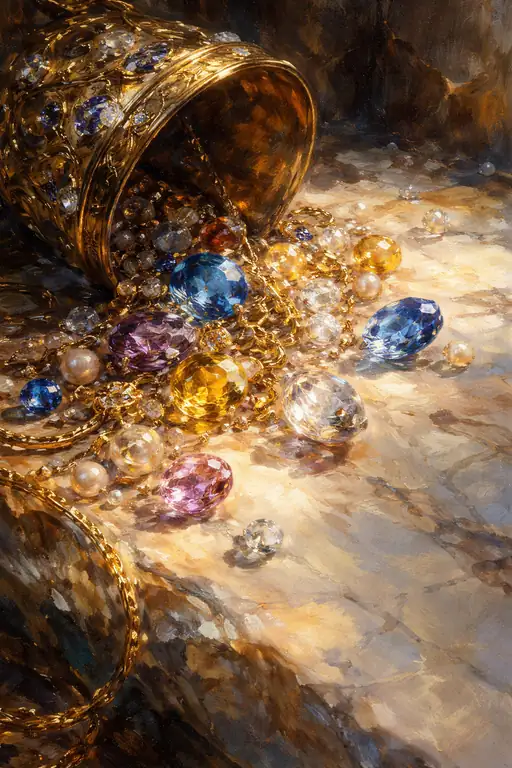 Tears of the Fallen Goblet
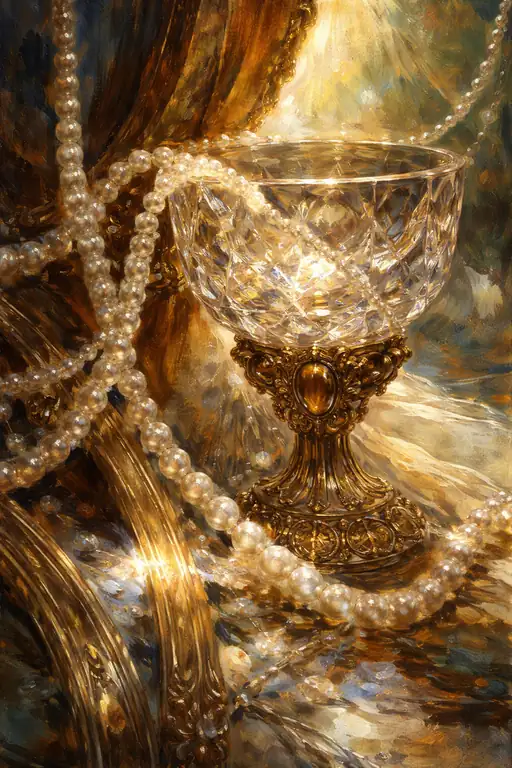 The Sacred Glow of Eternity
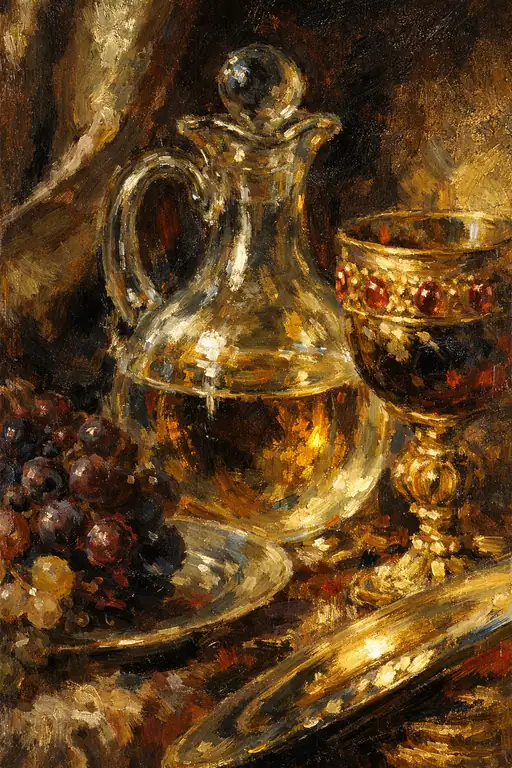 Opulent Shadows
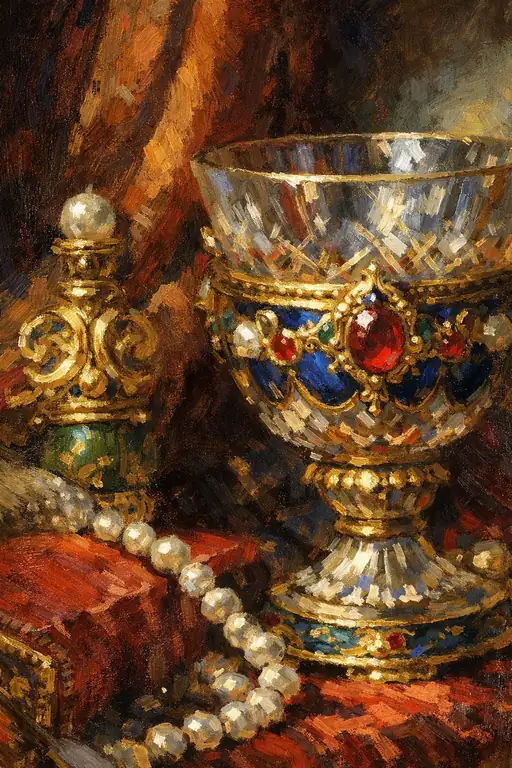 Legacy Woven in Jewel and Gold
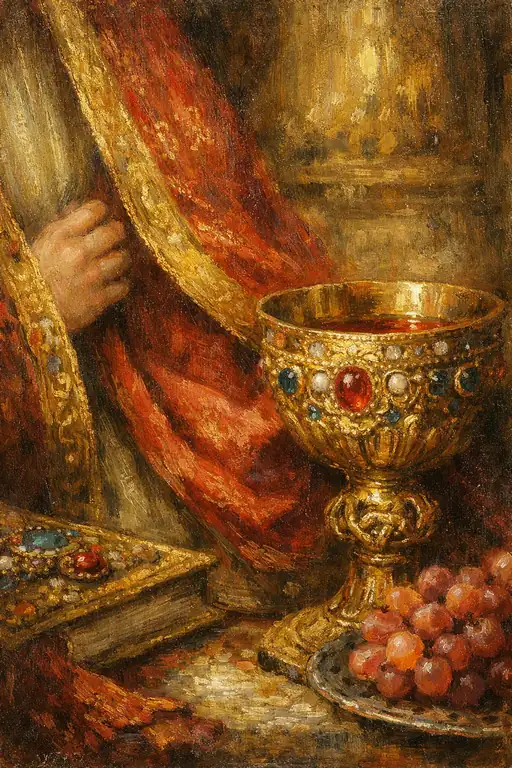 Whispers of Eternity in Velvet Shadows
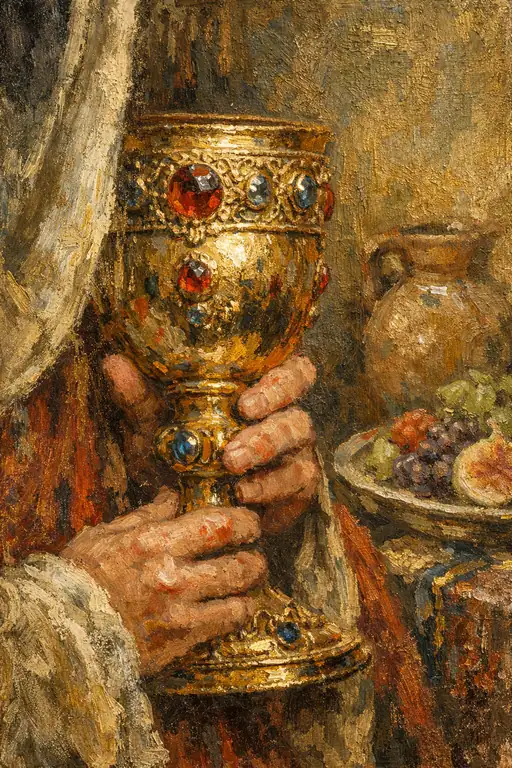 The Heavy Weight of Golden Legacy
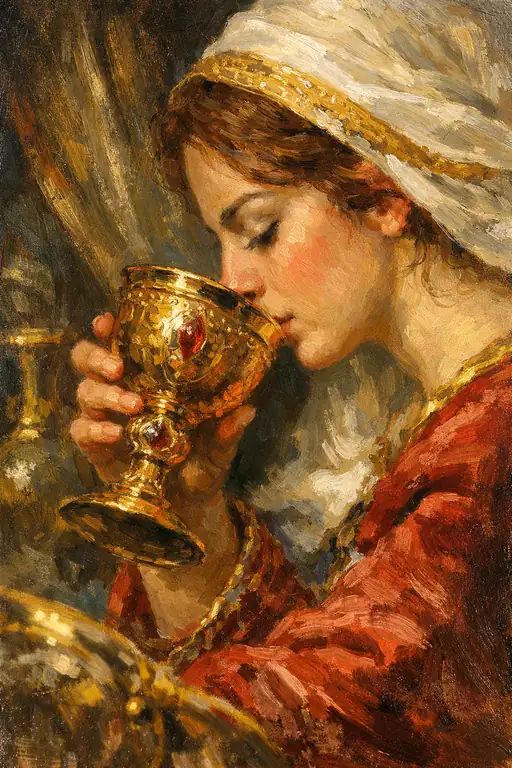 A Silent Prayer in Crimson
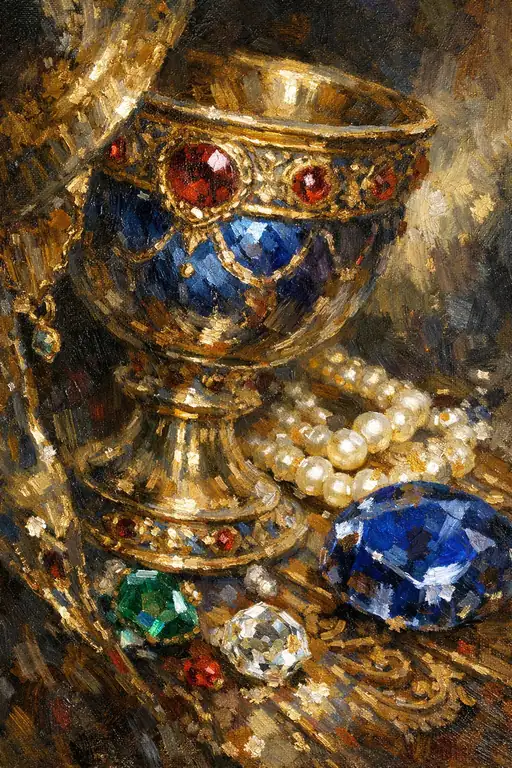 Reflections of Extravagance
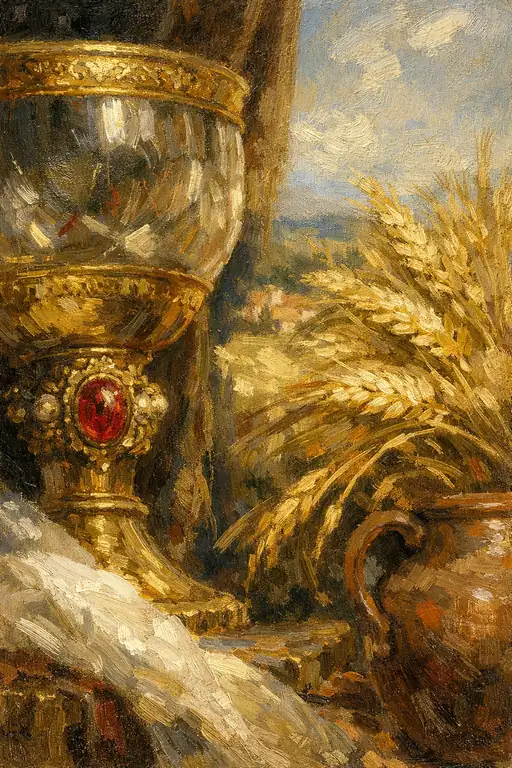 Grace of the Harvest under Golden Light