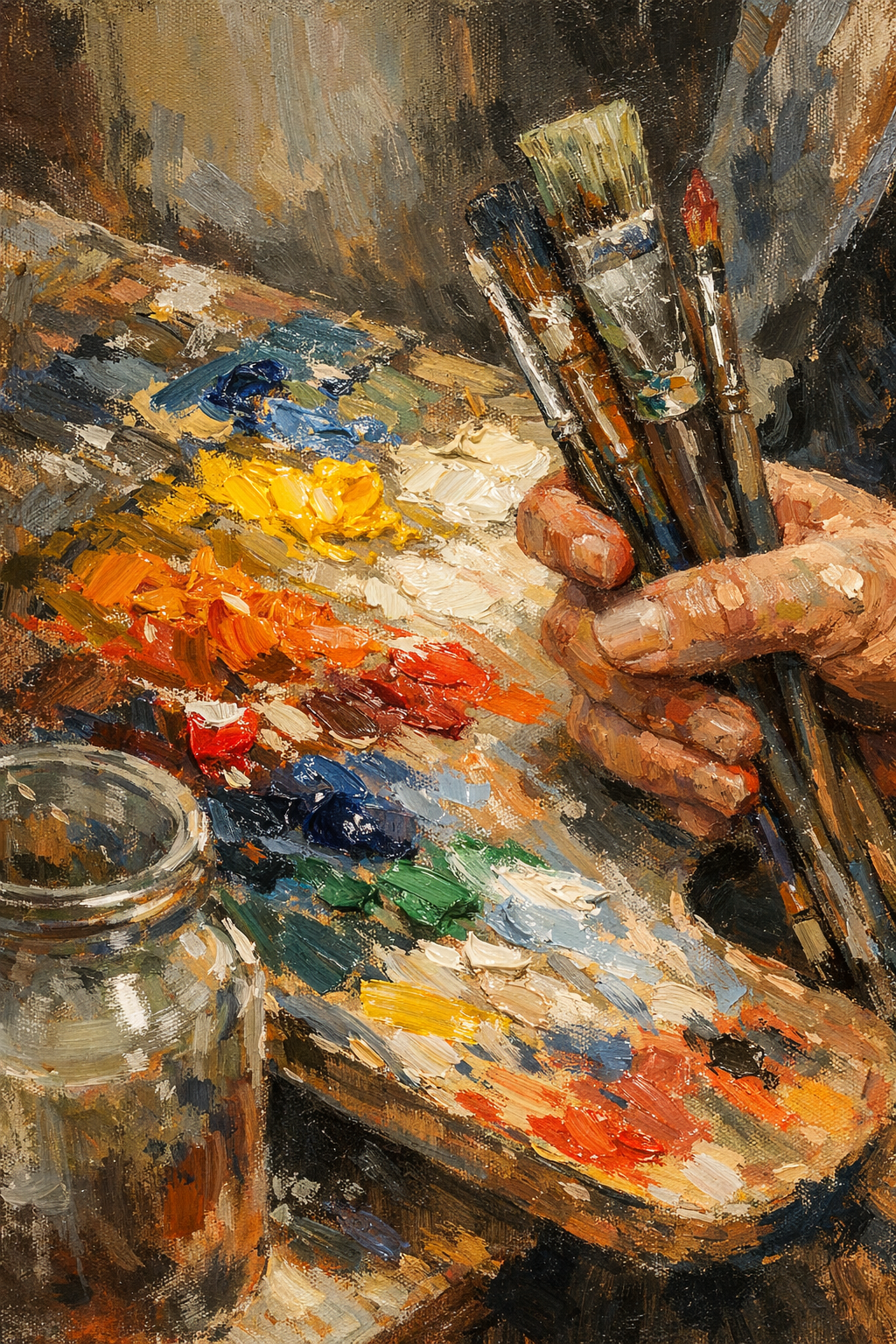
Birth of a Vision
Critique
1. Introduction This evocative oil painting focuses on the tools and process of artistic creation, depicting an artist窶冱 hand holding a cluster of brushes over a heavily loaded palette. The work employs a bold, impasto style that emphasizes the physical presence of the oil paint and the tactile nature of the craft. Through its tight composition and vibrant color usage, the piece serves as a meta-commentary on the act of painting itself, celebrating the raw materials from which art is born. 2. Description The central focus is a weathered, experienced hand grasping several paint-stained brushes of various sizes. Below the hand, a wooden palette is covered with thick mounds of vibrant pigment, including saturated yellows, oranges, deep reds, and cool blues and greens. To the left, a glass jar filled with used solvent or oil stands on a cluttered workbench, its surface smeared with traces of color. The background is a series of loose, gestural strokes that suggest a studio environment without providing specific detail. 3. Analysis The artist makes extensive use of the impasto technique, applying paint in thick, rhythmic layers that create a three-dimensional surface. This texture is particularly evident on the palette, where the individual peaks and valleys of the pigment suggest the spontaneous movements of the mixing process. The color palette is primary and energetic, creating a visual tension between the warm skin tones of the hand and the intense, unmixed colors of the paint. The lighting is strong and direct, casting sharp shadows that define the anatomical structure of the hand and the volume of the paint blobs. 4. Interpretation and Evaluation The painting functions as a powerful tribute to the physical and sensory aspects of the artistic profession. The choice to focus on the hand and the palette, rather than a finished work, directs attention to the labor, skill, and creative potential inherent in the process. The technical execution is highly effective, as the loose, energetic brushwork mirrors the subject matter, creating a sense of immediacy and creative urgency. This work demonstrates a deep understanding of the medium窶冱 expressive possibilities, using texture and color to convey the passion of the creator. 5. Conclusion While the subject of an artist窶冱 tools is a common motif, the work窶冱 emphasis on the materiality of paint gives it a distinct and compelling presence. The initial impression of a cluttered workspace evolves into a profound appreciation for the transformative power of the artist窶冱 hand and materials. Ultimately, the painting is a masterful celebration of the act of creation, successfully capturing the essence of the painterly tradition through its vibrant, tactile execution.
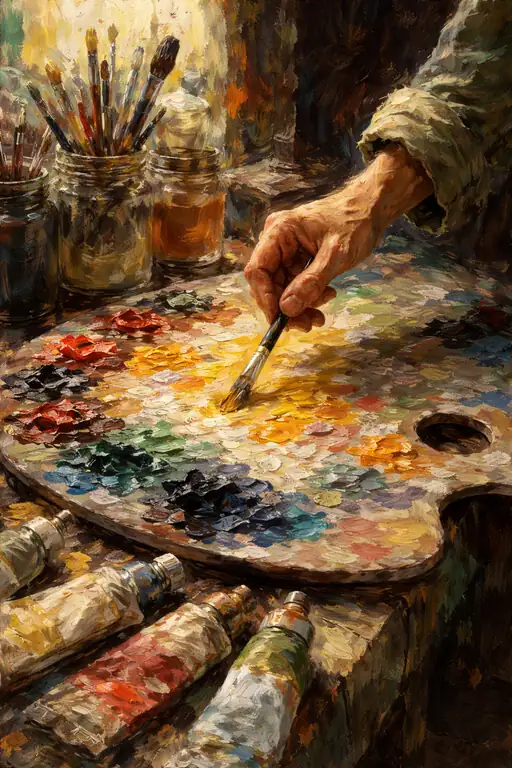 Colors Born from the Soul
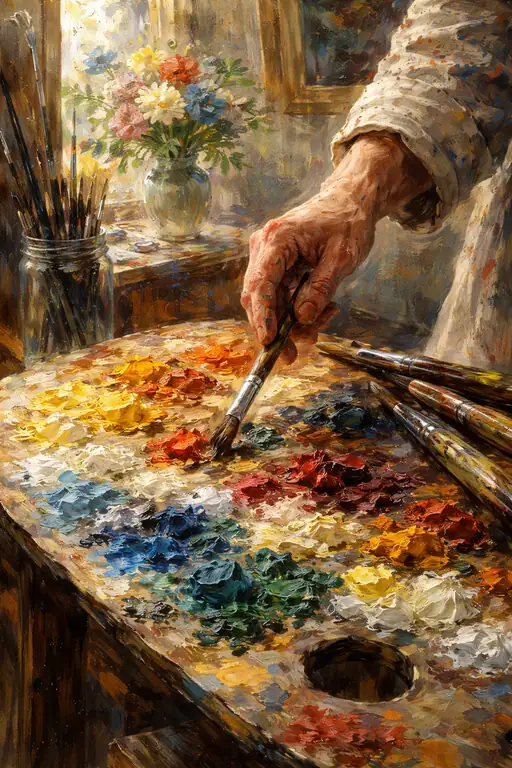 The Soul's Palette
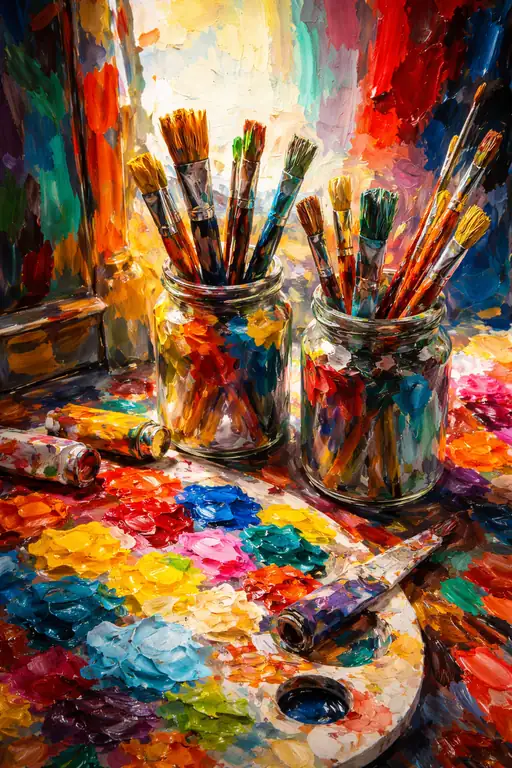 The Creator's Arsenal
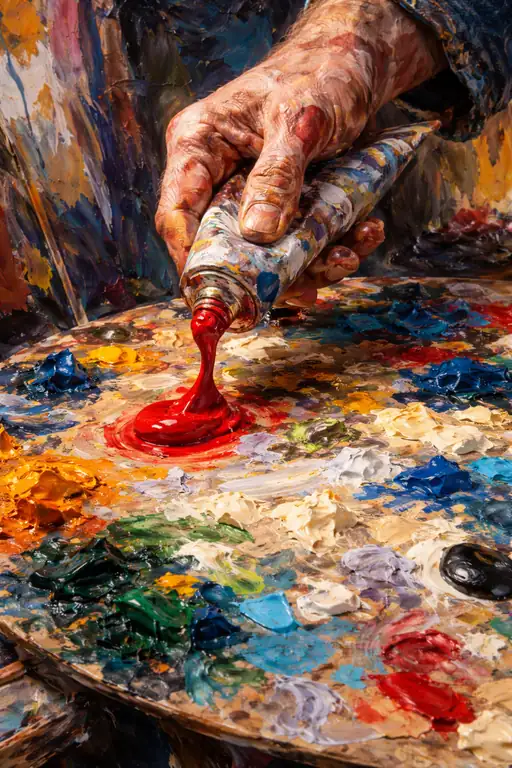 The Bleeding Palette of Creation
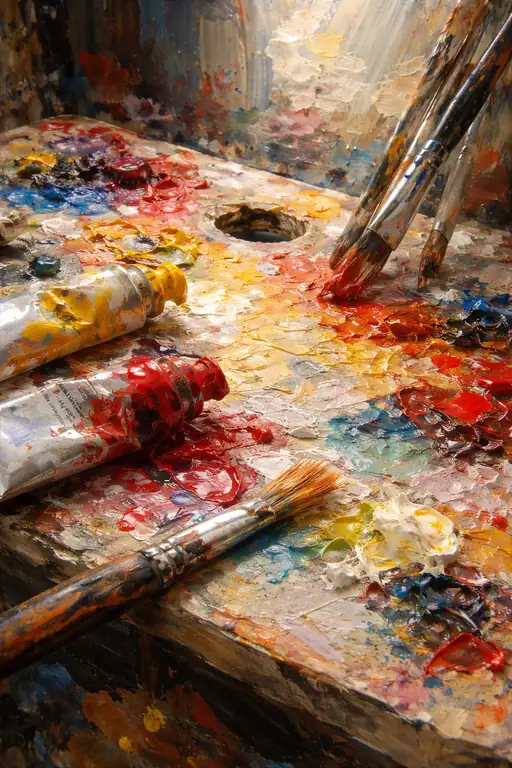 The Scholar's Reverie
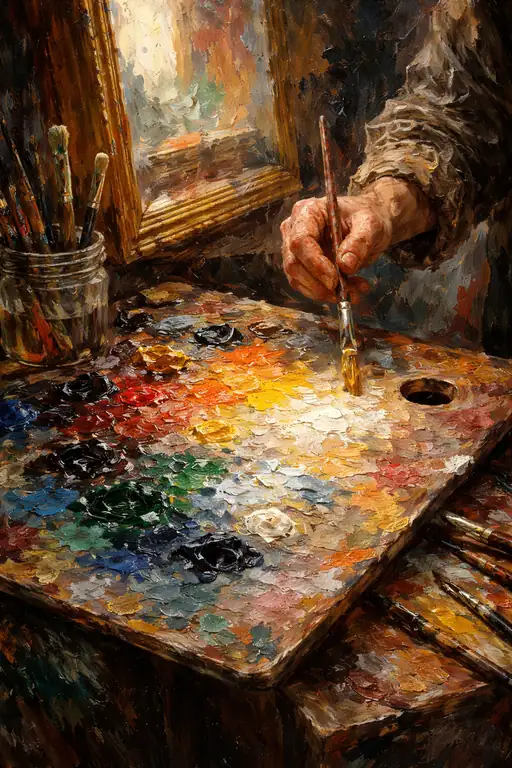 The Intense Genesis of Art
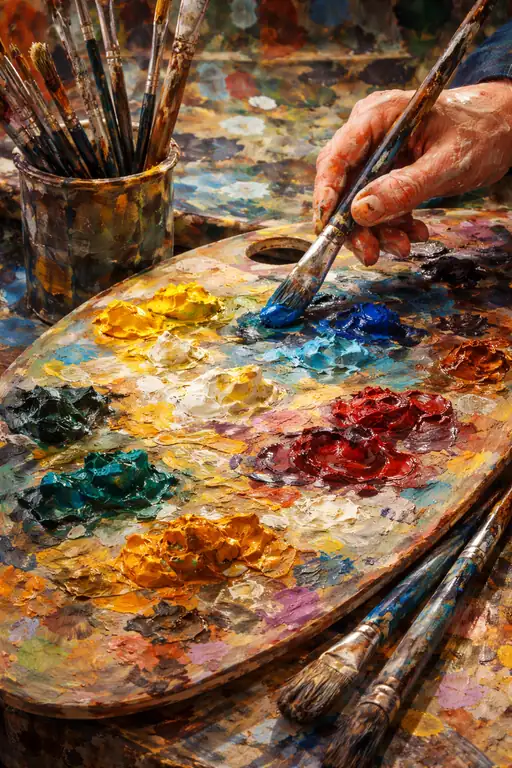 Where Colors Breathe
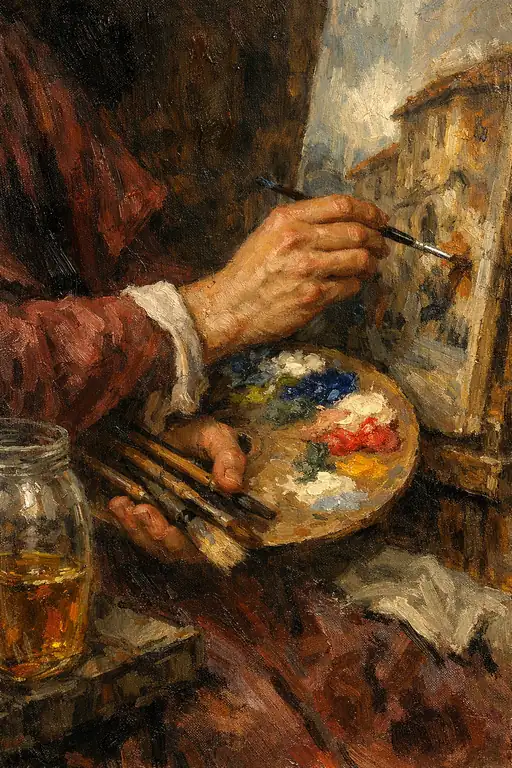 The Alchemy of Creation
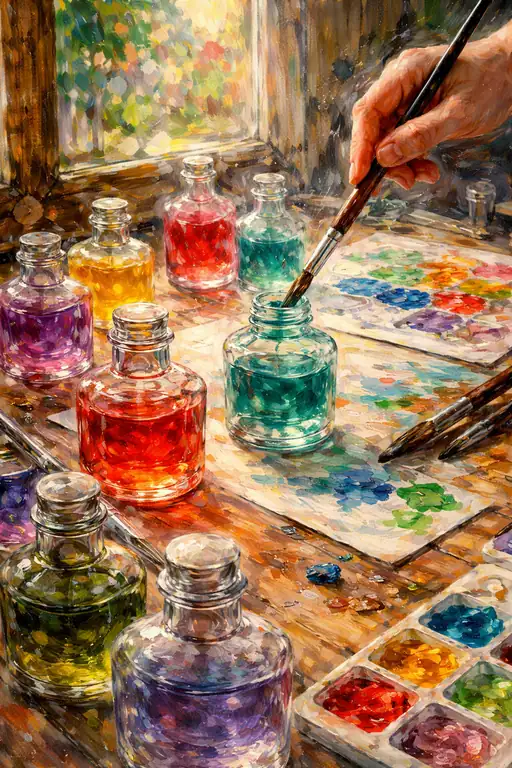 The Magic Flowing From My Fingertips
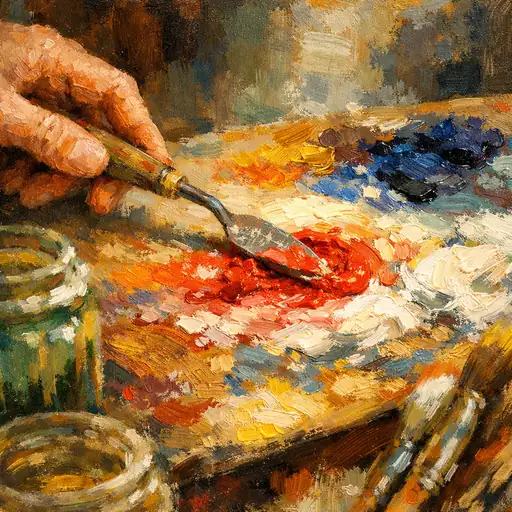 Birth of a Crimson Genesis