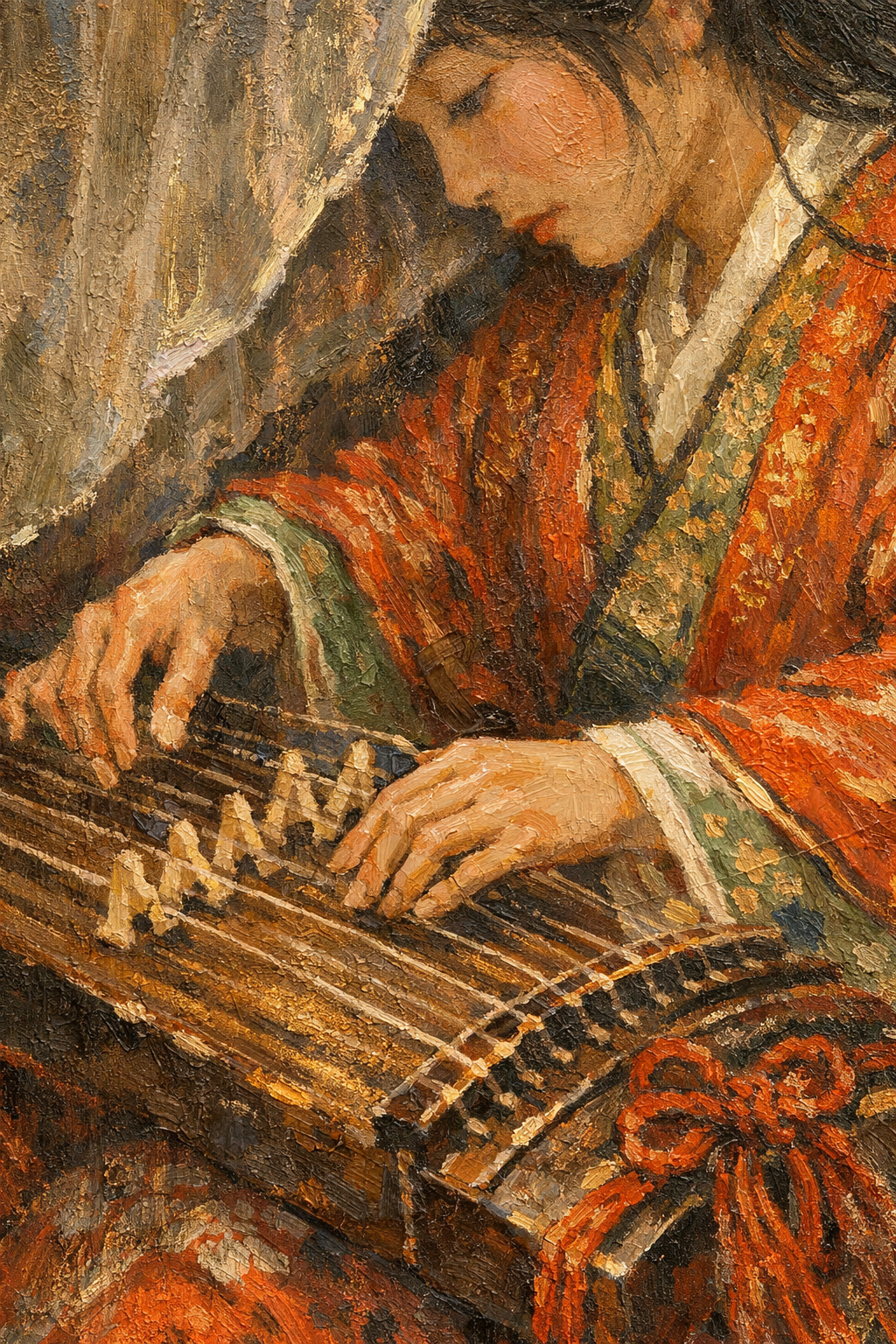
Echoes of the Crimson Strings
Critique
1. Introduction This oil painting depicts a serene moment of a young woman engaged in playing the koto, a traditional Japanese stringed instrument. The composition focuses on the intimate connection between the musician and her instrument, capturing a sense of focused tranquility. Through rich textures and a warm color palette, the work evokes a timeless atmosphere of cultural refinement and artistic dedication. 2. Description The woman is shown in a three-quarter view from above, her head bowed slightly as she concentrates on the strings. She wears an elaborate kimono decorated with intricate patterns in shades of deep red, orange, and green. Her hands are positioned gracefully over the koto, with the white bridges (ji) clearly visible against the dark wood of the instrument. A large red decorative cord is tied at the front end of the koto, adding a vibrant touch to the lower right corner. 3. Analysis The artist utilizes a thick, expressive application of paint, creating a tactile surface that enhances the material presence of both the kimono and the instrument. The lighting is soft and directional, illuminating the woman's face and hands while casting gentle shadows that define the form of the koto. The color harmony is dominated by warm tones, which are balanced by the cool, muted background, directing the viewer's attention to the central performance. 4. Interpretation and Evaluation This piece serves as a tribute to the elegance of traditional Japanese music and the discipline required to master it. The diagonal arrangement of the koto creates a dynamic sense of depth and movement within an otherwise still scene. The original technique is particularly successful in conveying the delicate tension of the strings and the weight of the embroidered fabric. The painting demonstrates a high degree of skill in balancing complex patterns with broader structural forms. 5. Conclusion A first glance reveals a beautiful portrait, but further study reveals a sophisticated study of rhythm and texture. The work successfully captures the quiet intensity of a musical performance without the need for theatrical gestures. The final assessment is that the painting is a masterful exploration of cultural identity and the universal beauty of artistic expression.
Same Subcategory
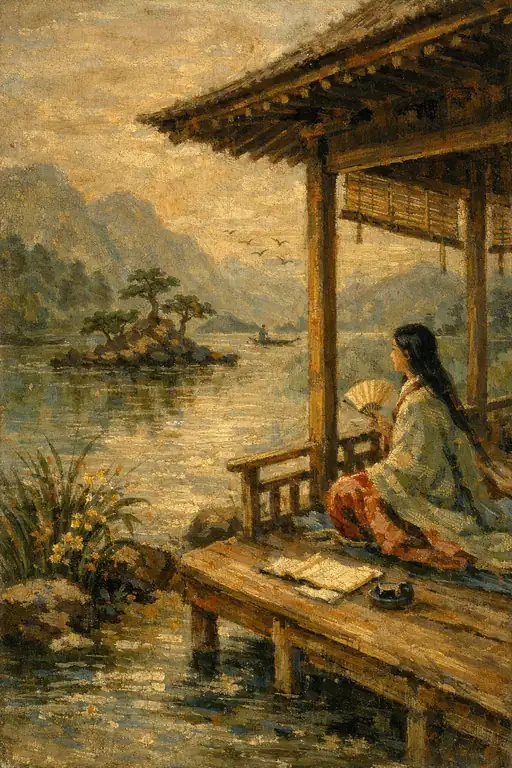 Serenity at Sunset
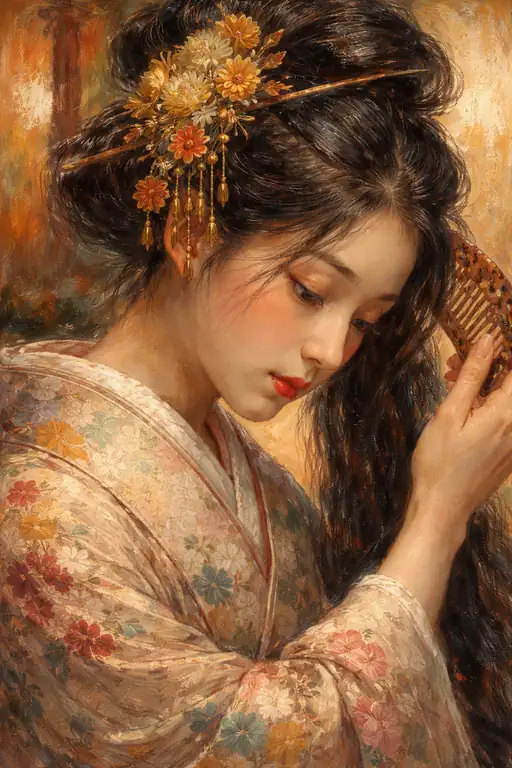 The Golden Threads of Introspection
Similar Artworks
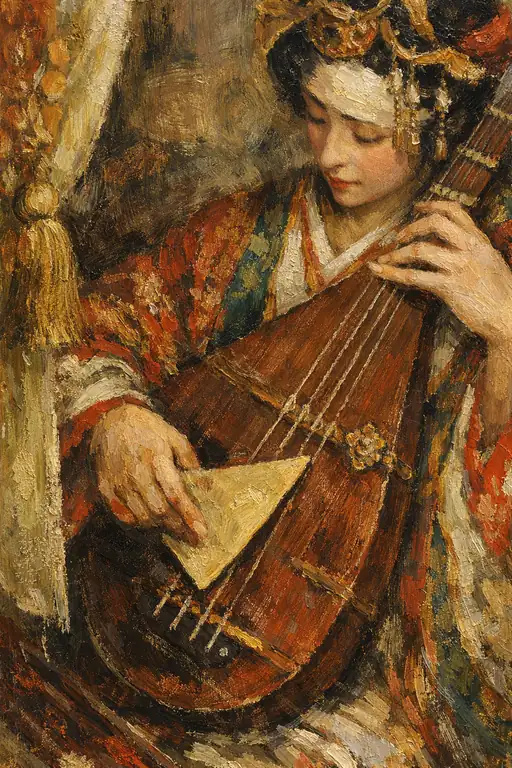 Echoes of the Golden Strings
 Echoes of Antiquity in Jade and Red
 Veiled Elegance Beyond the Fan
 Wisteria Blooms in Golden Silence
 The Elegance of Tradition
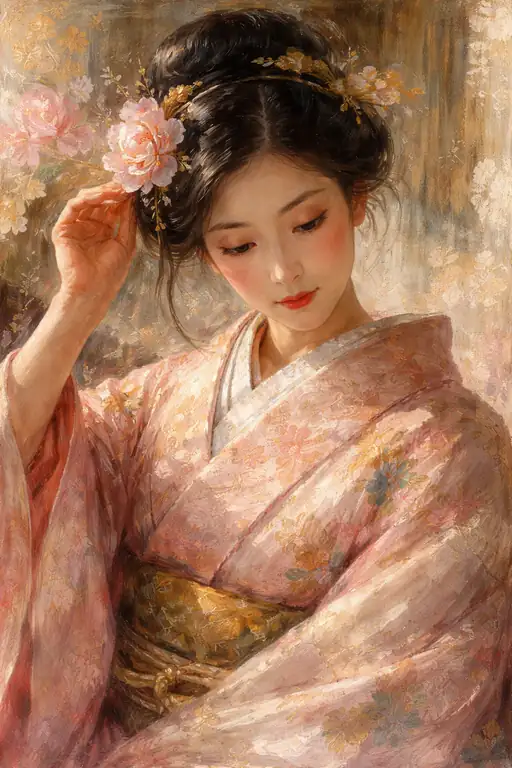 Echoes of Timeless Azure Grace
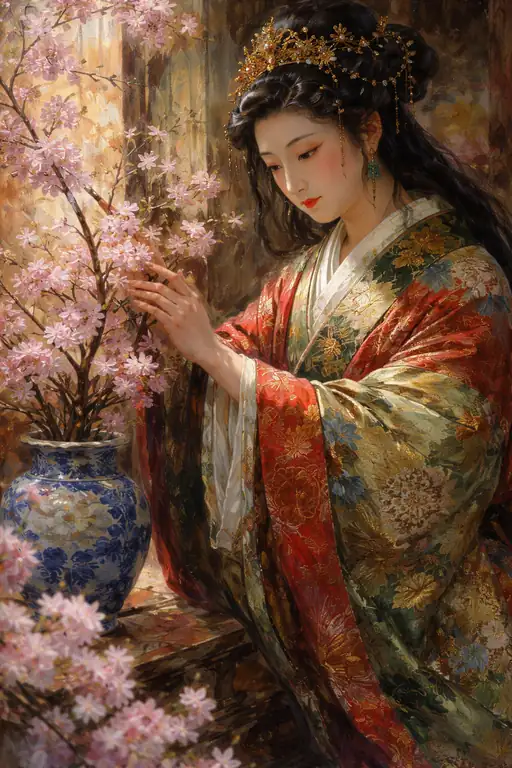 Contemplation Beneath the Spring Petals
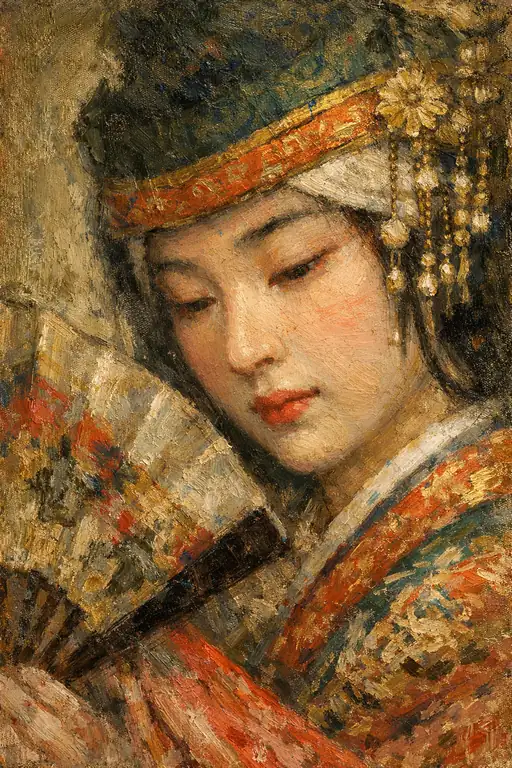 A Graceful Gaze Through Time
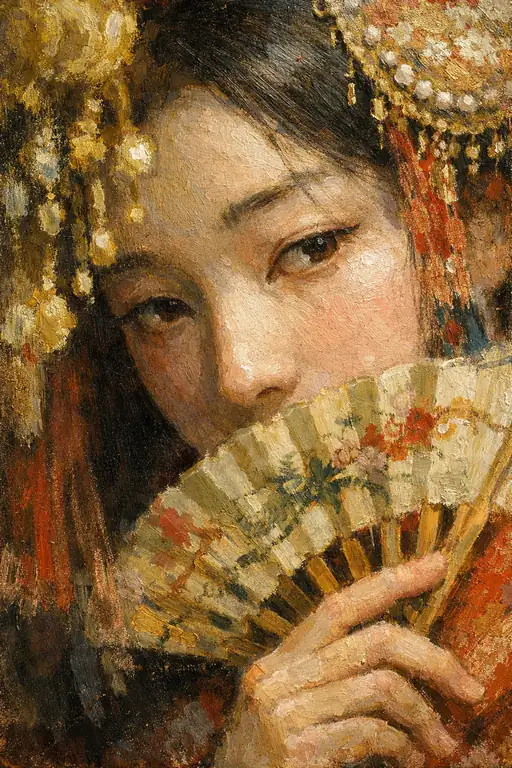 Secrets Concealed Behind the Fan
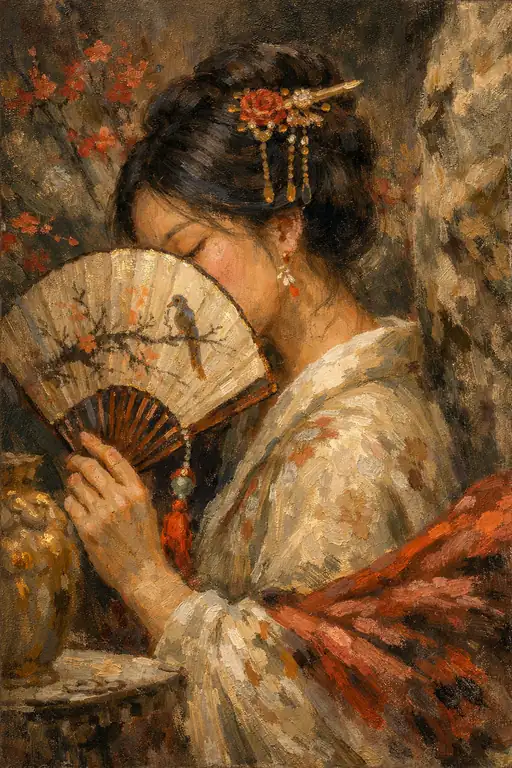 Elegance Behind the Folding Fan