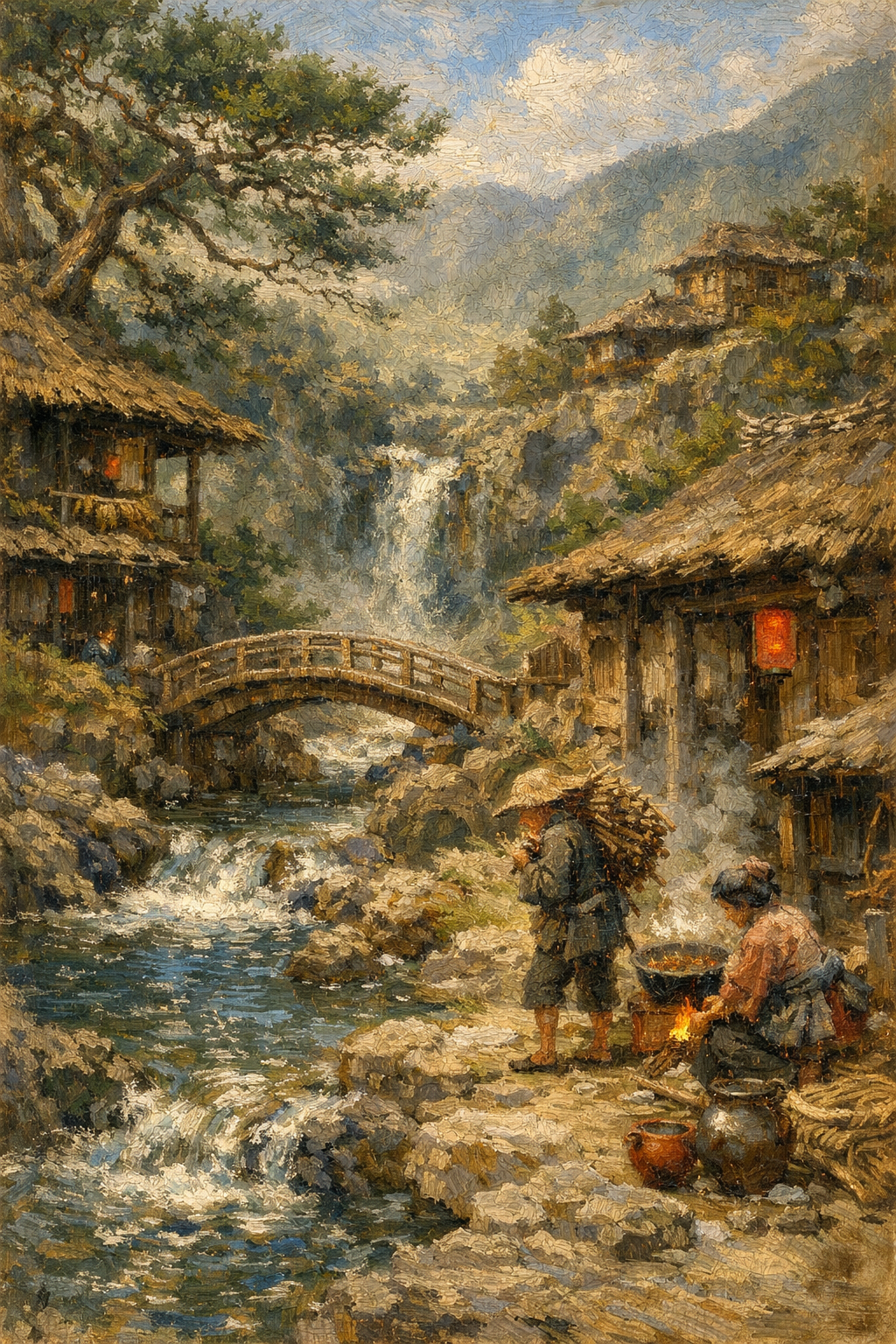
Warmth of the Evening Village
Critique
1. Introduction This vertical composition presents a powerful and evocative scene of a traditional mountain village, centered around a rushing river and a majestic waterfall. The painting captures the rugged beauty of a remote settlement where human life is deeply intertwined with the formidable forces of nature. Through a masterfully textured application of paint, the work establishes a sense of historical weight and enduring resilience. It invites the viewer to reflect on the quiet strength and communal spirit required to thrive in such a challenging yet breathtaking environment. 2. Description In the foreground, a man carrying a heavy bundle of wood stands on the rocky riverbank, while a woman nearby tends to a small fire outside a thatched-roof hut. The midground features a sturdy wooden arch bridge spanning a turbulent part of the river, which is fed by a cascading waterfall in the background. Traditional houses with weathered straw roofs cling to the steep slopes on either side of the waterway, one of which is adorned with a glowing red lantern. Above, the misty peaks of the mountains rise toward a pale blue sky filled with soft, textured clouds. 3. Analysis The artist utilizes a vigorous impasto technique, where thick, rhythmic brushstrokes create a palpable sense of the rugged terrain and the churning water. This tactile approach is particularly effective in rendering the weathered surfaces of the huts and the raw, crystalline quality of the waterfall. The color palette is dominated by warm earth tones窶俳chre, sienna, and deep browns窶背hich are balanced by the cool grays and blues of the sky and the water. The composition effectively leads the eye from the intimate details of the villagers' activities to the expansive power of the landscape beyond. 4. Interpretation and Evaluation The painting can be interpreted as a poignant celebration of the human spirit's ability to harmonize with a demanding natural world. The presence of the fire and the red lantern suggests a warmth and vitality that persists despite the isolation and physical hardship of mountain life. Technically, the work is masterful in its ability to manage a wide range of textures while maintaining a unified atmospheric depth. The artist's focus on the "soul" of the village rather than fine detail allows for a visceral emotional connection that transcends simple representation. 5. Conclusion Through its masterful handling of light, texture, and composition, the painting succeeds in creating a profoundly moving study of a traditional community. What initially appears as a scene of rugged isolation gradually reveals itself as a carefully balanced narrative of survival and quiet dignity. The visual journey from the domestic fire to the distant waterfall provides a satisfying sense of scale and interconnectedness. Ultimately, the work stands as a timeless testament to the enduring beauty and resilient spirit of those who live in the heart of the mountains.
Same Subcategory
Similar Artworks
 Ascent to the Autumn Skies
 Nostalgic Slumber of the Snowy Hamlet
 Slumbering Village: A Winter Tale in the Mountains
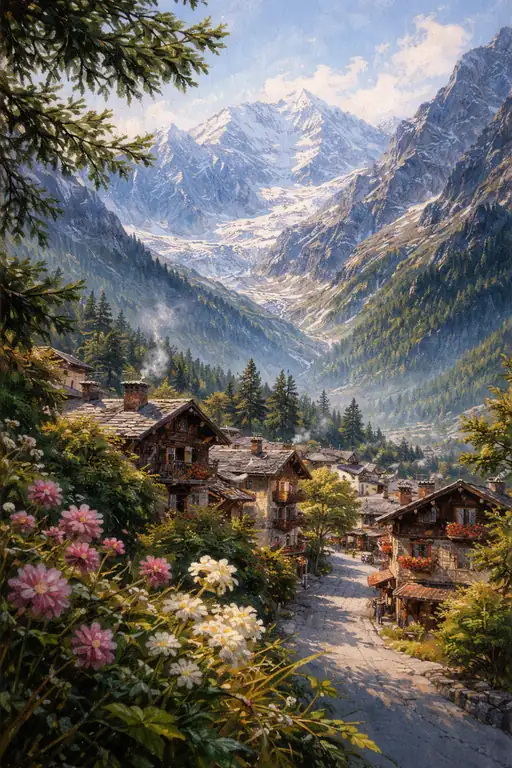 Crisp Echoes of the Alpine Sanctuary
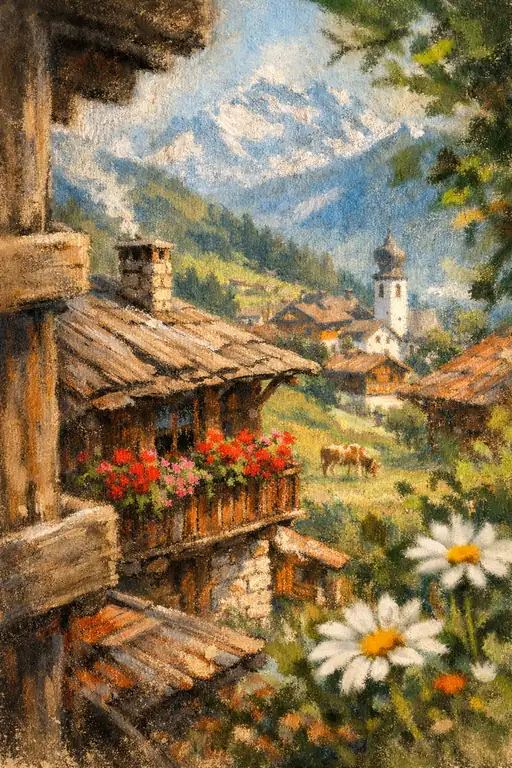 Alpine Heartbeat Amidst the Peaks
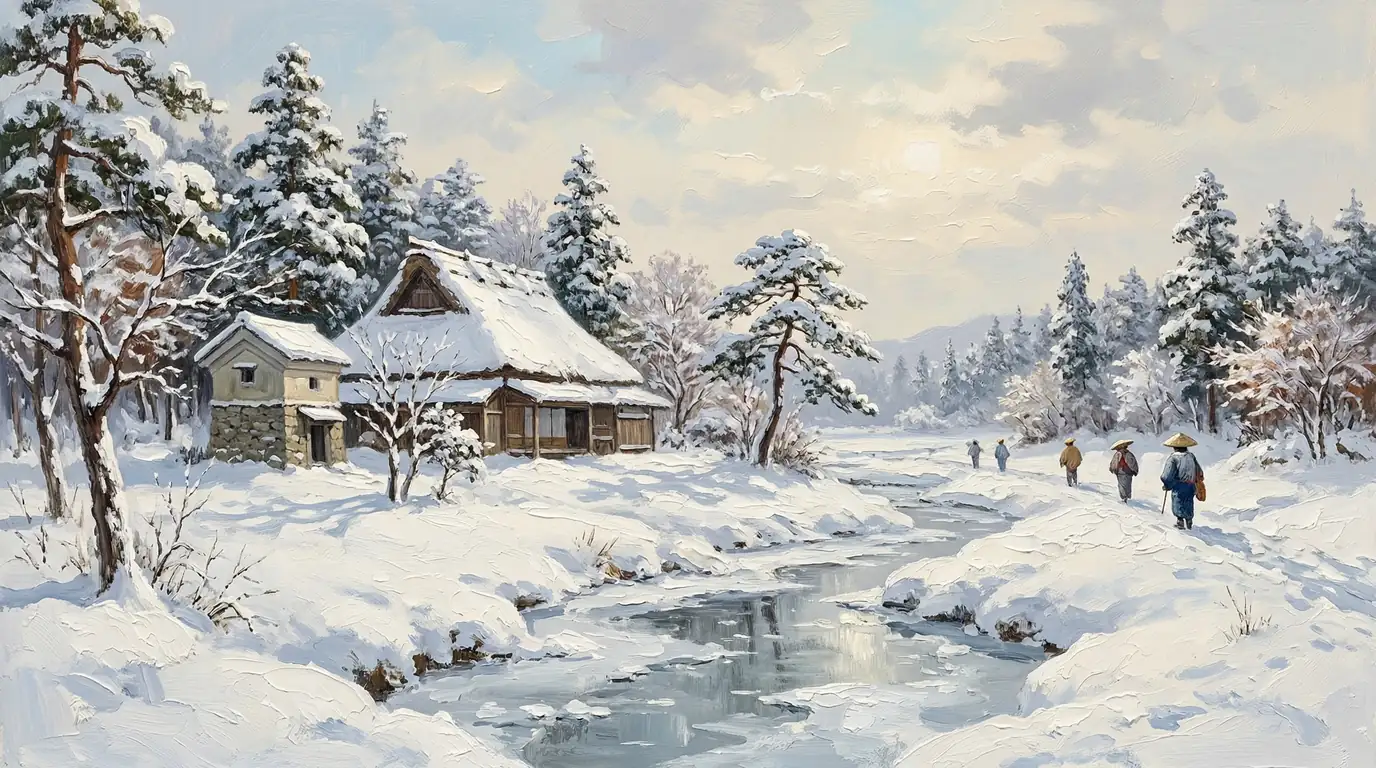 Slumber Beneath the Snowfall
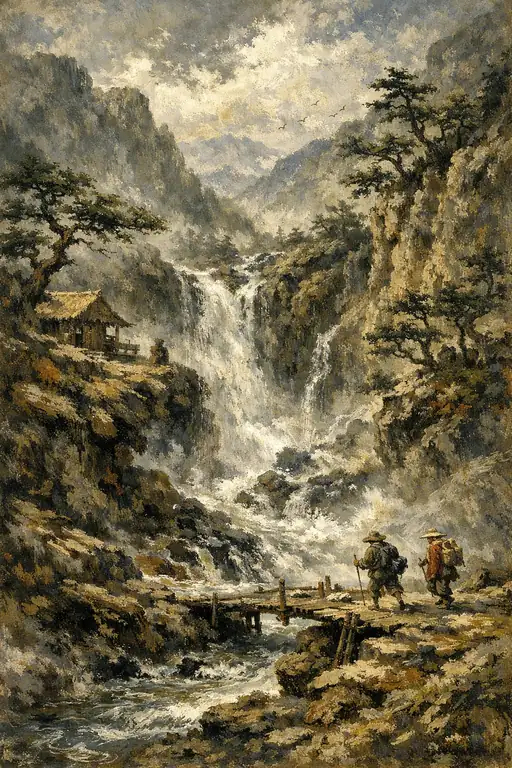 Majesty of the Cascade
 The Ascent of Sunlit Stone
 Crimson Silence and the Glowing Mirror
 Where the River Meets the Thatch