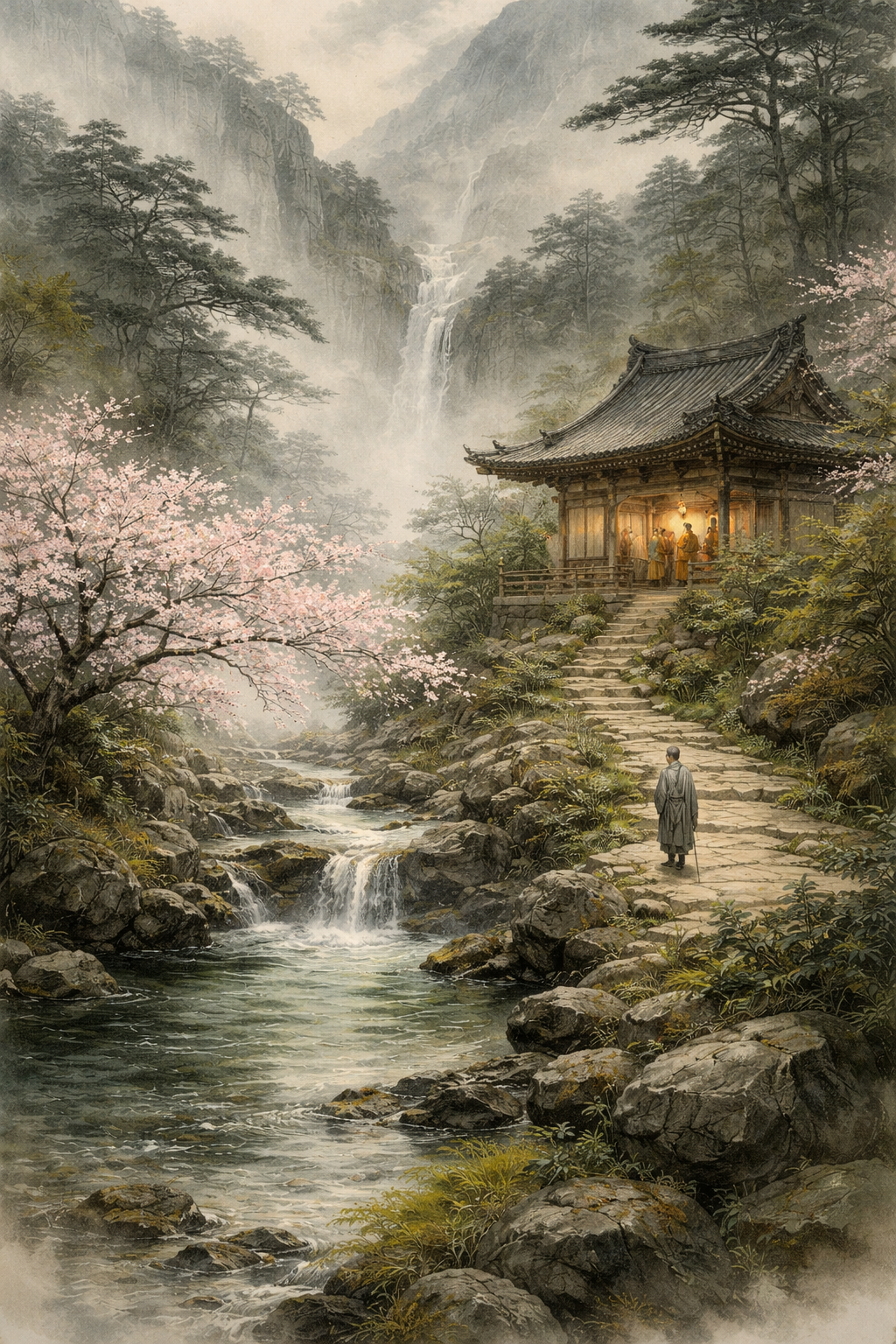
A Lonely Path to the Clouds
Critique
1. Introduction This landscape painting presents a harmonious scene where human architecture and natural elements coexist in a serene mountain setting. The composition skillfully leads the viewer窶冱 eye through a vertical arrangement of cascading water, lush vegetation, and a traditional pavilion. The presence of blooming cherry blossoms suggests a springtime theme, imbuing the work with a sense of renewal and ephemeral beauty characteristic of classical East Asian aesthetics. 2. Description In the background, a majestic waterfall descends from misty cliffs, partially obscured by low-hanging clouds that soften the rugged mountain features. The right midground features a multi-tiered wooden structure with an illuminated interior where several figures are gathered, casting a warm glow against the cool shadows. A solitary traveler, dressed in traditional gray robes, walks along a meticulously rendered stone path that winds beside a rushing stream filled with textured rocks and smaller rapids. 3. Analysis The artist employs a sophisticated palette of muted earth tones, complemented by the delicate pink of the cherry blossoms and the vibrant green of the foliage. Depth is achieved through atmospheric perspective, where the background elements are rendered with lighter, hazier brushwork compared to the sharp details of the foreground rocks and the building. The diagonal lines of the stream and the stone path create a dynamic flow that balances the static verticality of the waterfall and the distant peaks. 4. Interpretation and Evaluation The work reflects a deep reverence for the sublime power of nature while highlighting the quietude of monastic or scholarly life. The contrast between the vast, misty landscape and the intimate, lit interior of the pavilion suggests a narrative of refuge and intellectual pursuit. The technical execution is exceptional, particularly in the rendering of water textures and the precise architectural details, demonstrating a high level of mastery in traditional ink and color techniques. 5. Conclusion The painting successfully captures a moment of tranquil contemplation, inviting the viewer to join the traveler on a journey into the heart of the mountains. Through its balanced composition and evocative use of light, the work transcends mere representation to offer a spiritual experience. My initial perception of a simple scenic view evolved into a profound appreciation for the intricate relationship between the human spirit and the natural world.
Same Subcategory
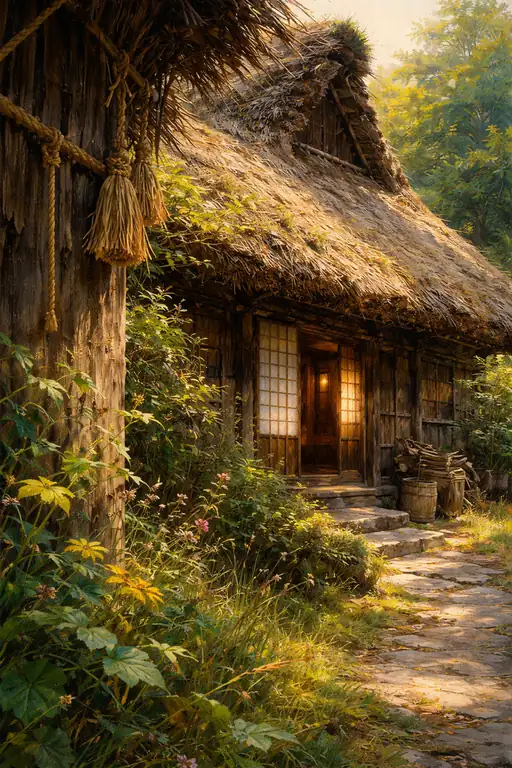 The Warmth of the Thatched Home
Similar Artworks
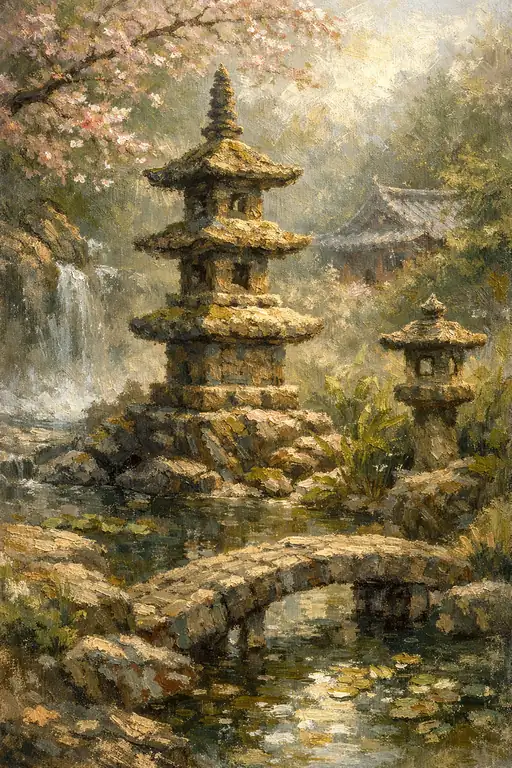 Zen in the Cherry Blossom Garden
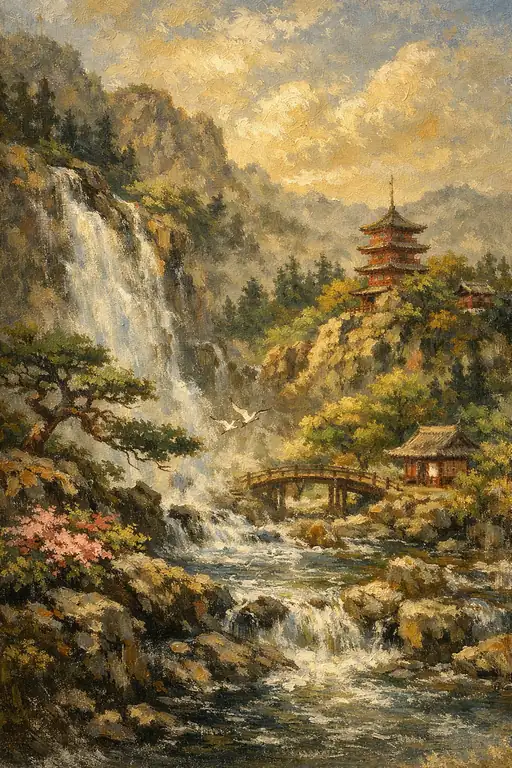 Golden Light Upon the Sacred Pagoda
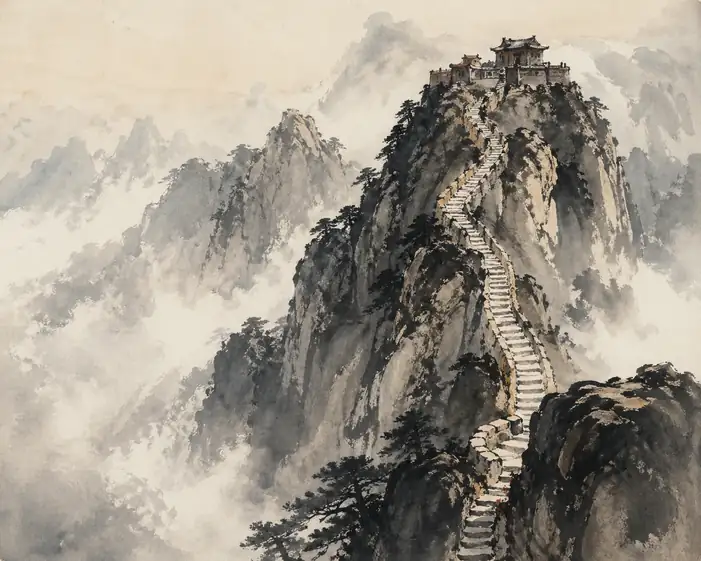 Stairway to the Sacred Sky
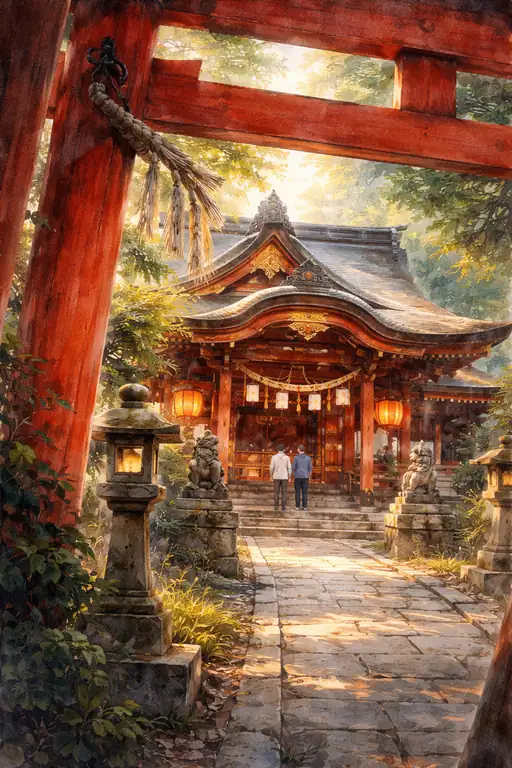 Vermilion Gateway to the Sacred
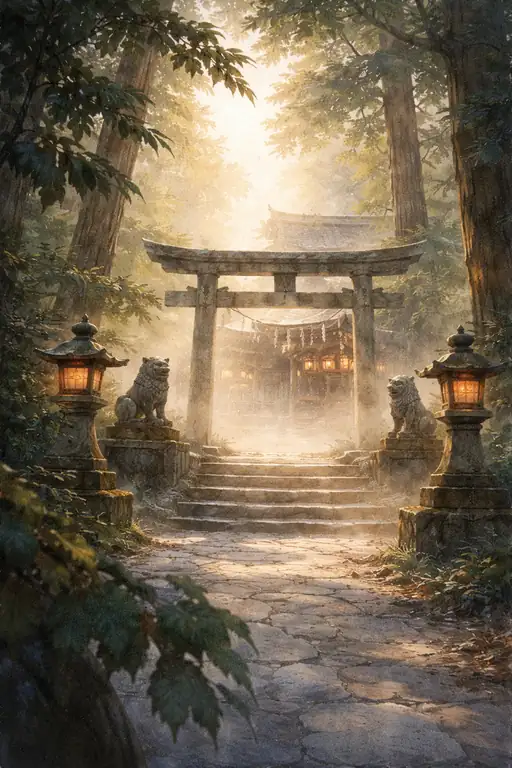 Silent Guardians of the Ethereal Dawn
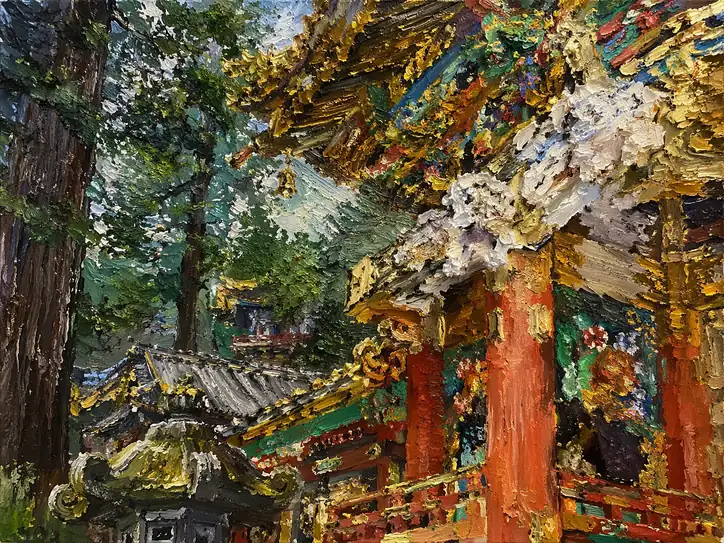 The Gilded Heart of the Forest
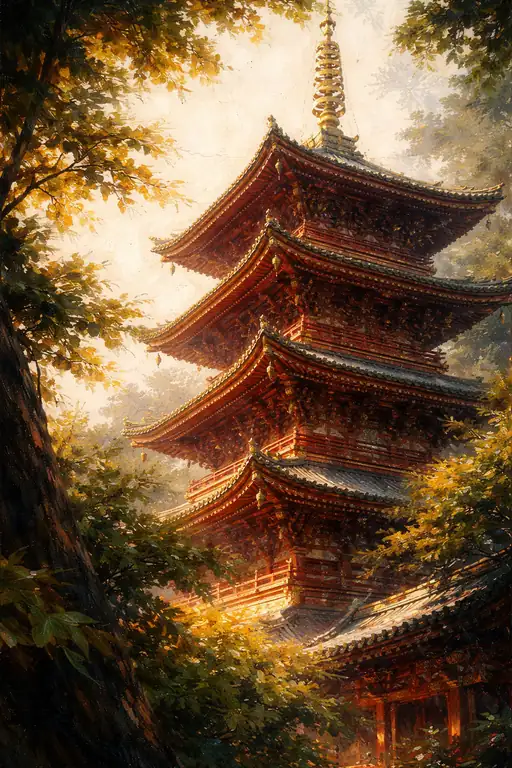 Radiance of the Autumn Pagoda
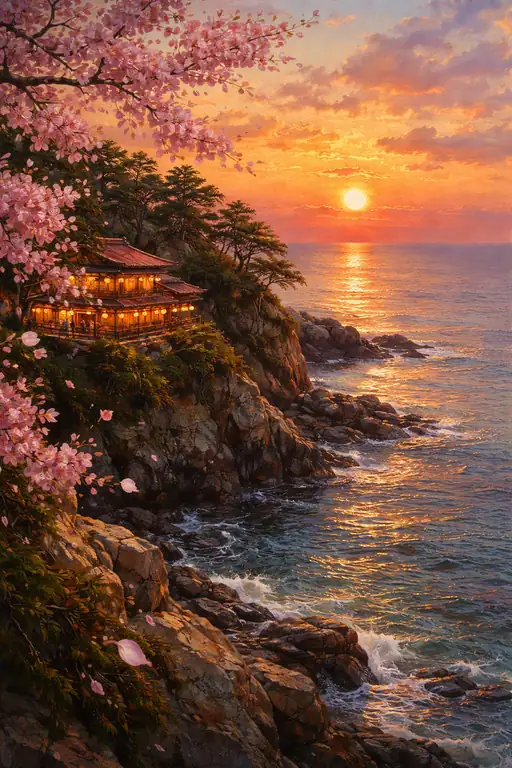 Golden Hour at the Cliff's Edge
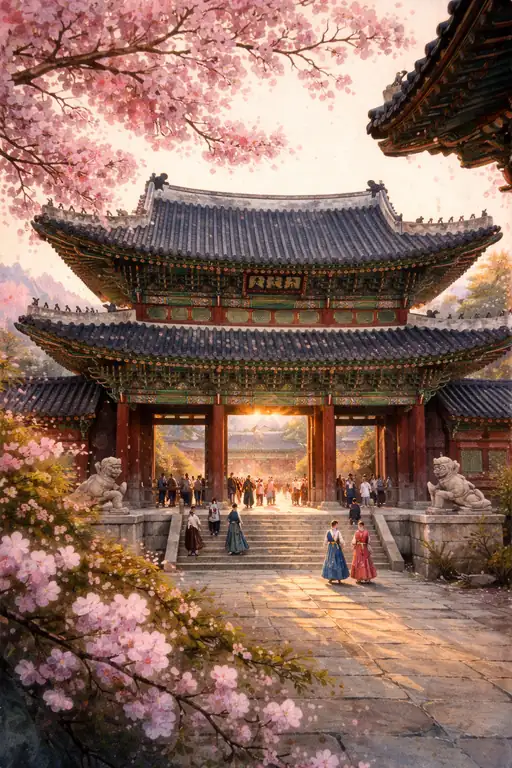 Spring Steps at the Ancient Gate
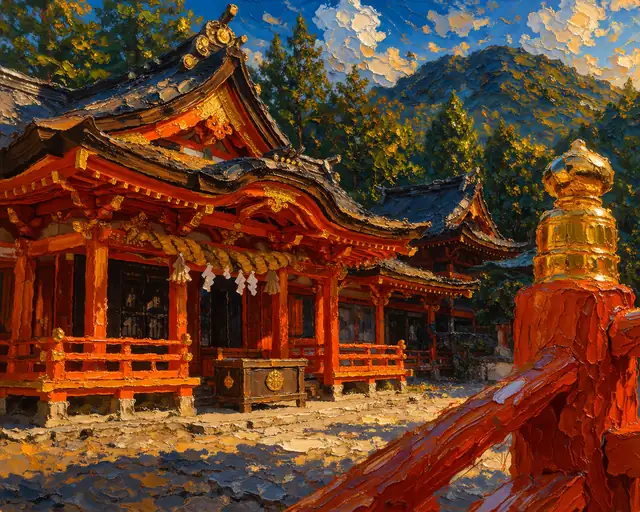 Vermilion Splendor in the Sacred Woods