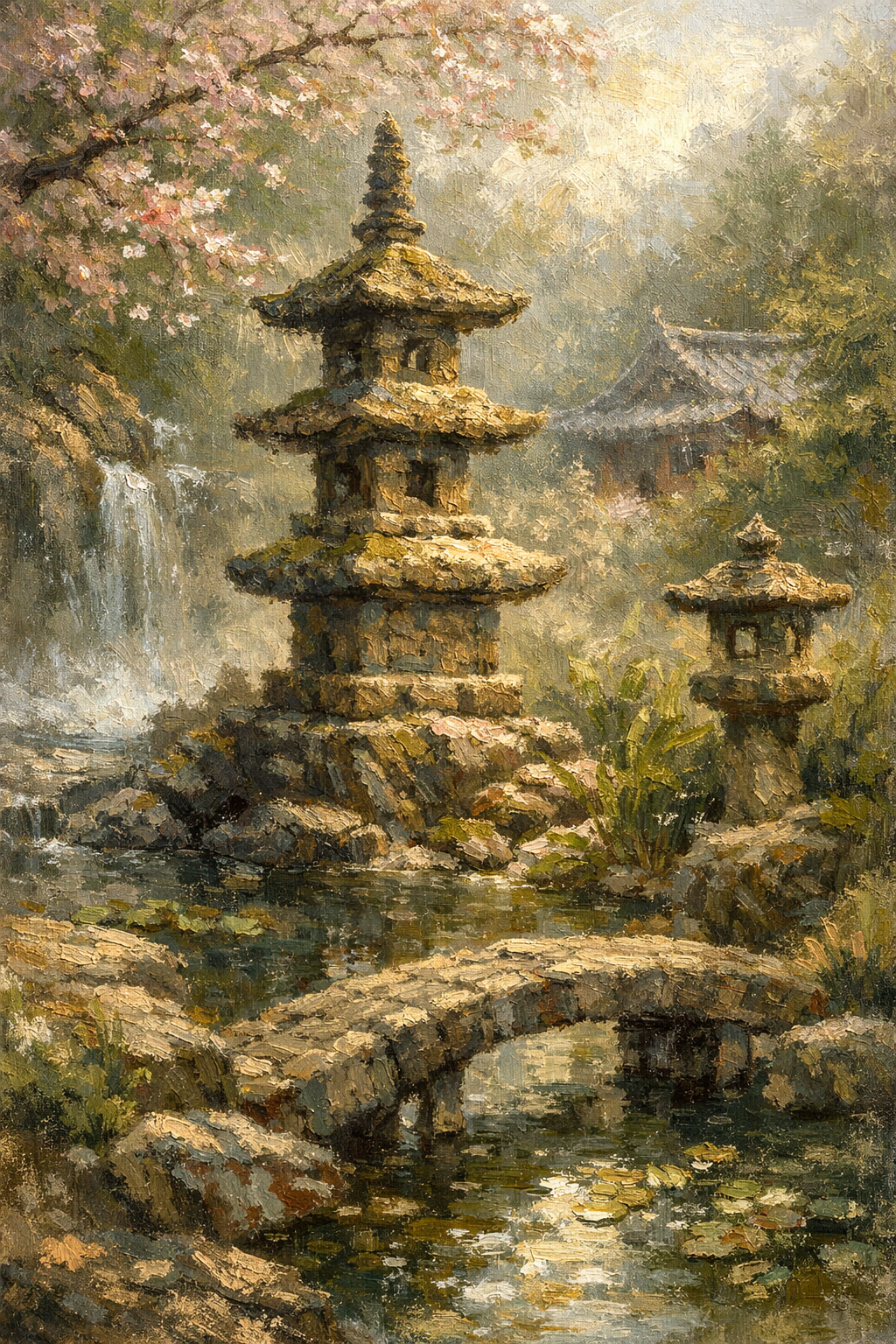
Zen in the Cherry Blossom Garden
Critique
1. Introduction The vertical landscape painting presents a serene scene within a traditional Japanese garden, centered on a multi-tiered stone pagoda. The composition captures the essence of a tranquil outdoor space where architectural elements and natural beauty coexist in perfect harmony. This work serves as an exploration of the spiritual atmosphere and the enduring aesthetic of classical East Asian garden design. 2. Description The central focus is a weathered stone pagoda standing firmly amidst lush greenery, with a stone lantern positioned to its right. In the foreground, a small arched stone bridge spans a calm pond filled with lily pads, while a gentle waterfall cascades in the background on the left. Soft pink cherry blossoms frame the top-left corner, adding a delicate touch to the scene as bright sunlight filters through the misty air. 3. Analysis The artist employs a vigorous impasto technique, using thick, rhythmic brushstrokes to define the rough texture of the stones and the softness of the foliage. The color palette is dominated by warm ochres, muted greens, and subtle pinks, creating a unified and radiant atmosphere. Light is rendered as a palpable presence, with sparkling highlights on the water and the stone surfaces that suggest a hazy, sun-drenched day. 4. Interpretation and Evaluation The painting evokes the philosophical concept of "wabi-sabi," finding profound beauty in the aged and the natural. The technical decision to prioritize texture over fine detail allows the viewer to feel the physical presence of the garden rather than merely observing its forms. It can be evaluated as a masterful study of light and material, effectively capturing the stillness and meditative quality of a zen-like environment. 5. Conclusion A primary encounter with the work offers a sense of immediate visual richness, but sustained viewing reveals a deeper layer of atmospheric complexity. The painting ultimately transforms the physical elements of the garden into a unified emotional experience. The deliberate use of heavy impasto ensures that the stone structures feel anchored in time, making the landscape both tactile and transcendent for the observer.
Same Subcategory
Similar Artworks
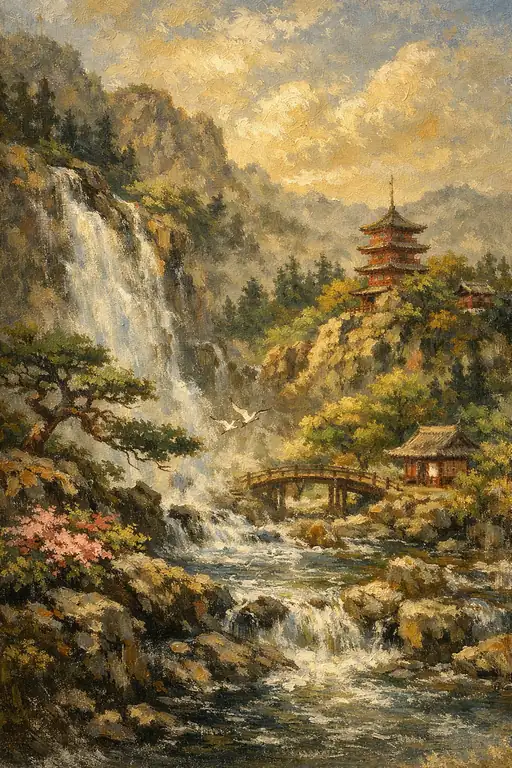 Golden Light Upon the Sacred Pagoda
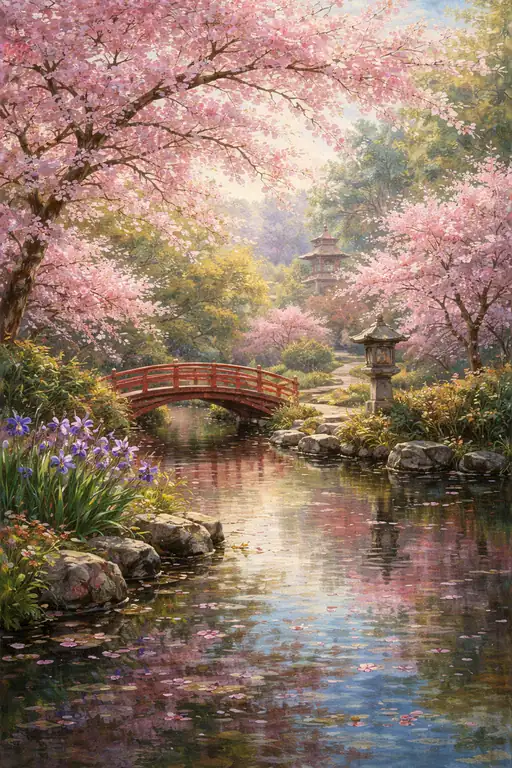 Tranquility in the Zen Garden
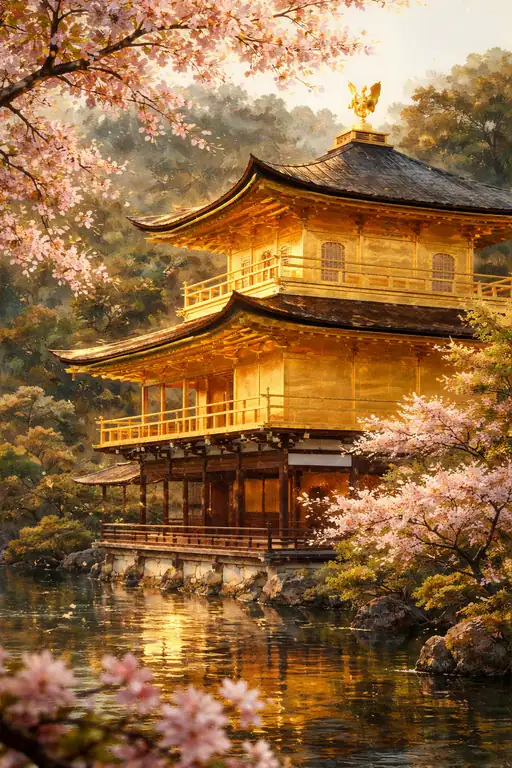 Spring's Whisper on the Golden Water
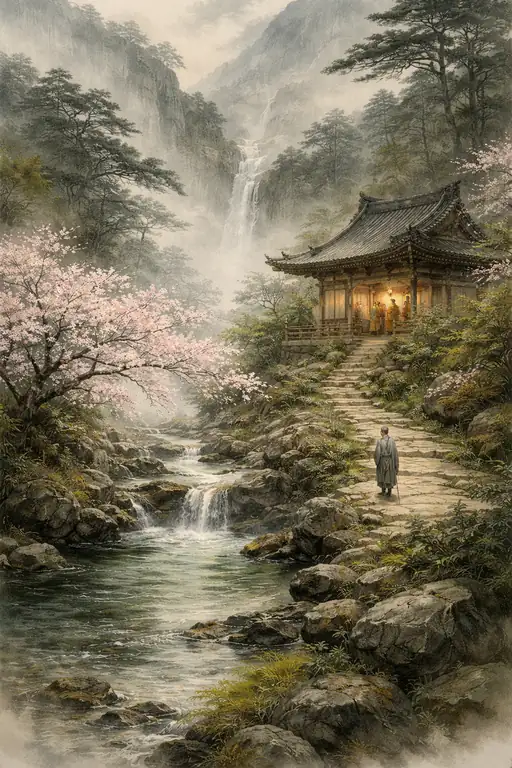 A Lonely Path to the Clouds
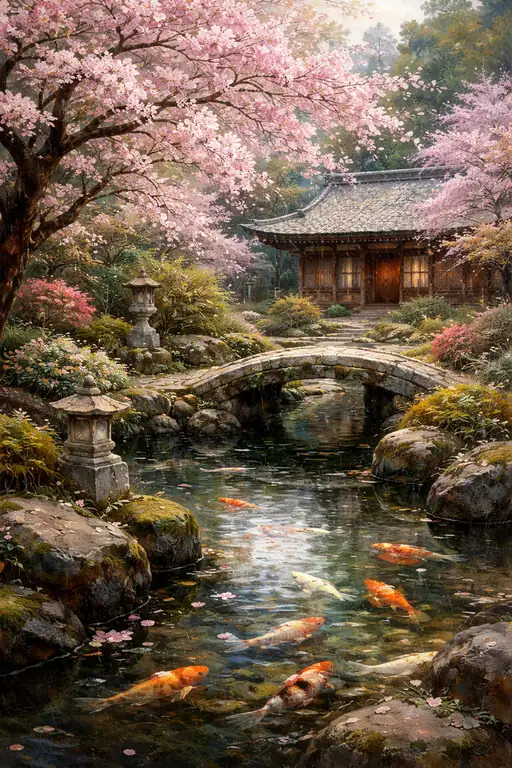 Reflections in the Koi Pond
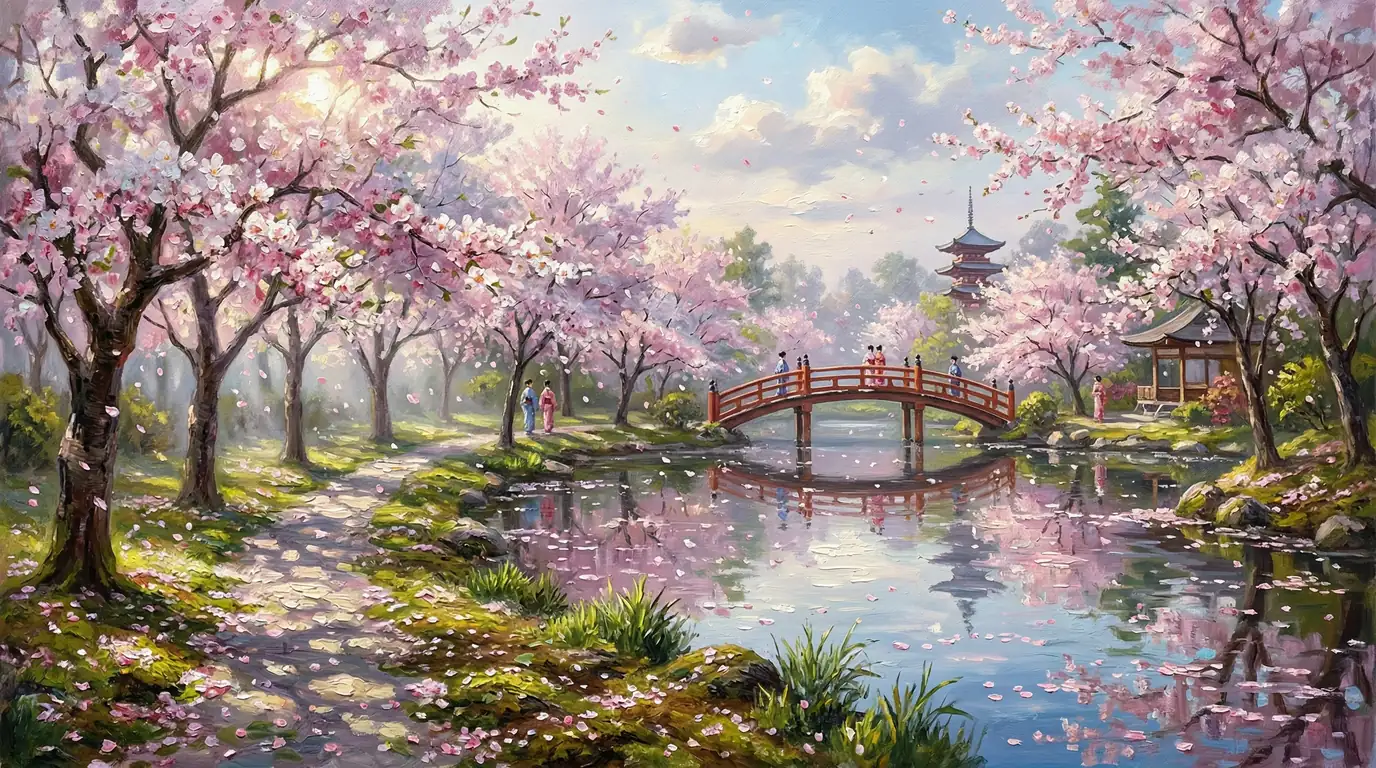 Spring's Fleeting Embrace
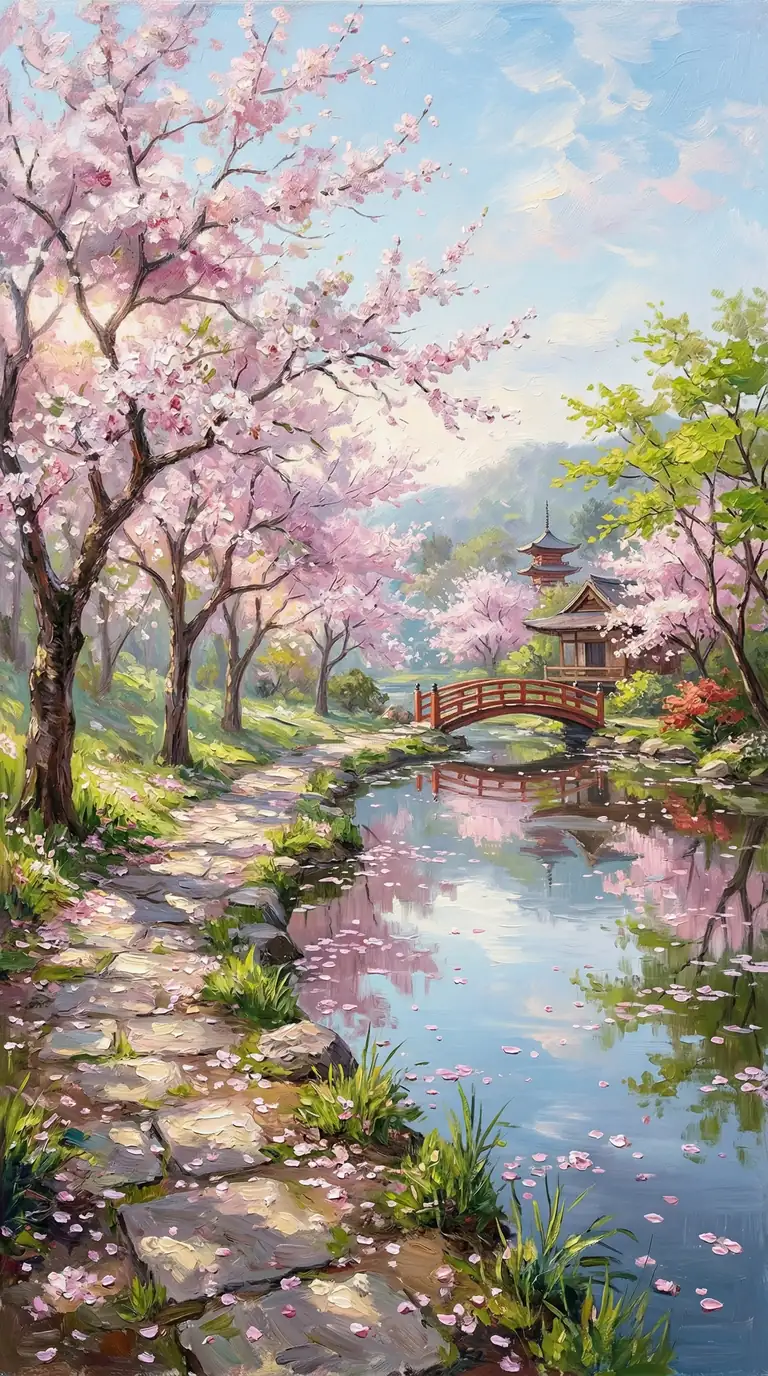 Ethereal Bloom: A Spring Daydream
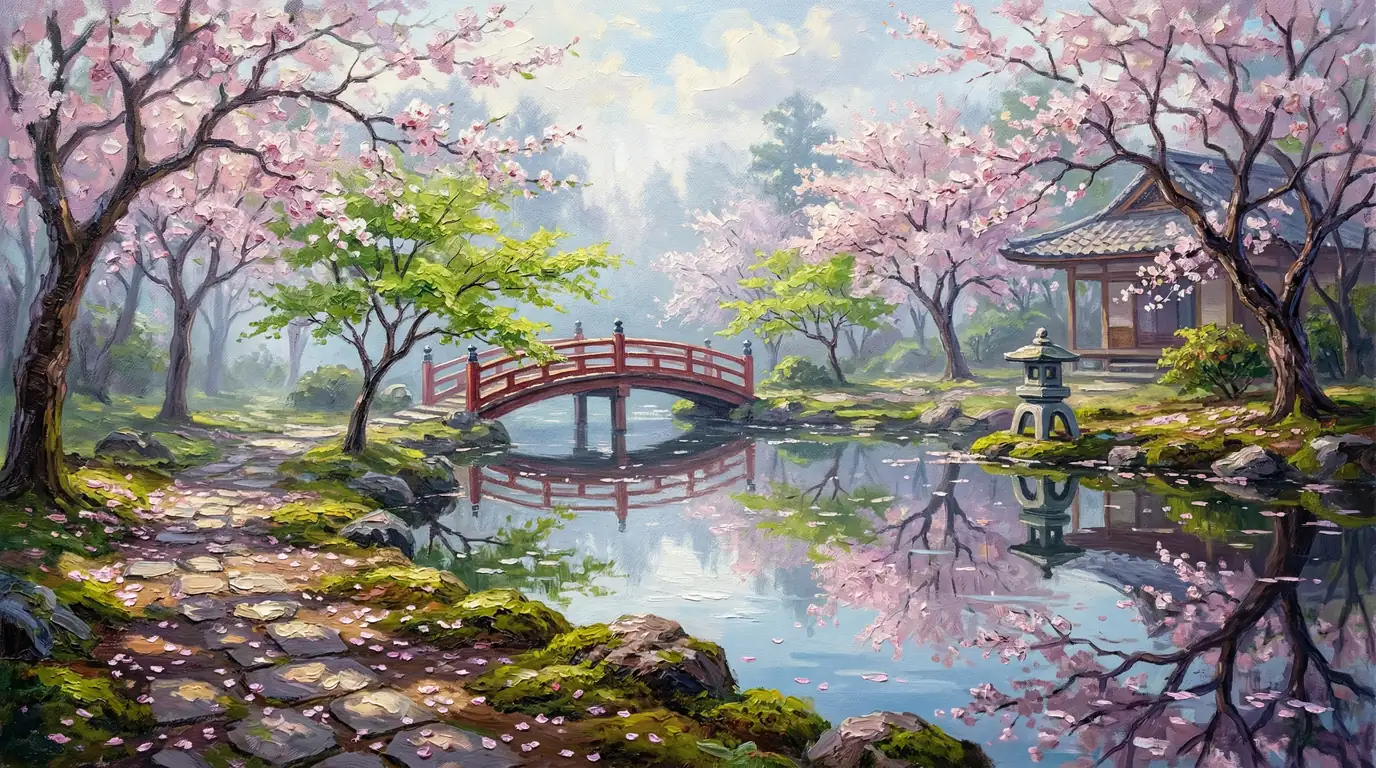 Spring Awakening at the Arched Bridge
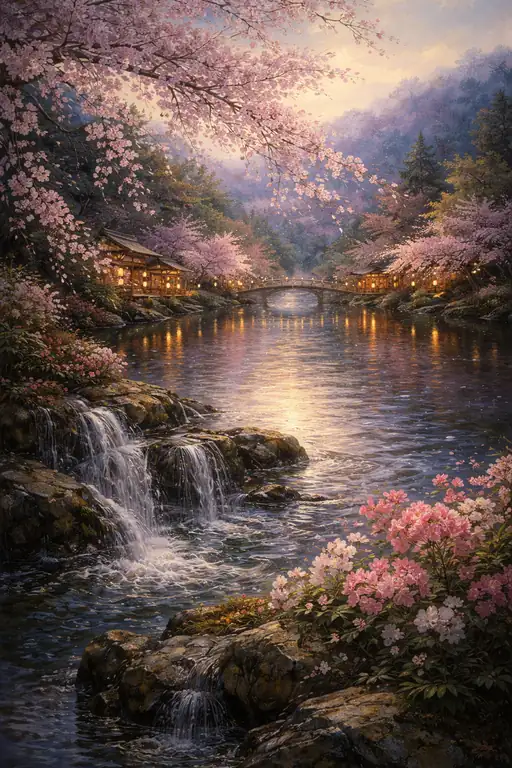 Whispers of the Sakura Moon
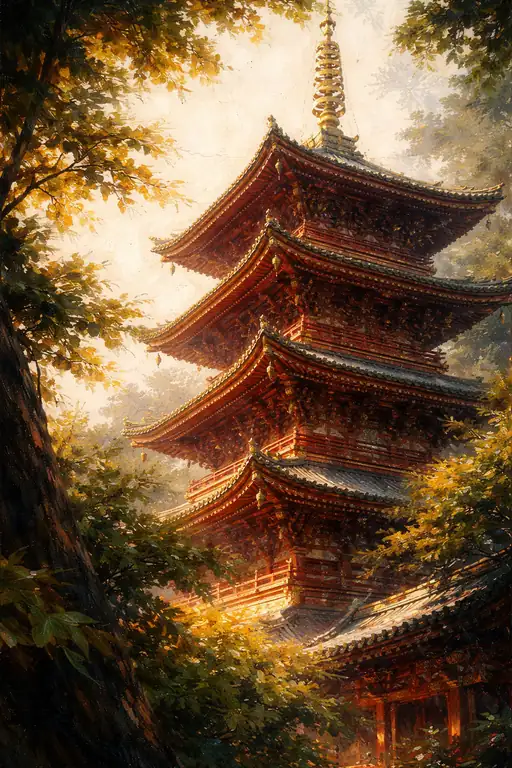 Radiance of the Autumn Pagoda